Toilet Keeps Running? How to Adjust a Float and Stop Overflow Refill
A toilet that keeps running because water keeps trickling into the overflow tube almost always means the fill valve‘s water level is set too high, and that’s controlled by the float, either a float ball on an arm or a cup-style float that rides up and down the fill valve shaft. This guide covers how to identify which float type you have, how to lower the water level correctly, and what to do when adjusting it doesn’t stop the overflow.
Ball Float vs. Cup Float: Identifying What You Have
Older toilets use a ball float: a plastic or metal ball on the end of a long metal or plastic arm that rises with the water level and shuts the fill valve off once it reaches the set height. Most toilets made in the last 15 to 20 years use a cup float instead: a small plastic cup that rides directly up and down the vertical fill valve shaft, taking up less space inside the tank and generally giving a more consistent shutoff. The adjustment method is different for each, so identify which type is installed before making changes.
Adjusting a Ball Float Arm
Most ball float arms have a small adjustment screw where the arm meets the fill valve body; turning it clockwise typically lowers the shutoff level, counterclockwise raises it. On older all-metal arms without a screw, you can carefully bend the arm downward by hand to lower the water level the float triggers at. Test after each adjustment by flushing and watching where the water stops relative to the overflow tube, rather than guessing at the right amount in one try.
Adjusting a Cup Float on the Fill Valve Shaft
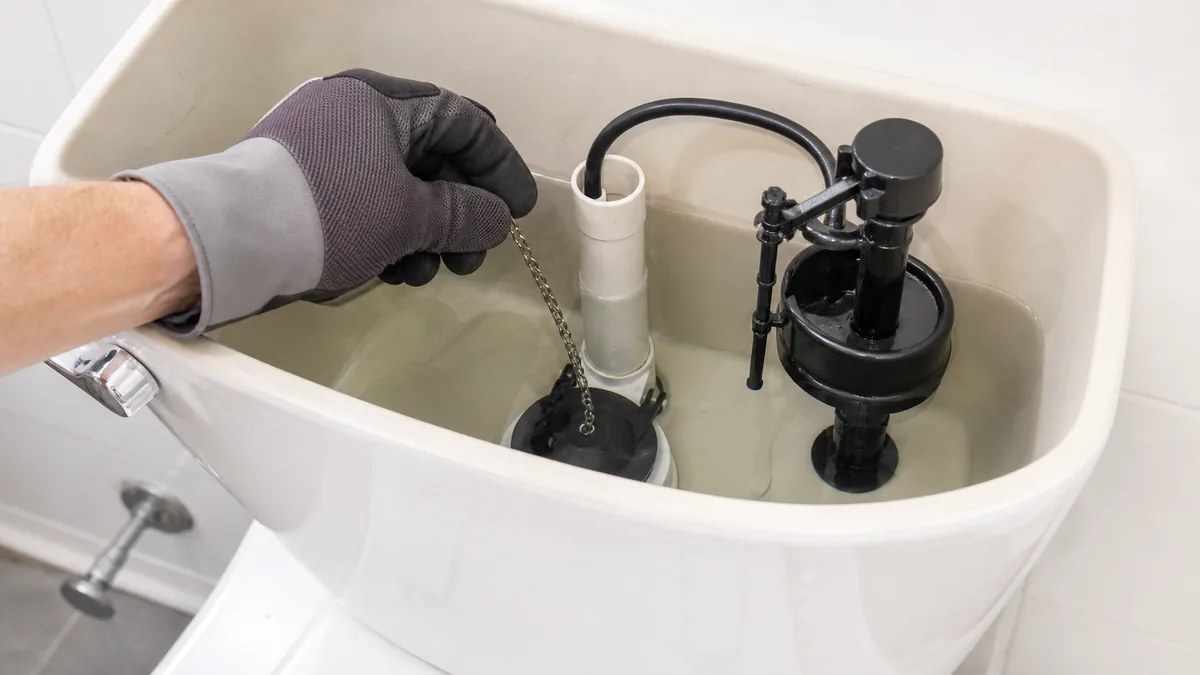
Cup floats typically have either a spring clip you pinch to slide the float down the shaft, or a small adjustment screw or dial built into the float that raises or lowers it in finer increments. Lowering the cup float lowers the water level the valve shuts off at. Most fill valves also have markings or a “critical level” line printed on the shaft itself as a reference point for how high the water should sit relative to the overflow tube.
Setting the Correct Water Level Relative to the Overflow Tube
The target is consistent regardless of float type: water should shut off roughly 1/2 to 1 inch below the top of the overflow tube. If the level sits at or above the tube’s opening, excess water drains continuously down the tube into the bowl, which is the “running” sound most homeowners notice, essentially a controlled overflow rather than a leak. Setting the level too low, on the other hand, can leave a weak flush that doesn’t fully clear the bowl.
When Float Adjustment Doesn’t Stop the Running
If you’ve lowered the float correctly and water still trickles into the overflow tube, the fill valve’s internal seal or diaphragm may be worn and unable to shut off completely regardless of float position, in which case the fill valve itself needs replacing (a universal fill valve is roughly 10 to 20 dollars). If the running instead stops and starts on its own without anyone flushing, that points toward a different toilet issue affecting the flush itself rather than the fill level, so it’s worth confirming which symptom you actually have before replacing parts.
Frequently Asked Questions
How do I know if my toilet has a ball float or a cup float?
Take the tank lid off and look: a ball float is a large ball on a long horizontal arm; a cup float is a small cylindrical piece that slides up and down directly on the vertical fill valve tower in the middle of the tank.
Is it normal to hear a faint hiss even after adjusting the float?
A brief hiss right after flushing while the tank refills is normal. A continuous hiss once the tank has finished filling usually means the fill valve isn’t sealing fully and needs replacement, not just readjustment.
Can I bend a ball float arm too far and cause a weak flush?
Yes, lowering the water level too much reduces the volume of water available for each flush, which can leave waste in the bowl. Adjust gradually and test-flush after each change rather than making one large bend.
Sponsored / affiliate links. As an Amazon Associate I earn from qualifying purchases. I may earn additional commission from eligible campaigns.