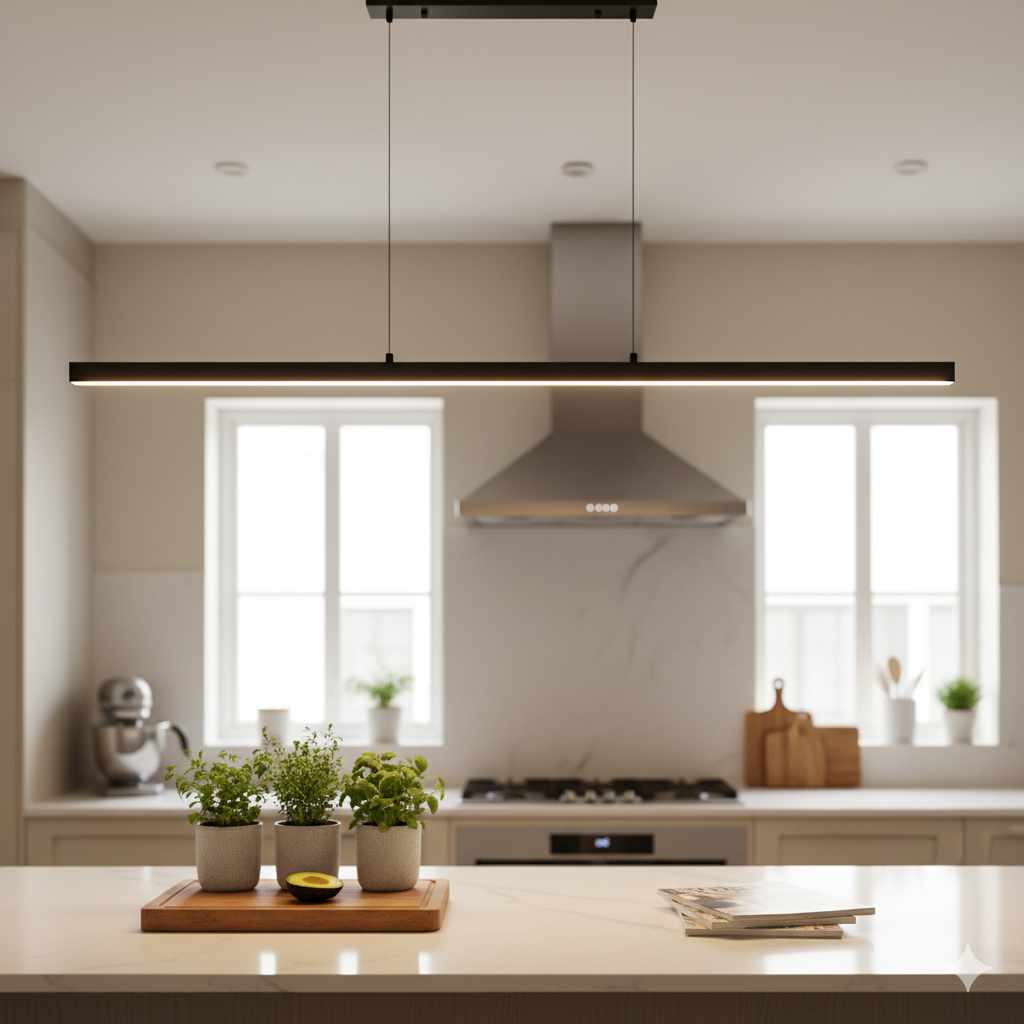
What Size Linear Light Over Kitchen Island: Essential Guide
Quick Summary: To find the right linear light size for your kitchen island, aim for a fixture that’s about half to two-thirds the length of your island’s countertop. This ensures balanced lighting without overwhelming the space. Consider island size, seating, and overall kitchen proportions for a perfect fit.
Choosing the right light fixture for your kitchen island can feel like a puzzle. You want something that looks great and lights up your space perfectly, but figuring out the size can be tricky. Too small, and it won’t do the job. Too big, and it might look out of place. Don’t worry, I’m here to help! We’ll walk through how to pick the ideal linear light for your kitchen island, making sure it’s both functional and beautiful. Get ready to transform your kitchen lighting with simple, step-by-step guidance.
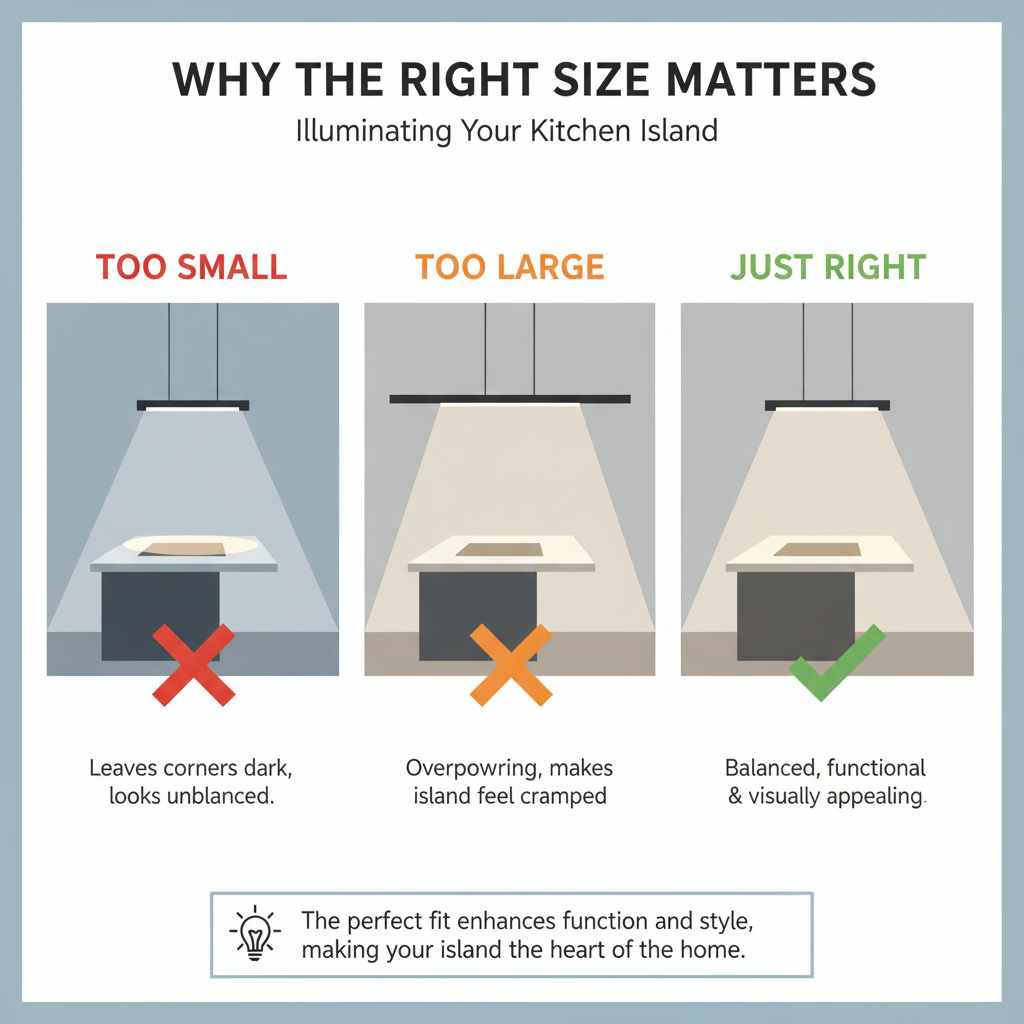
Why the Right Size Matters for Your Kitchen Island Linear Light
Your kitchen island is often the heart of the home – a place for cooking, chatting, and gathering. The lighting above it plays a huge role in setting the mood and ensuring it’s a practical workspace. A linear light, with its sleek, elongated design, is a popular choice because it offers even illumination and a modern aesthetic. But getting the size wrong can throw off the whole balance. A light that’s too small might leave corners dark, while one that’s too large can feel overpowering, making the island seem cramped. Getting the dimensions just right means your island will be beautifully lit, functional, and visually appealing, complementing your kitchen’s overall design.
Understanding Linear Lights for Kitchen Islands
Linear lights, also known as pendant lights or chandeliers in a linear form, are long, often rectangular or cylindrical fixtures that hang from the ceiling. They are perfect for illuminating wider surfaces like kitchen islands because they spread light more evenly than a single pendant. They come in various styles, from minimalist bars to more decorative designs with multiple bulbs or shades. Their main advantage is their ability to provide ample task lighting directly over the island, making food prep easier and safer. They also act as a significant design element, drawing the eye and adding a polished finish to your kitchen.
Types of Linear Lights
When you’re looking at linear lights, you’ll notice a few common types:
- LED Linear Pendants: These are very popular due to their energy efficiency, long lifespan, and sleek, modern look. They often have integrated LED strips that provide bright, uniform light.
- Multi-Light Linear Chandeliers: These fixtures have several individual lights (often pendants or shades) mounted on a single bar. They offer a bit more decorative flair and can allow for different light intensities or styles.
- Recessed Linear Lights: While not hanging, these are built directly into the ceiling above the island, offering a very clean, minimalist look. However, for this guide, we’re focusing on hanging linear lights.
- Industrial-Style Linear Fixtures: These often feature exposed bulbs, metal cages, or a more rugged aesthetic, fitting well in modern farmhouse or industrial kitchens.
Key Factors for Determining Linear Light Size
Before you even start looking at specific lights, let’s break down the important things to consider. This will help you make a confident decision.
1. Measure Your Kitchen Island
This is the most crucial step! You need accurate measurements of your island’s countertop. Grab a tape measure and note down:
- Island Length: Measure from one end of the countertop to the other.
- Island Width: Measure from the front edge to the back edge of the countertop.
These numbers will be your primary guide. For example, if your island is 6 feet (72 inches) long, you’ll be looking for a linear light that fits proportionally along that length.
2. Consider the Countertop Material and Style
While not directly about size, the material and style of your countertop can influence your choice. A busy, patterned granite might pair best with a simpler, sleeker linear light, whereas a clean, solid quartz countertop can handle a more elaborate fixture. The overall aesthetic you’re going for – modern, traditional, farmhouse, industrial – will also guide your design choices, which indirectly affects size perception.
3. Account for Seating and Clearance
If your island has seating, you need to ensure there’s enough clearance for people to sit comfortably and move around without bumping their heads. This relates more to the height of the light, but the width of the fixture can also impact the feeling of space. A very wide light might make the seating area feel more enclosed.
4. Think About Overall Kitchen Scale
How big is your kitchen? A large, open-concept kitchen can handle a more substantial linear light that makes a statement. In a smaller kitchen, you’ll want a fixture that’s proportionate to avoid making the space feel cluttered. The height of your ceilings also plays a role. Taller ceilings can accommodate longer or more dramatic fixtures.
5. Lighting Needs and Functionality
What will you primarily use the island for? If it’s mainly for food preparation, you’ll want bright, focused task lighting. If it’s more for ambient dining or gathering, softer, more diffused light might be better. Many linear lights offer dimmable options, which provide flexibility for different activities.
The Golden Rule: The 1:2 Ratio (and Variations)
As a general rule of thumb, many designers recommend that your linear light fixture should be about half to two-thirds the length of your kitchen island’s countertop. This ratio creates a visually balanced look and ensures adequate light coverage without the fixture dominating the space.
Let’s break this down with an example:
-
If your island is 60 inches long:
- Half the length is 30 inches.
- Two-thirds the length is 40 inches. So, a linear light between 30 and 40 inches long would likely be a great fit.
-
If your island is 72 inches long:
- Half the length is 36 inches.
- Two-thirds the length is 48 inches. You’d look for a fixture around 36 to 48 inches in length.
This 1:2 ratio is a fantastic starting point. However, it’s not a strict law. Sometimes, you might opt for a slightly larger or smaller fixture based on the specific design of the light and your personal preference.
Step-by-Step Guide to Choosing Your Linear Light Size
Ready to find the perfect fit? Follow these simple steps:
Step 1: Measure Your Island Accurately
As mentioned before, measure the length of your island’s countertop. Let’s say your island is 84 inches long.
Step 2: Calculate Your Ideal Fixture Length Range
Apply the 1:2 ratio:
- Half the length: 84 inches / 2 = 42 inches
- Two-thirds the length: 84 inches * (2/3) = 56 inches
Your ideal linear light length range is approximately 42 to 56 inches.
Step 3: Consider the Fixture’s Design
Linear lights vary greatly. Some are slim bars, while others have multiple shades or decorative elements that extend beyond the main bar. Look at the total width or span of the fixture. If a fixture has shades that stick out, measure from the furthest point of one shade to the furthest point of the opposite shade.
Example: If you found a beautiful fixture that is 48 inches long, but its shades extend 3 inches on each side, its total span is actually 54 inches (48 + 3 + 3). This fits nicely within our 42-56 inch range for an 84-inch island.
Step 4: Visualize the Space
This is where you can get creative. You can:
- Use Painter’s Tape: On your island countertop, use painter’s tape to mark out the dimensions of the linear lights you’re considering. This gives you a real-world sense of how much space they’ll occupy.
- Cut Out Cardboard: For a more 3D visualization, cut out cardboard templates of the fixture sizes and temporarily hang them from the ceiling using string.
- Look at Inspiration Photos: Find pictures of kitchens with islands similar in size to yours and see what size linear lights they used.
Step 5: Check the Height and Drop
While we’re focusing on length, don’t forget height! For task lighting over a kitchen island, the bottom of the fixture should typically be about 30 to 36 inches above the countertop. This ensures good light without being in the way or causing glare. Always check the fixture’s specifications for its adjustable drop length.
A great resource for understanding standard kitchen dimensions and clearances is the Houzz guide on kitchen island dimensions, which provides helpful visual guides.
Common Mistakes to Avoid
Even with guidelines, it’s easy to make a slip-up. Here are some common mistakes when choosing linear lights for kitchen islands:
- Going Too Big: This is probably the most frequent error. A fixture that’s too long can make the island feel crowded and disproportionate to the rest of the kitchen.
- Going Too Small: Conversely, a fixture that’s too short won’t provide adequate lighting and can look lost above a substantial island.
- Ignoring the Ceiling Height: A very long or low-hanging fixture in a room with low ceilings can feel oppressive.
- Forgetting About Dimmer Switches: Not installing dimmers means you lose the flexibility to adjust the mood and brightness for different times of day or activities.
- Not Considering the Fixture’s Visual Weight: A very chunky or elaborate fixture might feel too heavy for a delicate island, even if its length is proportionate.
When to Deviate from the 1:2 Rule
While the 1:2 ratio is a great starting point, there are times when you might want to adjust:
- Very Long Islands: For islands that are exceptionally long (e.g., 10 feet or more), you might consider using two smaller linear lights placed strategically rather than one very long one. This can create a more balanced look and better light distribution.
- Minimalist Design: If you prefer a very minimalist aesthetic and want the light to be a subtle element, you might choose a fixture closer to half the island’s length.
- Statement Piece: If the linear light is intended to be a major focal point and you have a large kitchen, you might lean towards a fixture that’s closer to two-thirds or even slightly more of the island’s length, provided it doesn’t overpower the space.
- Island with Overhang: If your island has a significant overhang for seating, you might need a slightly shorter fixture to ensure comfortable head clearance for those seated.
A Quick Reference Table for Linear Light Sizing
To make things even easier, here’s a handy table. Remember, these are guidelines, and visual balance is key!
| Kitchen Island Length (Inches) | Recommended Linear Light Length (Inches) – Approx. 1/2 to 2/3 of Island Length | Considerations |
|---|---|---|
| 36″ (3 ft) | 18″ – 24″ | Good for smaller islands or breakfast bars. Ensure fixture isn’t too visually heavy. |
| 48″ (4 ft) | 24″ – 32″ | A common size for many standard islands. |
| 60″ (5 ft) | 30″ – 40″ | Balances well with a 5-foot island. |
| 72″ (6 ft) | 36″ – 48″ | Ideal for larger islands; good coverage. |
| 84″ (7 ft) | 42″ – 56″ | For substantial islands, ensures good light distribution. |
| 96″ (8 ft) | 48″ – 64″ | Consider if two smaller linear lights might be better than one very long one. |
| 108″ (9 ft) | 54″ – 72″ | Likely a candidate for two fixtures for balanced lighting. |
| 120″ (10 ft) | 60″ – 80″ | Almost certainly requires two or more fixtures for optimal lighting and visual appeal. |
When selecting a fixture, always check the manufacturer’s specifications for the exact dimensions of the light, including any extensions or shades.
Installation Considerations
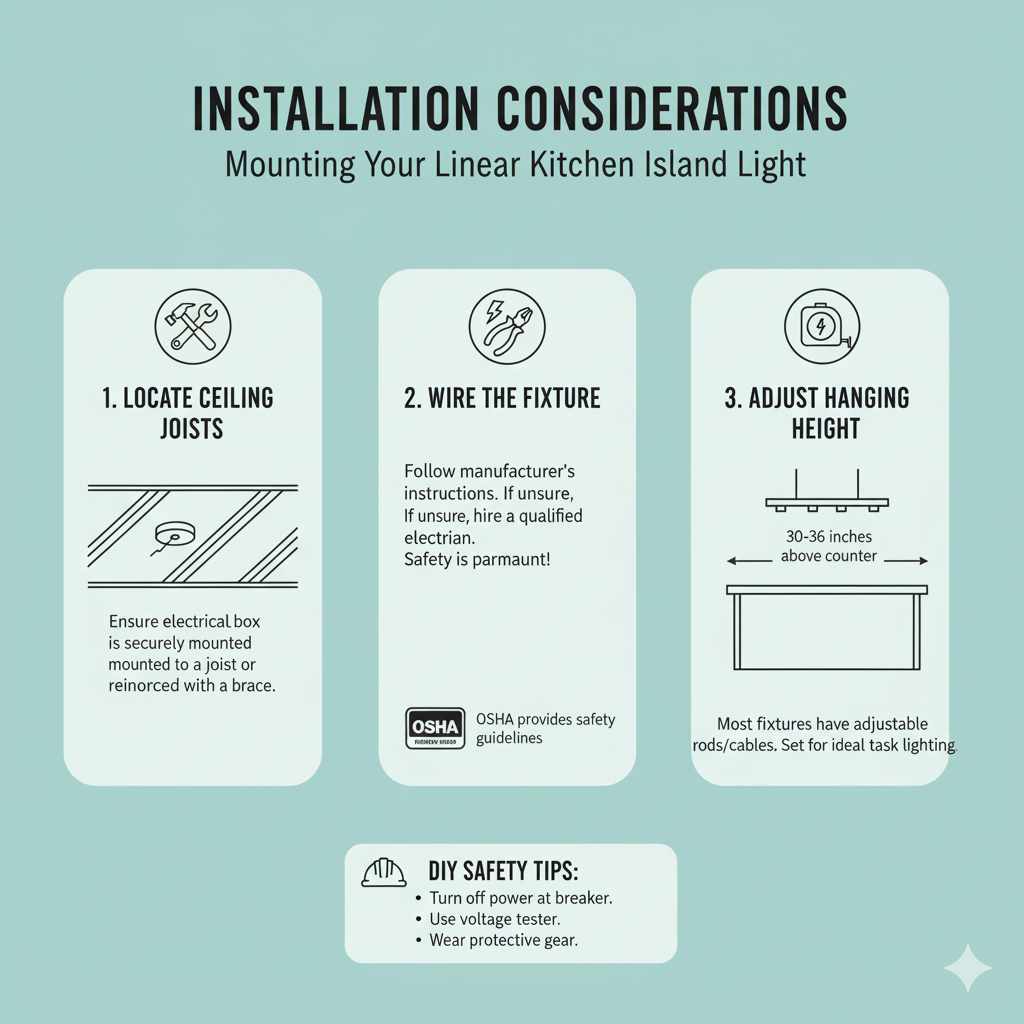
While this guide focuses on size, remember that proper installation is key to enjoying your new lighting. For hanging linear lights, you’ll typically need to:
- Locate Ceiling Joists: Ensure your electrical box is securely mounted to a joist or reinforced with a brace.
- Wire the Fixture: Follow the manufacturer’s instructions carefully. If you’re not comfortable with electrical work, hire a qualified electrician. Safety is paramount! The Occupational Safety and Health Administration (OSHA) provides extensive safety guidelines for electrical work.
- Adjust the Hanging Height: Most fixtures come with adjustable rods or cables to set the perfect height (30-36 inches above the counter).
If you’re doing this yourself, consider investing in basic electrical tools like a voltage tester and wire strippers. Always turn off the power at the breaker box before starting any electrical work.
FAQ: Your Linear Light Size Questions Answered
Here are some common questions homeowners have:
Q1: What’s the most important measurement for choosing a linear light size?
A1: The most important measurement is the length of your kitchen island’s countertop. This directly dictates the proportional size of the linear light that will best complement it.
Q2: Can I use two smaller linear lights instead of one large one?
A2: Absolutely! For very long islands (typically 8 feet or more), using two smaller linear lights can provide more balanced illumination and a more aesthetically pleasing arrangement than a single, extremely long fixture.
Q3: How far apart should two linear lights be if I use two?
A3: A good starting point is to have them spaced evenly, with a gap between them that’s roughly equal to the width of one of the fixtures. This creates a balanced visual. However, consider the layout of your island and where you need light most.
Q4: What if my island is round or square?
A4: Linear lights are best suited for rectangular islands. For round or square islands, consider a cluster of pendant lights or a single, large statement pendant that’s proportionate to the island’s width. For square islands, a shorter, squarer linear fixture might work if it’s visually balanced, but it’s less common.
Q5: How low should the linear light hang over my island?
A5: For optimal task lighting and to avoid glare, the bottom of the linear light fixture should generally hang 30 to 36 inches above the countertop. Always ensure there’s enough clearance for people to stand and work without hitting their heads.
Q6: Does the width of the island matter for linear light size?
A6: While the island’s length is the primary factor for linear light length, the island’s width is important for scale. A very wide island (e.g., 4 feet or more) can often accommodate a slightly longer or more visually substantial linear light than a narrower island. It helps maintain visual balance.
Q7: What if the linear light I love is slightly outside the recommended size range?
A7: Don’t be afraid to bend the rules slightly, especially if you love a particular fixture! If it’s a little shorter or longer but still feels visually balanced in your space, it can work. Use the painter’s tape or cardboard cutout method to visualize it before committing.
Conclusion
Finding the perfect size for your linear light over the kitchen island doesn’t have to be a daunting task. By understanding the basic principles, like the 1:2 ratio of fixture length to island length, and by taking accurate measurements, you’re well on your way to a beautifully lit and functional kitchen space. Remember to consider your island’s dimensions, your kitchen’s overall scale, and your personal style. Don’t forget to visualize the fixture in your space using painter’s tape or cardboard cutouts. With these tips and a little careful planning, you can confidently select a linear light that enhances your kitchen’s beauty and usability for years to come. Happy lighting!