Where to Put Knobs on Cabinet Doors: A Simple Guide for Everyone
I remember my first kitchen redo. I picked shiny new knobs for my cabinet doors, but I had no clue where to put them! After some trial and error, I learned that where to put knobs on cabinet doors matters for both looks and ease of use. This guide will show you how to place knobs the right way. It’s perfect for beginners, hobbyists, or anyone wanting a polished kitchen or bathroom. I’ll share easy steps, handy tips, and mistakes to avoid, all in simple words. Let’s make your cabinets shine!
What Is Cabinet Knob Placement?
Cabinet knob placement means deciding where to attach knobs on your cabinet doors. It’s important because it affects how easy it is to open doors and how nice your kitchen looks.
Good placement makes cabinets easy to use. Bad placement can make doors hard to open or look messy. For example, a knob too high on a tall cabinet might be tough to reach.
Why Knob Placement Matters
Knobs aren’t just for show—they help you use your cabinets every day. If placed wrong, you might struggle to open doors or bump into knobs.
I once put a knob too close to the edge. It looked odd and caught my sleeve! Proper placement keeps your kitchen functional and pretty.
Types of Cabinet Hardware
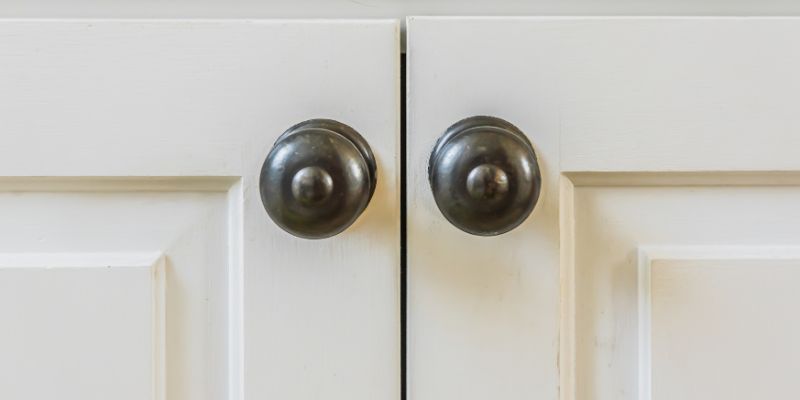
Before we dive into placement, let’s talk about hardware. Knobs are small, round, and need one screw. Pulls are longer, need two screws, and are great for drawers.
- Knobs: Best for doors, simple to install.
- Pulls: Great for drawers, easier to grip.
- Cup Pulls: Vintage style, good for drawers.
Visual Idea: A diagram showing a knob, pull, and cup pull on a cabinet door and drawer.
Where to Put Knobs on Cabinet Doors: Step-by-Step Guide
Here’s how I place knobs on cabinet doors. It’s easy if you follow these steps.
Tools and Materials You’ll Need
You don’t need much to install knobs. Here’s what I use:
- Screwdriver: A small one works best.
- Measuring tape: For exact placement.
- Cabinet hardware jig: Makes drilling holes easy (try Kreg’s jig).
- Pencil: To mark spots.
- Drill: Use a 5mm bit for wiggle room.
Table 1: Tools for Installing Cabinet Knobs
| Tool | Purpose | Cost (Approx.) |
|---|---|---|
| Screwdriver | Tighten screws | $5-$10 |
| Measuring Tape | Measure placement | $3-$8 |
| Cabinet Hardware Jig | Ensure accurate holes | $20-$30 |
| Drill (5mm bit) | Drill screw holes | $30-$50 |
Caption: Basic tools for installing cabinet knobs, with affordable price ranges.
Steps for Upper Cabinet Doors
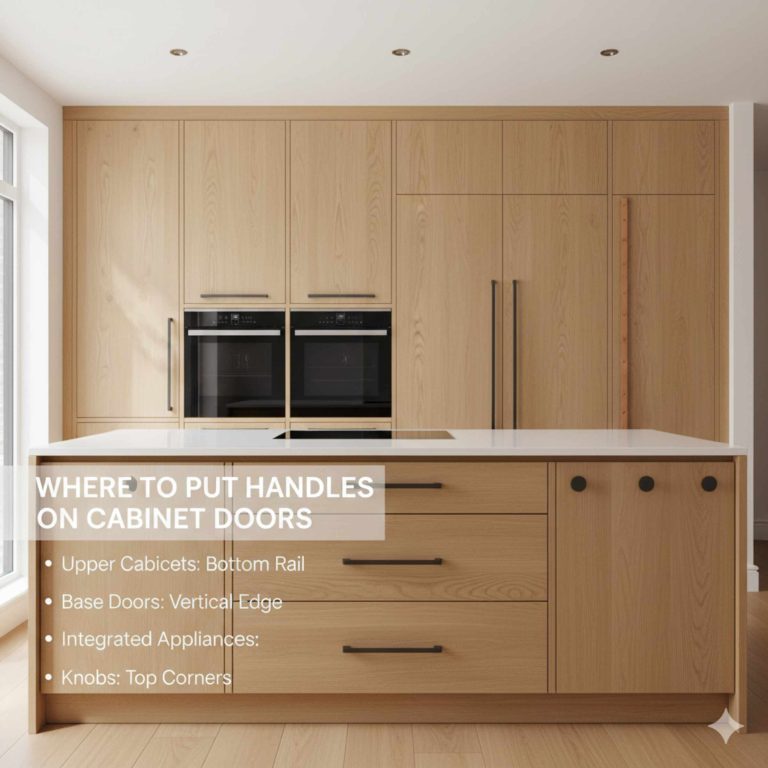
Upper cabinets are above your counter. Knobs go on the lower corner, opposite the hinges.
- Measure 2.5-3 inches from the bottom edge.
- Measure 1 inch from the side edge (opposite hinges).
- Mark the spot with a pencil.
- Drill a hole using a 5mm bit.
- Screw the knob in place.
This spot makes knobs easy to reach without stretching.
Steps for Lower Cabinet Doors
Lower cabinets are below the counter. Knobs go on the upper corner, opposite the hinges.
- Measure 2.5-3 inches from the top edge.
- Measure 1 inch from the side edge (opposite hinges).
- Mark the spot with a pencil.
- Drill a hole carefully.
- Attach the knob with a screw.
This keeps knobs high enough to avoid bending down too much.
Steps for Drawers
Drawers are trickier. For small drawers (under 24 inches), center the knob. For wide drawers, use two knobs.
- Measure the drawer’s width and height.
- For small drawers, mark the center point.
- For wide drawers, divide the width into thirds.
- Place knobs in the outer thirds, centered vertically.
- Drill and screw knobs in place.
Visual Idea: A labeled diagram showing knob placement on upper cabinets, lower cabinets, and drawers.
Benefits of Good Knob Placement
Good placement makes your kitchen easier to use. It also looks neat and balanced.
- Ease of Use: Knobs in the right spot are easy to grab.
- Looks Great: Symmetrical knobs make cabinets pop.
- Safety: Proper placement avoids bumps or snags.
Drawbacks of Bad Placement
Bad placement can cause problems. I learned this the hard way!
- Hard to Reach: Knobs too high or low are annoying.
- Looks Messy: Off-center knobs ruin the kitchen’s vibe.
- Damage: Wrong holes can harm your cabinets.
Different Placement Options
You can mix things up based on your style. Here are some ideas:
- Traditional Look: Place knobs on the corner of the door’s frame (stile and rail).
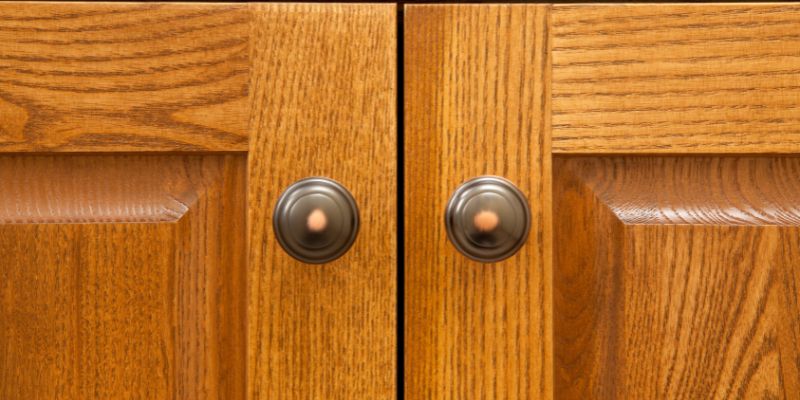
- Modern Look: Center knobs on the door’s stile, slightly above or below the rail.
- Tall Cabinets: Center knobs vertically on tall pantry doors for balance.
Table 2: Knob Placement Options
| Style | Placement Description | Best For |
|---|---|---|
| Traditional | 2.5-3” from corner, on stile | Classic kitchens |
| Modern | Center of stile, near rail edge | Sleek designs |
| Tall Cabinets | Center of door, vertically | Pantries, tall units |
Caption: Compare placement styles for different kitchen looks.
My Personal Tips for Perfect Knob Placement
After years of installing knobs, here are my top tips:
- Use a Jig: A hardware jig saves time and keeps holes even.
- Test with Tape: Stick painter’s tape on doors to test placement before drilling.
- Match Your Style: Pick knobs that fit your kitchen’s vibe, like brass for traditional or sleek pulls for modern.
Visual Idea: A photo of a cabinet door with tape marking knob placement.
Common Mistakes to Avoid
I’ve made these mistakes, so you don’t have to!
- Drilling Without Measuring: Always measure twice to avoid extra holes.
- Ignoring Hinges: Place knobs opposite hinges for better leverage.
- Using Wrong Screws: Check screw length to avoid damaging doors.
Table 3: Common Mistakes and Fixes
| Mistake | Fix |
|---|---|
| Drilling without measuring | Use a tape measure and jig |
| Knobs near hinges | Place opposite hinges |
| Wrong screw length | Use screws that match door thickness |
Caption: Avoid these mistakes for a smooth knob installation.
Safety Tips for Installing Knobs
Safety is key when drilling. Wear safety glasses to protect your eyes from wood dust. Keep your drill steady to avoid slipping.
If you’re new to drills, practice on scrap wood first. It helps you feel confident before working on your cabinets.
Cost-Saving Ideas
Knobs can be pricey, but you can save money:
- Shop Sales: Check Home Depot for deals on knobs.
- Reuse Old Holes: If replacing knobs, use existing holes to avoid extra work.
- Buy in Bulk: Get a set of knobs to save on cost per piece.
Conclusion
Placing knobs on cabinet doors is easy once you know the rules. Measure carefully, use the right tools, and think about your kitchen’s style. Whether you’re updating a bathroom or refreshing a kitchen, good knob placement makes a big difference. Try it out this weekend! Share your project photos with friends or on Houzz for inspiration. Have fun making your cabinets look amazing!
Frequently Asked Questions
Where should knobs go on upper cabinet doors?
Knobs on upper cabinets go 2.5-3 inches from the bottom corner, opposite the hinges. This makes them easy to reach without stretching. Measure carefully and use a jig for even placement.
Where should knobs go on lower cabinet doors?
Place knobs on lower cabinets 2.5-3 inches from the top corner, opposite the hinges. This keeps them accessible without bending down too much.
How do I place knobs on drawers?
For small drawers, center the knob. For wide drawers (over 24 inches), use two knobs, placed in the outer thirds of the drawer’s width, centered vertically.
Should I use knobs or pulls?
Knobs are great for doors and small drawers. Pulls work better for heavy drawers because they’re easier to grip. Choose based on your kitchen’s style.
What tools do I need to install knobs?
You need a screwdriver, measuring tape, drill with a 5mm bit, and a cabinet hardware jig. These tools make installation easy and precise.
How do I avoid mistakes when placing knobs?
Measure twice before drilling. Use a jig for accuracy. Place knobs opposite hinges for better leverage. Test placement with tape first.
Can I use different knob placements for style?
Yes! For a traditional look, place knobs in the corner. For a modern look, center them on the stile. For tall cabinets, center them vertically.