Will a Basement Wood Stove Heat the Whole House
Many folks wonder, Will a Basement Wood Stove Heat the Whole House? It’s a great question and a common one for anyone looking to save on heating bills or get cozy. Sometimes, figuring out home heating can seem a bit tricky, especially when you’re new to it. But don’t worry!
We’ll break it down step-by-step so it’s easy to understand. Let’s explore how a basement wood stove can work for your whole home.
Basement Wood Stove Heating Basics
This section explains how a wood stove in the basement can affect your home’s overall temperature. We will cover the fundamental principles of heat transfer and air circulation. Understanding these basics is key to determining if your basement wood stove can keep every room warm.
It sets the stage for exploring more advanced concepts later.
Understanding Heat Transfer
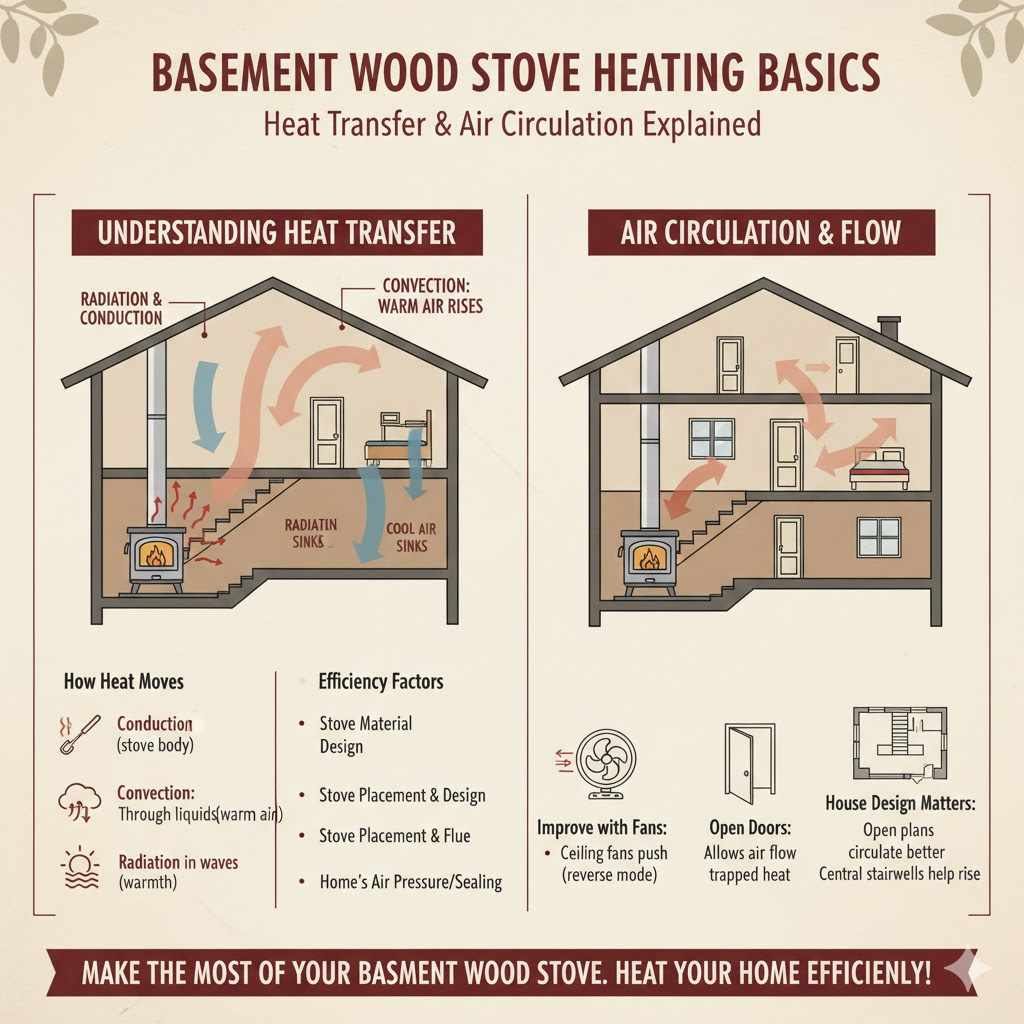
Heat moves in three main ways: conduction, convection, and radiation. Conduction is when heat moves through solid things, like how a metal rod gets hot when you hold one end near a fire. Convection is when heat moves through liquids or gases, like how warm air rises and cooler air sinks, creating a natural flow.
Radiation is when heat travels in waves, like the warmth you feel from the sun or a campfire, even without touching it.
A basement wood stove uses all these methods to warm your house. The stove itself gets hot through burning wood (radiation and conduction). This heat then warms the air around it.
As this air heats up, it becomes less dense and rises, a process called convection. This warmer air then spreads throughout your home. The heat also radiates out from the stove and pipes, warming objects and walls it touches.
The efficiency of heat transfer depends on several factors. The material of the stove and its construction play a big role. A well-insulated stove will hold heat better.
The size and design of the stove matter too. A larger stove can heat a bigger space. The way the stove is installed, including its placement and the flue system, significantly impacts how well heat moves throughout your home.
Proper installation ensures that convection currents can effectively distribute warmth.
Even the air pressure in your home can influence heat distribution. A tightly sealed home might have less natural airflow, making it harder for heat to spread. Older, leakier homes might have more drafts, which can help move warm air but also lead to cold spots.
Understanding these physical principles helps us see why a basement stove might not heat everywhere equally on its own.
Air Circulation and Flow
Air circulation is super important for getting heat from the basement to the rest of your house. Imagine your home like a big box. If you put a heater in one corner, the warm air might just stay there unless something helps it move around.
That’s where air circulation comes in. We want the warm air from the wood stove to travel up and fill all the rooms.
Natural convection is the main way air moves without help. Warm air is lighter and rises. Cold air is heavier and sinks.
So, the warm air from the basement will naturally try to go up through stairwells or any openings. The cooler air from upstairs will then flow down to the basement, where it can be heated by the stove. This creates a cycle that can help warm your home.
However, this natural flow isn’t always enough. In many homes, especially those with closed doors or long hallways, the warm air can get stuck. It might heat the basement and the floor directly above it really well, but the upper floors or rooms farther away might stay chilly.
This is a common challenge when relying on a single heat source in one part of the house.
To improve circulation, you can use fans. Small electric fans placed strategically can help push warm air into rooms or hallways. Ceiling fans, set to run in reverse (clockwise), can push warm air that collects near the ceiling down into the living space.
Opening doors between rooms also makes a big difference. This allows the warm air to flow more freely throughout the entire house.
The design of your house also plays a part. Homes with open floor plans tend to distribute heat better than those with many small, enclosed rooms. Stairwells act like chimneys, helping warm air rise.
If your stairwell is in the center of your home, it can be a good pathway for heat to travel upwards. If it’s off to the side, heat might not reach all areas as effectively.
Factors Affecting Basement Wood Stove Heating
Several things will decide if your basement wood stove can warm your whole house. We’ll look at these important points. These include how big your stove is, how well your house is insulated, and how you use the stove.
Getting these right makes a big difference in how warm and cozy your home stays, even in the coldest weather.
Stove Size and Heat Output
The size of your wood stove is really important. Think of it like choosing a heater for a room; a small heater won’t warm a big room. Wood stoves are measured by their heat output, often in British Thermal Units (BTUs) per hour.
A bigger stove burns more wood and produces more heat.
You need to match the stove’s size to the size of your home. A stove that is too small simply won’t be able to produce enough heat to warm your entire house, especially during very cold days. It might keep the basement and the rooms closest to it comfortable, but the rest of the house will likely remain cool.
This is a common reason why people find their basement wood stove doesn’t heat the whole house.
Conversely, a stove that is too large can also cause problems. If it’s too powerful, you might end up overheating the basement and nearby areas. This can lead to making the stove run inefficiently, creating more smoke and less heat.
It might also mean you’re burning through wood too quickly, which isn’t cost-effective. Finding the right balance is key.
Manufacturers often provide guidelines on what size home a particular stove can heat. These guidelines usually consider average insulation levels and climate conditions. It’s a good idea to consult these charts or speak with a qualified professional to select a stove that’s appropriately sized for your specific needs.
For example, a 1,500-square-foot home might need a stove with a heat output of around 50,000 BTUs per hour, while a 2,500-square-foot home might require 80,000 BTUs or more.
The type of wood you burn also affects the heat output. Denser hardwoods like oak and maple burn longer and hotter than softer woods like pine. Using dry, seasoned wood is crucial.
Wet wood burns poorly, produces less heat, and creates more creosote in your chimney. This can be a fire hazard. So, the quality of your fuel plays a role alongside the stove’s capabilities.
Home Insulation and Air Sealing
How well your house holds onto heat is a huge factor. Think of insulation like a warm blanket for your home. Good insulation in your walls, attic, and basement keeps the heat inside during the winter and the cool air inside during the summer.
Without it, the warm air from your wood stove escapes quickly, and cold air seeps in.
Air sealing is just as important. This means finding and fixing all the little cracks and gaps where air can leak in or out. These leaks can be around windows, doors, electrical outlets, plumbing penetrations, and where walls meet the foundation.
Even small leaks can add up and make a big difference in how well your home stays warm. It’s like trying to fill a leaky bucket; you’ll keep losing water.
Older homes often have less insulation and more air leaks than newer ones. This means they lose heat much faster. If your house isn’t well-sealed and insulated, a basement wood stove might struggle to keep up, even if it’s a powerful model.
The heat it generates will simply escape too quickly.
You can improve insulation by adding more material to your attic and walls. Professional energy audits can help identify areas that need more insulation or where air sealing is most needed. They use tools like infrared cameras to spot heat loss you might not see.
Simple DIY fixes like caulking around windows and doors or adding weatherstripping can also make a noticeable difference.
A well-sealed and insulated home will allow the heat from your wood stove to circulate more effectively. The warm air will stay inside longer, and the cool air will be less likely to enter. This means your stove doesn’t have to work as hard, and you’ll likely enjoy a more consistent temperature throughout your home.
It’s an investment that pays off in comfort and energy savings.
Wood Stove Placement and Flue System
Where you put your wood stove and how your chimney (flue) is set up are critical. The best spot for a basement wood stove to heat the whole house is usually where it can get good airflow to the rest of the house. This often means placing it in a central location if possible, or near the main stairwell.
If the stove is tucked away in a far corner, its heat will have a harder time reaching other parts of your home.
The flue system, or chimney, is not just for letting smoke out. It also plays a role in how well the stove works and how heat is distributed. A well-designed flue system creates a strong draft, which means it pulls the smoke up and out efficiently.
This helps the stove burn cleaner and hotter, producing more usable heat.
The height and diameter of the flue are important. The National Fire Protection Association (NFPA) provides guidelines for safe and effective chimney installation. A flue that is too short or too narrow can cause drafting problems, leading to smoke backing up into the house or the stove not burning as well.
This reduces its heating efficiency.
Some modern wood stoves are designed for optimal heat distribution. They might have blowers that help push warm air out of the stove and into the room. Others are designed to be connected to a ducted system, similar to a forced-air furnace, which can actively distribute warm air to different parts of the house.
These are often called catalytic or non-catalytic stoves and are more efficient.
Consider the path the heat needs to travel. If your basement is far from your main living areas, or if there are many walls and doors in the way, heating the whole house becomes more challenging. Thinking about your home’s layout from the stove’s perspective is important.
Visualizing how warm air will move naturally or with assistance will help you assess potential issues.
Strategies to Maximize Basement Wood Stove Heating
To make your basement wood stove do the best job it can for your whole house, there are smart things you can do. These strategies help the heat travel farther and stay where you want it. We’ll cover ways to boost airflow and use your stove more effectively so every room feels cozy.
This is about making the most of your wood heat.
Using Fans for Air Circulation
Fans are your best friends when trying to move warm air from the basement upwards. Even a simple box fan can make a big difference. Place a fan at the bottom of your main stairwell, pointing upwards.
This will help push the warm air that rises from the basement into the main living areas. It essentially gives the warm air a little boost.
Ceiling fans can also be a great help. Most ceiling fans have a switch that allows them to run in reverse. In the winter, you want the fan to spin clockwise at a low speed.
This gently pushes the warm air that collects near the ceiling down into the room, helping to even out the temperature from floor to ceiling. This can make a noticeable difference in comfort levels.
Portable oscillating fans can be used in rooms that tend to stay cooler. Position them to help move air from warmer areas into colder ones. For instance, if a hallway is warm but a distant bedroom is cold, an oscillating fan in the hallway could help circulate the warmth down the hall.
Experiment with placement to see what works best for your home’s layout.
Consider a whole-house fan system if you’re looking for a more integrated solution. These systems involve ductwork and fans that can actively distribute warm air from the basement to different rooms. While this is a more significant investment, it can be very effective in ensuring even heating throughout the house.
It essentially turns your wood stove into a central heating system.
When using fans, remember that they don’t create heat; they just move it. So, they are most effective when there is already a source of heat to move. Ensure your wood stove is producing enough heat for the areas you’re trying to warm.
Fans are a tool to help distribute existing heat, not to create warmth out of nothing. It’s about making the heat you generate go where you need it most.
Opening Doors and Vents
It sounds simple, but keeping interior doors open is one of the easiest and most effective ways to help heat circulate. If you close doors between rooms, you create barriers that trap warm air. When doors are open, especially on the main floors, the warm air from the basement has a much easier path to travel throughout your home.
Think of it as removing obstacles for the warm air.
Pay attention to the doors between the basement and the main floor. Keeping these doors open will allow the initial rise of warm air to enter the living space. Then, open doors between rooms on the main floors and upper levels to let the heat spread further.
This creates a continuous flow from where the heat is generated to where it is needed.
If your home has a forced-air heating system, you might have existing vents that can be used to your advantage. Even if you’re not using the furnace, you can open the vents in rooms that tend to be colder and close or partially close the vents in rooms that get too warm from the wood stove. This helps to direct any air movement from the basement towards the cooler areas.
Consider installing transfer grilles or small duct fans in doors or walls. A transfer grille is essentially a vent that allows air to move between rooms without compromising privacy. Small duct fans can be installed in these grilles to actively push air from warmer rooms to cooler ones.
This is a more advanced technique but can significantly improve heat distribution.
The goal is to create an unimpeded path for air movement. When heat rises from the basement, it needs a way to travel up and then spread horizontally. By opening doors and ensuring vents are positioned correctly, you are helping to establish these pathways.
This allows for a more even temperature across your entire home, reducing cold spots and making your wood stove heating more effective.
Improving Stove Efficiency
A more efficient wood stove produces more heat from the same amount of wood. Modern stoves are designed with better combustion technology. This means they burn the wood more completely, extracting more energy.
Older stoves might be less efficient, meaning a lot of potential heat goes up the chimney as smoke.
Look for stoves with a high efficiency rating. Some stoves are EPA-certified, meaning they meet specific environmental standards for emissions and efficiency. These stoves often have features like secondary combustion systems or catalytic converters that burn off smoke particles before they leave the chimney.
This results in less creosote buildup and more heat for your home.
Proper operation is key to efficiency. Always burn dry, seasoned wood. Wet wood smolders, produces less heat, and creates more creosote.
Loading the stove correctly, with enough air for combustion, is also important. Don’t overload the firebox; this can lead to inefficient burning. Follow the manufacturer’s instructions for your specific stove.
Regular maintenance ensures your stove operates at peak efficiency. This includes cleaning the chimney regularly to prevent creosote buildup, which can be a fire hazard and also restrict airflow. Check the gaskets around the door and glass for leaks.
A leaky gasket allows unwanted air into the stove, disrupting the controlled burn and reducing efficiency.
Consider adding a stove fan that uses the heat from the stove to power a small fan. These fans sit on top of the stove and help circulate the warm air around the stove and into the room. They don’t require electricity and are a simple way to improve heat distribution in the immediate area.
While they don’t move air throughout the entire house, they do help make the area around the stove more comfortable.
You can also insulate around the stovepipe where it passes through floors or ceilings. This helps to keep the heat in the flue system for longer, radiating more warmth into the surrounding areas before it exits the chimney. However, ensure all insulation is fire-safe and installed according to codes to prevent fire hazards.
This attention to detail can contribute to overall heating effectiveness.
When a Basement Wood Stove Might Not Heat the Whole House
Sometimes, even with the best efforts, a basement wood stove just can’t keep the entire house warm. This section explains why that might happen. We will discuss common situations where a single heat source in the basement falls short.
Knowing these limits helps you plan for supplemental heating if needed.
House Layout and Design Challenges
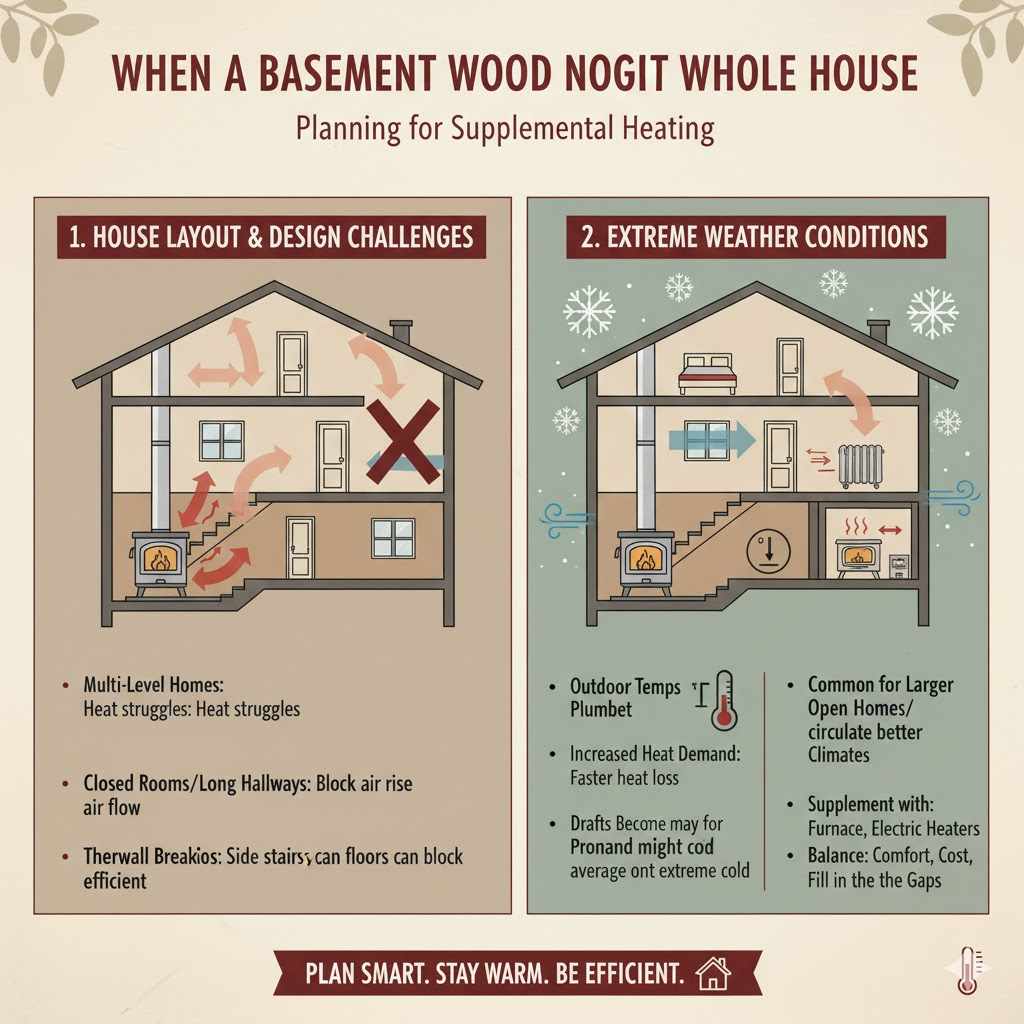
The way your house is built can present significant challenges for any single heat source. Homes with multiple levels, long hallways, or many small, closed-off rooms are harder to heat evenly from a basement location. The warm air simply has too many obstacles to overcome.
A split-level home, for instance, can be particularly tricky. The heat from the basement has to rise to the first level, then potentially more heat has to travel up another set of stairs to the second level. Each transfer point can lead to heat loss, meaning the upper floors may remain considerably cooler.
Open floor plans, on the other hand, tend to distribute heat much better. If the basement is directly below a large, open living area, the warm air can rise and spread more freely. The more enclosed your living spaces are, the more active effort is needed to move the heat around.
Consider the location of your stairwell. A stairwell located in the center of the house acts like a natural chimney, helping warm air to rise and distribute. A stairwell located at the far end of the house may not draw heat effectively to the central areas or upper floors.
Another factor is the presence of thermal breaks. These are elements in your home’s construction that can block heat flow. For example, a concrete slab separating floors, or poorly insulated crawl spaces, can create barriers.
These can prevent the warmth from the basement from reaching other parts of the house effectively.
In some cases, the sheer size of the house can be the limiting factor. A very large home, even with good insulation, requires a substantial amount of heat. A single wood stove, even a large one, may not be capable of producing enough BTUs to offset the heat loss across such a vast area, especially in extreme cold.
Extreme Weather Conditions
During periods of very cold weather, a basement wood stove’s ability to heat the whole house can be severely tested. When outdoor temperatures plummet, the rate at which your house loses heat increases dramatically. This is because the temperature difference between the inside and outside is much larger.
Even a well-insulated and sealed home will experience higher heat loss in extreme cold. A basement wood stove, even if it normally provides sufficient heat, may struggle to keep up with this increased demand. The stove might be running at its maximum output, but the house is still losing heat faster than the stove can replenish it.
This is particularly true if the stove is sized for average winter conditions rather than the most extreme cold snaps. For example, if your region experiences days with sub-zero Fahrenheit temperatures, and your stove is rated for milder climates, you will likely experience significant temperature drops in your home.
Drafts can also become more pronounced during very cold weather. While some drafts can help with circulation, excessive cold drafts can create uncomfortable cold spots and make it harder for the overall temperature to rise. These drafts might occur around windows, doors, or other structural weak points in your home’s envelope.
In such situations, relying solely on a basement wood stove might not be practical for maintaining comfortable living temperatures throughout the entire house. It may be necessary to supplement with your primary heating system or ensure you have other heat sources available. The goal is to maintain a safe and comfortable indoor environment, and extreme weather can make this a significant challenge for any single heating method.
Need for Supplemental Heating
It is quite common for a basement wood stove to be used as a supplementary heat source rather than the sole source of warmth for an entire house. This is especially true for larger homes or in colder climates. While the wood stove can significantly reduce your reliance on other heating methods and lower your energy bills, it might not always be enough on its own.
If you find that certain rooms consistently remain too cold, or if temperatures drop uncomfortably low during the coldest parts of winter, then supplemental heating is a good idea. This could involve using your existing furnace, electric baseboard heaters, or even portable electric heaters for specific rooms that need an extra boost.
When considering supplemental heating, think about efficiency and safety. Your primary heating system (like a gas or electric furnace) is usually designed for whole-house heating and is reliable. For targeted heating, electric heaters can be convenient, but they can also be energy-intensive.
It’s a balance between comfort, cost, and convenience.
Using the wood stove for your primary heating needs during milder parts of the season and then bringing in supplemental heat when temperatures drop is a practical approach. This strategy allows you to maximize the benefits of wood heating while ensuring your home remains comfortable year-round. It’s about smart energy use and comfort.
The decision to use supplemental heat often depends on personal comfort levels and the specific characteristics of your home and climate. There’s no one-size-fits-all answer. What works for one household might not work for another.
The key is to assess your home’s heating performance and make informed decisions to keep your family warm and safe.
Frequently Asked Questions
Question: Can a small basement wood stove heat a large house?
Answer: Generally, no. A small wood stove lacks the heat output (BTUs) needed to warm a large home effectively. It will likely only be able to comfortably heat the basement and perhaps the immediate area above it, leaving other parts of the house cold.
Question: How much wood do I need to burn to heat my whole house?
Answer: The amount of wood needed varies greatly depending on the stove’s efficiency, your home’s insulation, the size of your house, and the outside temperature. A general rule of thumb is that a larger, well-insulated home in a cold climate will require significantly more wood than a smaller, well-insulated home in a milder climate.
Question: Is it safe to leave a basement wood stove running all night?
Answer: It can be safe if the stove is properly installed, maintained, and operated according to the manufacturer’s instructions. However, it’s important to ensure there are no creosote buildup issues in the chimney and that the stove is not overloaded. Some people prefer to let the fire die down to embers for safety.
Question: Will a basement wood stove increase my homeowner’s insurance?
Answer: Installing a wood stove typically requires it to be inspected and certified. Some insurance companies may charge a higher premium due to the increased fire risk associated with wood burning. It’s crucial to inform your insurance provider about the installation.
Question: How do I prevent my basement wood stove from overheating my basement?
Answer: Proper sizing of the stove is key. If the stove is too large for the house, it will overheat the basement. You can also improve heat distribution to the rest of the house, which will help balance the heating load.
Ensure there is adequate ventilation around the stove and follow manufacturer guidelines for operation.
Summary
A basement wood stove can heat a whole house, but it depends on several factors like stove size, home insulation, and house layout. Using fans and open doors helps move heat. If your house is very large or the weather is extremely cold, you might need extra heating.
With smart planning, your basement wood stove can provide comfortable warmth.