Will Painting a Tree Stump Stop It from Growing
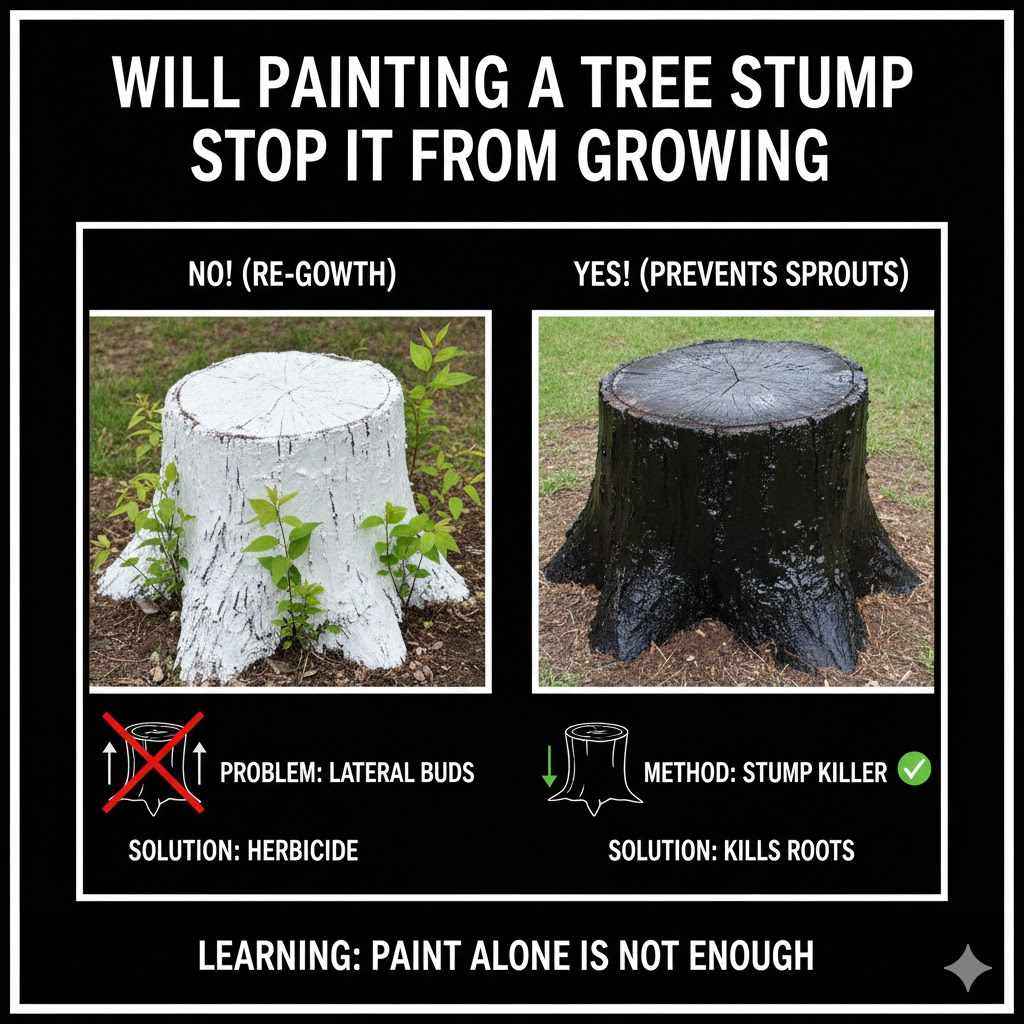
Many folks wonder, Will Painting a Tree Stump Stop It from Growing? It’s a common question, especially if you’ve just cut down a tree and don’t want that unsightly stump to stick around or sprout new shoots. It can seem a bit tricky to figure out the best way to deal with it. This guide will walk you through it step-by-step.
We’ll show you exactly what works and what doesn’t, making it super simple.
Understanding Tree Stump Regrowth
Tree stumps are living things, even after a tree has been cut. They contain roots and a vascular system that can still draw nutrients and water from the ground. This allows them to sometimes send up new shoots, commonly known as stump sprouts.
For beginners, it can be confusing because simply cutting the tree doesn’t always mean the problem is solved.
The desire to stop this regrowth stems from both aesthetic reasons and the practical need to reclaim yard space. An active stump can also attract pests and diseases. Understanding why regrowth happens is the first step in finding effective solutions.
It’s not magic; it’s about interrupting the plant’s natural processes.
The Biology of Stump Sprouts
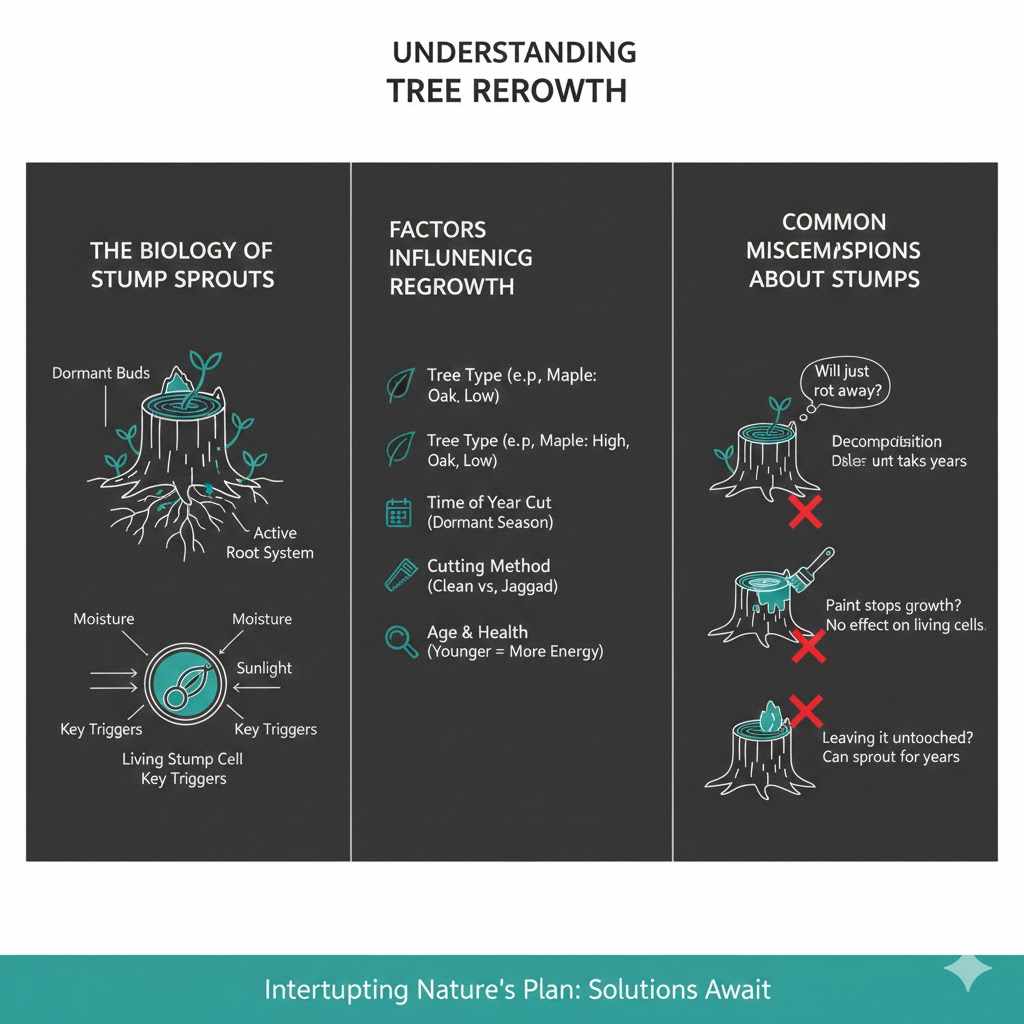
When a tree is cut, its natural instinct is to survive. The remaining stump holds dormant buds. These buds are like tiny, sleeping plants waiting for the right conditions to wake up.
Moisture, sunlight, and nutrients from the soil are key triggers.
Even a small amount of living tissue can support new growth. The roots are especially important. They continue to absorb water and nutrients, feeding the stump.
This is why simply letting a stump be often leads to new sprouts appearing, sometimes weeks or months later.
Factors Influencing Regrowth
Several factors affect how likely a stump is to sprout. The type of tree plays a big role. Some trees, like maples and willows, are notorious for sprouting aggressively.
Others, like oaks and beeches, are less prone to it.
The age and health of the tree before it was cut also matter. A young, vigorous tree might have more stored energy to fuel regrowth. The time of year the tree was cut can also influence sprouting.
For example, cutting during a dormant season might slightly reduce immediate sprouting.
The way the tree was cut also has an impact. A clean, level cut might be less likely to sprout than a jagged or high cut, as it provides less surface area for opportunistic growth. Proper removal techniques are key to preventing future issues.
Common Misconceptions About Stumps
Many people believe that once a tree stump is cut, it will simply rot away on its own. While decomposition is natural, it can take many years. During this time, sprouts can emerge and thrive.
Another misconception is that painting a stump is a guaranteed solution to stop growth. Paint might offer some temporary protection against moisture loss, but it doesn’t typically affect the living cells within the stump that are responsible for sprouting.
Some also think that leaving the stump untouched will eventually kill it. While starvation is a possibility, the stump can remain alive and sprout for a surprisingly long time, sometimes for years, before it finally decomposes. This extended lifespan allows ample opportunity for new growth.
Will Painting a Tree Stump Stop It from Growing? Exploring the Science
The question “Will Painting a Tree Stump Stop It from Growing?” is a frequent one for homeowners. The short answer is generally no, painting a tree stump by itself will not reliably stop it from growing. While paint might seal the surface and offer some cosmetic benefits or slight protection, it doesn’t address the underlying biological processes that cause a stump to sprout.
Tree stumps are living entities after the trunk is removed. They contain dormant buds and a root system that can still draw water and nutrients. These resources fuel the emergence of new shoots, often referred to as stump sprouts.
Painting might slow down moisture evaporation from the cut surface, but it doesn’t kill the cambium layer or the root structure that sustains new growth.
To effectively prevent a stump from growing, a more direct intervention is required, targeting the stump’s ability to regenerate. Relying solely on paint is often a temporary fix at best, and usually ineffective in the long run for preventing regrowth.
The Role of Paint on a Stump
When you paint a tree stump, you are primarily applying a coating to its surface. This coating can have a few effects. It can help to prevent rapid drying of the exposed wood, which might keep the stump looking a bit fresher for longer.
It can also offer a barrier against some moisture and potentially prevent the ingress of certain types of fungi or insects, at least initially. However, this barrier is usually not deep enough to penetrate the living tissues responsible for regrowth.
The key issue is that the living cells responsible for sprouting are located deeper within the stump, not just on the immediate cut surface. Unless the paint penetrates significantly or contains specific herbicides, its effect on preventing sprouting will be minimal.
Why Paint Isn’t Enough
Painting doesn’t kill the dormant buds. These buds are located just beneath the bark and within the wood itself. They are the source of new shoots.
Even if the surface dries out slightly, these buds can still be activated by stored energy within the stump and root system.
Furthermore, the root system remains alive and connected to the soil. It continues to absorb water and nutrients. This supply of resources is what allows the stump to sustain itself and produce new growth, regardless of what’s on the surface.
Paint doesn’t interfere with this vital supply line.
In essence, painting addresses a symptom (surface drying) rather than the cause (living tissue capable of regeneration). For effective stump control, methods that target the living cells or deplete the stump’s resources are necessary.
Chemical vs. Physical Barriers
When discussing stump treatment, it’s helpful to distinguish between chemical and physical barriers. Paint acts as a physical barrier, but a very superficial one. It prevents things from getting onto the surface but doesn’t kill what’s inside.
Chemical treatments, on the other hand, are designed to kill plant tissues. Herbicides, for example, are absorbed by the plant and disrupt its growth processes. When applied correctly to a stump, they can kill the cambium and prevent sprouting.
Physical methods like removal or covering the stump to block light and air can also be effective. These work by depriving the stump of necessary resources or by physically destroying its ability to grow. Paint alone doesn’t fit into these effective categories for long-term stump control.
Effective Methods to Prevent Stump Growth
Since painting alone isn’t a reliable solution for stopping a tree stump from growing, let’s explore effective methods. These approaches directly address the stump’s ability to regenerate or eliminate it altogether. They offer a more permanent and satisfactory outcome for your landscape.
The goal is to either kill the living parts of the stump or remove it entirely. This involves methods that are more aggressive than simply coating the surface. We’ll look at chemical treatments, physical methods, and natural decomposition accelerators.
Chemical Treatments for Stumps
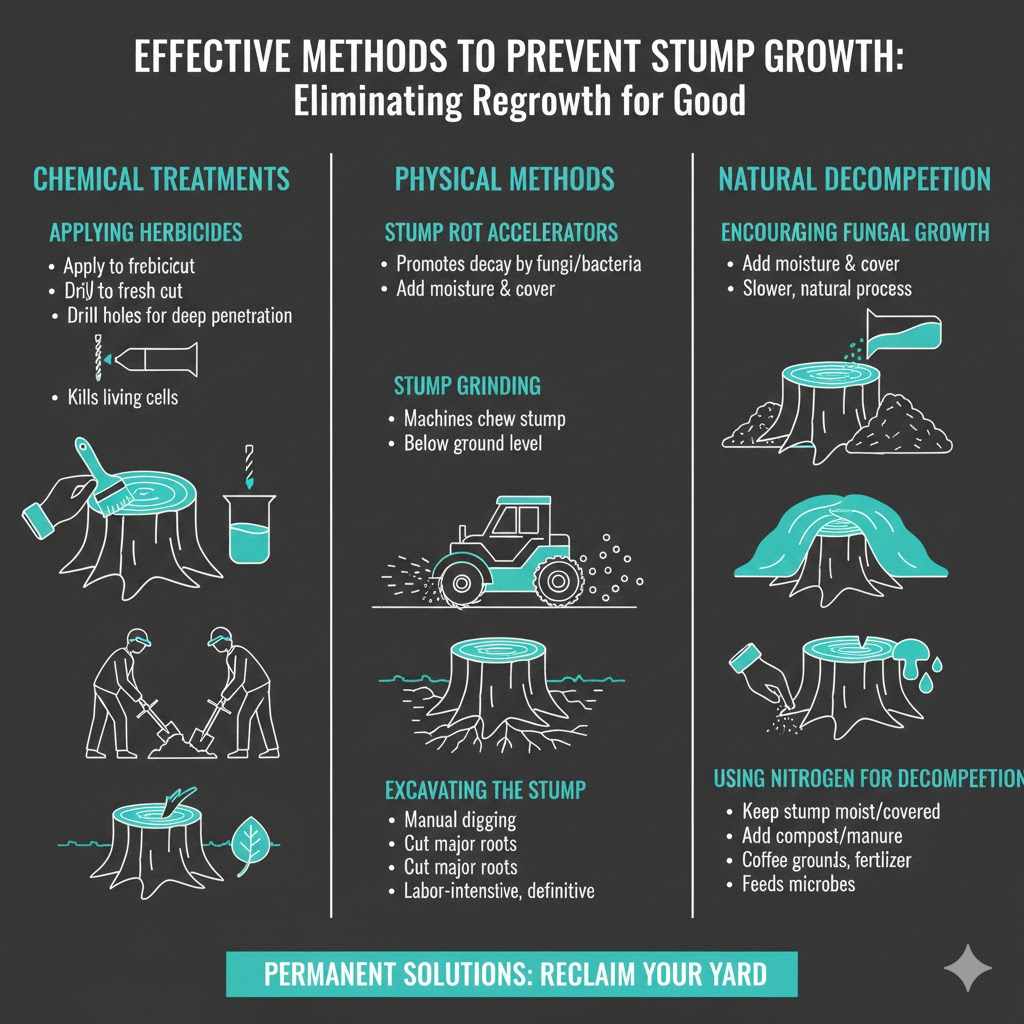
Chemical treatments are often used to accelerate the decay of stumps or to kill them outright, preventing regrowth. The most common approach involves using herbicides, typically those containing glyphosate or triclopyr. These chemicals are absorbed by the living tissue of the stump.
After cutting the tree, it’s best to apply the herbicide as soon as possible. The fresh cut surface is highly absorbent. Some methods involve drilling holes into the stump and pouring the herbicide into them.
This ensures deeper penetration into the wood and roots.
Another effective chemical method is using stump rot accelerators. These products are not herbicides but are designed to promote rapid decomposition by introducing beneficial fungi and bacteria. They often contain nitrogen and other nutrients that help wood-decaying organisms thrive.
Applying Herbicides
When applying herbicides, safety is paramount. Always wear protective gear, including gloves, eye protection, and long sleeves. Follow the product instructions carefully.
Dilute the herbicide according to the label directions.
For maximum effectiveness, apply the herbicide immediately after cutting the tree. Use a brush or sprayer to cover the entire exposed surface of the stump, including any exposed roots. For very large stumps, drilling holes into the stump and filling them with the herbicide can ensure better absorption.
The herbicide works by being absorbed into the stump’s vascular system, killing the living cells and preventing future sprouting. It may take several weeks or months to see the full effect, with the stump gradually drying out and softening.
Stump Rot Accelerators
Stump rot accelerators are different from herbicides. They don’t kill the stump directly. Instead, they introduce or encourage organisms that break down wood, like fungi and bacteria.
These products often contain nutrients that these organisms need to grow.
To use them, you typically drill holes into the stump and pour the accelerator into the holes and onto the surface. Keeping the stump moist can help the process along. You might also cover the stump with soil or mulch to retain moisture and heat, creating an ideal environment for decomposition.
This method is a slower process than chemical kill treatments, but it is a more natural way to deal with the stump. It effectively turns the stump into compost over time, and importantly, prevents regrowth because the living cells are being consumed by decomposers.
Physical Methods of Stump Removal
Physical methods involve removing the stump entirely or covering it in a way that prevents it from growing. These methods can be labor-intensive but are often the quickest ways to get rid of a stump permanently.
The most direct physical method is grinding the stump. Stump grinders are powerful machines that essentially chew up the stump, turning it into wood chips. This is a very effective way to remove a stump below ground level, eliminating any possibility of regrowth.
Another approach is to dig out the stump. This is feasible for smaller stumps. It involves excavating around the stump to expose and cut away the major roots.
It’s hard work but a definitive solution.
Stump Grinding
Stump grinding is a service offered by many landscaping companies, or you can rent a stump grinder. The machine has a rotating cutting disc that chips away at the stump. It can be adjusted to grind the stump several inches below the soil surface.
This method is very efficient. It reduces the stump to a pile of wood chips and sawdust. These chips can then be used as mulch elsewhere in the garden, or removed.
Grinding is generally considered one of the most effective ways to ensure no regrowth.
The process can be noisy and requires careful operation due to the powerful machinery involved. However, for a quick and complete stump removal, grinding is a top choice.
Excavating the Stump
Digging out a stump is a more manual process. You’ll need a shovel, a pickaxe, and possibly a saw or axe to cut through thick roots. Start by digging a trench around the stump to expose the roots.
Once the roots are visible, cut them away from the stump. Continue digging and cutting until you can loosen and remove the stump. For larger stumps, this can be a very demanding task.
After removal, the hole can be filled with soil. This method leaves no living parts of the stump behind, so regrowth is impossible. It’s a practical solution if you have the physical ability and tools for the job.
Natural Decomposition Methods
If you prefer to avoid chemicals and strenuous digging, you can encourage natural decomposition. While slower, this method allows the stump to break down over time. Several natural accelerators can help.
One common method is to keep the stump moist and covered. This creates an environment where fungi and bacteria can thrive and break down the wood. Adding nitrogen-rich materials can also speed up the process.
Another natural approach involves using Epsom salts or a high-nitrogen fertilizer. These can help to dehydrate the stump and promote decay, making it more palatable for decomposing organisms.
Encouraging Fungal Growth
Fungi are nature’s primary recyclers of wood. To encourage fungal growth, you need to provide the right conditions: moisture, air, and a food source (the stump itself). Keeping the stump damp is crucial.
Drilling holes into the stump can increase its surface area for fungal colonization. You can also add compost or manure to the stump. These materials introduce beneficial microbes and nutrients that support wood-decaying fungi.
Covering the stump with a tarp or mulch can help retain moisture and heat, creating a more favorable environment for fungal activity. Patience is key with this method, as it can take months or even years for the stump to fully decompose.
Using Nitrogen for Decomposition
Nitrogen is a key nutrient for decomposers. Adding nitrogen to a stump can significantly speed up its decay. High-nitrogen materials like coffee grounds, grass clippings, or manure can be layered onto and into the stump.
Alternatively, a high-nitrogen fertilizer can be applied. Drill holes into the stump and fill them with granular fertilizer, then add water. This provides a direct food source for the microbes that break down wood.
The goal is to essentially “feed” the decomposition process. By providing ample nitrogen, you encourage rapid growth of fungi and bacteria, which consume the stump’s organic matter. This method works best when combined with keeping the stump moist and covered.
Frequently Asked Questions About Stump Painting
Question: Will painting a tree stump prevent it from rotting?
Answer: Painting a tree stump might slightly slow down the surface drying, but it won’t prevent rotting. Rotting is a natural decomposition process that happens over time. Paint doesn’t kill the fungi and bacteria that cause rot; in fact, it might even trap moisture, potentially aiding fungal growth underneath.
Question: Can I paint a stump with latex paint?
Answer: Yes, you can use latex paint. It’s common for people to paint stumps with various colors for decorative purposes. However, as discussed, this paint will not stop the stump from growing or decaying.
It’s purely for appearance or a very minor, temporary surface protection.
Question: How long does it take for a painted stump to disappear?
Answer: A painted stump will disappear at the same rate as an unpainted one, which is through natural decomposition. This process can take many years, anywhere from five to ten years or even longer, depending on the type of wood, size of the stump, and environmental conditions.
Question: Does painting a stump help deter insects?
Answer: Painting a stump offers very little deterrent effect on insects. While it might mask odors temporarily, insects are attracted to the wood itself and the moisture it holds. For insect control, more direct methods like specific treatments or removal are needed.
Question: Will painting over a stump sprout stop new growth?
Answer: No, painting over a stump sprout will not stop new growth. Sprouts emerge from living tissue within the stump or roots. Paint on the surface does not reach or kill this tissue, so new shoots will continue to emerge if the stump remains alive.
Conclusion
In summary, while painting a tree stump might offer a brief cosmetic change, it will not stop it from growing. To prevent stumps from sprouting, you need to use methods that kill the living tissue or remove the stump. Effective strategies include chemical treatments, stump grinding, or encouraging natural decomposition.
Choose the method that best suits your needs and effort.