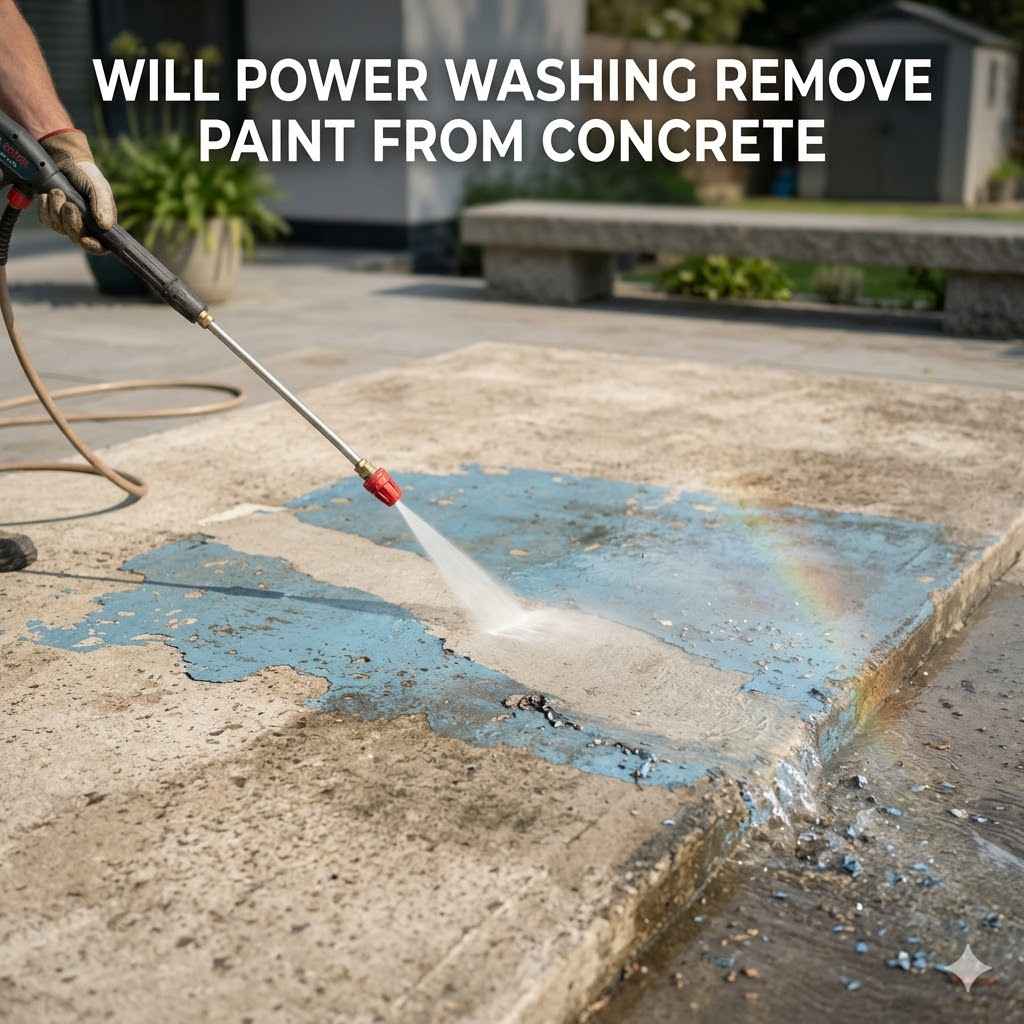
Will Power Washing Remove Paint from Concrete
Many people wonder if power washing can take off paint from concrete surfaces. It can seem tricky, especially if you’re new to it. You might worry about making a mess or damaging your concrete.
Don’t stress! We’ll walk you through this simply, step-by-step. Get ready to learn exactly how to handle paint removal with a power washer so you can get great results.
Understanding Power Washing And Paint On Concrete
This section explores the basic principles behind using a power washer to remove paint from concrete. It covers how the water pressure works and what factors influence its effectiveness. We will also look at why some paint is harder to remove than others.
This will help you understand the process better before you start.
How Power Washing Works
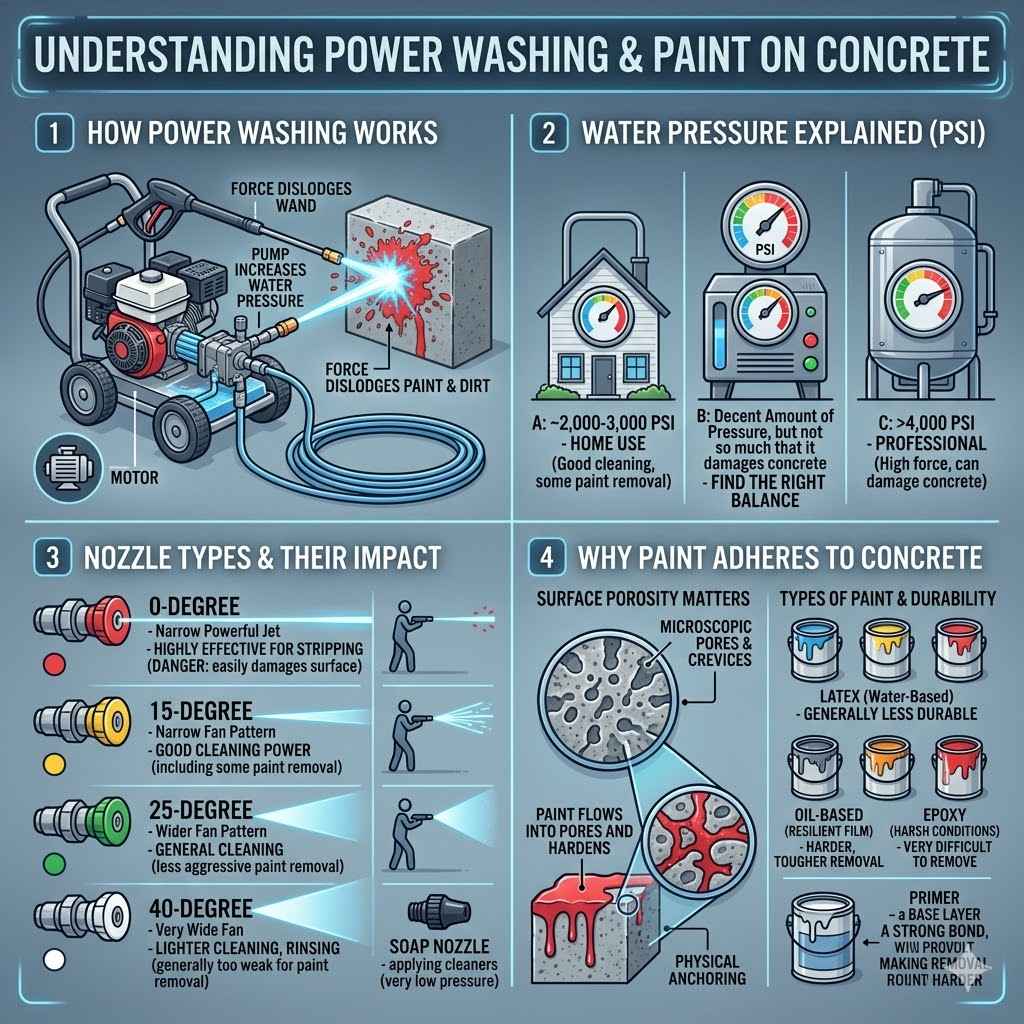
Power washing, also known as pressure washing, uses a high-pressure stream of water to clean surfaces. A motor powers a pump that increases the water pressure significantly. This pressurized water is then forced through a nozzle, creating a concentrated jet.
The force of this water jet can dislodge dirt, grime, mold, and sometimes, unwanted coatings like paint. The effectiveness depends on the water pressure, the type of nozzle used, and the condition of the surface being cleaned. Higher pressure settings can remove tougher substances but also pose a greater risk of damage to softer materials.
Think of it like using a strong hose spray versus a gentle garden hose. The power washer’s stream is much more forceful. This force is what makes it a potential tool for paint removal.
Water Pressure Explained
Water pressure is measured in pounds per square inch (PSI). For residential power washers, the PSI can range from 1,000 to 4,000 PSI. A higher PSI means more force.
For paint removal from concrete, you usually need a decent amount of pressure, but not so much that it damages the concrete itself. Finding the right balance is key.
A typical home user might have a machine around 2,000-3,000 PSI. This is often enough for many cleaning tasks.
Nozzle Types And Their Impact
The nozzle on a power washer is like the tip of a spray bottle. It changes the spray pattern and intensity.
Common nozzles include:
- 0-degree nozzle: This shoots a very narrow, powerful red jet of water. It’s highly effective for stripping but can easily damage surfaces if held too close or for too long.
- 15-degree nozzle: A yellow nozzle that sprays in a narrow fan pattern. It offers good cleaning power for tough jobs, including some paint removal.
-
25-degree nozzle: A green nozzle with a wider fan.
It’s good for general cleaning and less aggressive paint removal.
- 40-degree nozzle: A white nozzle with a very wide fan. This is for lighter cleaning and rinsing and is generally too weak for paint removal.
- Soap nozzle: Usually black, this nozzle mixes detergent with the water, but at a much lower pressure, for applying cleaners.
For removing paint from concrete, a 15-degree or 25-degree nozzle is often the best starting point. You might need to experiment to see what works best for your specific paint and concrete.
Why Paint Adheres To Concrete
Paint sticks to concrete because of several factors, including the surface’s porosity and the type of paint used. Concrete is a porous material, meaning it has tiny holes and rough textures. This allows paint to bond with the surface physically.
The binders in the paint seep into these pores, creating a strong mechanical bond. Also, the surface chemistry of concrete can create chemical bonds with certain paint formulations, further strengthening the adhesion.
Different types of paint, like latex, oil-based, or epoxy, will adhere differently. Older paints might have degraded binders, making them easier to remove. Newer, high-quality paints with strong binders and primers will be more challenging.
Surface Porosity Matters
Concrete’s surface isn’t perfectly smooth. It has microscopic pores and crevices.
When you paint concrete, these pores act like tiny anchors for the paint. The paint flows into them and then hardens. This creates a connection that isn’t just on the surface but also within it.
The more porous the concrete, the better the paint will grip it. A sealed or very smooth concrete surface will hold paint less securely than a rough, unsealed one.
Types Of Paint And Their Durability
The kind of paint on your concrete makes a big difference. Latex paints are water-based and generally less durable than oil-based paints.
Oil-based paints often form a harder, more resilient film. Epoxy coatings are even tougher. They are designed for high traffic and harsh conditions, making them very difficult to remove.
Primers also play a role. A good primer creates a strong bond between the concrete and the paint. This makes the entire paint layer harder to lift off.
Will Power Washing Remove Paint From Concrete
This section directly addresses the main question. We’ll explore the scenarios where power washing is effective for paint removal and when it might not be enough. It details the conditions that make paint removal successful and the limitations of relying solely on pressure washing.
Understanding these nuances is crucial for setting realistic expectations and choosing the right approach.
When Power Washing Is Effective
Power washing can be very effective at removing paint from concrete under certain conditions. It works best on older, peeling, or poorly adhered paint. If the paint is already flaking or bubbling, the high-pressure water can easily lift it away.
Thin layers of paint, especially latex-based paints that have lost their flexibility, are also good candidates for power washing. The water pressure can get under the edges of the paint chips and break the bond. You might also find success if the concrete surface is relatively sound and can withstand the pressure.
For light to moderate paint coverage, power washing can save you a lot of time and effort compared to manual scraping. It’s a good first step for many concrete painting projects.
Loose And Peeling Paint
If you see paint that is already coming off in flakes or seems to be lifting from the concrete surface, power washing is likely to work well.
The water jet can easily slip under these loose edges. It then pushes the paint off. It’s like using a strong spray to peel a sticker that’s already coming up.
This is the ideal scenario for using a power washer for paint removal. You’re essentially assisting a process that has already begun.
Thin Or Water-Based Paints
Thinner paints, particularly latex or acrylic-based paints, are generally easier to remove with power washing.
These paints are more flexible when applied but can become brittle over time. They also tend to form thinner films on the surface compared to thicker oil-based paints.
The water pressure can penetrate and break down the binder in these thinner paints more effectively.
When Power Washing May Not Be Enough
However, power washing alone is not always sufficient for complete paint removal. Thick layers of durable paint, like multiple coats of oil-based paint or epoxy coatings, can be very stubborn. These paints form strong, often chemically bonded layers that pressure washing struggles to penetrate.
If the paint is firmly adhered, has been applied in many thick coats, or is a high-performance coating, you will likely need to supplement power washing with other methods. These might include chemical strippers, sanding, or using specialized paint removal equipment.
It’s important to assess the paint’s condition and type before relying solely on power washing. You don’t want to waste time and water if it’s unlikely to yield the desired results.
Thick Multi-Layer Paint Jobs
When concrete has been painted multiple times over the years, each layer adds thickness and strength.
These thick paint layers can form a solid, almost seamless barrier. The power washer might only manage to strip off the top layer or just cause some surface etching.
Getting through several layers of paint with just water pressure can be incredibly time-consuming and may still leave significant residue.
Tough Coatings Like Epoxy
Epoxy paints and other high-performance coatings are designed for extreme durability. They create a very hard and chemically resistant finish.
These coatings bond exceptionally well to concrete. The power washer’s water pressure simply isn’t strong enough to break these robust chemical and physical bonds.
For epoxy or similar coatings, you will almost certainly need chemical strippers or aggressive mechanical methods like grinding.
How To Power Wash Paint Off Concrete Effectively
This section provides practical, actionable advice on how to use a power washer to remove paint from concrete. It details the preparation steps, recommended settings, techniques, and safety precautions. The goal is to guide users through the process safely and efficiently, maximizing the chances of success and minimizing potential damage.
Preparation Is Key
Before you even turn on the power washer, proper preparation is essential. This involves protecting surrounding areas, preparing the concrete surface, and ensuring you have the right tools. Skipping these steps can lead to unintended damage or poor results.
First, clear the area of any furniture, plants, or other items that could be damaged by overspray or high-pressure water. Cover sensitive items like windows, doors, or electrical outlets with plastic sheeting and painter’s tape.
Next, sweep the concrete surface to remove loose dirt and debris. This will ensure that the power washer is working directly on the paint, not on accumulated grime.
Clearing And Protecting The Area
Make sure the area around your concrete project is clear. Move any planters, patio furniture, or toys away.
Use drop cloths or plastic sheeting to cover anything you can’t move that might be sensitive to water or debris. This includes walls, doors, and even landscaping you want to protect.
Tape down the edges of the plastic sheeting securely to prevent water from seeping underneath. This simple step saves a lot of cleanup later.
Pre-Treating The Surface
Sometimes, pre-treating the paint can help loosen it before power washing. You can use a chemical paint stripper designed for concrete or a strong degreaser.
Follow the product instructions carefully. Apply the stripper or cleaner and let it sit for the recommended time. This can help break down the paint’s binder, making it more susceptible to the pressure washer.
After the soaking time, rinse the area thoroughly with plain water before you start power washing.
Choosing The Right Settings And Techniques
Selecting the correct nozzle and water pressure is critical. Start with a wider fan nozzle (like 25 degrees) and a moderate pressure setting. You can always increase the pressure or switch to a narrower nozzle if needed, but it’s harder to undo damage from too much pressure.
Hold the wand at a consistent distance from the concrete surface, usually about 12-18 inches. Move the wand in slow, overlapping strokes, working in a systematic pattern. Avoid lingering in one spot, as this can etch the concrete.
If a particular area isn’t responding, gradually increase the pressure or move to a narrower nozzle. Always test a small, inconspicuous area first to see how the concrete and paint react.
Selecting Your Nozzle And Pressure
As mentioned, start with a 25-degree nozzle. If that’s not doing enough, try a 15-degree nozzle.
For pressure, begin with a lower setting if your machine allows. If not, simply maintain a greater distance from the concrete. The goal is to remove paint, not gouge the concrete.
Experimentation is key. Test on a small, hidden spot to gauge the impact before committing to a larger area.
The Washing Technique
Hold the wand at a slight angle to the surface. This helps the water get under the paint.
Move the wand in sweeping motions, like you’re painting the concrete yourself. Overlap each stroke slightly to ensure even cleaning.
Work in manageable sections. This prevents the water from drying on the surface before you can rinse it, which can leave streaks.
Safety First
Always wear safety glasses or goggles to protect your eyes from flying debris and water spray. Wear sturdy, closed-toe shoes to protect your feet and provide good traction.
Be aware of your surroundings and avoid spraying water towards people, pets, or electrical outlets. Power washers generate significant force, and improper use can cause injury or damage.
If you are using a detergent, ensure it is safe for concrete and the environment. Always read and follow the manufacturer’s instructions for both the power washer and any cleaning solutions.
When To Use Chemical Strippers
If power washing alone isn’t removing the paint, chemical strippers are often the next step. These products are designed to break down the chemical bonds of paint, making it much easier to remove.
They are particularly useful for thick layers of paint, stubborn oil-based paints, or tough coatings like epoxy. While they require careful handling and good ventilation, they can significantly reduce the labor involved.
After applying the stripper, you’ll typically wait for it to work, then scrape away the softened paint. Power washing can then be used to rinse away residue and any remaining paint particles.
Types Of Chemical Strippers
There are several types of chemical strippers available.
- Solvent-based strippers: These use strong chemicals like methylene chloride (though its use is restricted in some areas) or NMP (N-methyl-2-pyrrolidone) to dissolve paint. They are very effective but require excellent ventilation.
-
Caustic strippers: These use alkaline chemicals like lye (sodium hydroxide) to saponify oil-based paints.
They work well but can etch concrete if not neutralized properly.
- Bio-based or citrus strippers: These are less toxic and environmentally friendly options, often derived from plant materials. They work slower but are safer to use.
Always choose a stripper that is specifically recommended for concrete and the type of paint you are trying to remove.
Application And Removal Process
Apply the stripper evenly using a brush or roller, following the manufacturer’s instructions. Wear protective gear, including gloves, goggles, and a respirator if recommended.
Allow the stripper to dwell for the time specified. You will see the paint begin to bubble, soften, or wrinkle.
Use a plastic scraper or putty knife to gently remove the softened paint. Work in small sections. Dispose of the removed paint and stripper residue properly, as it can be hazardous waste.
Alternatives And Complementary Methods
This section explores other options besides power washing and chemical stripping for removing paint from concrete. It covers mechanical methods like grinding and sanding, as well as newer technologies. The aim is to provide a comprehensive overview so readers can choose the best method or combination of methods for their specific project.
Mechanical Paint Removal
Mechanical methods involve using tools to physically remove the paint. These can be highly effective but also labor-intensive and can potentially damage the concrete surface if not used carefully.
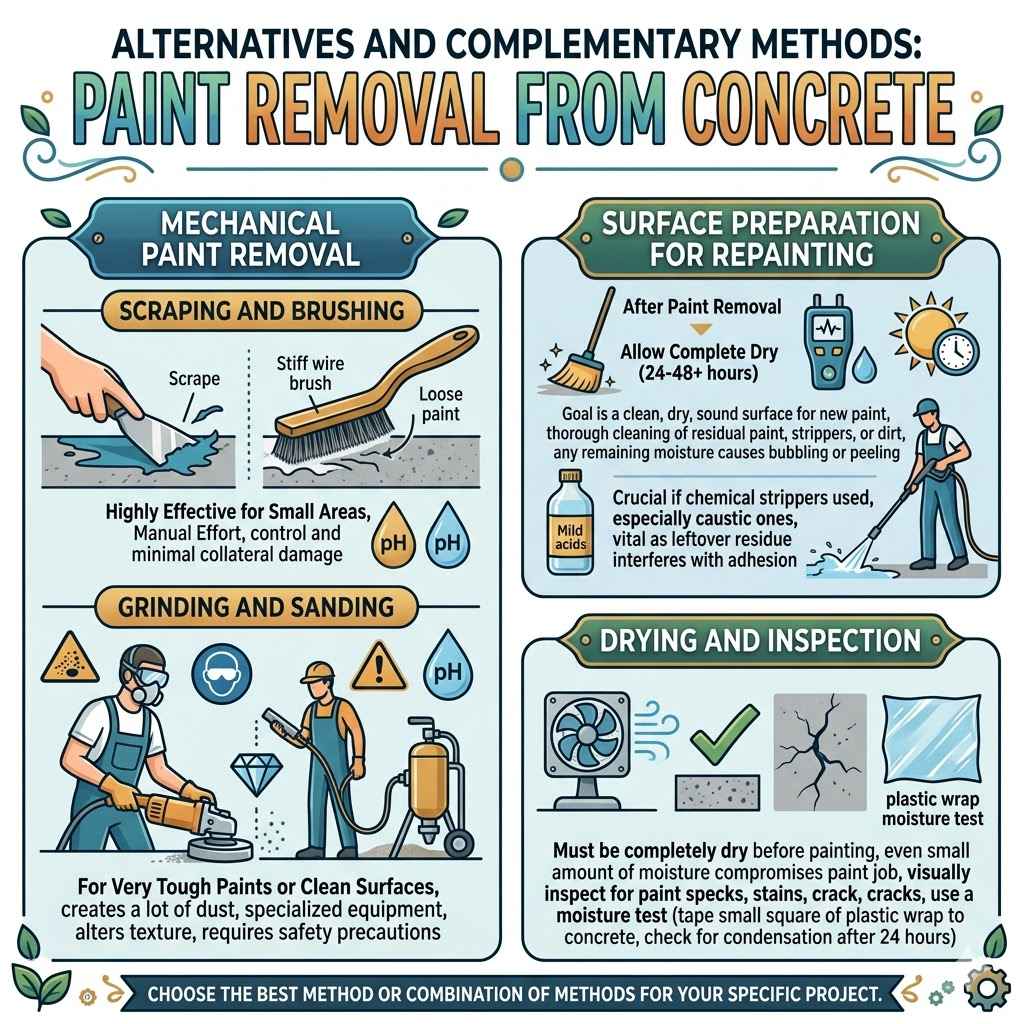
Examples include using a wire brush, scrapers, or even more aggressive methods like grinders or sanders. For small areas, manual scraping might suffice. For larger areas or tougher paints, power tools become necessary.
These methods are often used when chemical strippers are not feasible or when power washing has failed to remove the bulk of the paint.
Scraping And Brushing
For small areas or loose paint, a stiff wire brush or a paint scraper can be quite effective. This is a manual method that requires physical effort.
You would use a scraper to lift off peeling paint and a wire brush to scrub away more stubborn residue. This is best for touch-ups or very limited paint removal.
The benefit is control and minimal collateral damage. The downside is the time and effort involved for larger areas.
Grinding And Sanding
For very tough paints or when a completely clean surface is needed, grinding or sanding is an option.
Concrete grinders, often with diamond attachments, can effectively remove paint down to the concrete surface. Sandblasting is another powerful method, using abrasive materials propelled at high speed.
These methods are very effective but create a lot of dust, require specialized equipment, and can alter the texture of the concrete. Safety precautions, including dust masks or respirators, are crucial.
Surface Preparation For Repainting
Regardless of the removal method, proper surface preparation is crucial before repainting. The goal is to create a clean, dry, and sound surface that will ensure the new paint adheres well and lasts.
After paint removal, the concrete should be thoroughly cleaned to remove any residual paint particles, stripper chemicals, or dirt. A final rinse with clean water is essential.
Allow the concrete to dry completely. This may take 24-48 hours or longer, depending on humidity and temperature. A moisture meter can help determine if the concrete is dry enough.
Any remaining moisture can cause paint to bubble or peel later.
Neutralizing And Rinsing
If you used chemical strippers, especially caustic ones, you must neutralize the concrete surface. This usually involves a mild acid solution, like diluted vinegar or a specific concrete neutralizer.
Follow the stripper manufacturer’s instructions for neutralization. After neutralizing, rinse the surface thoroughly with clean water to remove all traces of chemicals.
A clean rinse is vital. Any leftover residue can interfere with the adhesion of new paint.
Drying And Inspection
Concrete must be completely dry before painting. Even a small amount of moisture can compromise the new paint job.
Visually inspect the surface for any remaining paint specks or stains. Check for cracks or damage that may need repair.
You can perform a simple test: tape a small square of plastic wrap to the concrete and leave it for 24 hours. If condensation forms underneath, the concrete is still too wet.
Frequently Asked Questions
Question: Can power washing remove all types of paint from concrete?
Answer: No, power washing is most effective on loose, peeling, or thin layers of paint, especially water-based types. It typically struggles with thick, multi-layered paint jobs or durable coatings like epoxy, which may require chemical strippers or mechanical methods.
Question: What is the safest way to power wash paint off concrete?
Answer: Start with a wider nozzle (like 25 degrees) and moderate pressure, holding the wand about 12-18 inches away. Always wear safety glasses and sturdy shoes. Test a small area first and move the wand in consistent, overlapping strokes to avoid damaging the concrete.
Question: How long does it take for concrete to dry after power washing?
Answer: Concrete can take 24-48 hours or longer to dry completely after power washing, depending on weather conditions like humidity and temperature. Ensure it is fully dry before repainting to prevent adhesion issues.
Question: Should I use a chemical stripper before power washing?
Answer: You might consider a chemical stripper if the paint is thick, very durable, or has not been successfully removed by power washing alone. A stripper can help loosen stubborn paint, making it easier for the power washer to finish the job.
Question: Will power washing damage my concrete?
Answer: Yes, if done improperly. Using too much pressure, the wrong nozzle (like a zero-degree), or holding the wand too close can etch, gouge, or otherwise damage the concrete surface. Always start with lower settings and test first.
Wrap Up
So, will power washing remove paint from concrete? Often, yes, especially for older, loose paint. It’s a great first step.
For tougher jobs, combine it with other methods. Always prepare well and use the right tools and pressure. You can achieve a clean surface ready for its next coat.