How to Remove Paint From a Door (Step-by-Step Guide)
Removing paint from a door comes down to picking the right method for the job — chemical gel strippers dissolve multiple layers on carved trim, a heat gun clears flat panels fastest, and sanding works for a single thin coat. Homes built before 1978 must be tested for lead paint first, per EPA rules, before any sanding or scraping begins. This guide covers all three methods, the lead-safety check, and how to prep the door for repainting.
Quick Answer
To remove paint from a door: test for lead if the home predates 1978, then choose a method — chemical gel stripper for multiple layers or carved trim, a heat gun (500-750°F, held about 4 inches away) for flat panels, or 80-220 grit sandpaper for a single thin coat. Scrape with the wood grain, then clean, fill, sand smooth, and prime before repainting.
Check for Lead Paint Before You Start
If your home was built before 1978, the EPA requires you to either test the paint or assume it contains lead before sanding, scraping, or heat-stripping it. Use an EPA-recognized lead test kit on a small area, or hire a certified lead inspector. Lead paint releases toxic fumes above roughly 200°F, so a heat gun is not safe on untested paint in an older home — dry sanding and scraping are also restricted under the EPA’s Renovation, Repair, and Painting (RRP) rule.
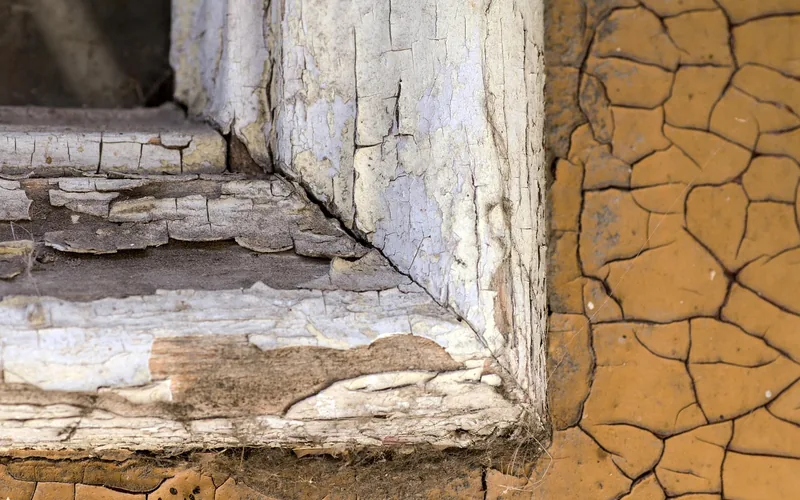
If the test comes back positive, mist the area with water before any scraping or sanding to keep dust down, use a HEPA vacuum attachment on power sanders, and dispose of paint chips and dust as hazardous waste per your local regulations. When in doubt on an older door, hire a lead-certified contractor rather than DIY-ing it.
Tools and Materials Needed
- Chemical paint stripper (gel or citrus-based) — for multiple layers or carved detail
- Heat gun — for flat panels, fastest on thick coats
- Sandpaper, 80-220 grit — for a single thin coat or final smoothing
- Putty knife or contour scraper — matched blade profiles help on moulded panels
- Drop cloths or old newspapers — to catch chips and dust
- Respirator mask, gloves, and safety goggles — required for chemical fumes and dust
- Wood filler and primer — for finishing before repainting
Preparation
Lay down drop cloths to catch paint chips and dust, and remove hardware like knobs, hinges, and locks so you don’t damage or strip them by accident. If possible, take the door off its hinges and lay it flat on sawhorses — this keeps stripper from dripping and makes scraping easier. Open windows or work outside for ventilation, especially with chemical strippers or a heat gun.
Choosing a Method: Chemical Stripper vs. Heat Gun vs. Sanding
The right method depends on how many layers of paint you’re dealing with and how detailed the door’s surface is. Flat panel doors strip fastest with heat; ornate mouldings and multiple layers respond better to chemical gel.
| Method | Works Best For | Time |
|---|---|---|
| Chemical gel stripper | Multiple paint layers (up to ~15), carved trim, mouldings | 15-30 min dwell time, then scrape |
| Heat gun | Large flat panels, thick coats, no chemical smell | Fast per section, slower overall on detail work |
| Sanding (80-220 grit) | A single thin coat, or final smoothing after stripping | Slow on thick paint, best as a finishing step |
Best Heat Gun Pick
Dual-Temp Heat Gun Paint Stripper – $99.90
A dual-temperature gun gives you the 500-750°F range this guide’s heat gun steps call for, without the single fixed setting that risks scorching flat door panels.
- Best for: Large flat door panels with thick, multi-coat paint
- Why we picked it: Dual settings match the temperature range this guide recommends
- Main drawback: Not ideal for carved trim — pair with a chemical stripper for mouldings
Compare more paint removal tools
 Eco-Friendly Pick Citrus Paint Stripper Gel, 1 Qt – $18.26
|
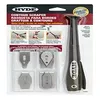 For Mouldings Contour Scraper, 6 Blade Profiles – $30.69
|
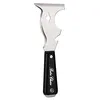 Budget Pick 10-in-1 Painters Tool Scraper – $6.26
|
As an Amazon Associate we earn from qualifying purchases.
Method 1: Chemical Paint Stripper
- Apply the gel: Brush a thick, even coat of stripper over the paint, working in small sections.
- Let it dwell: Wait the time on the label — usually 15-30 minutes — until the paint bubbles and softens.
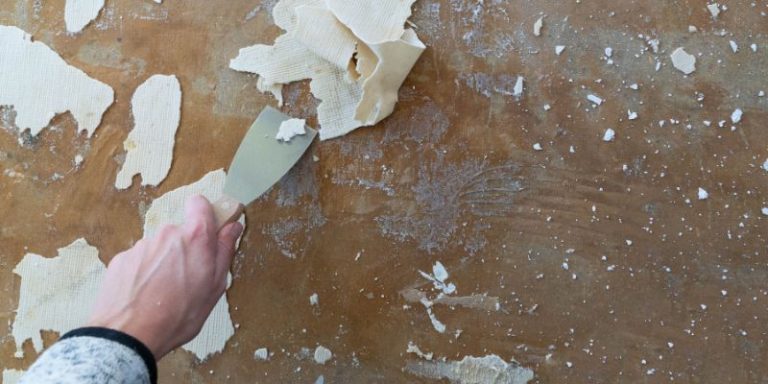
- Scrape it off: Use a plastic or metal putty knife, working with the wood grain to lift the softened paint.
- Repeat on stubborn spots: Multiple thin coats work better than one thick pass on doors with many paint layers.
- Neutralize and clean: Wipe with the neutralizer or solvent the label recommends, then rinse with water if the product allows it.
Method 2: Heat Gun
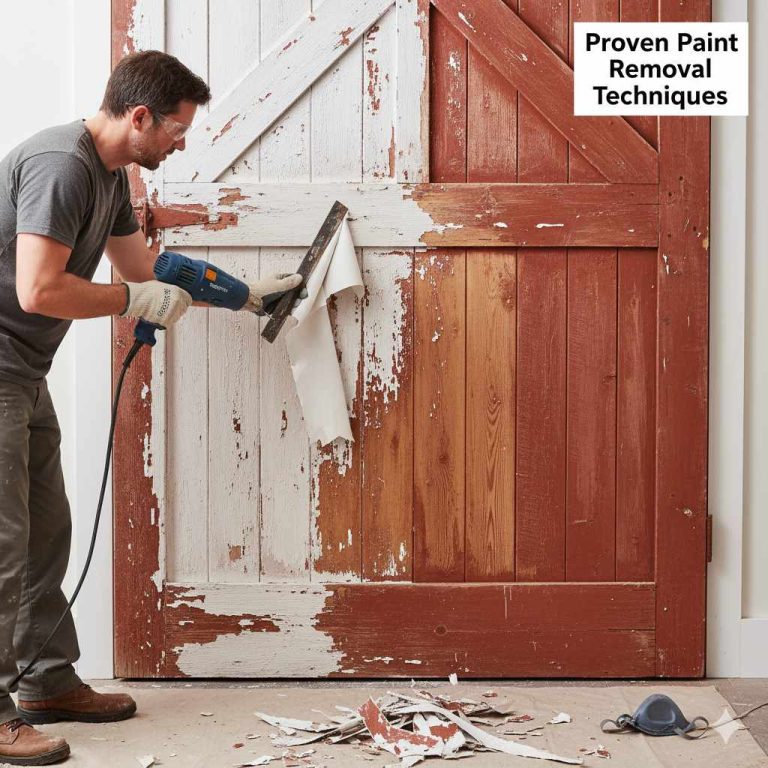
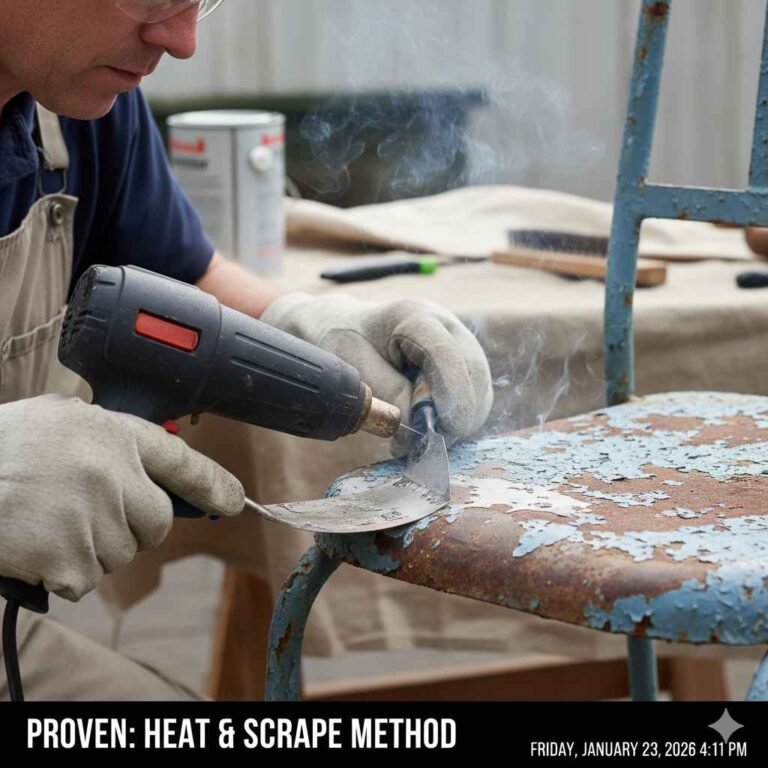
Set the heat gun to 500-750°F for standard latex or oil paint on wood, and hold it roughly 4 inches from the surface, moving it continuously — holding it still in one spot chars the wood. Wood itself ignites at around 480°F under sustained heat, so never leave the gun pointed at one area, and keep it away from any paint thinner, mineral spirits, or other flammable solvents in the room.
- Heat a small section: Aim the gun at a 6-8 inch area, keeping it moving in a steady sweep.
- Watch for bubbling: Once the paint bubbles and softens, pull the gun back.
- Scrape immediately: Lift the softened paint with a putty knife while it’s still warm and pliable.
- Move to the next section: Work in overlapping passes across the whole door.
- Let the wood cool: Check for scorch marks before moving to sanding or finishing.
Method 3: Sanding
Sanding works best for a single thin coat, or as a finishing step after chemical stripping or heat gun work. Start with 80-100 grit to remove the bulk of remaining paint, then switch to 120-220 grit to smooth the bare wood. Sand with the grain, not across it, to avoid visible scratch marks under the new paint.
Troubleshooting Common Issues
- Stubborn residue in grooves: Use a suitable solvent like mineral spirits on a small test area first, then work it in with a stiff-bristle brush. The same dwell-and-scrape logic applies to other painted surfaces — see our guide on removing epoxy paint from concrete if you’re tackling a garage floor next.
- Risk of gouging soft wood: Use gentle, wide scrapers rather than a narrow blade that can dig in and leave a groove.
- Paint won’t soften evenly: Work in smaller sections and reapply stripper or reheat rather than forcing a large area at once.
- Scorch marks from a heat gun: Sand them out with fine-grit paper, or fill deep marks with wood filler before priming.
Preparing the Door for Repainting
Once the paint is off, wash the door with warm, soapy water to remove dust and residue, then let it dry completely. Sand the bare wood smooth, fill any cracks, dents, or old nail holes with wood filler, and sand again once the filler cures. Check whether your paint already includes primer before buying a separate can — some paint-and-primer products skip that step, and our interior paint comparison can help pick a finish if you’re repainting an interior door. If you’re budgeting the full job, our guide on what it costs to paint a door frame covers typical material and labor prices.
Safe Disposal and Eco-Friendly Options
Never pour leftover stripper, paint, or rinse water down the drain or onto the ground — take unused product and paint chips to a household hazardous waste facility or paint recycling center. For a gentler approach on light coats, a paste of vinegar and baking soda or a citrus-based solvent can loosen paint without harsh chemical fumes, though neither works as fast as a gel stripper on multiple layers.
“If you proceed with sanding or scraping, mist the area with a spray bottle before you start — dry sanding and dry scraping of painted surfaces are both prohibited practices under the RRP Rule once lead paint is present or assumed.”
📊 Wood ignites at roughly 480°F under sustained heat, and lead paint releases toxic fumes above about 200°F — both are reasons a heat gun requires steady movement and a prior lead test on any door in a pre-1978 home. — Source: EPA, Lead-Safe Renovations for DIYers
Frequently Asked Questions
What Are the Best Methods for Removing Paint From a Wooden Door Without Damaging the Surface?
A heat gun or paint scraper used gently is the safest way to lift paint without damaging wood. Chemical strippers work well too — choose a low-toxicity gel and apply it with proper ventilation. Sanding should be a last resort, done carefully with fine-grit paper. Always test any method on a small, hidden area first.
How Can I Safely Remove Paint From a Metal Door?
Use a paint stripper or solvent formulated for metal surfaces, applied per the manufacturer’s instructions in a well-ventilated area with gloves and eyewear. Once the paint softens, scrape gently with a plastic or metal scraper to avoid gouging the metal, then clean with soapy water and dry before priming with a rust-inhibiting primer.
What Tools Do I Need for Effective Paint Removal From a Door?
You’ll need a paint scraper or putty knife, sandpaper or a power sander, a chemical paint stripper for tough spots, and a wire brush for stubborn areas. Add protective gear — gloves, a respirator mask, and a drop cloth — plus a heat gun if you’re tackling thick, multi-layer paint.
Are There Eco-Friendly Solutions for Removing Paint From a Door?
Yes — a paste of vinegar and baking soda can soften light paint without harsh fumes, and biodegradable citrus-based strippers are a less toxic alternative to solvent-based gels. A heat gun also avoids chemicals entirely, though it takes more time and care to use safely.
How Do I Prepare a Door for Repainting After Removing Old Paint?
Clean the surface thoroughly, then sand gently to smooth rough patches and wipe away dust with a damp cloth. Fill holes or dents with wood filler, let it dry, and sand again if needed. Finish with a primer suited to the door’s material — wood or metal — to create a uniform base for the new paint.
Do I Need to Test for Lead Paint Before Stripping a Door?
Yes, if your home was built before 1978. The EPA requires testing with an approved kit or hiring a certified inspector before sanding, scraping, or heat-stripping the paint. If you skip testing, you must treat the paint as if it contains lead and follow full lead-safe work practices.
Conclusion
Removing paint from a door is straightforward once you match the method to the job: chemical gel for detailed trim and multiple layers, a heat gun for flat panels, sanding for a single thin coat or final smoothing. Test for lead first on any door in a home built before 1978, work in a ventilated area, and always finish with a clean, primed surface before repainting.
Sponsored / affiliate links. As an Amazon Associate I earn from qualifying purchases. I may earn additional commission from eligible campaigns.