Are Clorox Toilet Tablets Safe for Septic Systems?
A common question homeowners ask is, Are Clorox Toilet Tablets Safe for Septic Systems? This is because many people worry about damaging their septic systems with harsh chemicals. Figuring out whether or not something is safe can feel like a puzzle for beginners. Don’t worry, though! We’ll walk through everything step-by-step to give you a clear answer. We’ll start with the basics, explore the potential problems, and then give you some easy ways to keep your septic system healthy. Ready to find out what you need to know?
What You Need to Know About Septic Systems
Septic systems are an important part of many homes, especially in areas without city sewer lines. They’re basically underground wastewater treatment plants that break down waste. This process happens in two main parts: the septic tank and the drain field. Understanding how these systems work is the first step in keeping them running smoothly and avoiding costly repairs. A healthy septic system keeps your home safe and protects the environment. That is why it’s important to know the right way to care for them.
Septic Tank Basics
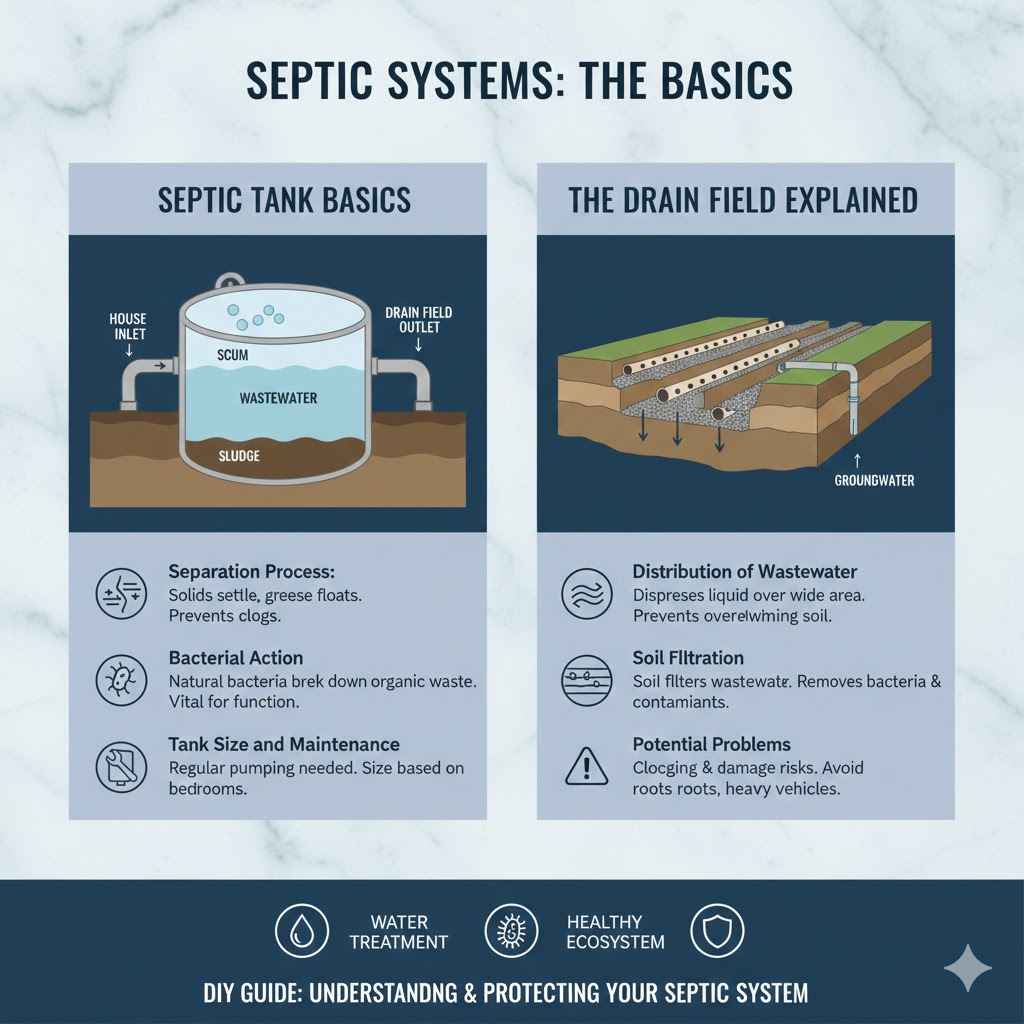
The septic tank is where the magic happens. Wastewater from your house goes into this tank, and the solids settle at the bottom, forming sludge. Lighter stuff, like grease and oil, floats to the top, forming a scum layer. Bacteria in the tank break down the organic matter in the wastewater. This is a natural, ongoing process that reduces the volume of solids. The tank’s main job is to separate solids from the liquids before they go into the drain field. Regular inspections and pumping of the septic tank are important to remove the sludge and scum. This keeps the system working as it should and prevents backups.
Separation Process: The tank separates solids from liquids. Solids settle, and grease floats. This prevents the drain field from getting clogged.
This separation is key. The solid waste at the bottom of the tank, called sludge, contains partially decomposed materials. The layer on top, called scum, is made up of grease and other floating materials. Between these layers is a relatively clear liquid. If too many solids get into the drain field, they can clog the soil, which leads to system failure. This is why it’s essential to avoid putting anything down the drain that isn’t supposed to be there.
Bacterial Action: Natural bacteria break down organic waste. These bacteria are vital for the septic system’s function.
These bacteria are anaerobic, meaning they don’t need oxygen to do their job. They break down the organic matter in the waste. This is a slow but steady process. Products that kill these bacteria, like strong chemicals, can harm the septic system. Keeping the bacteria happy is important for waste decomposition.
Tank Size and Maintenance: Tank size is important, and regular pumping is needed. Choose a tank size based on the number of bedrooms in the house and the amount of water used.
A larger tank is generally better, particularly for a larger family. It needs pumping every few years, depending on use. Regular maintenance extends the life of the tank and the entire system. Ignoring the need for pumping can lead to backups and costly repairs. So, follow a regular schedule for tank inspections and pumping to keep everything in good shape.
The Drain Field Explained
The drain field, also known as the leach field or soil absorption field, is the final part of the septic system. After the liquid leaves the septic tank, it goes into the drain field. Here, the liquid gets filtered by the soil before returning to the groundwater. This process is important for removing harmful substances and preventing pollution. The drain field has a network of underground trenches filled with gravel or other materials. The soil acts as a natural filter, removing any remaining impurities. Proper care of the drain field is essential for a properly functioning system. It helps protect the environment and avoid expensive repairs.
Distribution of Wastewater: The drain field disperses the liquid from the septic tank over a wide area. This prevents the soil from getting overwhelmed.
The distribution of the wastewater is even over the entire field. This makes sure that the soil can absorb the liquid properly. The design of the drain field is essential. It’s often made of perforated pipes buried in trenches filled with gravel. Wastewater slowly seeps out of these pipes and into the surrounding soil. This area is usually several hundred feet long and needs to be kept clear of anything that could damage it, like trees or heavy vehicles.
Soil Filtration: The soil filters the wastewater before it returns to the groundwater. The soil removes bacteria, viruses, and other contaminants.
The soil’s filtering ability is key to the drain field’s function. Soil particles trap and break down pollutants, like bacteria and viruses. The type of soil is important, with sandy soil generally draining better than clay soil. The soil should never be compacted, which can stop the water from seeping into the ground. Protect your drain field by avoiding driving on it and planting only shallow-rooted plants nearby.
Potential Problems: Clogging and damage are the main risks to drain fields. Avoid anything that could damage or clog the drain field.
Drain fields can be damaged by roots, heavy vehicles, or getting clogged by solids from the septic tank. A clogged drain field can lead to backups in your home and a total system failure. The cost of replacing a drain field is high, which makes it essential to take care of it. Regular maintenance of the septic tank is a must to prevent solid waste from entering the drain field.
Examining Clorox Toilet Tablets and Septic Systems
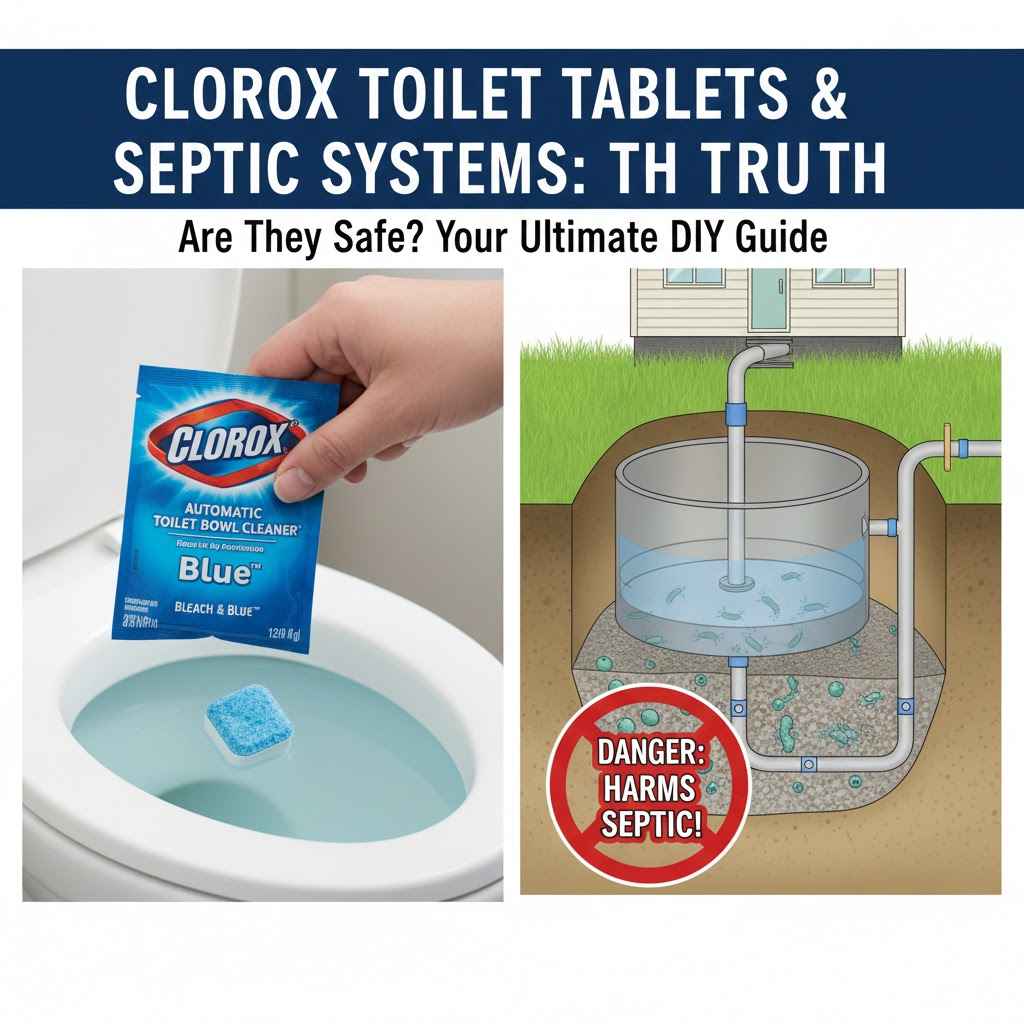
The question about Are Clorox Toilet Tablets Safe for Septic Systems? is a common concern because of the tablets’ ingredients. People worry that chemicals could harm the helpful bacteria in the septic tank or damage the system. Clorox tablets usually contain chemicals designed to clean and disinfect toilets. Understanding what’s in these tablets and how they interact with septic systems is important for making smart choices. Knowing the potential effects of these tablets allows homeowners to decide how to best care for their septic systems.
Ingredients Found in Clorox Tablets
The main ingredient in many Clorox toilet bowl tablets is sodium dichloroisocyanurate, which releases chlorine when it dissolves. Chlorine is a strong disinfectant. It kills germs and bacteria. Other ingredients can include surfactants, which help with cleaning, and fragrances to improve the smell. The concentration of chlorine is the primary concern for septic systems. While chlorine helps clean the toilet, it can also have negative effects on the environment. Therefore, understanding these ingredients helps you assess their impact on your septic tank.
Chlorine’s Role: Chlorine is the primary disinfectant, killing germs and sanitizing the toilet bowl. This action, while beneficial for cleaning, can be harsh.
Chlorine is powerful at killing germs, and that’s why it’s a key ingredient in many cleaning products. However, chlorine doesn’t just kill the germs in your toilet; it can also affect the helpful bacteria in your septic tank. These bacteria are responsible for breaking down waste. Excessive chlorine use can decrease their numbers and hurt the breakdown process.
Surfactants and Fragrances: Surfactants help with cleaning. Fragrances are for scent. Some of these ingredients may cause problems.
Surfactants are detergents that help to remove dirt and grime, while fragrances are added to make the toilet smell fresh. Some surfactants are biodegradable, but others might linger in the system. Fragrances can also cause problems, as some might interfere with the natural breakdown of waste. All of these components add to the overall impact of the toilet tablets on your septic system.
Chemical Concentrations: The amount of chemicals in each tablet varies. Pay close attention to the product label.
The exact amount of chemicals, especially chlorine, can vary between different tablet brands and formulations. Reading the product label carefully is important. Knowing the concentration of chlorine and other chemicals helps you evaluate how much impact they might have on your septic system. Some products have more concentrated chemicals. Make sure to consider the product’s strength before using it.
The Impact of Chlorine on Your Septic Tank
The chlorine in Clorox tablets can affect the helpful bacteria living in your septic tank. It can kill or slow down these bacteria, which makes it harder for the tank to break down waste. Over time, this disruption can lead to problems. It is important to know that a small amount of chlorine from occasional use of the tablets may not cause major issues. However, regular use, especially with high-chlorine products, can significantly disrupt the balance of your septic system. Therefore, consider the frequency and amount of tablets used.
Killing Beneficial Bacteria: Chlorine can kill the bacteria. These bacteria break down waste in the septic tank.
These bacteria are anaerobic microorganisms that break down the organic matter in the wastewater. When chlorine enters the septic tank, it attacks these microorganisms. As the number of bacteria decreases, the breakdown process slows down. This can lead to a build-up of solids, which may result in more frequent pumping. Chlorine affects the natural functions of the system, so the tank will not work as it should.
Disrupting Waste Decomposition: This can slow the process. Less efficient waste breakdown can cause issues.
The chlorine in the tablets not only kills bacteria but also hinders their ability to decompose waste efficiently. This slows the breakdown of solid waste, causing more solids to accumulate in the tank. When solid waste builds up, the risk of clogs and drain field problems increases. The septic system might struggle to function properly. Therefore, limiting the use of products that introduce a lot of chlorine is essential.
Potential for System Overload: Too much chlorine can cause the system to fail. Overuse can cause significant damage.
The accumulation of solids can overload the drain field. This can lead to the soil becoming clogged. Once the soil clogs, the wastewater can’t be filtered and absorbed properly. The result may be backups in the house, contaminated groundwater, and a costly repair. This is the worst-case scenario. Therefore, avoiding the overuse of chlorine-based products can prevent problems with the septic system.
Safer Alternatives and Best Practices
When thinking about Are Clorox Toilet Tablets Safe for Septic Systems? it’s important to explore safer alternatives. These alternatives can help clean your toilet without the harsh effects of chlorine. Along with choosing different cleaning products, there are also general best practices. These practices are designed to protect your septic system. Using milder products and following septic-safe habits can help keep your system healthy and functional for years. Knowing your options helps you to be a responsible homeowner.
Septic-Safe Cleaning Products
Many toilet cleaners are designed to be safe for septic systems. These products use ingredients that are less harsh and won’t kill the beneficial bacteria in your septic tank. Look for products that are biodegradable and don’t contain chlorine, bleach, or other strong chemicals. Using these products is a smart move that helps protect your septic system. These products often use natural ingredients. Making these changes can help you maintain a healthy septic system.
Products Without Chlorine or Bleach: Look for alternative cleaning options. Many cleaners are free of harsh chemicals.
Chlorine and bleach are powerful disinfectants, but they can significantly disrupt the bacterial balance in your septic tank. Products without these chemicals are more gentle and less likely to harm the essential bacteria. Cleaning options may include products made with natural ingredients. By selecting these, you can reduce the impact on your septic system.
Biodegradable Options: Choose cleaning products that break down naturally. These products will not cause problems.
Biodegradable cleaners are designed to break down into simpler substances. This means they won’t accumulate in your septic system. Look for products labeled as “septic-safe” or “biodegradable.” These products often use plant-based ingredients or other less harmful chemicals. Making this change can help protect your septic system. Check the product labels for certifications or information.
Homemade Cleaning Solutions: Make your own cleaning solutions with safe ingredients. You can also make your own to know what is in it.
Many effective toilet cleaning solutions can be made at home with common ingredients like vinegar, baking soda, and essential oils. Vinegar is a good disinfectant, and baking soda helps remove stains. Essential oils can provide a pleasant scent without adding harsh chemicals. The control over ingredients in your cleaning solution is a big benefit. This way, you know the ingredients won’t harm your septic system.
Septic-Safe Habits
Beside choosing the right cleaning products, some everyday habits will help keep your septic system in great shape. These habits help you to protect the balance of the system. They reduce the risk of clogs or damage. Making small changes can go a long way in ensuring your septic system is working correctly. These habits include what you flush down the toilet and how frequently you run water. These are small actions, but they make a difference.
What You Can Flush: Avoid flushing items that don’t break down. Only flush toilet paper.
Only flush toilet paper, and avoid flushing things like feminine hygiene products, diapers, and wipes. These items don’t break down easily. They can clog your septic system. Many wipes are labeled “flushable,” but often don’t break down quickly enough to avoid problems. This is important to remember. If in doubt, throw it away in the trash. This protects your septic system from clogs.
Conserving Water: Reduce your water usage. This reduces the load on the septic system.
Conserving water is essential for your septic system. Less water means less wastewater that needs to be processed. Make sure to fix leaky faucets and toilets. Use water-efficient appliances like low-flow showerheads and toilets. Spreading out water use also helps. Avoid doing several loads of laundry or running multiple showers at the same time. These practices extend the life of your septic system.
Regular Inspections and Pumping: Schedule regular inspections and pumping to keep your system healthy. Regular maintenance is key.
A septic system should be inspected every few years by a professional. The frequency of pumping depends on the size of your tank, the number of people in your household, and your water usage. Pumping removes accumulated solids and prevents them from entering the drain field. If you take the time to set up regular maintenance, your septic system should last for many years. A good maintenance schedule saves money in the long run.
Putting It All Together: A Simple Comparison
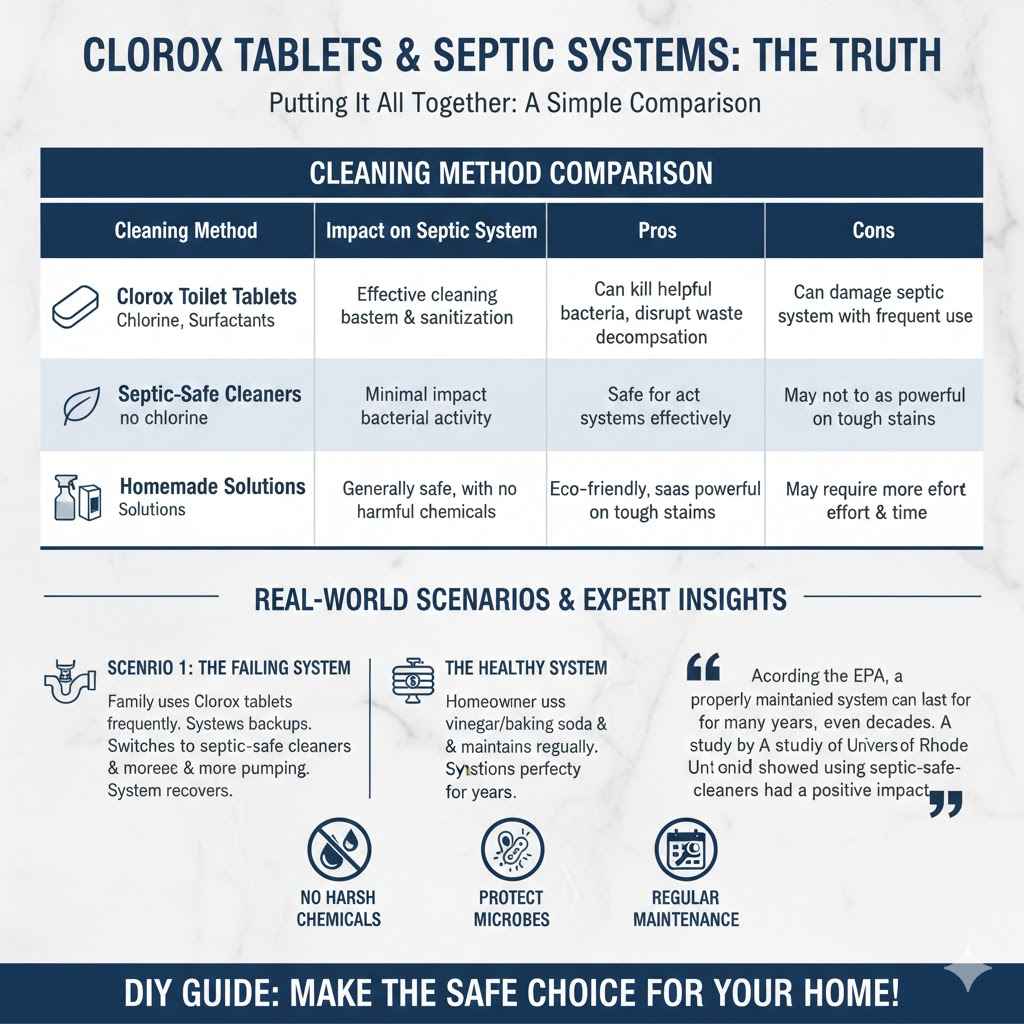
Understanding the impact of different toilet cleaning methods helps you make informed choices. The following table gives a clear comparison. It can help you find out if Are Clorox Toilet Tablets Safe for Septic Systems? or if alternatives are better. Comparing the options helps you see the benefits and drawbacks of each choice.
| Cleaning Method | Ingredients | Impact on Septic System | Pros | Cons |
|---|---|---|---|---|
| Clorox Toilet Tablets | Chlorine, Surfactants, Fragrances | Can kill helpful bacteria, disrupt waste decomposition | Effective cleaning and sanitization | Can damage the septic system with frequent use |
| Septic-Safe Cleaners | Biodegradable ingredients, no chlorine | Minimal impact on bacterial activity | Safe for septic systems and cleans effectively | May not be as powerful on tough stains |
| Homemade Solutions | Vinegar, Baking Soda, Essential Oils | Generally safe, with no harmful chemicals | Eco-friendly, safe, and cost-effective | May require more effort and time |
Here are some scenarios to consider:
- A family frequently uses Clorox toilet tablets. Over time, their septic system experiences backups and slow drainage. The chlorine from the tablets has harmed the beneficial bacteria. The family switches to septic-safe cleaners and a more frequent pumping schedule. The system returns to normal function.
- A homeowner uses vinegar and baking soda to clean their toilet. They also watch their water usage. They have their septic tank inspected and pumped regularly. Their septic system continues to function effectively, with no issues over many years. This shows the value of regular care and maintenance.
According to the EPA, a properly maintained septic system can last for many years, even decades. A study by the University of Rhode Island showed that using septic-safe cleaners had a positive impact. These cleaners help to maintain the healthy bacterial balance in septic tanks. These findings support the importance of the right product choice and maintenance.
Frequently Asked Questions
Question: Do Clorox toilet tablets kill the bacteria in my septic system?
Answer: Yes, the chlorine in Clorox toilet tablets can kill or harm the helpful bacteria needed for waste breakdown.
Question: What’s the best way to clean my toilet if I have a septic system?
Answer: Using septic-safe toilet cleaners, vinegar, or baking soda are generally safe options.
Question: How often should I pump my septic tank?
Answer: The frequency depends on the size of your tank, your household size, and water usage, but every 3-5 years is common.
Question: Can I use bleach in my toilet if I have a septic system?
Answer: Using bleach frequently is not recommended, as it can harm the septic system’s bacteria.
Question: How can I tell if a cleaning product is septic-safe?
Answer: Look for products labeled “septic-safe” or “biodegradable” and avoid those with chlorine or strong chemicals.
Final Thoughts
So, Are Clorox Toilet Tablets Safe for Septic Systems? The answer isn’t a simple yes or no. The chlorine in these tablets can cause problems for your septic system, especially with regular use. You now know the risks, including harming the good bacteria and potentially damaging your drain field. But there’s good news! There are plenty of alternatives that are gentle on your system, like using septic-safe cleaners, making your own cleaning solutions, and practicing water conservation. These small changes can make a big difference in the health and lifespan of your septic system. Take the time to look for septic-safe products. Then, think about making these simple, eco-friendly habits. Your septic system (and your wallet!) will thank you for it.