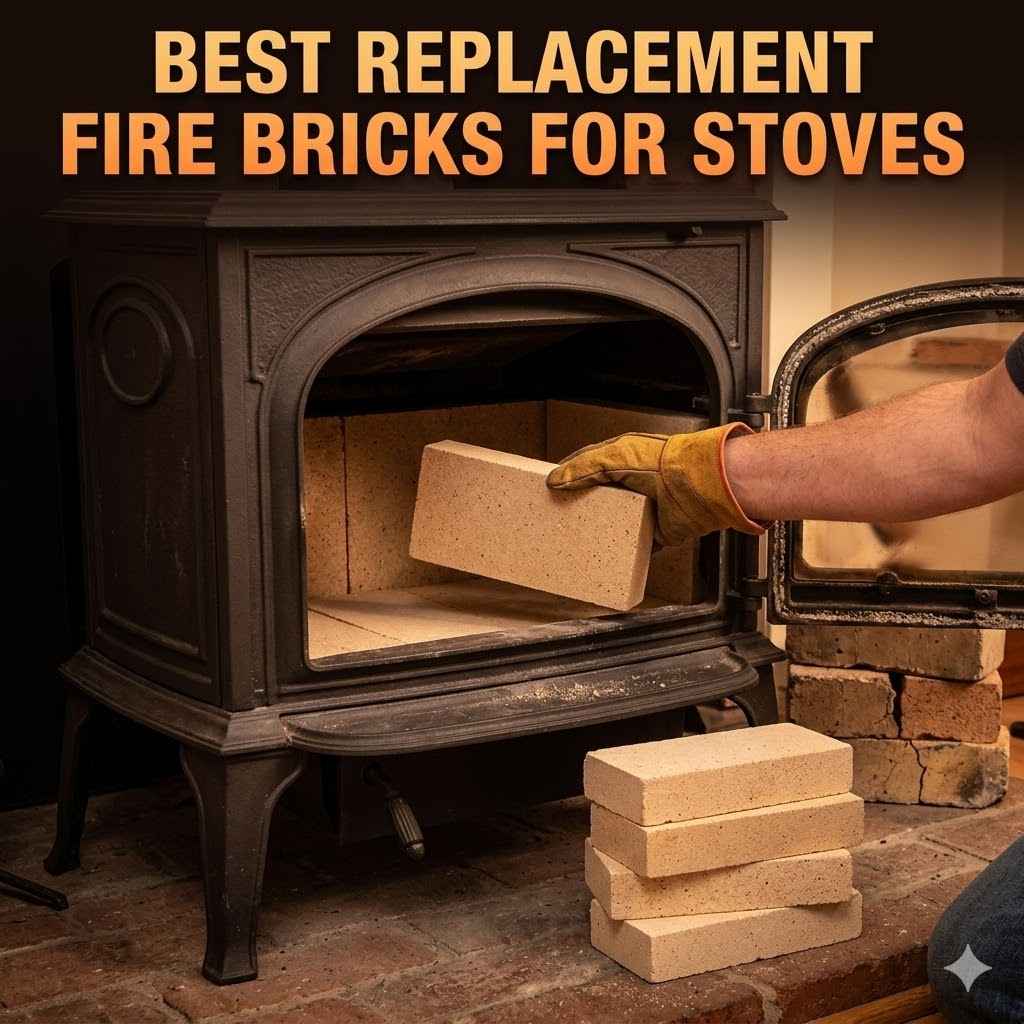
Best Replacement Fire Bricks for Stoves
Finding the Best Replacement Fire Bricks for Wood Burning Stoves can seem a bit tricky at first, especially if you’re new to stove care. You want to make sure your stove stays safe and warm, and the right bricks are a big part of that. Don’t worry, we’ll make this super simple.
We’ll walk through everything you need to know, step by step, so you can get your stove working its best again. Get ready to learn what makes good fire bricks and how to pick them out easily.
Choosing the Best Replacement Fire Bricks for Stoves
Selecting the right fire bricks is key to keeping your wood burning stove running safely and efficiently. These bricks form the inner lining of your stove, protecting its metal shell from intense heat. When they crack or crumble, your stove’s performance suffers, and it can even become dangerous.
This section will guide you through what makes a fire brick good and how to identify the best options for your specific stove model. We’ll cover material types, sizes, and important features to look for.
What Are Fire Bricks Made Of
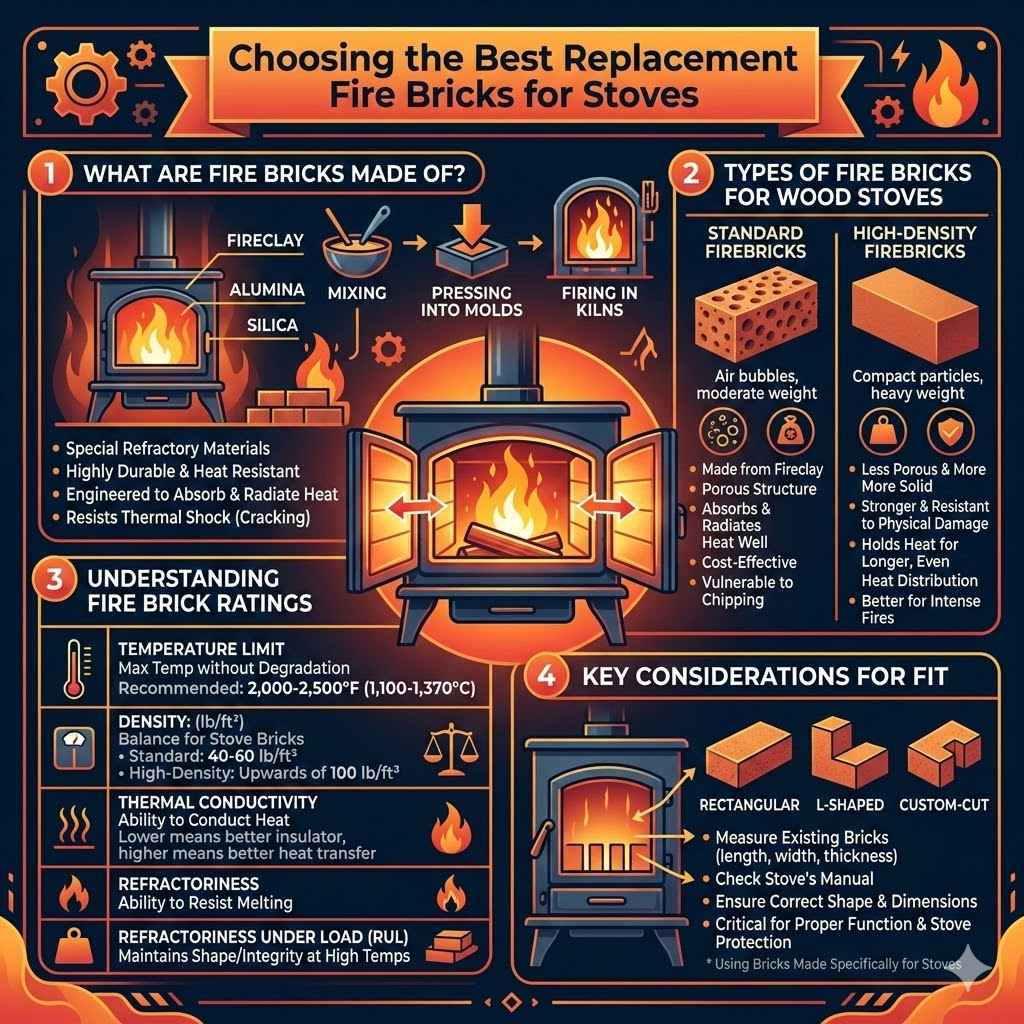
Fire bricks, also known as refractory bricks, are special building materials designed to withstand very high temperatures. They are typically made from a mixture of clay and other refractory materials like alumina and silica. This composition gives them their incredible heat resistance and durability.
When exposed to the constant high heat from burning wood, ordinary bricks would quickly break down. Fire bricks, however, are engineered to absorb and radiate heat effectively without deteriorating.
The main ingredient in most fire bricks is fireclay. This clay is rich in alumina and silica, which are minerals that can handle extreme heat. The exact blend of these materials varies depending on the manufacturer and the intended use of the brick.
Higher alumina content, for example, generally means higher heat resistance. The manufacturing process involves pressing the clay mixture into molds and then firing it in kilns at very high temperatures. This firing process hardens the bricks and creates their strong, porous structure.
It’s important to note that not all fire bricks are the same. Some are designed for general high-heat applications, while others are specifically made for stoves. Stove fire bricks often have a particular density and thermal shock resistance.
Thermal shock is when a material rapidly changes temperature, which can cause cracking. Stove bricks need to handle the cycles of heating up and cooling down that happen when you use your stove. Therefore, choosing bricks made for stove applications is crucial for longevity and safety.
Types of Fire Bricks for Wood Stoves
When looking for replacement fire bricks, you’ll likely encounter two main types: standard firebricks and high-density firebricks. Each has its own advantages and is suited for different needs and stove types. Understanding the difference will help you make an informed choice for your wood burning stove.
Standard firebricks are the most common type. They are made from fireclay and are designed to withstand high temperatures. They are porous, which allows them to absorb heat and radiate it back into the room.
This porosity also helps in managing the expansion and contraction that occurs with temperature changes. While they are durable, they can be more prone to chipping or breaking if subjected to harsh impacts.
High-density firebricks, also known as dense refractory bricks, are less porous and more solid. This makes them stronger and more resistant to physical damage. They tend to hold heat for longer and can provide a more even distribution of heat.
Because they are denser, they might not absorb and release heat as quickly as porous bricks, but they offer superior durability. These are often recommended for stoves that experience very intense fires or for areas where bricks might be more likely to be bumped or scraped.
Another consideration is the shape and size of the bricks. Stoves often use specific shapes to fit the firebox walls, back, and sides. Some stoves use simple rectangular bricks, while others might require L-shaped or custom-cut pieces.
Always check your stove’s manual or measure the existing bricks to ensure you get the correct dimensions and shape. Getting the fit right is essential for the bricks to function properly and protect the stove’s structure.
Understanding Fire Brick Ratings
Fire bricks come with various ratings that indicate their performance capabilities. These ratings are important because they tell you how well a brick will perform under specific conditions. For wood burning stoves, key ratings to pay attention to include temperature limits, density, and thermal conductivity.
Knowing what these mean will help you select the best replacement fire bricks for your stove.
Temperature Limit: This is the maximum temperature the brick can withstand without significant degradation. For wood stoves, you’ll want bricks rated for temperatures well above the typical operating temperatures of your stove, usually around 2,000-2,500°F (1,100-1,370°C). A higher rating provides a good safety margin.
Density: Density is measured in pounds per cubic foot (lb/ft³). Higher density bricks are generally stronger and more durable but may be less insulating. Lower density bricks are lighter and more insulating but might be more fragile.
For stove fire bricks, a balance is often sought, with density usually falling in the range of 40-60 lb/ft³ for standard firebricks. High-density bricks can be upwards of 100 lb/ft³.
Thermal Conductivity: This rating indicates how well a material conducts heat. A lower thermal conductivity means the brick is a better insulator. For fire bricks lining a stove, you generally want good insulation to keep the heat inside the firebox, but also the ability to absorb and radiate heat effectively.
The interplay between density and thermal conductivity is important; denser bricks can sometimes have higher conductivity, meaning they transfer heat more readily.
It’s also worth noting Refractoriness and Refractoriness Under Load (RUL). Refractoriness is the brick’s ability to resist melting at high temperatures. RUL measures how well a brick maintains its shape and structural integrity under load at high temperatures.
For stove use, both are critical to ensure the bricks don’t sag or deform under the weight of their own structure and the heat.
How to Measure and Fit Replacement Fire Bricks
Replacing fire bricks might seem like a daunting task, but it’s quite manageable with the right approach. The most crucial steps involve accurately measuring your existing bricks and ensuring the new ones fit snugly. This section will guide you through the process, from taking measurements to properly seating the new bricks in your stove’s firebox.
Measuring Your Existing Fire Bricks
Before you buy any new fire bricks, you need to know the exact dimensions of the ones you need. Stoves use various sizes and shapes, and even slight differences can affect the fit and performance. Take your time measuring each brick you plan to replace.
You’ll need to measure length, width, and thickness.
Start by carefully removing an old brick. If it’s brittle, be gentle to avoid further damage or injury from sharp edges. Once removed, use a reliable measuring tape or ruler to get precise measurements.
It’s a good idea to measure each brick in a few different spots, as they might not be perfectly uniform. Record these measurements carefully. Pay attention to any angles or curves on the bricks, as some stoves use specialized shapes.
If your stove uses an L-shaped or other uniquely shaped brick, you might need to measure its profile. A simple way to do this is to trace the brick onto a piece of paper or cardboard. This tracing can then be used to compare with potential replacement bricks or to help a manufacturer create custom-cut bricks if needed.
Remember to note which brick goes where, as different sides of the firebox might require different brick dimensions or orientations.
A common mistake is to assume all bricks in a stove are the same size. Always measure them individually. Your stove’s manual might also list the required brick dimensions, which can be a helpful reference.
If you cannot find the manual, measuring the original bricks is the most reliable method. Accuracy here prevents the need for returns or awkward, ill-fitting replacements that could compromise your stove’s integrity.
Getting the Right Size and Shape
Once you have your measurements, you can start looking for
If you find standard bricks that are slightly larger, some can be carefully cut or ground down to fit. However, this is often best left to professionals or done with specialized tools. It’s generally easier and safer to find bricks that are the correct size from the start.
Many manufacturers and stove parts suppliers offer a wide range of fire brick sizes, including those for specific stove models.
Consider the shape carefully. If your stove has angled bricks for the corners or stepped bricks for the backplate, you will need to find exact
The fit should be snug but not forced. Bricks that are too tight can put stress on each other and crack. Bricks that are too loose can allow heat to escape and potentially damage the stove’s metal components.
A well-fitting brick will sit firmly in place, allowing for slight expansion when hot, but without excessive gaps.
Installing the New Fire Bricks
Installing new fire bricks is a straightforward process, but it requires care. First, ensure the stove is completely cool and has been thoroughly cleaned of ash and debris. This will give you a clean workspace and ensure the new bricks seat properly.
Begin by placing the new bricks into the firebox. Start with the bottom layer and work your way up. Gently tap each brick into place with a rubber mallet or the handle of a tool.
You want them to fit snugly without being forced. If a brick doesn’t seem to fit, don’t try to hammer it in. Re-check your measurements or see if there’s a slight obstruction you missed.
For some stoves, there might be a small gap between the bricks or between the bricks and the stove wall. This is often intentional to allow for expansion. Some installers use a thin layer of refractory cement to fill minor gaps, but this is not always necessary and can make future
Ensure that the bricks are aligned correctly and provide a smooth surface for the fire. If any bricks are loose, you might need to use small pieces of cardboard or shims to secure them until the stove is heated up and they settle into place. However, the goal is to avoid needing shims.
Proper fit means the bricks stay put on their own.
After all the bricks are in place, inspect the firebox one last time to make sure everything looks secure and correctly positioned. You are now ready to carefully restart your stove with a small fire to allow the new bricks to cure and settle in. Avoid a large, roaring fire for the first few burns.
Maintaining Your Wood Burning Stove Fire Bricks
The lifespan of your replacement fire bricks depends a lot on how you use and maintain your stove. Proper maintenance not only extends the life of the bricks but also ensures your stove operates efficiently and safely. This section covers simple tips for keeping your fire bricks in good condition.
Regular Cleaning of Ash and Soot
One of the simplest yet most effective ways to maintain your fire bricks is by regularly cleaning out the ash and soot from the firebox. Ash buildup can insulate the bricks, preventing them from radiating heat effectively. Excessive soot can become flammable and, in some cases, lead to creosote buildup, which is a fire hazard.
After each use, or at least daily when the stove is in regular operation, use a metal ash shovel and brush to carefully remove accumulated ash. Always wait until the fire has completely died down and the stove is cool. Place the ash in a metal container with a tight-fitting lid, and store it away from any combustible materials.
Many people find that a vacuum cleaner with a HEPA filter specifically designed for ash can be very effective for thorough cleaning.
Soot buildup on the bricks and inside the flue can also be problematic. While regular fires usually burn off much of the soot, a cooler or less efficient burn can lead to more significant accumulation. Visually inspect the bricks for thick layers of soot.
If you notice significant buildup, you might need to adjust your burning practices, such as ensuring you use dry, seasoned wood and maintain adequate airflow.
A buildup of ash can also trap moisture, which over time can accelerate the deterioration of the bricks. Keeping the firebox clear ensures that the bricks can dry out properly between uses. This simple cleaning routine is fundamental to the longevity of your fire bricks and the overall health of your wood burning stove.
Proper Burning Techniques
How you burn wood in your stove significantly impacts the fire bricks. Using dry, seasoned wood is paramount. Wet or unseasoned wood burns at a lower temperature and produces more smoke and creosote.
This inefficient burn puts more stress on the fire bricks as they are exposed to prolonged lower temperatures and corrosive byproducts.
Always aim to burn hot and fast. This means using a good amount of seasoned wood and ensuring proper airflow. Open the air vents sufficiently to allow the fire to burn brightly.
A hot fire burns fuel more completely, reducing smoke and creosote, and it allows the fire bricks to reach their optimal operating temperature, which can actually help to burn off some minor soot deposits. Avoid smoldering fires, which are known to be hard on fire bricks and create a lot of soot.
Do not overload the firebox. Overloading can lead to fires that are too intense or uneven. This can cause localized overheating of the bricks, leading to cracking or spalling (pieces breaking off).
It’s better to add wood in smaller amounts more frequently if needed. Always refer to your stove’s manual for recommended loading capacities.
Allowing the stove to cool down naturally between uses is also beneficial. Rapid cooling, such as quenching with water, can cause thermal shock and crack the bricks. Letting the embers die out on their own is the best approach for preserving the integrity of the fire bricks.
Consistent, hot fires with the right fuel and proper cooling cycles are key to long-lasting fire bricks.
When to Consider Replacement
Even with the best care, fire bricks will eventually wear out. Knowing when they need replacing is important for safety and stove performance. Look for signs of significant damage such as deep cracks, broken edges, or bricks that have started to sag or crumble.
A crack that goes all the way through a brick is a clear indicator that it needs replacement. Small hairline cracks might not be an immediate issue, especially if they are not in critical structural areas. However, these cracks can widen over time, so it’s wise to monitor them.
If a brick is chipped or broken on an edge, it might still be functional if the damage is minor and doesn’t compromise its stability.
However, if a significant portion of the brick is missing, or if multiple bricks show extensive damage, it’s time to consider a full replacement. Sagging bricks are particularly concerning as they can put structural pressure on surrounding bricks and the stove itself. This is a sign of significant material breakdown and potential failure.
The number of bricks that need replacement also matters. If only one or two bricks are damaged, you can often replace just those. If a large section of the firebox lining is compromised, it might be more cost-effective and safer to replace all the bricks in that section.
Always consult your stove’s manual or a qualified technician if you are unsure about the condition of your fire bricks.
Where to Buy Best Replacement Fire Bricks for Wood Burning Stoves
Finding the right place to buy your replacement fire bricks is as important as choosing the bricks themselves. You want a reliable source that offers quality products and good advice. This section will point you towards the best options for purchasing Best Replacement Fire Bricks for Wood Burning Stoves.
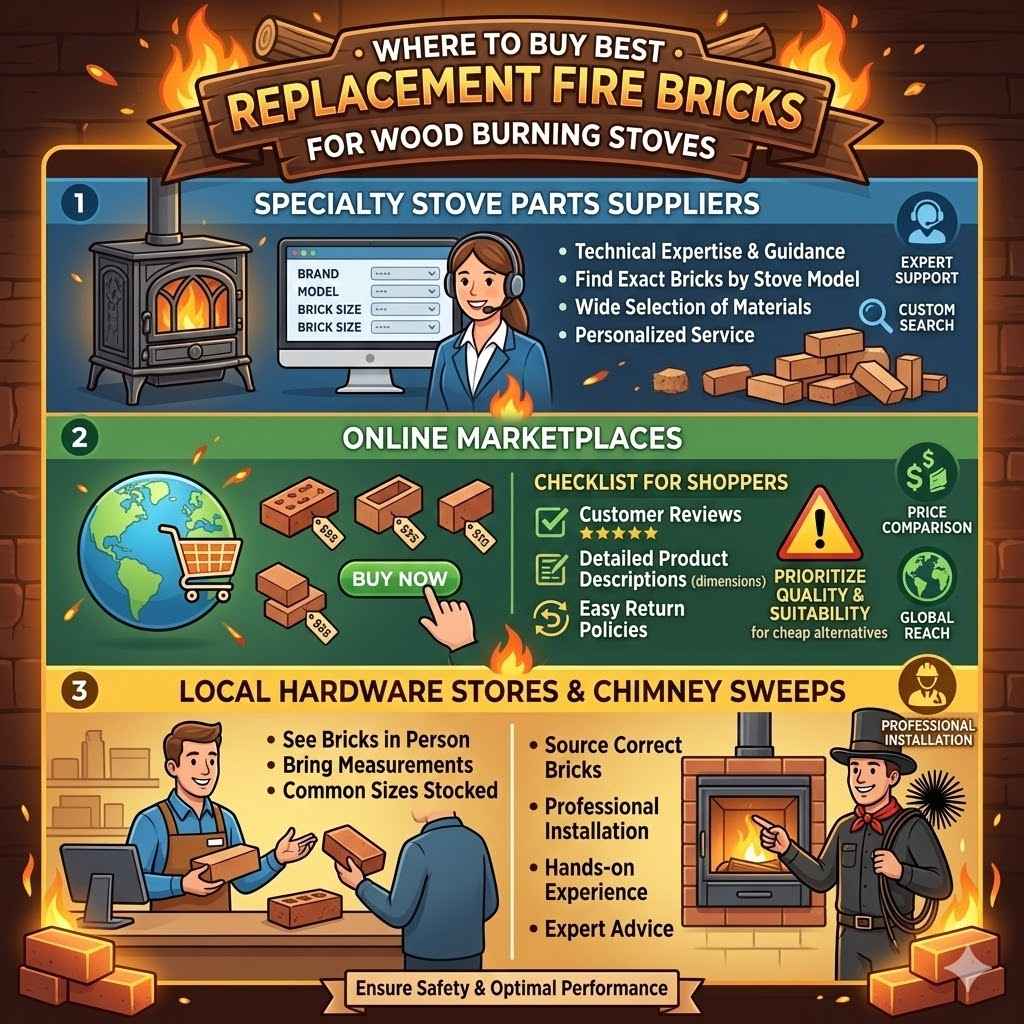
Specialty Stove Parts Suppliers
These are often the best places to find exactly what you need. Specialty suppliers focus on heating equipment and have a wide selection of parts, including fire bricks for many different stove makes and models. They understand the technical specifications and can often help you identify the correct size and type of brick.
Their websites are usually well-organized, allowing you to search by stove brand, model, or brick dimensions. They often carry a variety of fire brick materials, so you can choose based on your stove’s requirements and your budget. Many of these suppliers also offer related products like fire rope seals, gasket material, and stove cement, which are useful for a complete stove refurbishment.
The advantage of using a specialty supplier is their expertise. If you’re unsure about what to order, their customer service representatives can often provide guidance. They might ask you specific questions about your stove or the existing bricks to ensure you get the perfect fit.
This personalized service is invaluable when dealing with specialized parts.
Some of the larger online specialty retailers have extensive catalogs, and you can often find reviews from other customers that can help you make a decision. They are a trusted source for high-quality, durable fire bricks designed specifically for wood burning stoves, ensuring safety and optimal performance.
Online Marketplaces
Large online marketplaces can also be a source for replacement fire bricks. You’ll find a wide range of sellers, from large retailers to smaller independent businesses. The variety can be extensive, and you might find competitive pricing.
When shopping on these platforms, it’s essential to be diligent. Always check the seller’s reputation and read customer reviews carefully. Look for sellers who provide detailed product descriptions, including dimensions, material type, and intended use.
High-quality images of the product are also a good sign.
Pay close attention to the return policy. If the bricks don’t fit or are not as described, you’ll want to be able to return them easily. Some sellers on these marketplaces may offer generic fire bricks, so ensure they are specifically rated and intended for wood burning stoves, not just general industrial use.
You might find great deals, but always prioritize quality and suitability for your stove. It’s better to pay a bit more for bricks from a reputable seller on a marketplace than to buy cheap, ill-fitting bricks that could be a safety risk. Compare prices and product details from several sellers before making a purchase.
Local Hardware Stores and Chimney Sweeps
Some local hardware stores, especially those that specialize in home heating or outdoor living products, might stock common sizes of fire bricks. It’s worth checking your local options, as this allows you to see the bricks in person before buying.
A more specialized local resource is your chimney sweep. Many chimney sweeps offer stove maintenance and repair services, which often include replacing fire bricks. They can often source the correct bricks for your stove and install them for you.
This is a great option if you prefer to have the work done by a professional or if you need advice on the best type of bricks for your stove.
A professional chimney sweep has hands-on experience with various stove models and can identify potential issues you might not notice. They can also advise on whether your existing fire bricks are truly beyond repair or if minor interventions might suffice. Their services often come with a guarantee, providing peace of mind.
If you choose to buy from a local hardware store, be sure to bring your measurements and perhaps a picture of the brick you need. Staff might not have specialized knowledge of stove parts, so accurate information from your end is crucial. However, for very common stove sizes, they might have a suitable option readily available.
Frequently Asked Questions
Question: What are the main signs that my fire bricks need replacing?
Answer: Look for deep cracks that go all the way through the brick, significant chips or missing pieces, or if the bricks appear to be sagging or crumbling. Any damage that compromises the structural integrity of the firebox lining is a strong indicator.
Question: Can I use regular house bricks instead of fire bricks?
Answer: No, absolutely not. Regular house bricks are not designed to withstand the high temperatures of a wood burning stove and will crack, crumble, or even explode under such conditions, creating a serious safety hazard.
Question: How do I know if I have the right size fire bricks?
Answer: The best way is to measure your existing bricks carefully. The new bricks should fit snugly without being forced. There should be minimal to no gaps between bricks or between bricks and the stove walls, allowing for slight expansion.
Question: How often should I expect to replace my fire bricks?
Answer: This varies greatly depending on stove usage, the quality of the bricks, and burning habits. With proper care and moderate use, fire bricks can last anywhere from 5 to 10 years or even longer. Heavy use might shorten this lifespan.
Question: What is the difference between fire brick and refractory cement?
Answer: Fire bricks are solid blocks that form the main structure of the firebox lining. Refractory cement is a heat-resistant mortar used to fill small gaps between bricks or to repair minor damage. It’s not typically used as a primary building material for the entire lining.
Summary
Finding and fitting the right fire bricks is crucial for your wood stove. Measure carefully and choose bricks made for stoves. Clean them regularly and burn wood properly to make them last.
Buying from specialty suppliers or trusted online stores ensures quality. Your stove will be safer and warmer with good bricks.