Board Coverage Calculator: How Many Boards Do You Need?
A board coverage calculator divides your total project area by one board’s area — width × length — to tell you exactly how many boards you need. Skipping the standard 5–10% waste allowance for cuts and defects is the most common reason DIYers run short mid-project. This guide includes a free instant calculator below, the exact formulas for decking, flooring, and plywood sheets, and real cost-per-board-foot examples.
Instant Board Coverage Calculator
Introduction To Board Coverage Calculators
Board coverage calculators are used across home improvement calculator tools to plan decking, flooring, siding, and plywood sheet goods. Precise measurements lead to fewer errors and cost savings, and they help you avoid buying too much or too little material.
Benefits of precise measurements include:
- Cost efficiency: Save money by buying only what you need.
- Time-saving: Quick calculations speed up the planning process.
- Reduced waste: Minimize leftover materials, benefiting the environment.
- Improved accuracy: Ensure your project meets specifications without errors.
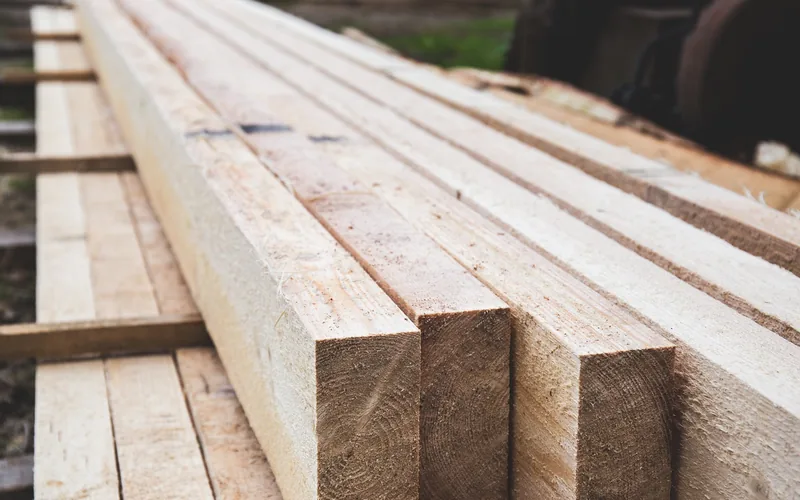
Understanding Board Measurements
Board feet is a unit of measure for lumber volume. One board foot equals a board that is 1 foot long, 1 foot wide, and 1 inch thick. To calculate board feet, use this formula: (Thickness in inches × Width in inches × Length in feet) / 12.
Converting square feet to board feet: (Square Feet × Thickness in inches) / 12. For example, a board that covers 100 square feet at 1 inch thick equals 8.33 board feet. One detail lumber yards assume you already know: nominal sizes are not actual sizes — a “2×6” board measures a true 1.5 x 5.5 inches after milling, so always use the actual (not nominal) dimension in any coverage formula.
Board coverage math answers “how many individual boards.” If you instead need total lumber volume for a mixed-material project, our wood calculator handles that broader estimate.
The 4-Step Process: From Room Dimensions To Board Count
- Measure the total area: Multiply the room, deck, or wall’s length by its width to get the total square footage you need to cover.
- Find one board’s coverage: Multiply the board’s actual (not nominal) width in feet by its length to get the square footage a single board covers.
- Divide for the raw count: Total area ÷ one board’s coverage = the number of boards needed before waste, rounded up to a whole board.
- Add your waste allowance: Multiply that raw count by 1.05–1.25 depending on layout complexity (5% for a simple straight run, up to 25% for diagonal or angled cuts).
📊 A 5% material waste allowance covers most straight, rectangular board layouts; irregular cuts, angled walls, or diagonal decking patterns need 15–25% instead. — Source: Janss Lumber, Adding Waste Factors
Best Laser Measure Pick For Coverage Projects
BOSCH GLM100-23 100 Ft Blaze Laser Distance Measure – $49.98
Measures a room’s total length and width in seconds so you can plug an accurate square footage straight into the calculator above instead of guessing.
- Best for: Measuring total floor, deck, or wall area before ordering boards
- Why we picked it: Accurate to 1/16 inch at up to 100 ft, so your area input matches reality
- Main drawback: Reads distance only — you still need a tape measure for individual board width
Compare more laser measure options
 Option 1 MILESEEY 229ft Laser Measure – $26.09
|
 Option 2 Klein Tools Laser Distance Measure – $39.98
|
 Option 3 DTAPE 165 Ft Laser Measuring Tool – $23.99
|
As an Amazon Associate we earn from qualifying purchases.
Key Features Of Board Coverage Calculators
Ease of use is a standout feature — inputting board dimensions and area is straightforward, with no formulas to memorize. Accuracy matters just as much: a reliable calculator accounts for actual (not nominal) board dimensions and rounds up to a whole board, so you never come up short on-site.
Calculating Board Coverage For Flooring
Calculating board coverage for flooring involves a few simple steps. First, measure the length and width of the room and multiply them to find the total area in square feet. Next, multiply the length and width of one flooring board to find its area.
Divide the total area by the area of one board to get the number of boards needed. Add the waste allowance from the data box above, and account for the installation method — diagonal or herringbone patterns need more extra material than a straight run.
Decking Project Calculations
To determine materials needed for a decking project, measure the length and width of the deck area and multiply them to find the total square footage. Enter that figure and your deck board dimensions into the calculator above for an instant board count.
Double-check measurements before ordering, and remember that deck boards typically need a small gap (about 1/8″) between boards for drainage and expansion — that gap slightly increases the number of boards needed to cover the same span versus flooring installed tight.
Our deck board calculator factors that 1/8″ gap in automatically if you want a deck-specific board count instead of the generic formula above.
How Many Screws Or Nails Do You Need?
Standard decking practice uses two screws or nails everywhere a board crosses a joist — one fastener lets a board twist as it dries, two hold it flat. With joists spaced 16 inches on-center (the residential default), a board spanning a 12-foot-wide deck crosses roughly 9 joists, meaning about 18 fasteners per board before you count the perimeter framing. According to Manasquan Fasteners, always confirm your actual joist spacing before ordering — 12″, 16″, and 24″ on-center are all common depending on the decking material and its span rating.
Calculating Cost Per Board Foot
To calculate cost per board foot, use the formula:
Cost per board foot = Total cost / Total board feet
For example, if lumber costs $200 for 100 board feet: $200 / 100 = $2 per board foot. Another example: 50 board feet for $150 works out to $150 / 50 = $3 per board foot. Comparing this figure across suppliers is the fastest way to spot an overpriced quote.
Choosing The Right Calculator For Your Project
For plywood or other sheet goods instead of individual boards, use a sheet-based calculator like our wood panel calculator, which divides your area by one full sheet’s face area instead of a single board’s width.
Online and app calculators both work well — online tools are ideal for a quick one-time estimate, while an app is useful if you need to save calculations across multiple visits to the lumberyard.
| Feature | Online Calculator | App Calculator |
|---|---|---|
| Accessibility | Requires internet | Works offline |
| Functionality | Basic features | Advanced features |
| Usability | Mobile-friendly | Customizable |
A Pro-Level Detail Most Calculators Skip: Nominal Vs. Actual Size
The single most common board-coverage math error isn’t the formula — it’s the input. A “1×6” board is not 1 inch by 6 inches; after milling it measures a true 0.75 x 5.5 inches. A “2×4” is really 1.5 x 3.5 inches. If you plug the nominal (labeled) size into any calculator instead of the actual size, your board count will be wrong — usually short. Always measure the board itself with a tape measure, or check the actual-size spec on the product listing, before calculating coverage.
Frequently Asked Questions
How Do You Calculate Board Coverage?
Multiply the board’s actual (not nominal) width and length to find the area one board covers. Divide the total area you want to cover by that number, then round up to a whole board. The result is the number of boards needed before adding a waste allowance.
How Many Square Feet Does A Board Cover?
It depends entirely on the board’s size. An 8-foot-long, 5.5-inch-wide deck board covers about 3.67 square feet. Always multiply the actual width (in feet) by the actual length to get your specific board’s coverage — there is no universal “standard” figure.
How Many Boards Do I Need For A Given Square Footage?
Divide the total square footage by the area each board covers, then use the calculator above to add your waste allowance automatically. Always round up to a whole board to ensure you have enough material for the project.
How To Calculate Board Feet Cost?
Divide the total cost of the lumber by the number of board feet purchased. Use the formula: Cost per Board Foot = Total Cost / Total Board Feet. This method makes it easy to compare pricing between suppliers.
How Much Extra Should I Order For Waste?
Order 5% extra for a simple, straight, rectangular layout. Increase that to 10% for a project with several cuts, and 15–25% for diagonal patterns, angled walls, or a layout with many small pieces. The calculator above defaults to 10% as a safe middle ground.
Conclusion
A board coverage calculator turns a room’s dimensions into an exact board count, which keeps you from buying too much or running short mid-project. Use the actual (not nominal) board size, add a 5–25% waste allowance based on your layout’s complexity, and double-check your numbers before you order.
Sponsored / affiliate links. As an Amazon Associate I earn from qualifying purchases. I may earn additional commission from eligible campaigns.