Wood Stain Calculator: How Much Stain You Need
A wood stain calculator starts with actual square footage, then typically uses about 150 to 250 sq ft per gallon on smooth wood and 75 to 150 sq ft on rough or weathered wood, with absorbent surfaces often needing a second coat. Guessing low leaves you short mid-project or over budget on extra cans. This guide shows how to estimate stain for decks, fences, floors, and siding based on wood condition, board type, and coat count.
How is this calculated?
Press Calculate to see the math with your numbers.
The formula, buffer, and wood variables that shift coverage
A wood stain calculator turns surface area into gallons. The starting point is simple: stain coverage is listed in square feet per gallon, and the right number changes with wood porosity, stain type, coat count, and how the product is applied. That is why two projects with the same footprint can need very different amounts.
The basic formula is straightforward: total square feet ÷ coverage per gallon = gallons per coat. Then multiply by the number of coats and add a waste buffer for laps, end grain, and touch-ups. That buffer matters more on fences, railings, and rough lumber than on smooth interior flooring.
Why wood condition changes the number
New, weathered, rough-sawn, and pressure-treated wood do not absorb stain the same way. Rough or porous wood takes in more finish, so the same gallon covers fewer square feet. Softwoods usually pull in more stain than dense hardwoods, and sun-baked boards often need more product than fresh lumber of the same size.
How coat count changes total gallons
One coat uses less product, but many stain jobs need two coats for even color or better protection. If a label covers 200 sq ft per gallon on one coat, a two-coat job on the same area may need nearly double the stain before you add waste. Sealing and conditioning steps can also change the final total.
How do you measure the surface area?
Measure each surface in square feet before you buy. For flat areas, multiply length by width. For projects with boards, rails, openings, or gaps, measure each stainable face and subtract the spaces that will not take finish. Then add a buffer for waste and touch-up reserve.
Flat surfaces: length times width
Floors, panels, and many siding sections are easy to estimate. Multiply length by width for each section, then add the sections together. A 12-by-16 deck surface, for example, is 192 sq ft before you adjust for railings, stairs, or underside work.
Decks, fences, and floors
Deck boards need more than the deck’s footprint if you are coating the board faces, rails, or steps. Fences often require both sides, which can double the stainable area. Interior floors are simpler, but sanding marks and open grain can still change how much finish the wood pulls in.
When to subtract openings and gaps
Subtract windows, doors, and other openings on siding. For fences, do not count air gaps between pickets as stainable area, but do count the face, edges, and any rails you plan to coat. End grain at cut ends absorbs heavily, so it should stay in the estimate even if it seems small.
Wood porosity and stain type
Wood porosity is one of the biggest reasons stain estimates miss. New lumber, weathered boards, pressure-treated wood, and rough-sawn surfaces all absorb at different rates. Stain type matters too: transparent and semi-transparent products usually spread farther than solid stains, and oil-based and water-based formulas do not behave the same way.
New, weathered, and rough-sawn wood
Fresh, smooth lumber usually lands near the high end of published coverage. Weathered wood often sits lower because UV exposure and open grain increase absorption. Rough-sawn lumber is even more demanding; the texture adds surface area, so a gallon covers less actual wood than the same footprint on planed boards.
Softwood versus hardwood absorption
Softwoods such as cedar and pine tend to drink stain faster than many hardwoods. Dense hardwoods can hold coverage a little better, though sanding and grain opening can reduce that advantage. Pressure-treated wood varies widely because moisture content and surface texture change as the boards dry.
Transparent, semi-transparent, and solid stain
Transparent and light semi-transparent stains usually cover more square footage per gallon than solid products. Solid stain behaves more like thin paint and often lands on the lower end of coverage claims. Oil-based products may flow farther on some jobs, while water-based formulas can dry faster and sometimes require more careful overlap control.
Wood stain coverage table
Use this table as a planning range, not an exact promise. The coverage figures assume typical retail products, normal application, and one coat. Rough wood, end grain, sprayer loss, and a second coat will push the total upward.
| Project type | Estimated sq ft per gallon | Expected waste buffer | Sample total cost range, 1 coat | Sample total cost range, 2 coats |
|---|---|---|---|---|
| Deck boards, smooth or lightly weathered | 150-200 | 10%-15% | $25-$70 per gallon used | $50-$140 per gallon used |
| Privacy fence, one side | 125-175 | 15%-20% | $25-$70 per gallon used | $50-$140 per gallon used |
| Pickets and rails, both sides | 75-125 | 20%-25% | $25-$70 per gallon used | $50-$140 per gallon used |
| Interior floor, sanded smooth | 200-250 | 5%-10% | $25-$70 per gallon used | $50-$140 per gallon used |
| Siding, weathered or rough | 100-150 | 15%-20% | $25-$70 per gallon used | $50-$140 per gallon used |
For budgeting, a common gallon price range is about $25 to $70, with some exterior formulas and premium deck products often priced higher. That means cost per square foot can land anywhere from about $0.10 on smooth, higher-coverage jobs to more than $0.90 on rough, absorbent surfaces with heavier waste.
How many coats do you need?
Most stain projects start with one coat, then add a second only if the product label, wood condition, or color target calls for it. Two coats raise the total gallons needed by nearly half again, because the second pass often goes over the same surface and also uses extra material at edges and overlaps.
One-coat versus two-coat planning
Plan the gallons for the full number of coats, not the first pass alone. If a deck needs 3 gallons for one coat after waste, a second coat can push the total near 6 gallons. On porous wood, the second coat may absorb unevenly, so extra material should be kept aside for blending.
Primer, conditioner, and sealing notes
Some wood species and stains benefit from conditioner or sealer steps before the main coat. Those products change how the stain lays down and can reduce blotching on softwoods or interior floors. Read the label directions before converting area into gallons, because prep products can alter both coverage and recoat timing.
How to turn area into gallons
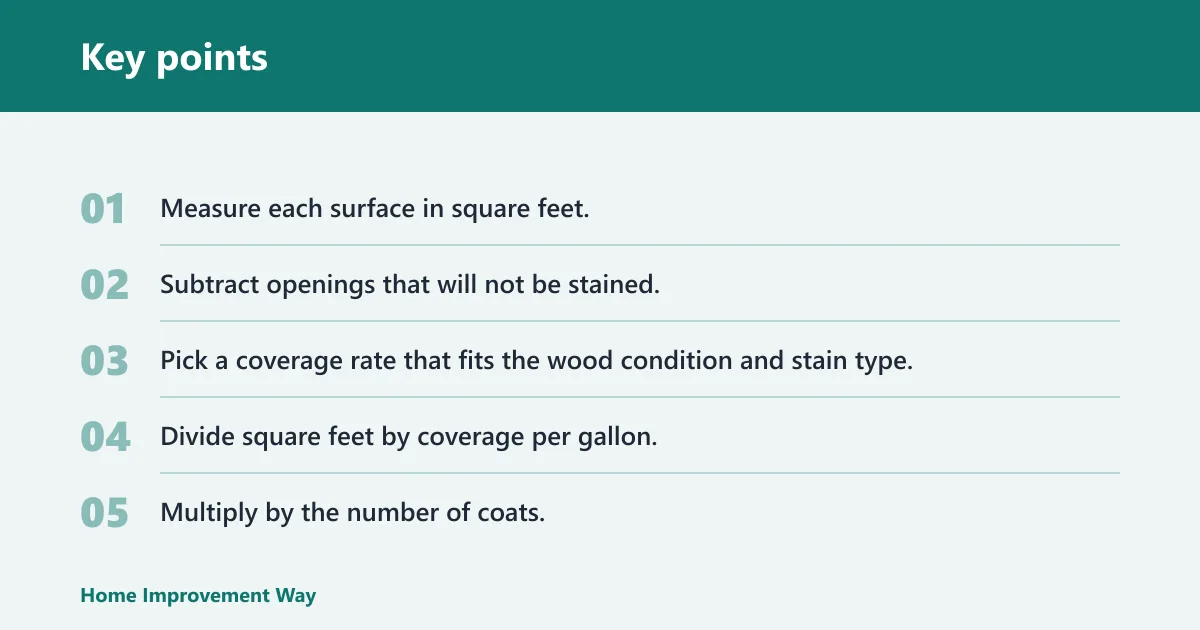
- Measure each surface in square feet.
- Subtract openings that will not be stained.
- Pick a coverage rate that fits the wood condition and stain type.
- Divide square feet by coverage per gallon.
- Multiply by the number of coats.
- Add 10% to 25% for waste, end grain, and touch-up reserve.
Suppose a 14-by-20 deck has 280 sq ft of walking surface, rough boards, and one coat of semi-transparent stain rated at 175 sq ft per gallon. That base estimate is 1.6 gallons, which becomes 2 gallons before waste and touch-up reserve. A second coat would move the estimate closer to 4 gallons.
Which tool changes your stain estimate?
Application tool changes waste more than many DIY estimates account for. A brush lays down stain efficiently on trim and rail ends. A roller can move quickly on flat boards. A pad gives controlled coverage on floors. A pump sprayer covers fast, but it usually needs back-brushing and creates more overspray loss.
Brush, roller, and pad coverage
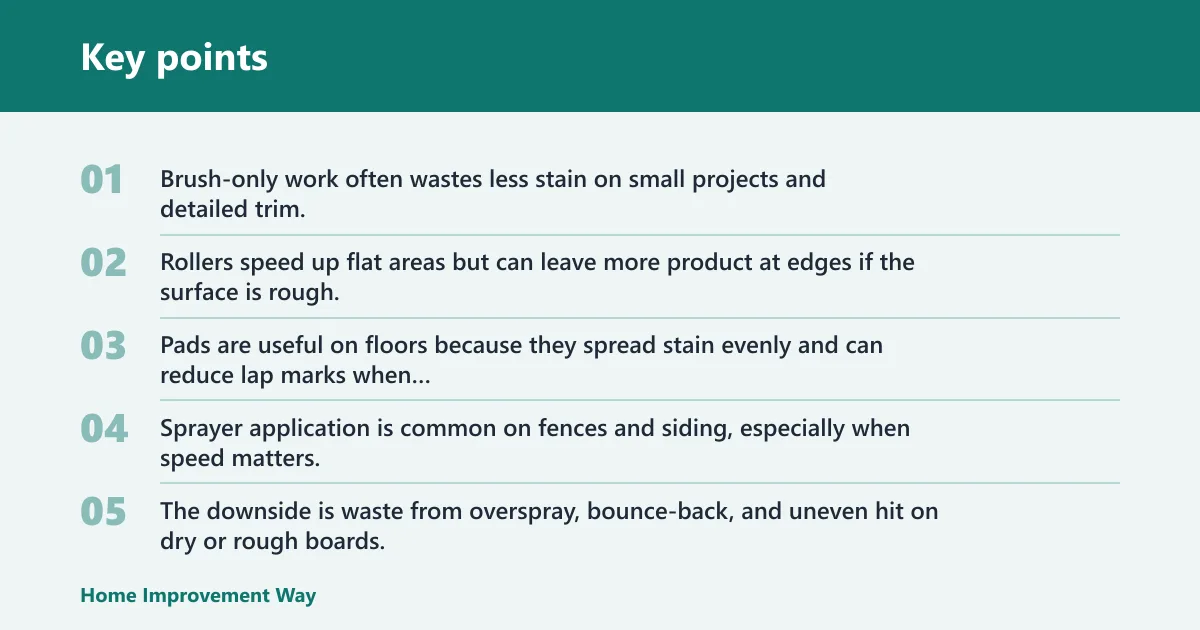
Brush-only work often wastes less stain on small projects and detailed trim. Rollers speed up flat areas but can leave more product at edges if the surface is rough. Pads are useful on floors because they spread stain evenly and can reduce lap marks when used with consistent pressure.
Pump sprayer plus back-brush workflow
Sprayer application is common on fences and siding, especially when speed matters. The downside is waste from overspray, bounce-back, and uneven hit on dry or rough boards. Back-brushing after spraying helps work stain into the grain, but it also means buying extra product for losses at the application stage.
Overspray, overlap, and end grain waste
End grain at board ends, fence pickets, and railing cuts soaks up more stain than the face of the lumber. Overlap from a second pass can also darken spots and use more product than planned. For lattice, spindles, and other small details, a 15% to 25% waste buffer is usually safer than a thin margin.
A common first-timer mistake is estimating a 100-foot privacy fence as if every board were a flat wall. Once both sides, rail faces, and cut ends are counted, the total can jump sharply. A sprayer may finish faster, but it rarely lowers the purchase amount on a detailed fence.
How long does staining take?

Drying time and recoat timing affect the full job schedule, not just the shopping list. Most labels set dry time by product, temperature, humidity, and wood condition. Water-based stains often dry sooner than oil-based ones, but cool or damp weather can slow both.
Drying time by product and weather
In warm, dry conditions, some stains can feel dry in a few hours. In cooler or humid weather, that can stretch well past a day. Direct sun can speed surface drying while leaving deeper wet spots under the film, so timing should follow the label rather than the look of the top layer.
Recoat timing and project schedule
Recoat windows matter because a second coat applied too early can trap moisture or create uneven color. If a product calls for 4 to 24 hours between coats, the second day of the job may not start until the first coat is fully ready. That delay should be part of the plan for decks and fences alike.
How coverage affects labor planning
Coverage and drying time work together. A stain that covers fewer square feet per gallon usually takes longer to apply because you are handling more material, more breaks, and more cleanup. On large fences and decks, buying enough product up front keeps the work moving instead of forcing a mid-project store run.
Say your 8-by-12 deck uses a semi-transparent stain rated at 175 sq ft per gallon, but the boards are weathered and the sprayer-plus-back-brush method is planned. The calculator should push the estimate higher than the label number alone, because rough boards and application loss both reduce real coverage.
Frequently asked questions
How many gallons of wood stain do I need?
Start with the total square footage and the stain’s coverage rate per gallon. Add extra for a second coat and waste.
How much wood stain per square foot
Cost per square foot depends on both coverage and price per gallon. A $30 gallon covering 200 sq ft costs about $0.15 per sq ft before waste. A rough surface that only covers 100 sq ft per gallon doubles that base cost, even before a second coat.
How much is a gallon of wood stain?
A common retail range is about $25 to $70 per gallon, though some exterior or solid stains cost more. The price alone does not tell the full story, because a cheaper gallon that covers fewer square feet can cost more per square foot than a pricier but higher-coverage product.
How much wood stain do I need for a fence?
Fence estimates should count both sides if both will be coated, plus rails, posts, and cut ends. Pickets and lattice create more waste than a flat wall, so add a larger buffer than you would for siding. Rough or weathered fence boards often need closer to the lower coverage range.
How long does it take to stain wood?
The application may take a few hours, but drying and recoating can extend the project into the next day. Drying time depends on the product, temperature, humidity, and wood condition. If a second coat is needed, the recoat window on the label becomes part of the schedule.
Sponsored / affiliate links. As an Amazon Associate I earn from qualifying purchases. I may earn additional commission from eligible campaigns.