Mulch Calculator: How Much Mulch Do I Need to Buy?
Use a mulch calculator to work out how much to buy. Multiply bed area by desired depth, then divide by 324 to get cubic yards; at 3 inches, one cubic yard covers 108 square feet. Guess too low, and you leave bare soil. Guess too high, and you waste money or bury roots. This guide shows how to measure irregular beds, convert to bags or bulk, and choose a safe depth for trees, borders, and playgrounds.
How is this calculated?
Press Calculate to see the math with your numbers.
How much mulch do I need?


Start with the bed’s area, then choose the depth and convert that volume into the unit you plan to buy. The basic method is area times depth, with depth converted to feet before you calculate cubic feet, then cubic yards if you are ordering bulk.
What the calculator needs from you
You need two inputs: area and depth. Calculator tools commonly accept area in square feet, square meters, square yards, or acres, and depth in inches, centimeters, feet, meters, or yards. For most DIY projects, square feet and inches are the easiest inputs.
The basic area × depth method
For a rectangular bed, multiply length by width to get square feet. Then multiply that area by mulch depth in feet. For example, a 100-square-foot bed at about 3 inches deep uses about 25 cubic feet of mulch, because 3 inches is roughly one-quarter foot.
When to add overage
Add extra mulch for settling, uneven ground, and cut loss around curves or edging. A common buying allowance is about 10 percent over the calculated amount. That helps if the pile compacts after spreading or if the bed shape forces a few partial bags to be trimmed away.
How to calculate mulch coverage
Mulch coverage depends on area, depth, and material. The same yard of mulch covers a smaller area as depth increases. Fine mulch is usually placed thinner than coarse mulch, and denser materials such as stone often cover differently than light organic mulch at the same depth.
Measure the area
Use length × width for rectangles and squares. If the bed is circular, measure the radius or diameter and calculate the circle area. For multiple beds, calculate each one separately, then add the totals. That keeps one oddly shaped bed from distorting the whole order.
Circles, rings, triangles, and trapezoids
Circle beds and tree rings need special handling because the planting area is usually a ring, not a full circle. Calculator tools may offer circle, circle border, annulus, triangle, and trapezoid options. Those shapes let you estimate real garden layouts instead of forcing everything into a rectangle.
How to split odd shapes into smaller sections
Break an L-shaped or curved border into simple parts such as rectangles, triangles, and circles. Measure each section, find each area, and add them together. Say your foundation bed has two rectangles and one half-circle. Measure each piece on its own, then total the areas before choosing depth.
Handling multiple beds
For separate beds, keep a simple list of area and depth by location. That is especially helpful if one border gets finer mulch and another gets coarser mulch or a deeper layer. Add all cubic feet together before converting to yards or bags.
How deep should mulch be applied?
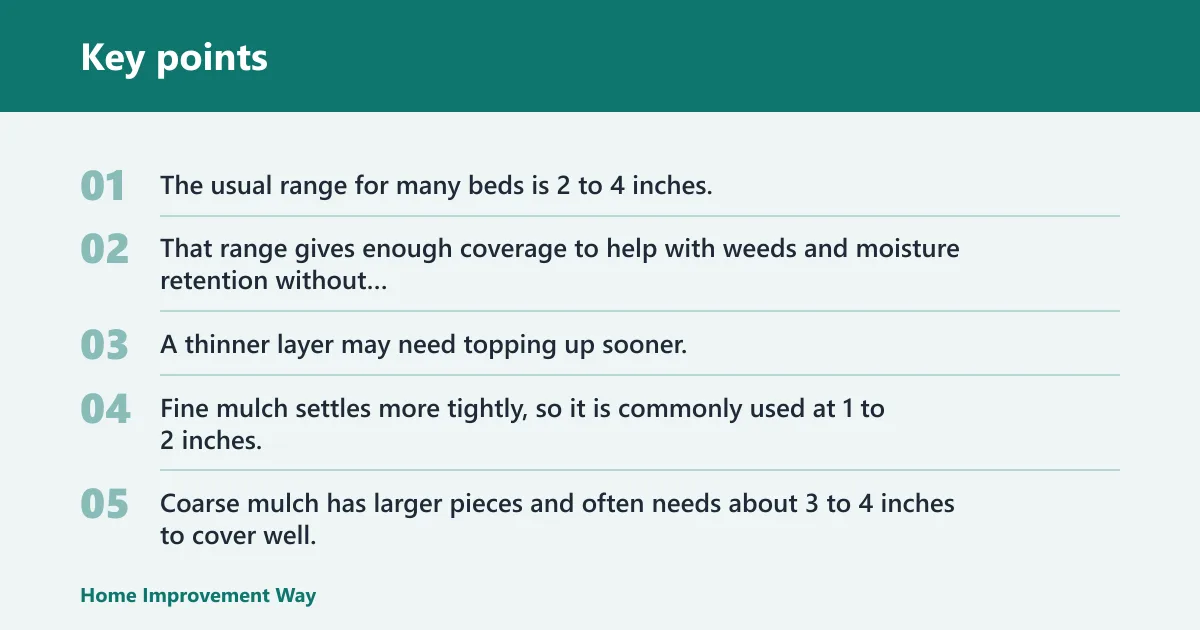
A common mulch layer is 2 to 4 inches, but the right depth depends on the material and use. Fine mulch is often applied at 1 to 2 inches. Coarse mulch should be roughly 3 to 4 inches deep. Too much mulch can block oxygen and water flow.
Typical application range
The usual range for many beds is 2 to 4 inches. That range gives enough coverage to help with weeds and moisture retention without creating an overly heavy mat. A thinner layer may need topping up sooner, while a very thick layer can become hard to manage.
Fine mulch versus coarse mulch
Fine mulch settles more tightly, so it is commonly used at 1 to 2 inches. Coarse mulch has larger pieces and often needs about 3 to 4 inches to cover well. Organic mulch, wood chips, rubber, and stone all behave differently, so the same depth does not perform the same way.
Tree-trunk clearance and volcano mulching risks
Keep mulch away from the trunk. Do not pile it against bark or build a cone around the base. Leave a clear ring around the trunk so the mulch does not trap moisture against the bark or encourage rot. A tree ring should look flat and open, not volcano-shaped.
A common first-timer mistake is filling a tree ring all the way to the trunk because the center looks bare. That turns a neat bed into a mulch volcano. A safer approach is to leave visible trunk clearance, then spread the mulch in a low, even ring to the edge of the planting area.
Convert area to mulch volume
Once you know area and depth, convert that volume into the unit used for buying. The standard path is square feet to cubic feet, then cubic feet to cubic yards for bulk orders. Small projects can also be checked in cubic inches before you convert.
Square feet to cubic feet
Multiply square feet by depth in feet. That gives cubic feet. For example, 120 square feet at about 2 inches deep equals about 20 cubic feet. The formula is simple: area × depth = volume, with depth converted from inches to feet first.
Cubic feet to cubic yards
Divide cubic feet by 27 to get cubic yards. One cubic yard equals 27 cubic feet. That is the number you need for many bulk deliveries. A 54-cubic-foot order equals 2 cubic yards.
Cubic inches conversion for small projects
For very small areas, cubic inches can help with check work. 1,728 cubic inches equals 1 cubic foot, and 46,656 cubic inches equals 1 cubic yard. That matters when you measure a narrow border or a small tree ring and want to confirm the final order size.
How many bags or yards?
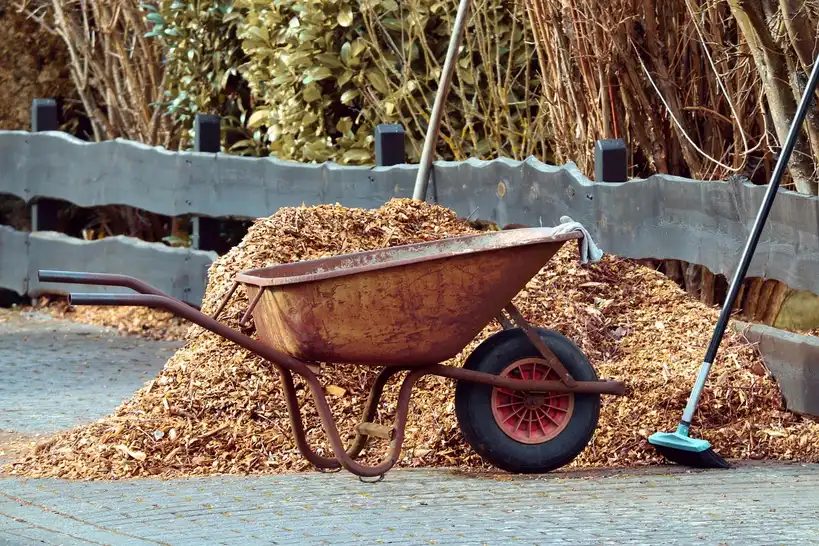
Bag count depends on bag size and the total cubic feet you need. Bulk orders depend on cubic yards. If you are comparing options, check the full delivered cost, not just the shelf price, because small bag counts can still cost more than one bulk drop.
2 cubic foot bag counts
Divide total cubic feet by 2 for two-cubic-foot bags, then round up. If your math says 6.2 bags, buy 7. Rounding down leaves part of the bed unfinished, and the last partial layer is usually where coverage problems show up first.
3 cubic foot bag counts
Divide total cubic feet by 3 for three-cubic-foot bags, then round up. Larger bags cut the bag count, but they are heavier and may be harder to move. Landscapecalculator.com outputs cubic yards and bag counts for 2 and 3 cubic foot bags.
Bagged mulch versus bulk mulch
Bagged mulch is easier for small jobs, stairs, and narrow access. Bulk mulch usually makes more sense for larger beds because the per-unit price is often lower. If the order is close to one full yard or more, bulk often wins on convenience and cost.
Price per bag, yard, foot, or cubic meter
Bulk pricing may be listed per cubic yard, cubic foot, or cubic meter, while bagged pricing is usually by the bag. Calculator tools can also accept price per cubic foot, cubic yard, cubic meter, liter, and bag sizes. To estimate cost, multiply the unit price by the quantity you need.
Suppose a border needs 18 cubic feet at 2 inches deep. If the store sells 2-cubic-foot bags, that is 9 bags before overage. If the same mulch is sold by the cubic yard, 18 cubic feet is 2/3 of a yard, so delivery minimums may matter more than the raw math.
Mulch buyer’s worksheet
Use this worksheet to turn shape and use case into a purchase decision. It ties common projects to a depth range and the buying format that usually fits best. Add 10 percent overage after you total the project, especially if the bed has curves, cuts, or uneven settling.
| Project type | Recommended depth range | Buying method |
|---|---|---|
| Rectangles | 2 to 4 inches | Use area × depth; compare 2 cubic foot bags with bulk yards for the total |
| Tree rings | 2 to 4 inches, with trunk clearance | Measure the annulus, not the full circle; bulk is often easier for larger rings |
| Playgrounds | Deeper layers are common for impact surface needs; check the project spec before ordering | Buy by cubic yard for larger coverage; verify depth before delivery |
| Mixed beds | 1 to 2 inches for fine mulch, 3 to 4 inches for coarse mulch | Split into sections, total each section, then choose bags or bulk from the final volume |
| Final order allowance | Add 10 percent overage | Round up after adding settling and cut loss |
What mulch type should you buy?
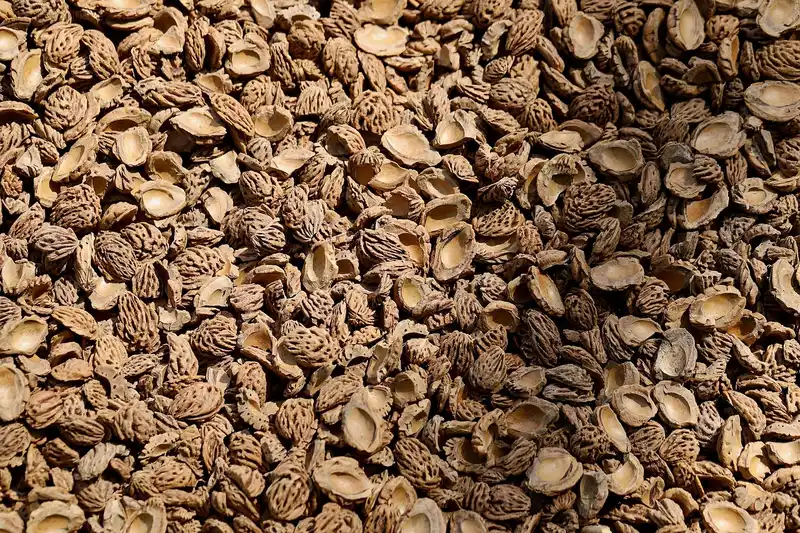
Choose mulch by purpose, appearance, and maintenance level. Organic mulch breaks down over time and usually needs topping up. Inorganic mulch lasts longer but does not add organic matter. Wood chips, rubber, and stone each change the buying math because density, depth, and long-term upkeep differ.
Organic mulch
Organic mulch includes bark, shredded wood, and similar materials that decompose over time. That means the bed may settle and need more product later. It is often used in garden beds where soil improvement matters as much as surface coverage.
Inorganic mulch
Inorganic mulch includes materials such as stone or other non-decomposing cover. It usually does not break down like organic mulch, but it can still shift, collect debris, or need raking. Because it is heavier, the coverage and transport choices can be different from bagged bark mulch.
Wood chips, rubber, and stone
Wood chips are common for paths, borders, and some tree areas. Rubber mulch is often used where low maintenance is the priority, and stone works well where a permanent surface is wanted. Always match the material to the site, because the same depth can behave differently across these products.
Frequently asked questions
How do I calculate how much mulch I need?
Measure the bed area, choose a depth, and multiply the two once the depth is in feet. Then convert cubic feet to cubic yards by dividing by 27 if you are ordering bulk. Add 10 percent if the bed has curves, slopes, or settling risk.
How do I calculate mulch coverage?
Coverage is area divided by depth. At 1 inch depth, one cubic yard covers 324 square feet. At 2 inches depth, one cubic yard covers 162 square feet. As depth increases, coverage drops quickly, so always match the yardage to the depth you plan to spread.
How many bags of mulch do I need?
First find total cubic feet. Then divide by the bag size, usually 2 or 3 cubic feet, and round up. That rounding matters because a half bag is not enough to finish a section cleanly. If the bed is irregular, add overage before you divide.
How many cubic yards of mulch do I need?
Find cubic feet first, then divide by 27. If a bed needs 81 cubic feet, the answer is 3 cubic yards. For shaped beds, total each section before the conversion. That keeps the final order aligned with the actual area and depth.
How do I calculate mulch for a circle or tree ring?
Measure the circle with radius or diameter, then use the circle area. For a tree ring, calculate the annulus, not the full circle, so you subtract the trunk opening from the outer area. That avoids overordering and helps keep mulch away from the trunk.
Should I add overage for settling and waste?
Yes. A 10 percent allowance is a practical way to cover settling, uneven ground, and cuts around edges or posts. It also helps if the final spread looks thin after compaction. Round up after adding the allowance, especially on odd shapes and mixed-depth jobs.
Sponsored / affiliate links. As an Amazon Associate I earn from qualifying purchases. I may earn additional commission from eligible campaigns.
 Permanent Mulch Recycled Rubber Border - 6 Feet Long x 22 Inches Wide | Weed Deterrent | Easy Install | Scatter-Proof | Landscaping | Paths | Eco-Friendly Design
 Rubberific Premium Shredded Rubber Mulch for Gardens, Lawns, and Landscaping | Long Lasting Color | Looks Like Natural Wood Mulch (0.8 Cu. Ft. - 16 LBS, Brown)