Do Door Handles Fit All Doors

Do Door Handles Fit All Doors? Size Guide

It’s a common question when you’re thinking about new doors or just a quick update: Do Door Handles Fit All Doors? Size Guide can seem tricky at first glance. Many people wonder if they need special tools or if they’ll end up with a handle that doesn’t quite line up.

Don’t worry! It’s simpler than you think. We’ll walk through exactly how to check if a door handle will work for you, making sure your next DIY project goes smoothly.

Let’s get started by looking at the main things that matter.

Understanding Door Handle Measurements

When you’re picking out a new door handle, the most important thing is to know if it will fit your door properly. This isn’t about fancy designs or special locks, but about the basic measurements that connect the handle to the door. Getting these right means the handle will work smoothly and look good.

We’ll cover the key measurements you need to know, so you can confidently choose the right hardware for any door in your home. This part is all about the nitty-gritty details that make a big difference.

Backset Explained

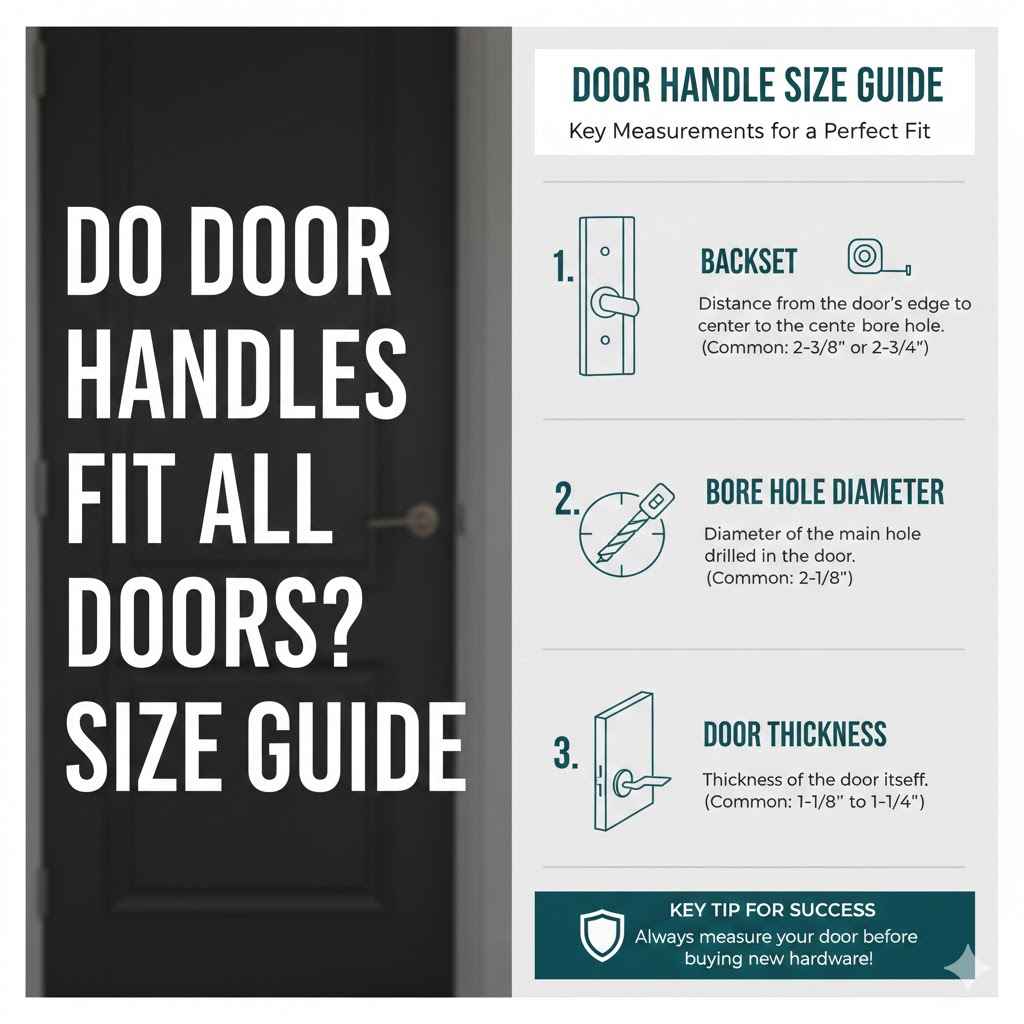
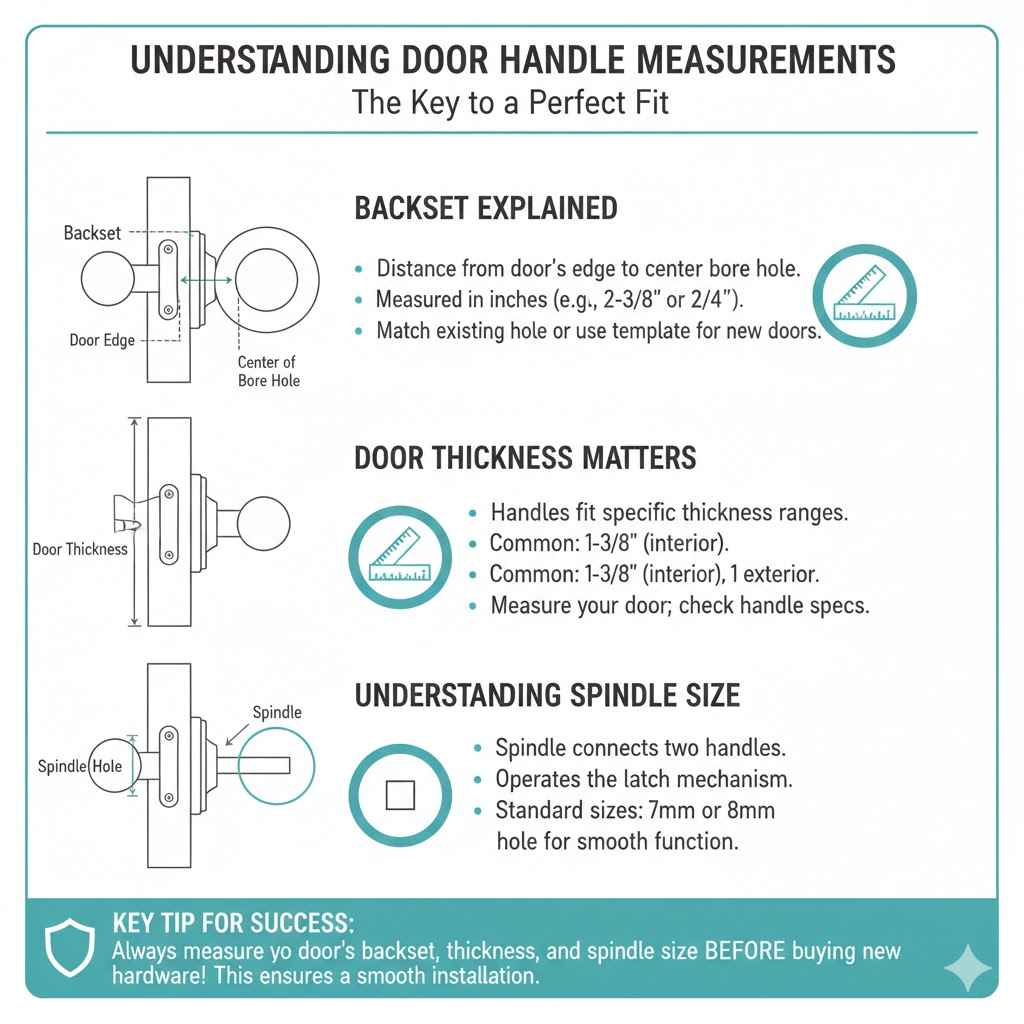
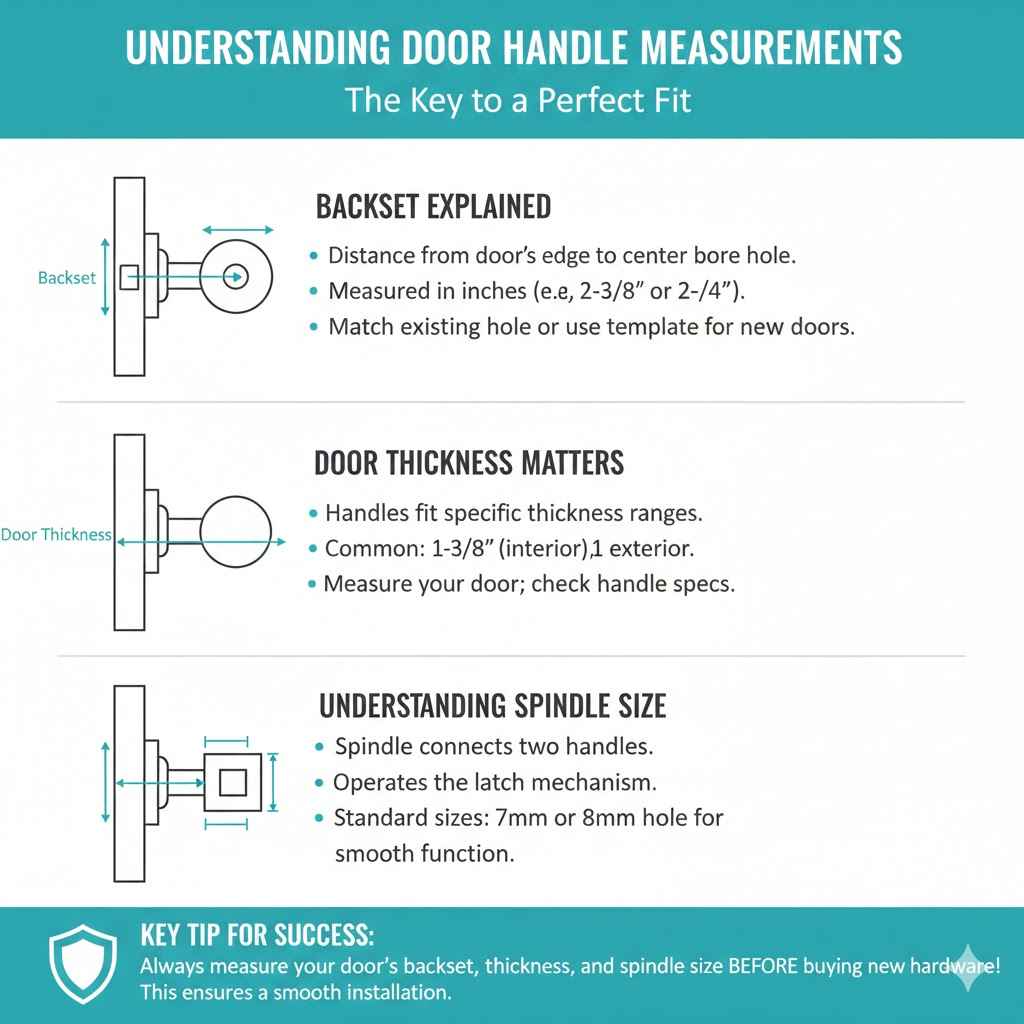
The backset is the distance from the edge of the door to the center of the hole where the doorknob spindle goes. It’s usually measured in inches. Standard backsets are typically 2 3/8 inches or 2 3/4 inches.

If your door already has holes, you’ll need to measure this to buy a

Imagine you have a door with a pre-drilled hole. If you measure from the very edge of the door to the middle of that hole, that’s your backset. Most modern doors are drilled with one of the two standard sizes.

Older homes might have different sizes, but it’s less common. Knowing your backset is the first step to ensuring a good fit.

Discover more interesting content on Door Hardware & Locks by reading this post. How to Open a Locked Door Without a Key

The Importance of Door Thickness

Door handles are designed to fit doors within a certain thickness range. Most standard interior doors are about 1 3/8 inches thick, while exterior doors are often thicker, around 1 3/4 inches. The handle’s mounting screws and spindle are usually long enough to accommodate these common thicknesses.

If your door is unusually thick or thin, you might need to look for specialized hardware or adjust the installation.

If you buy a handle and your door is much thinner than what it’s made for, the screws might go in too far and cause problems. If your door is too thick, the screws might not reach enough to hold the handle securely. It’s always good to check the handle’s specifications to see the range of door thicknesses it supports.

Understanding Spindle Size

The spindle is the rod that passes through the door and connects the two handles. It’s what you turn to operate the latch. Spindles have standard sizes, and they need to match the holes in your door.

Most interior door knobs use a 7mm or 8mm spindle. If you’re replacing a knob, the new spindle should match the old one, or the pre-drilled hole in your door.

The spindle is essentially the bridge between the handle on one side of the door and the handle on the other. It’s what allows you to operate the latch mechanism. If the spindle is too small for the hole, the handles might feel loose.

If it’s too big, it won’t fit through the hole at all.

It’s a common question when you’re thinking about new doors or just a quick update: Do Door Handles Fit All Doors? Size Guide can seem tricky at first glance. Many people wonder if they need special tools or if they’ll end up with a handle that doesn’t quite line up.
Don’t worry! It’s simpler than you think. We’ll walk through exactly how to check if a door handle will work for you, making sure your next DIY project goes smoothly.
Let’s get started by looking at the main things that matter.
Understanding Door Handle Measurements
When you're picking out a new door handle, the most important thing is to know if it will fit your door properly. This isn't about fancy designs or special locks, but about the basic measurements that connect the handle to the door. Getting these right means the handle will work smoothly and look good.
We'll cover the key measurements you need to know, so you can confidently choose the right hardware for any door in your home. This part is all about the nitty-gritty details that make a big difference.
Backset Explained
The backset is the distance from the edge of the door to the center of the hole where the doorknob spindle goes. It’s usually measured in inches. Standard backsets are typically 2 3/8 inches or 2 3/4 inches.
If your door already has holes, you’ll need to measure this to buy a
Imagine you have a door with a pre-drilled hole. If you measure from the very edge of the door to the middle of that hole, that’s your backset. Most modern doors are drilled with one of the two standard sizes.
Older homes might have different sizes, but it’s less common. Knowing your backset is the first step to ensuring a good fit.
The Importance of Door Thickness
Door handles are designed to fit doors within a certain thickness range. Most standard interior doors are about 1 3/8 inches thick, while exterior doors are often thicker, around 1 3/4 inches. The handle’s mounting screws and spindle are usually long enough to accommodate these common thicknesses.
If your door is unusually thick or thin, you might need to look for specialized hardware or adjust the installation.
If you buy a handle and your door is much thinner than what it's made for, the screws might go in too far and cause problems. If your door is too thick, the screws might not reach enough to hold the handle securely. It’s always good to check the handle’s specifications to see the range of door thicknesses it supports.
Understanding Spindle Size
The spindle is the rod that passes through the door and connects the two handles. It's what you turn to operate the latch. Spindles have standard sizes, and they need to match the holes in your door.
Most interior door knobs use a 7mm or 8mm spindle. If you're replacing a knob, the new spindle should match the old one, or the pre-drilled hole in your door.
The spindle is essentially the bridge between the handle on one side of the door and the handle on the other. It's what allows you to operate the latch mechanism. If the spindle is too small for the hole, the handles might feel loose.
If it’s too big, it won’t fit through the hole at all.
Common Door Handle Types and Their Fit
There are several popular types of door handles, and each has specific fitting requirements. Understanding these differences will help you choose the right one for your needs. From simple knobs to stylish levers, knowing how they attach to the door is key to a successful installation.
We will explore the most common styles and what you need to consider for each.
Door Knobs
Door knobs are the classic choice. They are circular and typically operate by twisting. Most door knobs are designed to fit doors with a standard backset and spindle size.
When buying a new knob, you'll usually get a set that includes both knobs, a latch mechanism, and all the necessary screws and spindles.
For a standard door knob, you generally need a door that has a cross-bore (the hole drilled through the face of the door) and a separate edge bore (the hole drilled into the edge of the door for the latch). The backset measurement is critical here. If your door doesn't have these holes, you may need to drill them, which requires a specific type of drill bit called a spade bit or a hole saw.
Door Levers
Door levers are a more modern and accessible option. They are easier to operate, especially for children or people with mobility issues, as they can be pushed down with an arm or elbow. Like knobs, levers are designed for standard door preparations.
You will still need to consider the backset and door thickness.
Lever handles often come with a more substantial mounting plate or rose, which can sometimes cover a larger area of the door. This can be beneficial if you are replacing an old handle and want to cover any existing marks or holes. The spindle mechanism for levers is the same as for knobs, ensuring they connect to the latch.
Mortise Locks
Mortise locks are a more robust and often more secure type of lock system. Instead of a simple latch, they have a box-like mechanism that fits inside a pocket cut into the edge of the door. The handles or levers then connect to this mortise lock case.
Installing a mortise lock is more involved than a standard knob or lever set. It requires a larger cutout in the door's edge to accommodate the lock case. The dimensions of this case and the placement of the handles relative to it are specific.
If you are retrofitting a mortise lock, you will likely need to do significant carpentry work on the door. However, if a door is already prepared for a mortise lock, you simply need to ensure the new handle set matches the lock case's specifications.
Smart Locks
Smart locks offer convenience and advanced security features like keyless entry, remote access, and integration with home automation systems. Most smart locks are designed to replace standard deadbolts and knobs or levers. The key measurement here is often the backset and the existing door bore sizes.
Many smart lock manufacturers provide templates to help you measure your door and ensure compatibility. They are typically designed to fit doors with standard preparations for deadbolts and doorknobs. Some smart locks are full handle replacements, while others only replace the deadbolt.
Always check the product specifications for compatible door thickness and hole sizes.
Measuring Your Door for Compatibility
To answer the question, "Do Door Handles Fit All Doors? Size Guide is essential," you need to know how to measure your existing door. This is not complicated, and with a few simple tools, you can get all the necessary information.
We’ll guide you through taking precise measurements to ensure you purchase a handle that will work perfectly.
How to Measure the Backset
Measuring the backset is straightforward. You’ll need a tape measure.

Open the door.
Locate the latch plate on the edge of the door. This is the metal piece that goes into the door frame.
Remove the screws holding the latch plate in place.
Pull the latch mechanism out from the edge of the door.
Measure from the edge of the door to the center of the hole that the spindle passes through. This is your backset.

If you cannot easily remove the latch mechanism, you can also measure from the edge of the door to the center of the cross-bore hole on the face of the door. This will give you the same measurement. The most common backsets are 2 3/8 inches and 2 3/4 inches.
Measuring Door Thickness
Door thickness is also an easy measurement to take.

Place your tape measure against the edge of the door.
Read the measurement where the door stops.

Standard interior doors are usually 1 3/8 inches thick. Exterior doors are commonly 1 3/4 inches thick. Most door handles are made to fit this range.
If your door is significantly thicker or thinner, you might need to look for specialized hardware or consider if the existing mechanism can be adapted.
Checking Existing Hole Sizes
The holes in your door are already there, so you just need to confirm their sizes.

Cross-Bore Diameter: This is the larger hole on the face of the door. You can measure its diameter. Standard cross-bores are often 2 1/8 inches in diameter.
Edge Bore Diameter: This is the smaller hole on the edge of the door where the latch mechanism fits. This is usually 1 inch in diameter.
Spindle Size: If you can see the spindle, measure its diameter. Most are 7mm or 8mm square rods.

If you are replacing an existing handle, compare these measurements to the specifications of the new handle. If you are installing a new handle on a door that doesn't have holes, you will need to drill them to the correct sizes.
Do Door Handles Fit All Doors? Answering the Question
To directly answer: No, door handles do not fit all doors without consideration. While many handles are designed for standard door sizes and preparations, there are variations. The key to a successful fit lies in matching the handle's specifications to your door's measurements.
This is where the "Do Door Handles Fit All Doors? Size Guide" becomes your best friend.
The primary factors are the backset, door thickness, and the diameter of the holes already in the door. If your door has non-standard dimensions or pre-existing holes that don't match common hardware, you might need to get creative. This could involve drilling new holes, using adapter plates, or seeking out specialized hardware.
When Handles Might Not Fit
Several situations can lead to a door handle not fitting.

Non-Standard Backset: If your door has a backset of, say, 3 inches, you’ll need to find a handle specifically made for that larger backset. Standard handles won't reach or align correctly.
Unusual Door Thickness: Very old doors or custom-made doors can be thicker or thinner than the 1 3/8-inch or 1 3/4-inch standard. A handle designed for standard thickness might not be able to secure properly.
Incorrect Hole Sizes: If the holes drilled in your door for the spindle and latch are too small or too large for the new hardware, the handle won't install correctly.
Different Lock Types: Trying to fit a standard knob onto a door prepared for a mortise lock, or vice-versa, will obviously not work without significant modification.

For example, if you have a solid wood door that is 2 1/4 inches thick, most standard handles won't be long enough to connect securely. You would need to find handles that offer longer spindles and mounting screws, or consider using a surface-mounted lock instead of a through-door mechanism.
Adapting Doors for New Handles
If your door doesn't have the correct measurements for the handle you want, don't despair. Many doors can be adapted.

Drilling New Holes: For doors without any pre-drilled holes, you can install new hardware. This requires measuring and drilling the cross-bore, edge bore, and possibly a hole for a deadbolt. Using a template that comes with the hardware is highly recommended.
Using Adapters: Some manufacturers offer adapter plates that can cover larger existing holes or bridge gaps if the new hardware is slightly different in size from the old.
Modifying Latch Mechanisms: If the backset is only slightly off, some latch mechanisms are adjustable. You can often find latches that can be set to either 2 3/8 inches or 2 3/4 inches.

Let's say you find a beautiful lever handle, but your door only has a hole for a small knob with a 2-inch backset. You would first need to fill the old holes and then carefully measure and drill new ones for the new lever handle, ensuring the backset and spindle hole are correctly positioned. This often involves using wood filler, a drill with appropriate bits, and a steady hand.
When to Call a Professional
While many door handle installations are DIY-friendly, there are times when it's best to call a professional. If you are unsure about measuring, drilling into your doors, or working with complex locking mechanisms like mortise locks, a locksmith or carpenter can save you time and prevent costly mistakes. They have the specialized tools and experience to ensure a perfect fit and secure installation.
For instance, if you are dealing with an antique door made of very hard wood, or a door with intricate decorative elements, drilling might risk damaging it. A professional can assess the situation and advise on the best course of action. They can also ensure that the new hardware is installed to meet security standards, especially for exterior doors.
Examples and Scenarios
To make this more practical, let's look at a few real-life situations where understanding the Do Door Handles Fit All Doors? Size Guide is crucial. These examples show how common measurement issues can be solved with a little knowledge.
Scenario 1: Replacing an Old Doorknob
You have an old house and want to
Scenario 2: A New Interior Door
You've installed a brand-new interior door. It came pre-drilled for a standard knob. You want to install a lever handle instead.
You check the lever handle's specifications and find it requires a 2 3/4-inch backset. The pre-drilled holes in your door are for a 2 3/8-inch backset. In this case, the existing holes won't work.
You will need to either fill the existing holes and drill new ones for the 2 3/4-inch backset, or find a lever handle that offers an adjustable backset or is specifically designed for a 2 3/8-inch backset.
Scenario 3: An Exterior Security Upgrade
You want to upgrade your exterior door with a smart lock. The smart lock requires a 2 3/4-inch backset and is designed for a standard 2 1/8-inch cross-bore. Your door currently has an old, simple deadbolt with a 2 3/8-inch backset.
You measure the existing hole and find it's a standard 2 1/8-inch cross-bore, but the latch mechanism is set to 2 3/8 inches. You can either adjust the existing latch to 2 3/4 inches if it's adjustable, or you might need to purchase a new latch mechanism that supports the required backset, ensuring the cross-bore size is compatible.
Case Study: The "Mystery" Door Thickness
A homeowner was renovating a historic cottage and found a beautiful antique door. They wanted to put a modern privacy knob on it. Standard knobs are for doors up to 1 3/4 inches thick.
When they measured the antique door, it was a surprising 2 1/4 inches thick. Most hardware stores only carried standard-sized screws and spindles. The solution involved ordering a "heavy-duty" or "extended spindle" kit specifically designed for thicker doors.
This kit came with longer connecting rods and screws that could reach through the substantial door, ensuring a secure fit for the new knob. This shows that even for unusual door sizes, there are often specific solutions available.
Statistics on Door Hardware Compatibility
According to industry reports, approximately 85% of new residential doors manufactured in North America are pre-drilled with standard bore hole sizes and backsets (2 1/8-inch cross-bore and 2 3/8-inch or 2 3/4-inch backset). This high standardization is why many homeowners can easily swap out hardware. However, about 10% of older homes may have non-standard measurements, and another 5% might be custom doors with unique requirements.
This means while standard sizes cover most cases, being prepared to measure is always wise.
Frequently Asked Questions
Question: Can I put any door handle on any door?
Answer: No, you cannot put any door handle on any door without checking measurements. While many handles are made for standard door sizes, you need to match the handle's backset, door thickness compatibility, and hole sizes to your specific door for a proper fit.
Question: What is the most important measurement for a door handle?
Answer: The most important measurement is the backset, which is the distance from the edge of the door to the center of the hole where the spindle passes through. Standard backsets are 2 3/8 inches and 2 3/4 inches, and your new handle must match your door's backset.
Question: How do I know if a new handle will fit my door's thickness?
Answer: Most door handles are designed to fit standard interior doors (about 1 3/8 inches thick) and exterior doors (about 1 3/4 inches thick). Check the product specifications for the range of door thicknesses the handle supports. If your door is significantly different, you may need specialized hardware.
Question: What if the holes in my door don't match the new handle?
Answer: If the holes don't match, you might be able to drill new holes after filling the old ones. Some adjustable latches can also accommodate slight variations. For significant differences, consider adapter plates or specialized hardware, or call a professional.
Question: Are all door spindles the same size?
Answer: No, door spindles are not all the same size. While standard interior knobs and levers commonly use 7mm or 8mm square spindles, you need to ensure the spindle size of your new hardware matches the pre-drilled hole in your door or the existing spindle size if you are reusing the mechanism.
Conclusion
So, do door handles fit all doors? Not exactly, but the "Do Door Handles Fit All Doors? Size Guide" makes it easy.
By measuring your door's backset, thickness, and existing holes, you can confidently select hardware that will work perfectly. Most doors have standard preparations, but knowing how to measure ensures you avoid common issues.

Common Door Handle Types and Their Fit

There are several popular types of door handles, and each has specific fitting requirements. Understanding these differences will help you choose the right one for your needs. From simple knobs to stylish levers, knowing how they attach to the door is key to a successful installation.

We will explore the most common styles and what you need to consider for each.

Dive deeper into Door Hardware & Locks by checking out this article. How to Align Door Hinges for a Perfect Fit

Door Knobs

Door knobs are the classic choice. They are circular and typically operate by twisting. Most door knobs are designed to fit doors with a standard backset and spindle size.

When buying a new knob, you’ll usually get a set that includes both knobs, a latch mechanism, and all the necessary screws and spindles.

For a standard door knob, you generally need a door that has a cross-bore (the hole drilled through the face of the door) and a separate edge bore (the hole drilled into the edge of the door for the latch). The backset measurement is critical here. If your door doesn’t have these holes, you may need to drill them, which requires a specific type of drill bit called a spade bit or a hole saw.

Door Levers

Door levers are a more modern and accessible option. They are easier to operate, especially for children or people with mobility issues, as they can be pushed down with an arm or elbow. Like knobs, levers are designed for standard door preparations.

You will still need to consider the backset and door thickness.

Lever handles often come with a more substantial mounting plate or rose, which can sometimes cover a larger area of the door. This can be beneficial if you are replacing an old handle and want to cover any existing marks or holes. The spindle mechanism for levers is the same as for knobs, ensuring they connect to the latch.

Mortise Locks

Mortise locks are a more robust and often more secure type of lock system. Instead of a simple latch, they have a box-like mechanism that fits inside a pocket cut into the edge of the door. The handles or levers then connect to this mortise lock case.

Installing a mortise lock is more involved than a standard knob or lever set. It requires a larger cutout in the door’s edge to accommodate the lock case. The dimensions of this case and the placement of the handles relative to it are specific.

If you are retrofitting a mortise lock, you will likely need to do significant carpentry work on the door. However, if a door is already prepared for a mortise lock, you simply need to ensure the new handle set matches the lock case’s specifications.

Expand your knowledge about Door Hardware & Locks with this article. What Is a Do Not Disturb Door Knob?

Smart Locks

Smart locks offer convenience and advanced security features like keyless entry, remote access, and integration with home automation systems. Most smart locks are designed to replace standard deadbolts and knobs or levers. The key measurement here is often the backset and the existing door bore sizes.

Many smart lock manufacturers provide templates to help you measure your door and ensure compatibility. They are typically designed to fit doors with standard preparations for deadbolts and doorknobs. Some smart locks are full handle replacements, while others only replace the deadbolt.

Always check the product specifications for compatible door thickness and hole sizes.

Measuring Your Door for Compatibility

To answer the question, “Do Door Handles Fit All Doors? Size Guide is essential,” you need to know how to measure your existing door. This is not complicated, and with a few simple tools, you can get all the necessary information.

We’ll guide you through taking precise measurements to ensure you purchase a handle that will work perfectly.

How to Measure the Backset

Measuring the backset is straightforward. You’ll need a tape measure.

  1. Open the door.
  2. Locate the latch plate on the edge of the door. This is the metal piece that goes into the door frame.
  3. Remove the screws holding the latch plate in place.
  4. Pull the latch mechanism out from the edge of the door.
  5. Measure from the edge of the door to the center of the hole that the spindle passes through. This is your backset.

If you cannot easily remove the latch mechanism, you can also measure from the edge of the door to the center of the cross-bore hole on the face of the door. This will give you the same measurement. The most common backsets are 2 3/8 inches and 2 3/4 inches.

Measuring Door Thickness

Door thickness is also an easy measurement to take.

  1. Place your tape measure against the edge of the door.
  2. Read the measurement where the door stops.

Standard interior doors are usually 1 3/8 inches thick. Exterior doors are commonly 1 3/4 inches thick. Most door handles are made to fit this range.

If your door is significantly thicker or thinner, you might need to look for specialized hardware or consider if the existing mechanism can be adapted.

Need to understand more about Door Hardware & Locks? This post might help you. How to Remove a Door Knob From the Outside

Checking Existing Hole Sizes

The holes in your door are already there, so you just need to confirm their sizes.

  • Cross-Bore Diameter: This is the larger hole on the face of the door. You can measure its diameter. Standard cross-bores are often 2 1/8 inches in diameter.
  • Edge Bore Diameter: This is the smaller hole on the edge of the door where the latch mechanism fits. This is usually 1 inch in diameter.
  • Spindle Size: If you can see the spindle, measure its diameter. Most are 7mm or 8mm square rods.

If you are replacing an existing handle, compare these measurements to the specifications of the new handle. If you are installing a new handle on a door that doesn’t have holes, you will need to drill them to the correct sizes.

Do Door Handles Fit All Doors? Answering the Question

To directly answer: No, door handles do not fit all doors without consideration. While many handles are designed for standard door sizes and preparations, there are variations. The key to a successful fit lies in matching the handle’s specifications to your door’s measurements.

This is where the “Do Door Handles Fit All Doors? Size Guide” becomes your best friend.

The primary factors are the backset, door thickness, and the diameter of the holes already in the door. If your door has non-standard dimensions or pre-existing holes that don’t match common hardware, you might need to get creative. This could involve drilling new holes, using adapter plates, or seeking out specialized hardware.

When Handles Might Not Fit

Several situations can lead to a door handle not fitting.

  • Non-Standard Backset: If your door has a backset of, say, 3 inches, you’ll need to find a handle specifically made for that larger backset. Standard handles won’t reach or align correctly.
  • Unusual Door Thickness: Very old doors or custom-made doors can be thicker or thinner than the 1 3/8-inch or 1 3/4-inch standard. A handle designed for standard thickness might not be able to secure properly.
  • Incorrect Hole Sizes: If the holes drilled in your door for the spindle and latch are too small or too large for the new hardware, the handle won’t install correctly.
  • Different Lock Types: Trying to fit a standard knob onto a door prepared for a mortise lock, or vice-versa, will obviously not work without significant modification.

For example, if you have a solid wood door that is 2 1/4 inches thick, most standard handles won’t be long enough to connect securely. You would need to find handles that offer longer spindles and mounting screws, or consider using a surface-mounted lock instead of a through-door mechanism.

Find out more about Door Hardware & Locks by exploring this related topic. How to Replace a Door Threshold in Easy Steps

Adapting Doors for New Handles

If your door doesn’t have the correct measurements for the handle you want, don’t despair. Many doors can be adapted.

  • Drilling New Holes: For doors without any pre-drilled holes, you can install new hardware. This requires measuring and drilling the cross-bore, edge bore, and possibly a hole for a deadbolt. Using a template that comes with the hardware is highly recommended.
  • Using Adapters: Some manufacturers offer adapter plates that can cover larger existing holes or bridge gaps if the new hardware is slightly different in size from the old.
  • Modifying Latch Mechanisms: If the backset is only slightly off, some latch mechanisms are adjustable. You can often find latches that can be set to either 2 3/8 inches or 2 3/4 inches.

Let’s say you find a beautiful lever handle, but your door only has a hole for a small knob with a 2-inch backset. You would first need to fill the old holes and then carefully measure and drill new ones for the new lever handle, ensuring the backset and spindle hole are correctly positioned. This often involves using wood filler, a drill with appropriate bits, and a steady hand.

When to Call a Professional

While many door handle installations are DIY-friendly, there are times when it’s best to call a professional. If you are unsure about measuring, drilling into your doors, or working with complex locking mechanisms like mortise locks, a locksmith or carpenter can save you time and prevent costly mistakes. They have the specialized tools and experience to ensure a perfect fit and secure installation.

For instance, if you are dealing with an antique door made of very hard wood, or a door with intricate decorative elements, drilling might risk damaging it. A professional can assess the situation and advise on the best course of action. They can also ensure that the new hardware is installed to meet security standards, especially for exterior doors.

Examples and Scenarios

To make this more practical, let’s look at a few real-life situations where understanding the Do Door Handles Fit All Doors? Size Guide is crucial. These examples show how common measurement issues can be solved with a little knowledge.

Scenario 1: Replacing an Old Doorknob

You have an old house and want to

Scenario 2: A New Interior Door

You’ve installed a brand-new interior door. It came pre-drilled for a standard knob. You want to install a lever handle instead.

You check the lever handle’s specifications and find it requires a 2 3/4-inch backset. The pre-drilled holes in your door are for a 2 3/8-inch backset. In this case, the existing holes won’t work.

You will need to either fill the existing holes and drill new ones for the 2 3/4-inch backset, or find a lever handle that offers an adjustable backset or is specifically designed for a 2 3/8-inch backset.

Scenario 3: An Exterior Security Upgrade

You want to upgrade your exterior door with a smart lock. The smart lock requires a 2 3/4-inch backset and is designed for a standard 2 1/8-inch cross-bore. Your door currently has an old, simple deadbolt with a 2 3/8-inch backset.

You measure the existing hole and find it’s a standard 2 1/8-inch cross-bore, but the latch mechanism is set to 2 3/8 inches. You can either adjust the existing latch to 2 3/4 inches if it’s adjustable, or you might need to purchase a new latch mechanism that supports the required backset, ensuring the cross-bore size is compatible.

Case Study: The “Mystery” Door Thickness

A homeowner was renovating a historic cottage and found a beautiful antique door. They wanted to put a modern privacy knob on it. Standard knobs are for doors up to 1 3/4 inches thick.

When they measured the antique door, it was a surprising 2 1/4 inches thick. Most hardware stores only carried standard-sized screws and spindles. The solution involved ordering a “heavy-duty” or “extended spindle” kit specifically designed for thicker doors.

This kit came with longer connecting rods and screws that could reach through the substantial door, ensuring a secure fit for the new knob. This shows that even for unusual door sizes, there are often specific solutions available.

Statistics on Door Hardware Compatibility

According to industry reports, approximately 85% of new residential doors manufactured in North America are pre-drilled with standard bore hole sizes and backsets (2 1/8-inch cross-bore and 2 3/8-inch or 2 3/4-inch backset). This high standardization is why many homeowners can easily swap out hardware. However, about 10% of older homes may have non-standard measurements, and another 5% might be custom doors with unique requirements.

This means while standard sizes cover most cases, being prepared to measure is always wise.

Examples and Scenarios

Frequently Asked Questions

Question: Can I put any door handle on any door?

Answer: No, you cannot put any door handle on any door without checking measurements. While many handles are made for standard door sizes, you need to match the handle’s backset, door thickness compatibility, and hole sizes to your specific door for a proper fit.

Question: What is the most important measurement for a door handle?

Answer: The most important measurement is the backset, which is the distance from the edge of the door to the center of the hole where the spindle passes through. Standard backsets are 2 3/8 inches and 2 3/4 inches, and your new handle must match your door’s backset.

Question: How do I know if a new handle will fit my door’s thickness?

Answer: Most door handles are designed to fit standard interior doors (about 1 3/8 inches thick) and exterior doors (about 1 3/4 inches thick). Check the product specifications for the range of door thicknesses the handle supports. If your door is significantly different, you may need specialized hardware.

Question: What if the holes in my door don’t match the new handle?

Answer: If the holes don’t match, you might be able to drill new holes after filling the old ones. Some adjustable latches can also accommodate slight variations. For significant differences, consider adapter plates or specialized hardware, or call a professional.

Question: Are all door spindles the same size?

Answer: No, door spindles are not all the same size. While standard interior knobs and levers commonly use 7mm or 8mm square spindles, you need to ensure the spindle size of your new hardware matches the pre-drilled hole in your door or the existing spindle size if you are reusing the mechanism.

Conclusion

So, do door handles fit all doors? Not exactly, but the “Do Door Handles Fit All Doors? Size Guide” makes it easy.

By measuring your door’s backset, thickness, and existing holes, you can confidently select hardware that will work perfectly. Most doors have standard preparations, but knowing how to measure ensures you avoid common issues.
Similar Posts