Does Cat Urine Smell? Proven, Essential Facts
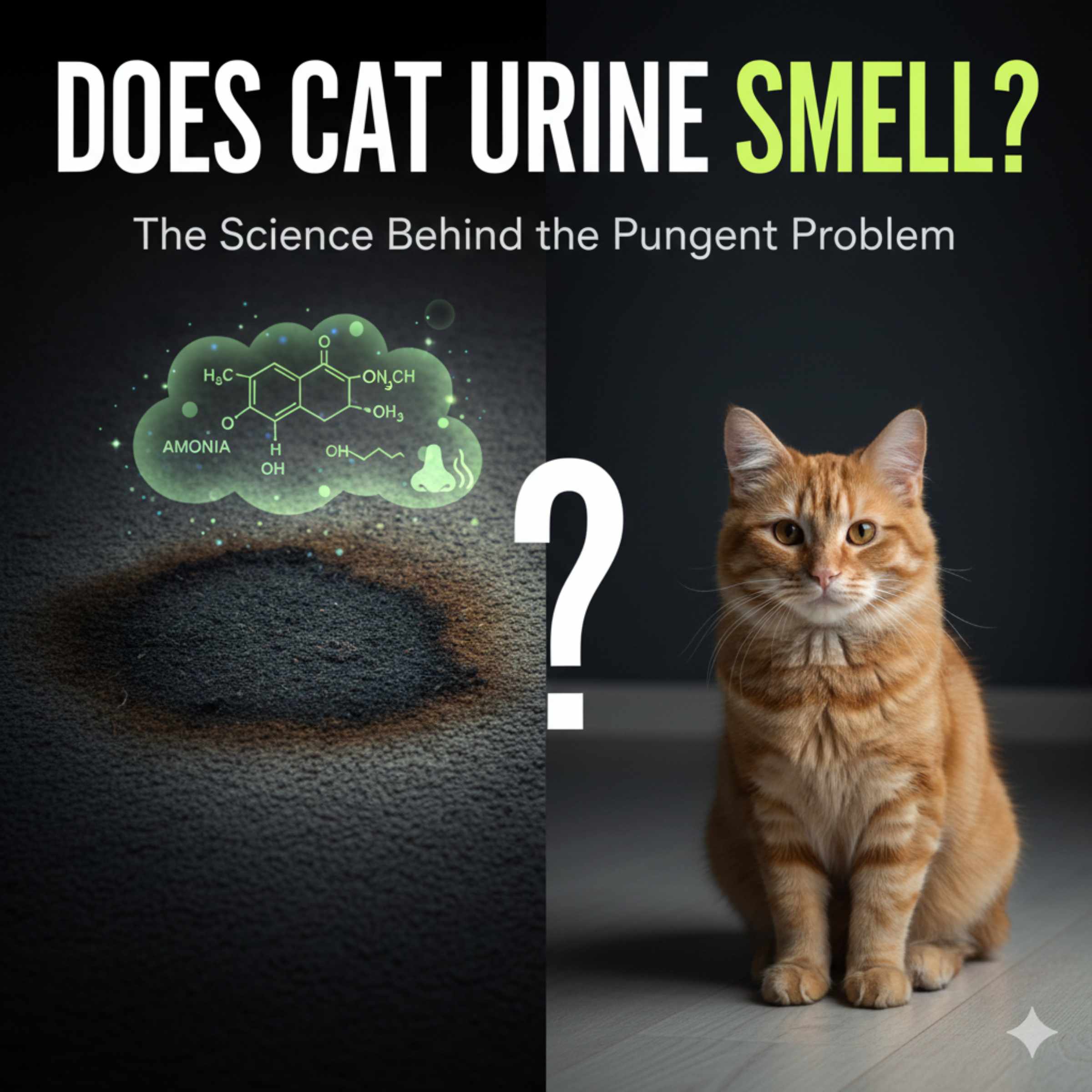
Yes, cat urine smells strongly, primarily due to high concentrations of urea and uric acid, which break down into potent ammonia and odor-causing mercaptans. The smell is complex and difficult to remove without proper enzymatic cleaners.
If you own a cat, you know this truth well: cat urine is powerful. That sharp, unmistakable odor can linger in carpets, wood floors, or furniture, making your home feel less welcoming. It’s frustrating when a small accident turns into a massive cleaning headache. You might wonder why that smell is so tough to tackle compared to other pet messes. Don’t worry; you are not alone in this struggle. We can break down exactly why cat urine smells so intensely and, more importantly, what you can do about it using simple, effective methods.
We will explore the science behind the stink, identify the main culprits, and walk you through the best, easiest cleaning strategies. By the end of this guide, you will feel confident taking control of those tough odors, turning your home back into a fresh, clean space. Let’s dive into the essential facts about why does cat urine smell so much!
Why Does Cat Urine Smell So Strongly? The Science Behind the Stink
Understanding why cat urine smells is the first big step toward getting rid of that smell for good. It’s not just “pee smell”—it’s a chemical cocktail that gets worse over time. As a helpful guide for homeowners, knowing these facts means you can choose the right tools, saving you time and effort.
The Main Chemical Culprits
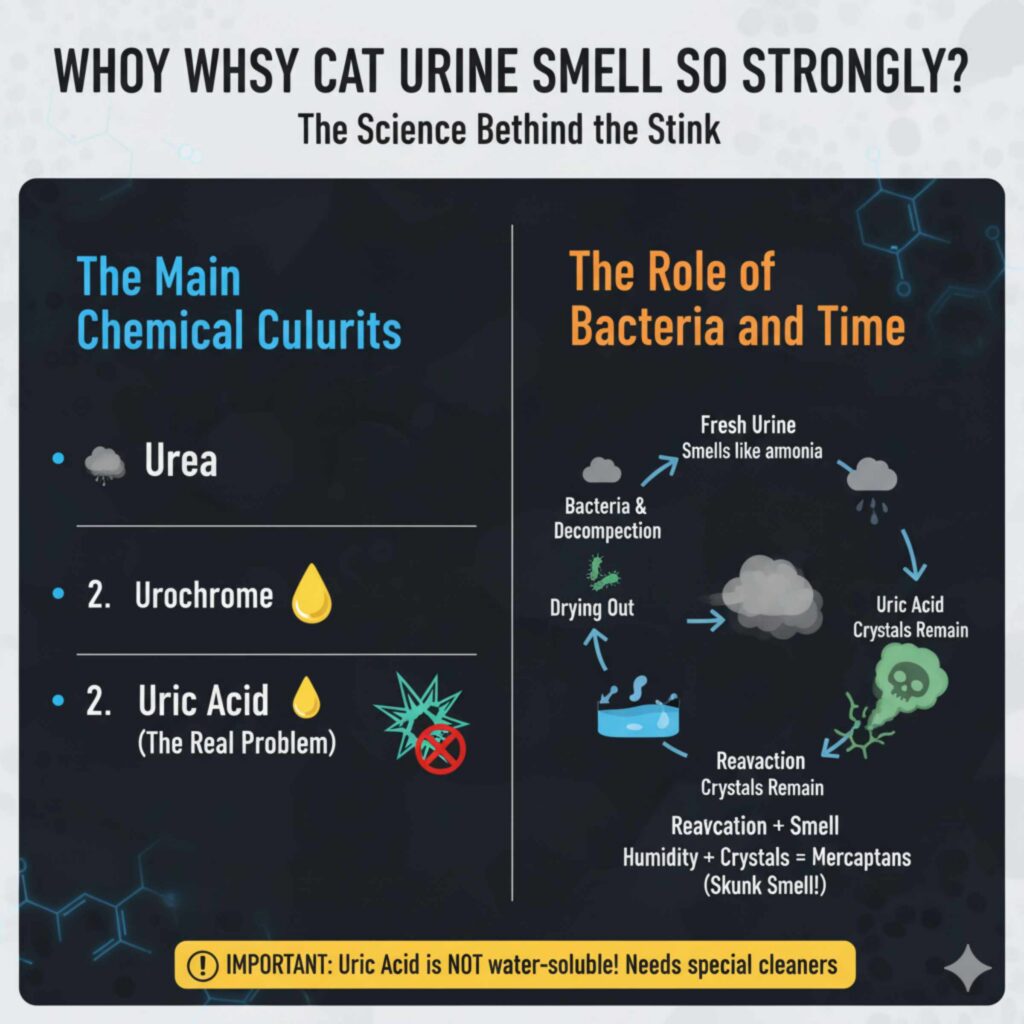
Cat urine contains several compounds, but three major players create that notorious, lingering odor. Think of these as the building blocks of the smell:
- Urea: This is the most abundant component. When fresh, it has a mild odor, but it breaks down quickly.
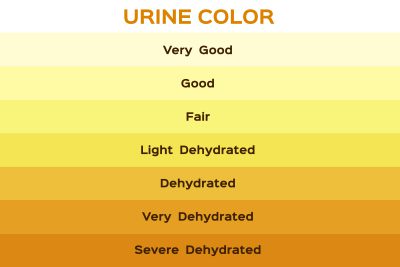
- Urochrome: This is what gives urine its yellow color, but it doesn’t contribute much to the long-term smell.
- Uric Acid (The Real Problem): This crystal structure is the villain. Uric acid is not water-soluble, meaning plain soap and water won’t touch it. It binds tightly to fibers and porous surfaces.
The Role of Bacteria and Time
The real trouble starts when bacteria get involved, especially with uric acid crystals. This process is called decomposition. Here is the simple breakdown of how the smell escalates:
- Fresh Urine: High in urea. Smells like strong ammonia.
- Decomposition Begins: Bacteria feed on the urea, releasing ammonia. This is the sharp, recognizable smell you notice immediately.
- Drying Out: As the moisture evaporates, the uric acid crystals are left behind.
- Reactivation (The Ghost Smell): When humidity rises (like a rainy day or in a humid bathroom), these crystals absorb moisture and release foul-smelling volatile organic compounds (VOCs), specifically mercaptans—the same compounds that give skunks their terrible odor! This is why you might smell old cat pee only on humid days.
Because uric acid doesn’t dissolve easily, traditional cleaners just mask the smell temporarily. You need a specific tool to tackle those crystals.
Cat Pee vs Other Pet Stains: What Makes It Different?
If you’ve cleaned up after dogs or other pets, you might notice cat urine is uniquely challenging. This difference is crucial when selecting your cleaning supplies.
Concentration and Diet
Cats are desert animals by nature, meaning their bodies are incredibly efficient at conserving water. This efficiency results in highly concentrated urine.
Think of it this way: A dog might produce a large volume of dilute urine. A cat produces a smaller volume, but it is packed with waste products, including high levels of nitrogenous waste. This high concentration means more odor-causing material is deposited in one small spot.
The Uric Acid Factor
This is the main differentiator. While dog urine contains some uric acid, the levels in cat urine are typically higher, and the uric acid crystals are more persistent. As noted before, uric acid is the core component that resists standard cleaning methods like soap, vinegar, or bleach because it is not water-soluble.
For homeowners tackling deep cleaning projects, this means you must bypass the surface-level dirt and target the embedded crystals. If you skip this step, the smell will always return, especially when humidity hits.
Essential Tools and Ingredients for Odor Removal
As a DIY enthusiast, you want reliable tools that get the job done right the first time. Forget harsh chemicals that might damage your wood floors or upholstery. We are focusing on safe, effective, enzyme-based solutions.
The Cleaning Arsenal
Before you start cleaning, gather these essentials. Safety first! Always wear rubber gloves when dealing with strong odors and cleaners.
- Rubber Gloves and Eye Protection: Protect your skin and eyes.
- Blacklight (UV Flashlight): Essential for finding old, dried stains that you can no longer see.
- Enzymatic Cleaner: This is non-negotiable for cat urine. These cleaners contain beneficial bacteria and enzymes that literally eat the uric acid crystals.
- Baking Soda: A great, mild absorbent for pulling surface moisture and odors.
- White Vinegar (Optional Pre-treatment): Good for neutralizing initial ammonia, but it must be followed by an enzymatic cleaner.
- Wet/Dry Vacuum (Shop-Vac): Useful for extracting deeply soaked liquids from carpets or crevices.
Why Enzymatic Cleaners Win the Fight
Enzymatic cleaners are the gold standard because they chemically break down the odor-causing compounds. They work by using specialized bacteria that produce enzymes (like protease and lipase). These enzymes digest the organic matter (urea and uric acid), converting them into odorless, water-soluble byproducts that can then be rinsed away. This is how you achieve true odor elimination, not just masking.
You can find more information on how different cleaning agents interact with biological waste on sites dedicated to environmental cleanup, reinforcing the scientific necessity of enzyme action (U.S. Environmental Protection Agency sometimes covers these topics regarding safe disposal and material breakdown).
Step-by-Step Guide: How to Clean Cat Urine Smell Effectively
Whether the stain is fresh or dried into your subfloor, following a precise, methodical approach is key. Remember, we are not just cleaning a mess; we are dismantling a persistent chemical residue.
Phase 1: Locate and Assess the Damage
You can’t clean what you can’t find. This is where your blacklight comes in handy, especially if the stain is old.
- Dim the Lights: Turn off all room lights.
- Shine the Blacklight: Cat urine stains glow a yellowish-green or sometimes a dull blue under UV light. Mark the perimeter of the stain with chalk or painter’s tape so you don’t miss any spots during cleaning.
- Assess Saturation: Press a clean white paper towel firmly onto the stain. If the towel soaks through immediately, you know the urine has penetrated deeply into padding, subflooring, or wood grain. Deep saturation requires extra attention to the layers beneath the surface.
Phase 2: Initial Surface Treatment (For Fresh Stains)
If the stain is still wet, act fast to absorb as much liquid as possible before it soaks in deeper.
- Blot the area repeatedly with old towels or paper towels. Do not rub! Rubbing pushes the liquid deeper into the fibers.
- Once most moisture is absorbed, sprinkle a generous layer of baking soda over the damp area to absorb lingering moisture and neutralize some immediate ammonia. Let it sit for 15–30 minutes, then vacuum it up.
Phase 3: The Deep Clean with Enzymes
This step targets the persistent uric acid crystals. You must saturate the area as deeply as the urine penetrated.
- Prepare the Cleaner: Follow the directions on your enzymatic cleaner carefully. Some are ready-to-use; others need dilution.
- Saturate Generously: Pour or spray the cleaner onto the stain. If the urine soaked deep into the carpet padding, you must apply enough cleaner to reach that exact same depth. If you only clean the top layer of carpet, the smell will remain in the padding underneath.
- Allow Dwell Time: This is crucial. Enzymatic cleaners need time to “eat.” Most manufacturers recommend allowing the cleaner to sit, uncovered, for at least 1 to 24 hours. Check the bottle, but generally, longer is better for old stains.
- Keep It Moist: Since the enzymes need moisture to work, cover the treated area with a damp towel or plastic wrap (tape the edges down) to prevent the cleaner from drying out too quickly.
- Extraction: After the required dwell time, blot the area thoroughly or use a wet/dry vacuum to pull the cleaner and the dissolved waste out of the surface. Do not rinse with plain water immediately, as this can wash away the active enzymes before they finish working.
- Air Dry: Allow the area to dry completely, which can take a few days. Keep pets away during this time.
Phase 4: Testing and Re-treatment
Once dry, use your nose or the blacklight again. If you still detect an odor or see a glow, the enzymes did not fully reach or break down all the uric acid. Repeat Phase 3.
For surfaces like wood floors or concrete, you may need to seal the area with an odor-blocking primer (like shellac-based primer) after thorough cleaning to lock in any microscopic residue that cleaning missed.
Tackling Specific Surfaces: Where the Smell Hides
Different materials hold onto that cat urine smell in different ways. What works for carpet might damage your hardwood floor. Here is a quick reference guide for homeowners working on various surfaces.
| Surface Type | Challenge | Recommended Approach |
|---|---|---|
| Carpet & Padding | Deep saturation into padding and subfloor. | Use lots of enzymatic cleaner to soak through to the padding layer. Extract thoroughly with a wet/dry vac. |
| Upholstery/Mattresses | Foam core absorbs liquid easily and holds odors. | Saturate thoroughly, cover with plastic to prevent evaporation, allow 24-hour dwell time, then extract. |
| Hardwood Floors | Urine penetrates the finish and soaks into the wood grain or subfloor. | Clean with enzymatic cleaner, then use a sanding block to lightly remove the top layer of finish if the stain is stubborn. Seal with a shellac primer before refinishing. |
| Concrete (Basement/Garage) | Highly porous; odors can wick back up through the concrete. | Saturate heavily. After drying, a strong acid etching followed by an industrial-grade sealant (like an epoxy coating) is often required for permanent odor elimination. |
Dealing with wood requires care. When cleaning wood, always test your cleaner in an inconspicuous area first. Excess water can cause wood to swell or warp. If you find that the urine has stained raw wood beneath the finish, you may need to sand down to clean wood before applying a new sealant layer. For reference on protecting wood finishes, resources from established home maintenance groups often provide excellent preparatory steps.
Preventing Future Stink: Why Cats Go Outside the Box
The best way to deal with cat urine smell is to prevent it entirely. If your cat is frequently eliminating outside the litter box, the smell problem becomes constant. This is often a sign that something is wrong, not just that your cat is being naughty.
Litter Box Management Checklist
Most accidents are resolved by improving the litter box situation. Cats are surprisingly particular creatures.
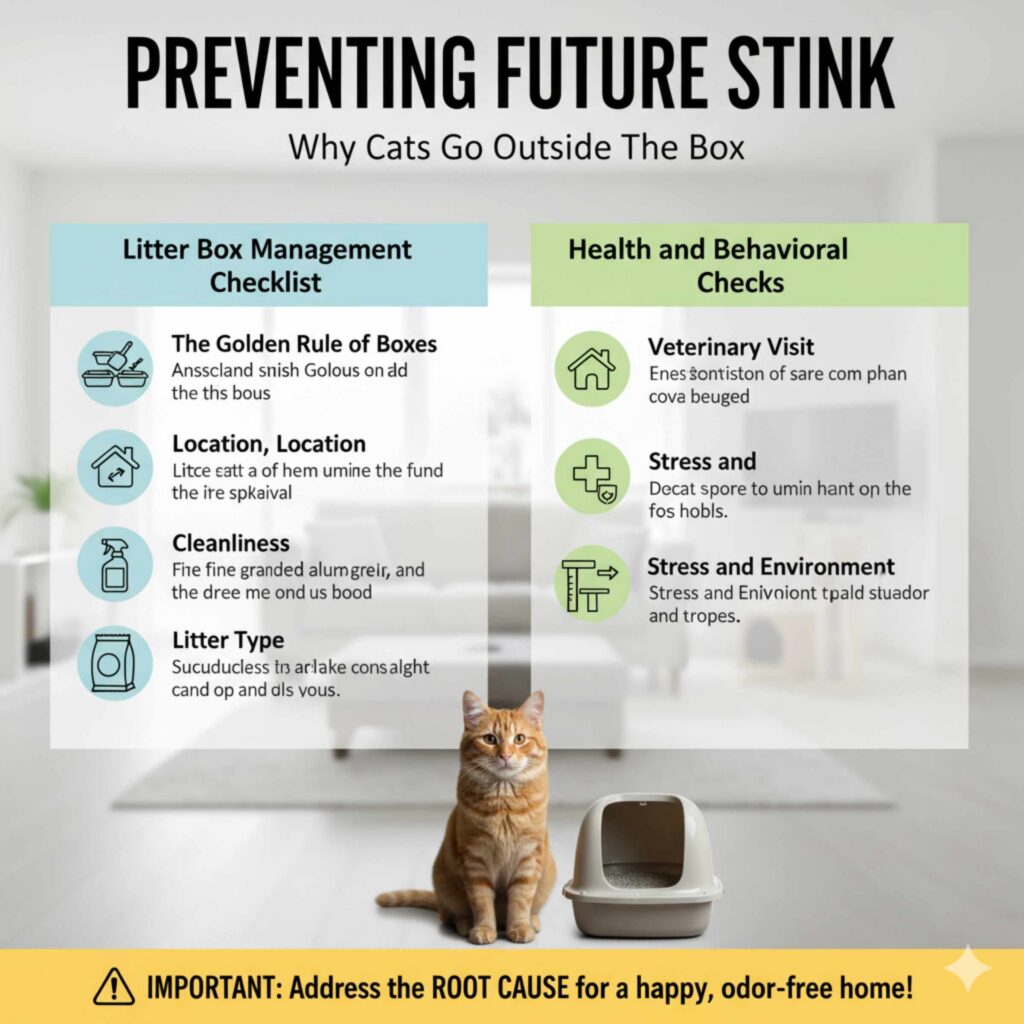
- The Golden Rule of Boxes: You should have one more litter box than the number of cats you own (e.g., two cats = three boxes).
- Location, Location: Place boxes in quiet, low-traffic areas. Cats hate being startled while using the box.
- Cleanliness: Scoop solid waste at least once daily. Completely change out all litter and scrub the box with mild, unscented soap once a week.
- Litter Type: Most cats prefer unscented, fine-grained, clay-based litter. Strong perfumes in some litters can deter sensitive cats.
Health and Behavioral Checks
Persistent inappropriate elimination is often a symptom of an underlying issue. If you have cleaned thoroughly and the behavior continues, it is time to consult a professional.
- Veterinary Visit: Rule out medical issues first. Conditions like Urinary Tract Infections (UTIs), kidney issues, or bladder stones cause pain during urination, leading the cat to associate the litter box with pain.
- Stress and Environment: Changes in the household (new furniture, new pet, moving) can cause stress. Ensure your cat has safe vertical spaces (cat trees) and resources are not being guarded by another pet.
By addressing the environment and ruling out health concerns, you address the root cause of the recurring odor problem.
Tools Comparison: Enzyme Cleaner vs Vinegar vs Bleach
When you are standing in the cleaning aisle, it can be overwhelming to choose. Here is a simple breakdown of what these common household solutions actually do to cat urine odor.
| Cleaner | Primary Action | Effectiveness on Uric Acid | Safety Note |
|---|---|---|---|
| Enzymatic Cleaner | Breaks down organic waste (eats the uric acid). | Excellent (Essential for elimination). | Generally safe for most surfaces when used as directed. |
| White Vinegar | Neutralizes ammonia (good for fresh smells). | Poor (Does not break down crystals). | Safe for many surfaces, but should not be used on natural stone (like granite or marble). |
| Bleach (Chlorine) | Disinfects and temporarily masks odor. | None (May react dangerously with ammonia). | Extremely dangerous when mixed with ammonia (found in urine) or vinegar. Never mix! |
As a DIY-focused guide, I must strongly advise against using bleach. While it smells clean, mixing bleach with ammonia-producing cat urine can create toxic chloramine gas, which is dangerous to breathe. Stick to the enzyme cleaners; they are designed specifically for this type of organic soil.
FAQ: Beginner Questions About Cat Urine Smell
Q1: How long does the smell of cat urine last if I don’t clean it properly?
If left untreated, especially on porous surfaces like wood or carpet padding, the uric acid crystals can remain active for years. The smell might become faint, but it will reactivate and become very noticeable every time the humidity in your home increases.
Q2: Can I use steam cleaners on cat urine stains?
No, it is generally advised against. The heat from a steam cleaner permanently bonds the protein molecules (including the uric acid) to the fibers or surface, effectively “setting” the stain and making future removal nearly impossible. Always use cool or lukewarm water extraction methods.
Q3: Is it safe to use essential oils to cover up the smell?
No, essential oils are not a safe or effective solution for cat urine odor. They only mask the smell temporarily and do nothing to break down uric acid crystals—the real source of the odor. Even worse, many essential oils are toxic to cats, including tea tree, eucalyptus, citrus, peppermint, pine, and lavender oils. Cats can absorb these oils through their skin or inhale the vapors, which may lead to serious health problems.
Q4: Why does the cat urine smell come back even after I clean it?
The smell comes back because uric acid crystals were not fully removed. Many common cleaners remove surface odor but leave microscopic crystals deep in carpets, padding, wood, or concrete. When humidity rises, those crystals rehydrate and release odor again. This is why enzymatic cleaners are essential—they break down the crystals at a molecular level instead of masking them.
Q5: Can professional cleaning completely remove cat urine odor?
Yes—if the professionals use enzyme-based treatments and proper extraction methods. Standard carpet cleaning alone is often not enough. In severe cases (especially with wood subfloors or concrete), professionals may need to treat, seal, or replace materials. Always ask what products and methods they use before hiring.
Conclusion: Understanding the Smell Is the Key to Eliminating It for Good
Cat urine smells so strong because it isn’t just a simple mess—it’s a stubborn chemical problem. The combination of urea, bacteria, and especially uric acid crystals creates an odor that intensifies over time and reappears with humidity. That’s why quick fixes and household cleaners often fail.
The good news is that once you understand why cat urine smells so bad, you can finally eliminate it the right way. Enzymatic cleaners, proper saturation, patience, and correct drying are the real solutions. When applied thoroughly, they don’t just cover the smell—they destroy it at the source.
Equally important is prevention. Addressing litter box cleanliness, placement, and your cat’s health ensures the problem doesn’t return. Accidents are often signals, not bad behavior, and solving the cause protects both your home and your cat’s well-being.
With the right knowledge and tools, cat urine odor is not permanent—and it doesn’t have to control your space. A clean, fresh-smelling home is absolutely achievable!