Proven Cost: Essential Sherwin Williams Paint
The proven cost for essential Sherwin-Williams paint ranges from about $40 to $85 per gallon, depending heavily on the specific line, finish, and current sales. For most DIY projects, starting with the versatile SuperPaint or Duration lines offers the best balance of quality and value without breaking the budget.
Understanding Essential Sherwin-Williams Paint Prices for Your DIY Projects
Picking the right paint can feel overwhelming. You want a finish that looks amazing and lasts forever, but sticker shock at the paint counter is real! Sherwin-Williams is famous for quality, but knowing how much that quality costs—and which can to choose—is key to staying on budget for your next room refresh.
I’m Md Meraj, and I’ve spent countless hours testing paints on everything from old trim to brand-new drywall. Forget the confusing jargon. We are going to break down the Sherwin-Williams paint cost structure simply. We will look at the best lines for beginners, the real price ranges, and how to save money. Let’s get that confidence boost so you can confidently grab the perfect gallon!
Why Sherwin-Williams Prices Seem High (And Why They Are Often Worth It)
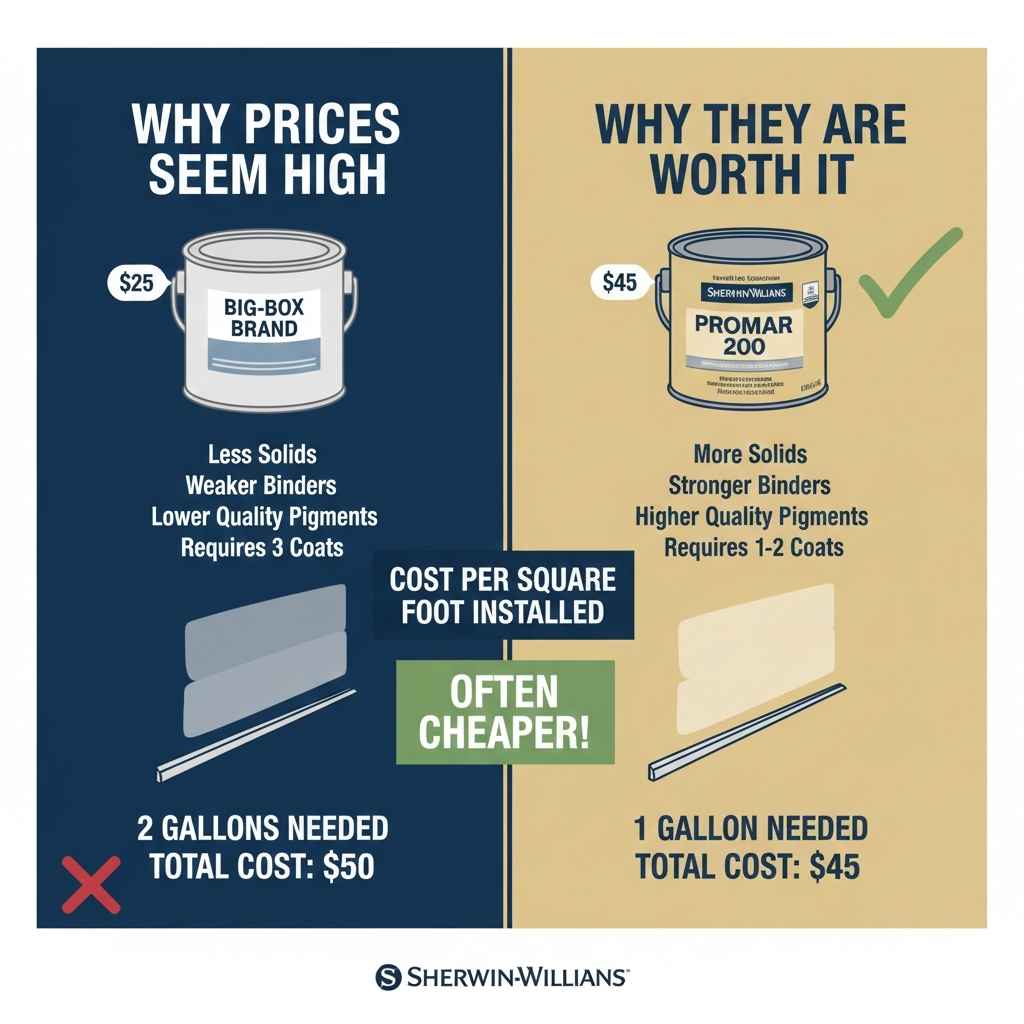
When you look at a gallon of Sherwin-Williams next to a big-box store brand, the price difference is noticeable. Why pay more? It often boils down to what’s inside that can.
Higher-quality paints, like those from Sherwin-Williams, usually contain:
- More Solids: These are the pigments and resins that actually stay on the wall. More solids mean better coverage, usually requiring only one or two coats instead of three.
- Better Binders (Resins): These hold the paint film together, making it more durable, washable, and resistant to scuffs.
- Higher Quality Pigments: This leads to richer color depth and better fade resistance, especially important for exterior jobs.
Think of it this way: If a cheaper paint requires two full gallons to cover a room because the coverage is weak, and a premium paint covers perfectly with one gallon, the “expensive” paint might actually be cheaper per square foot installed!
The Sherwin-Williams Paint Hierarchy: Finding Your Value Sweet Spot
Sherwin-Williams organizes its lines based on performance, features (like scrubbability), and price. For DIY homeowners, you don’t need the absolute top-tier unless you are painting a high-traffic commercial kitchen. You need the best value for your home.
Here is a quick look at the most common lines and where they typically land in terms of cost and application. Prices are estimated for standard interior paint and can vary by region and sale periods.
Sherwin-Williams Interior Paint Cost Guide (Approximate Retail Price)
| Paint Line | Best For | Approximate Cost Per Gallon | Key Benefit |
|---|---|---|---|
| Harmony / Emerald | High-End Jobs, Odor Elimination, Extreme Durability | $75 – $90+ | Maximum washability and zero or low VOCs. |
| Duration Home | High-Traffic Areas (Kitchens, Bathrooms, Kids Rooms) | $65 – $80 | Excellent moisture resistance and superior scrubbability. |
| SuperPaint | The Best All-Around Value (Most Common Choice) | $55 – $70 | Good durability, excellent coverage, great for living spaces. |
| Cashmere / Acrilic Latex (Basic) | Low-Traffic Areas, Rentals, or Quick Fixes | $40 – $55 | Good smooth finish at a more budget-friendly price point. |
Meraj’s Tip: If you are painting your main living area or a bathroom that gets moderate use, SuperPaint is your reliable workhorse. It handles cleaning well and applies beautifully, which saves time!
Breaking Down the “How Much Does a Gallon of Sherwin Williams Paint Cost” Question
The real cost hinges on three main factors:
1. The Specific Line You Choose
As shown above, the line dictates the starting price. Emerald is their premium offering; SuperPaint is the mid-range champion. Choosing Emerald for a guest bedroom that gets used twice a year is usually overkill.
2. Finish Matters (Sheen)
The finish you select (sheen) affects the cost slightly, but more importantly, it affects performance. Generally, finishes go up in price as they get glossier because the binders required for that shine are more expensive.
- Flat/Matte: Hides imperfections well. Lowest cost.
- Eggshell/Satin: The sweet spot for most rooms. Mid-range cost.
- Semi-Gloss/Gloss: Best for trim, doors, and moisture-prone areas. Often slightly higher cost and much easier to clean.
3. Sales and Promotions
This is where DIYers can save real money! Sherwin-Williams runs national sales almost constantly. If you buy during a major holiday weekend or one of their advertised 30% to 40% off promotions, you can bring the price of a premium gallon down near the retail price of a mid-tier can.
Always ask the staff when the next sale is scheduled before checking out, or check their website. Never pay full retail price unless you absolutely have to.
Exterior Paint Costs: A Different Ballgame
Exterior paints need to withstand sun (UV damage), rain, temperature swings, and mildew. Because they require more specialized UV blockers and mildewcides, they usually cost slightly more than their interior counterparts.
For exterior projects, the Duration Exterior line is highly recommended by professionals because of its excellent adhesion and fade resistance. You might pay $70 to $95 per gallon, but that extra cost buys you years of protection, saving you from repainting sooner. When dealing with weather protection, investing in quality upfront is essential, as detailed by preservation guidelines from organizations like the National Park Service regarding material longevity.
Essential Tools and Supplies: Where Extra Costs Hide
The paint itself is only one part of the expense. To do the job right (and safely), you need the supporting cast. Underestimating these costs often throws off the budget!
Here is a checklist of non-paint items you will likely need for an average interior room repaint:
- Primer: Essential for new drywall or dramatic color changes. A quality gallon of Sherwin-Williams Interior/Exterior Latex Primer might run $30–$45.
- Painter’s Tape: You need good tape (like FrogTape or high-quality blue tape) so it doesn’t peel the existing paint or drywall paper. Budget $8–$15 per roll.
- Brushes: Invest in at least one high-quality angled sash brush (2 or 2.5 inches) for cutting in. A good brush is $15–$25 but lasts for years.
- Rollers and Covers: You need quality covers appropriate for your wall texture (e.g., 3/8 inch nap for smooth walls). Budget $10–$15 for a frame and a few covers.
- Drop Cloths: Canvas drop cloths protect better than thin plastic and are reusable. Around $20–$35 for a decent size.
- Spackle/Patching Compound: For filling nail holes before you even start painting. Small tubs are affordable ($5–$10).
When budgeting your project, add at least $75 to $100 on top of your paint total for these necessary supplies, assuming you have basic items like a ladder and buckets already.
Maximizing Your Budget: How to Get Quality for Less
As your guide, my goal is to help you achieve professional results affordably. Here are my top strategies for controlling the Sherwin-Williams cost:
1. Buy in Bulk When It’s on Sale
If you plan to paint your entire house over the next year, buy all your necessary gallons during their biggest sale events (often around major holidays). Sales usually run 30% to 40% off the retail price. Buying five gallons during a sale is significantly cheaper than buying one gallon at a time at full price.
2. Don’t Skimp on Primer for Tough Jobs
If you are painting glossy oil-based trim with latex paint, or covering dark colors with light ones, using a dedicated bonding primer (like Sherwin-Williams Extreme Bond Primer) is crucial. Skipping primer here means you will use extra coats of expensive topcoat, which costs you more time and paint in the long run.
3. Utilize Contractor Discounts (Even for Small Jobs)
If you have a friend who is a professional contractor, ask if they can purchase the paint for you using their account. Contractors receive tiered discounts. Even a 10–15% contractor discount can save you $10 to $15 per gallon.
4. Choose the Right Sheen for the Right Place
Do not default to Satin everywhere. Use Flat or Matte on low-traffic ceilings and walls where people rarely touch them. This saves you money, as these are generally the least expensive options within a product line.
DIY Step-by-Step: Calculating Paint Needs and Budgeting
Before you buy a single gallon, you need to know how much paint you actually need. Running out mid-job is frustrating and forces you to buy that next gallon at a less favorable price!
Step 1: Measure the Area
For each room, measure the length of all walls and multiply that by the ceiling height. Add these lengths together to get the total perimeter.
Formula: (Wall Length A + Wall Length B + Wall Length C + Wall Length D) x Ceiling Height = Total Square Footage to be Painted.
Step 2: Determine Coverage Rate
Most high-quality paints like Sherwin-Williams cover approximately 350 to 400 square feet per gallon for a single coat.
Crucial Tip: Always calculate for two coats on walls unless the color change is minor.
Step 3: Calculate Gallons Needed
Take your Total Square Footage, divide by 400, and then multiply by 2 (for two coats).
Example: A 10×12 room with 8-foot ceilings.
- Perimeter = (10 + 10 + 12 + 12) = 44 linear feet.
- Total Sq Ft (1 coat) = 44 ft x 8 ft = 352 sq ft.
- Total Needed (2 coats) = 352 sq ft x 2 = 704 sq ft.
- Gallons Required = 704 sq ft / 400 sq ft per gallon = 1.76 gallons.
Since you cannot buy 0.76 of a gallon, you must purchase 2 full gallons.
For this example, if you choose SuperPaint at an average cost of $60 per gallon (pre-sale), your paint budget is 2 x $60 = $120, plus supplies.
Exterior Preparation and Durability: Investing for the Long Haul
Exterior painting requires more focus on prep, as failure here leads to blistering and peeling much faster than indoor paint failure. The cost savings in materials are rarely worth the headache of a premature failure.
A critical step, especially when dealing with older wood siding, is ensuring a proper surface profile. For best results, cleaning surfaces—often using a mild detergent and bleach solution or commercial cleaner—and scraping off any loose paint is non-negotiable. For guidance on surface preparation suitable for modern coatings, resources from organizations like the American Society for Testing and Materials (ASTM) emphasize the importance of substrate integrity before application.
If you are priming wood, consider Sherwin-Williams’ specific exterior primers. While these add $50 to $60 per gallon to your material cost, they seal the wood tannins and ensure the topcoat adheres perfectly, potentially adding five or more years to the life of your paint job.
Understanding VOCs and Health Costs
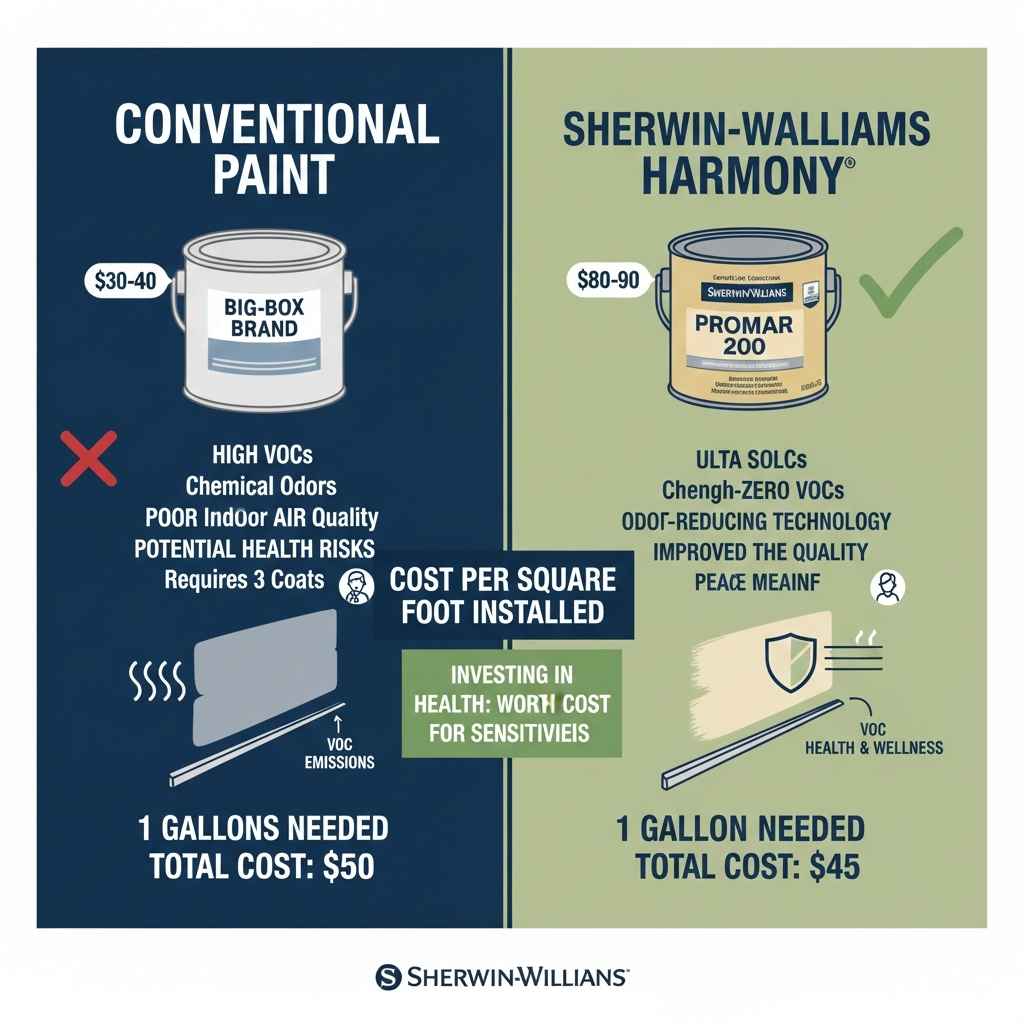
One area where Sherwin-Williams often commands a higher price is in their commitment to low or zero Volatile Organic Compounds (VOCs). VOCs are chemicals that evaporate into the air as the paint dries, contributing to odors and potentially impacting indoor air quality.
Paint lines like Harmony are specifically formulated to have near-zero VOCs and even help reduce odors after drying. While these specialized paints might start at $80 to $90 per gallon, if anyone in your house has sensitivities, allergies, or if you are painting a nursery or bedroom, this added cost translates directly into peace of mind and better indoor air quality.
It’s a hidden cost of cheaper paints: the cost to your health if the ventilation isn’t perfect.
Frequently Asked Questions (FAQ) for Beginner Painters
Q1: Can I use interior paint outside?
No. Interior paint is not formulated to handle UV rays, temperature changes, or moisture exposure outdoors. It will fade, chalk, and peel very quickly. Always use paint specifically labeled for exterior use.
Q2: Which Sherwin-Williams paint is the cheapest per gallon?
The absolute cheapest lines are typically the basic DIY contractor/builder grades or the standard interior/exterior Latex/Acrylic lines that are not branded as SuperPaint or Duration. However, these often require three coats instead of two, making them more expensive in labor and time.
Q3: Is buying primer really necessary?
Yes, if you are painting brand-new, unprimed drywall (often called “hot drywall”), painting over glossy oil-based surfaces, or painting a very dark color with a very light color. Primer grips the surface, seals stains, and locks in color, ensuring your expensive topcoat adheres correctly and achieves its advertised coverage.
Q4: What finish (sheen) should I use in a standard living room?
Satin or Eggshell is the industry standard for most walls in living areas. Satin offers a slight, pleasing luster and is easy to wipe down. Flat or Matte finishes hide wall flaws the best but are very difficult to clean without burnishing (making shiny spots).
Q5: How often does Sherwin-Williams have major sales?
They frequently run sales, often tied to federal holidays (Memorial Day, 4th of July, Labor Day) or seasonal changes. Look for promotions advertised as 30% to 40% off during these peak times. It is rare for them to go more than a month without some form of sale running.
Q6: Can I mix different lines of Sherwin-Williams paint together?
It is strongly advised not to mix lines (e.g., mixing SuperPaint with Emerald). While the chemistry might be compatible, the performance characteristics—like sheen, dry time, and durability—will be inconsistent, resulting in an uneven, unpredictable finish.
Conclusion: Confidence in Your Paint Purchase
Understanding the proven cost of essential Sherwin-Williams paint means understanding the trade-off between upfront expense and long-term performance. For most homeowners tackling an interior refresh, aiming for the SuperPaint line during a 30% off sale offers the sweet spot of budget control and professional-grade durability.
Remember that paint budget planning is more than just the can price. Factor in quality supplies, calculate your coverage accurately for two coats, and be patient for that big sale weekend. By approaching your purchase armed with this knowledge, you move from being a hesitant shopper to a confident home improver. You now know which line fits your project’s needs and, most importantly, how to secure that premium quality without paying a premium price. Go ahead and pick that color—you’ve got this!