How High Chandelier Above Table: Genius Placement
Quick Summary:
The ideal height for a chandelier above a dining table is typically 30-36 inches from the tabletop. This ensures it’s high enough to avoid bumping heads but low enough to provide ample, focused light and create a cozy atmosphere. Getting this placement right makes a huge difference in your dining space’s look and feel.
Ever stood back and looked at your dining room, feeling like something’s just a little… off? Often, the culprit is a chandelier that’s either too high and feels lost, or too low and becomes a head-knocking hazard. Getting the height of your chandelier just right above your dining table is a surprisingly big deal. It’s not just about aesthetics; it’s about functionality and comfort too! Don’t worry, it’s a common puzzle, and thankfully, there’s a simple, proven solution. We’ll walk through exactly how to find that perfect spot so your dining area feels balanced, inviting, and beautifully lit. Let’s get this right!
Why Chandelier Height Matters So Much
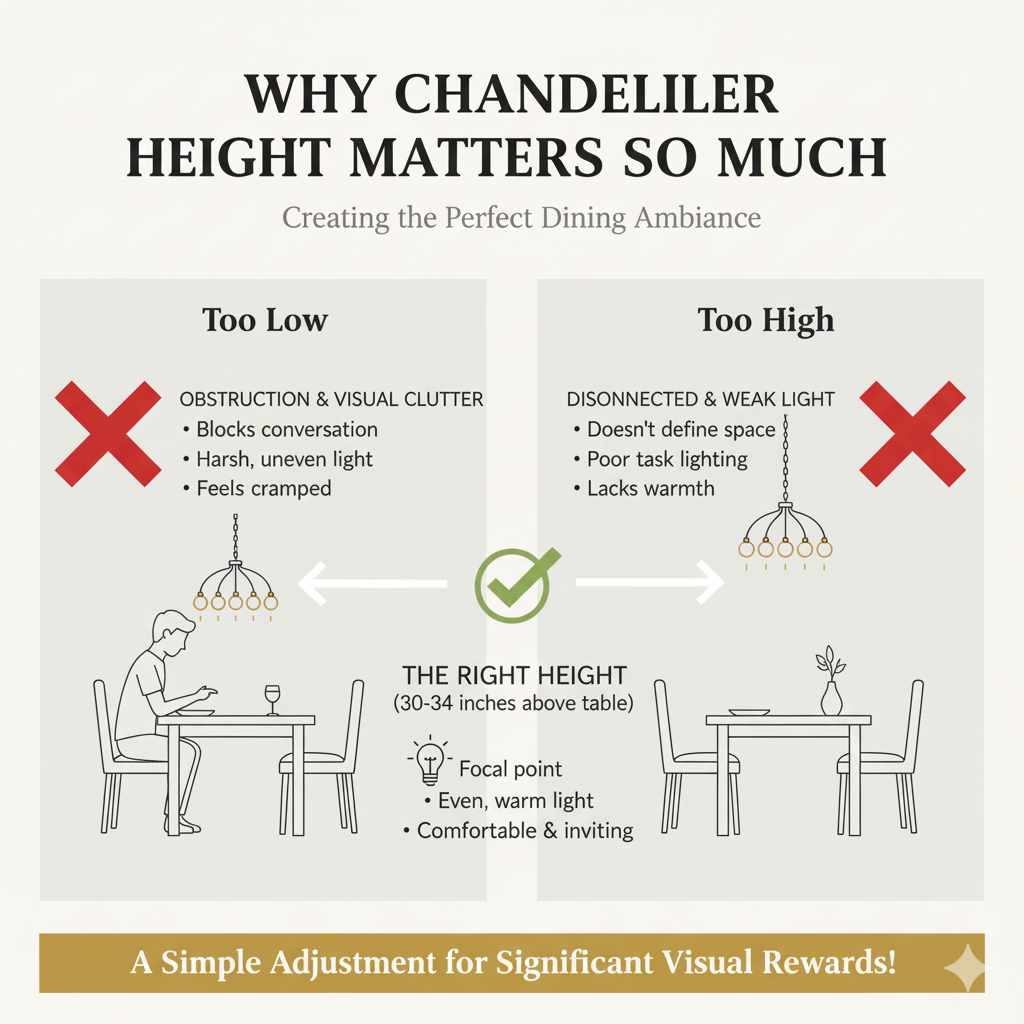
Think of your dining room chandelier as the crown jewel of your space. Its placement isn’t just about hanging a light fixture; it’s about creating a focal point, setting a mood, and ensuring a comfortable dining experience. When a chandelier is hung at the wrong height, it can throw off the entire visual balance of the room. Too high, and it can feel disconnected, like an afterthought, failing to anchor the table and define the dining area. Too low, and it becomes an obstacle, a constant reminder of its presence in the worst way – by being in the way!
The right height does more than just prevent bumped heads. It influences how light is distributed, how intimate or grand the space feels, and how the chandelier itself is perceived. A well-placed chandelier draws the eye, enhances the table setting, and contributes to the overall ambiance, making every meal feel a little more special. Getting it right is a simple step that yields significant visual rewards.
The Golden Rule: Standard Chandelier Height Above a Table
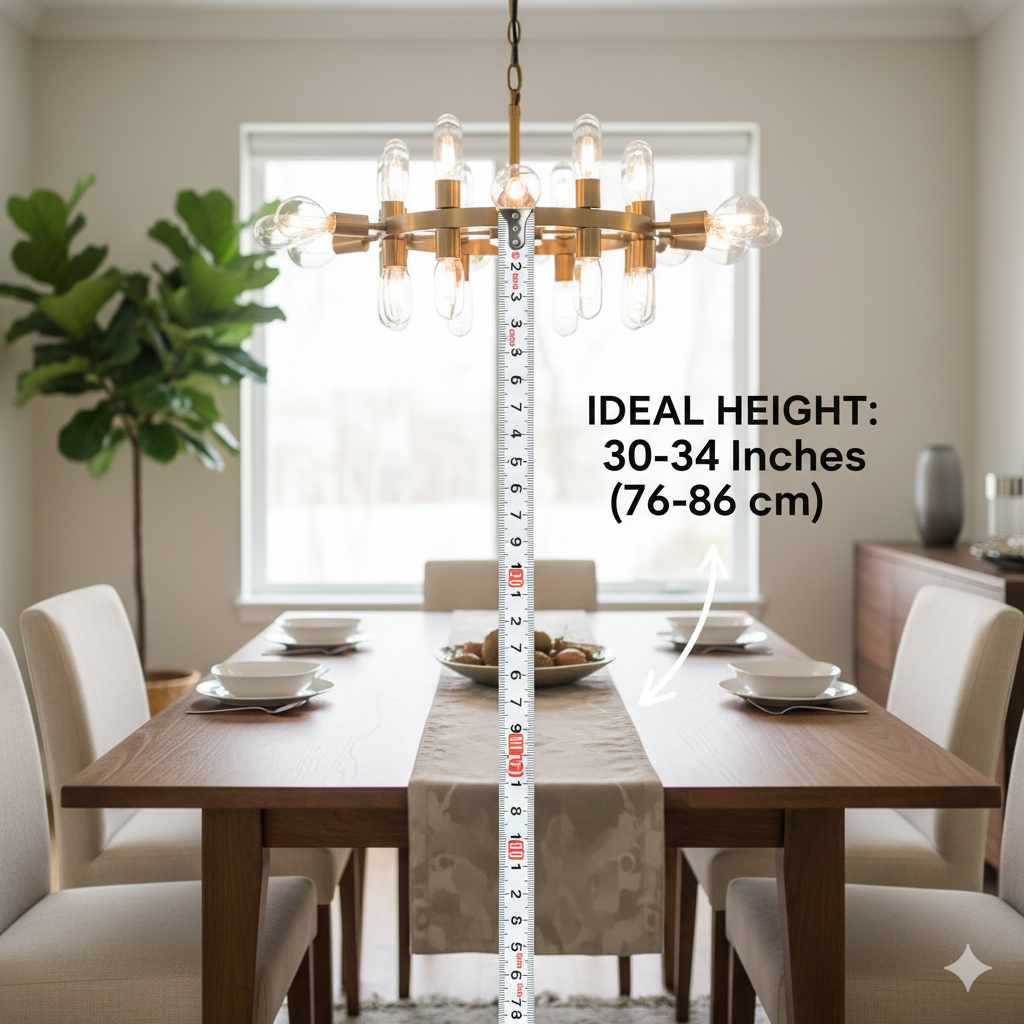
When it comes to answering “how high chandelier above table,” there’s a widely accepted sweet spot. For most dining rooms, the general guideline is to hang the bottom of the chandelier between 30 to 36 inches above the surface of your dining table. This range is considered the “golden rule” by many interior designers and lighting experts for good reason.
This 30-36 inch measurement achieves a few crucial things:
- Headroom: It provides ample clearance for people to comfortably sit down, stand up, and move around the table without any risk of bumping their heads. This is especially important if you have taller guests or a very active family.
- Illumination: At this height, the chandelier is close enough to the table to cast a focused, warm glow directly onto the dining surface and the people gathered around it. This creates an intimate and inviting atmosphere, perfect for meals and conversations.
- Visual Balance: The chandelier acts as a natural anchor for the table, visually connecting it to the ceiling and the room. It feels like a deliberate design choice, rather than an object floating aimlessly overhead.
Remember, this is a starting point. We’ll explore factors that might nudge you slightly higher or lower within this range.
Factors That Influence Your Chandelier Height
While the 30-36 inch rule is a fantastic starting point, your specific situation might call for slight adjustments. Here are the key factors to consider:
Ceiling Height
This is probably the most significant factor. A very high ceiling in a grand dining room can accommodate a slightly lower chandelier relative to the ceiling, while still maintaining the 30-36 inch clearance from the table. Conversely, in a room with lower ceilings, you might need to be more mindful of the overall visual weight and ensure the chandelier doesn’t make the room feel smaller.
- Standard Ceilings (8-9 feet): The 30-36 inch rule generally works perfectly.
- High Ceilings (10+ feet): You might still aim for 30-36 inches from the table, but the chandelier will naturally hang much lower from the ceiling. Ensure the chandelier itself is scaled appropriately for the room’s volume. A common guideline for very high ceilings is to have the bottom of the chandelier about 40-50 inches from the ceiling, which usually still falls within the 30-36 inch range from the table.
- Low Ceilings (Below 8 feet): You might lean towards the higher end of the 30-36 inch range, or even slightly more (e.g., 36-40 inches), to maximize headroom. Be cautious about overly large or long chandeliers in low-ceilinged rooms.
Chandelier Size and Scale
The physical dimensions of your chandelier play a big role. A massive, sprawling chandelier will command more visual space than a delicate, small one. You want the chandelier to be in proportion with your table and the room.
- Diameter: A general rule of thumb is that the diameter of your chandelier should be about half to two-thirds the width of your dining table.
- Visual Weight: A chandelier with lots of intricate details, large shades, or dark finishes can feel heavier and might need to be hung slightly higher to avoid overwhelming the space. A simpler, more open design can often be hung a bit lower without feeling oppressive.
Table Shape and Size
While the 30-36 inch rule is primarily about vertical clearance, the shape and size of your table can subtly influence the perceived scale of the chandelier.
- Rectangular/Oval Tables: Chandeliers often look best when centered lengthwise over the table. The length of the chandelier might be about two-thirds the width of the table.
- Round Tables: A single, centrally placed chandelier works well. The diameter of the chandelier is often about half the diameter of the table.
Purpose of the Light
Is the chandelier the primary light source for your dining room, or is it supplemented by other fixtures? If it’s the main source, you want it positioned to provide effective task lighting.
- Task Lighting: For reading menus, seeing your food clearly, and facilitating conversation, the light needs to be directed downwards. The 30-36 inch range is optimal for this.
- Ambient Lighting: If the chandelier also contributes to the room’s overall mood lighting, its height might be adjusted slightly to allow light to spread more broadly. However, the primary consideration remains functional illumination of the table.
Your Personal Preference and Room Style
Ultimately, design is subjective! While guidelines are helpful, trust your eye. Some people prefer a more dramatic, lower-hanging fixture for a cozier feel, while others like a more open, airy look with the chandelier hung higher.
How to Measure for Chandelier Height: A Step-by-Step Guide
Ready to find that perfect spot? Measuring is straightforward, but doing it carefully ensures you get it right the first time. Here’s how:
Step 1: Gather Your Tools
You won’t need a full workshop for this, just a few common items:
- A reliable tape measure
- A pencil or chalk (for marking, if needed)
- A stepladder or sturdy chair (ensure it’s stable!)
- A helper (optional, but highly recommended for safety and accuracy)
Step 2: Measure Your Table Height
Start by measuring the height of your dining table from the floor to the tabletop. Most standard dining tables are around 30 inches high, but it’s always best to measure your own.
Step 3: Determine Your Target Bottom Height
Now, decide on the desired height for the bottom of your chandelier. As we discussed, the sweet spot is typically 30-36 inches above the tabletop. For a standard 30-inch table, this means the bottom of the chandelier would be around 60-66 inches from the floor (30 inches table height + 30-36 inches clearance).
Step 4: Measure Your Chandelier
Measure the full height of your chandelier, from its very top point (including any chain or mounting hardware that will be visible) to its very bottom point. If your chandelier has a chain, measure the chain and the fixture itself. You’ll need to decide how much chain you want to use.
Step 5: Calculate the Required Chain Length (If Applicable)
This is where the math comes in, but it’s simple!
- Target Height from Ceiling: First, figure out how far down from the ceiling you want the top of your chandelier (including chain) to hang. A common starting point is to have the bottom of the chandelier 30-36 inches above the table. If your ceiling is 8 feet (96 inches) high and your table is 30 inches high, and you want 30 inches of clearance, the bottom of the chandelier should be at 66 inches from the floor. So, the top of the chandelier (including chain) needs to be 96 inches (ceiling height) – 66 inches (target bottom height) = 30 inches from the ceiling.
- Subtract Fixture Height: Subtract the height of your chandelier fixture itself from the target height from the ceiling. For example, if your chandelier fixture is 24 inches tall and you want the top of the fixture to be 30 inches from the ceiling, you have 6 inches of chain and mounting hardware to work with.
- Adjust Chain Length: This calculation tells you how much chain you’ll need. Most chandeliers come with extra chain that can be shortened or sometimes extended with additional links.
Step 6: Mark and Test Hang (If Possible)
Once you have an idea of the chain length, you can mark the spot on your ceiling where the electrical box is. If you have a temporary fixture or can safely hang the chandelier partially, do so. Use your tape measure from the tabletop up to the bottom of the chandelier to confirm your 30-36 inch clearance. Having a helper hold it in place (safely!) can be invaluable here.
Safety Note: Always ensure the stepladder is on a stable surface and that someone is spotting you. If you’re uncomfortable with heights or electrical work, it’s best to consult a professional electrician.
Chandelier Height Table: A Quick Reference
To make things even easier, here’s a handy reference table. This assumes a standard 8-foot ceiling and a standard 30-inch table height.
| Desired Clearance (Table to Chandelier Bottom) | Target Chandelier Bottom Height (from Floor) | Target Chandelier Top Height (from Ceiling) | Chandelier Fixture Height (Example) | Required Chain/Hardware Length (Example) |
|---|---|---|---|---|
| 30 inches | 60 inches | 36 inches | 24 inches | 12 inches |
| 32 inches | 62 inches | 34 inches | 24 inches | 10 inches |
| 34 inches | 64 inches | 32 inches | 24 inches | 8 inches |
| 36 inches | 66 inches | 30 inches | 24 inches | 6 inches |
Note: This table is illustrative. Adjust the “Chandelier Fixture Height” and “Required Chain/Hardware Length” based on your actual chandelier and ceiling height.
Common Mistakes to Avoid
Even with guidelines, it’s easy to stumble. Here are a few common pitfalls when hanging a chandelier:
- Hanging it too high: This is incredibly common. The chandelier looks like it’s floating aimlessly and doesn’t define the dining space effectively.
- Hanging it too low: The obvious issue is bumping heads. But visually, it can also make the room feel cramped and the chandelier look out of proportion.
- Ignoring the scale of the chandelier: A tiny chandelier over a massive table looks lost, while an enormous one over a small table can be overwhelming.
- Not considering the ceiling height: What works for an 8-foot ceiling won’t necessarily work for a 12-foot ceiling without adjustments.
- Centering it visually, not physically: Ensure the chandelier is centered over the table, not just the room.
When to Break the Rules (and How)
While the 30-36 inch rule is a solid foundation, there are times when you might adjust it. Always ensure any deviation still prioritizes safety and functionality.
Very Large or Statement Chandeliers
If you have an exceptionally large or visually dominant chandelier, you might hang it slightly higher within the 30-36 inch range (e.g., 34-36 inches) to allow it to breathe and prevent it from feeling too heavy or imposing.
Low Ceilings
As mentioned, with ceilings below 8 feet, you might opt for the higher end of the range, or even 38-40 inches from the table, to maximize headroom. Choose a chandelier with a lower profile, like a semi-flush mount or a drum shade style, rather than a long, dangling one.
Creating a Specific Ambiance
For a particularly cozy, intimate setting, some designers might hang a fixture slightly lower. However, this requires careful consideration to ensure it doesn’t become a hazard. This is more common in spaces where people are typically seated and not moving around the table frequently.
Multiple Fixtures
If you’re using multiple smaller pendant lights or chandeliers over a long table, the spacing and height might be adjusted. Each fixture should still aim for a similar clearance from the tabletop, but the overall visual effect changes. For instance, you might hang three pendants, each 30-36 inches above the table, spaced evenly.
When in doubt, err on the side of caution and safety. It’s always better to have slightly more headroom than to risk someone hitting their head.
Professional Insights and Resources
For those who want to dive deeper or need professional validation, resources like the Houzz guide on chandelier hanging offer excellent visual examples and further tips. Many lighting manufacturers also provide detailed installation guides that can be invaluable. Understanding electrical safety is paramount, and resources from organizations like the U.S. Consumer Product Safety Commission (CPSC) can provide crucial safety information for any home electrical project.

Frequently Asked Questions (FAQ)
Q1: What is the standard height for a chandelier above a dining table?
The standard height is typically 30 to 36 inches from the tabletop to the bottom of the chandelier. This provides good headroom and effective task lighting.
Q2: How do I calculate the right chain length for my chandelier?
Measure your ceiling height, your table height, and the chandelier fixture’s height. Determine your desired clearance (30-36 inches above the table). Calculate how far down from the ceiling the top of the chandelier should be, then subtract the fixture height to find the required chain length.
Q3: My dining table is very high/low. Does that change the rule?
Yes, it does. While the 30-36 inch clearance above the table is key, the absolute height from the floor will change. Always measure from your specific tabletop.
Q4: What if I have a very high ceiling? Can I hang the chandelier lower?
You can still aim for the 30-36 inch clearance from the table. The chandelier will naturally hang much lower from the ceiling, which can be visually effective. Ensure the chandelier is scaled appropriately for the room’s volume.
Q5: My chandelier is too high/low. Can I adjust it easily?
Often, yes. Most chandeliers come with adjustable chain links that can be shortened or lengthened. If you need to significantly alter the height, you might need to add or remove chain links, or adjust the mounting hardware. If electrical work is involved, consult a professional.
Q6: Should the chandelier be centered over the table or the room?
It should generally be centered over the dining table itself, as this is the functional focal point of the space.
Q7: What if my chandelier is very large? Does that change the height rule?
For very large or visually heavy chandeliers, you might lean towards the higher end of the 30-36 inch range (e.g., 34-36 inches) to prevent it from feeling overwhelming or too close.
Conclusion
Finding the perfect height for your chandelier above the dining table is a simple yet impactful design decision. By adhering to the standard 30-36 inch clearance from the tabletop, you ensure both safety and optimal illumination, creating an inviting atmosphere for every meal. Remember to consider your unique ceiling height, the scale of your chandelier, and your personal style to make minor adjustments. With a tape measure, a little patience, and these guidelines, you can confidently hang your chandelier to enhance your dining space beautifully. Enjoy your perfectly lit and elegantly appointed dining area!