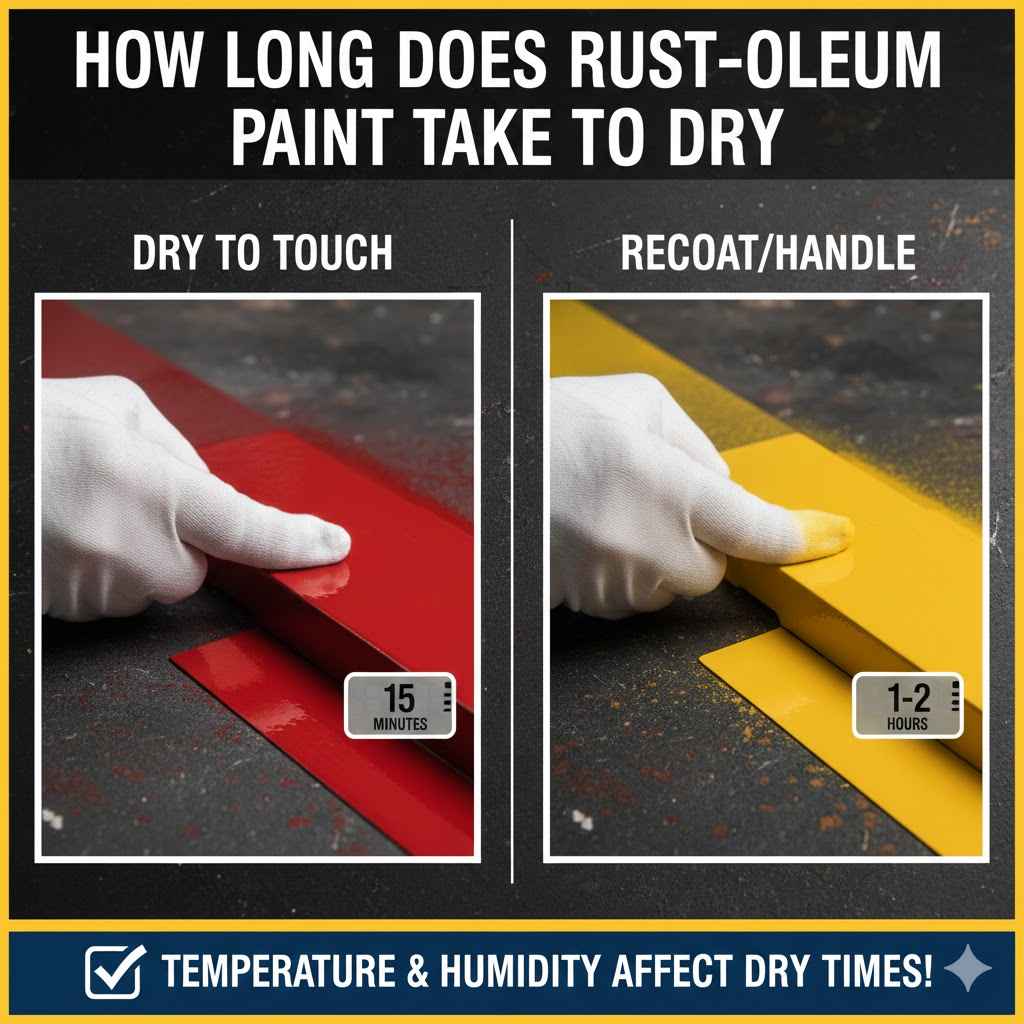
How Long Does Rust-Oleum Paint Take to Dry
It’s a common question for anyone starting a DIY project: How Long Does Rust-Oleum Paint Take to Dry?. Beginners often wonder about the best time to recoat or handle their freshly painted items. It can be a bit tricky to figure out because a few things can change the drying time.
But don’t worry, we’ll make it super simple to get the answers you need. We’ll go over everything step by step so you can get back to your project with confidence.
Understanding Rust-Oleum Paint Drying Times
Knowing how long your paint needs to dry is super important for a great paint job. If you try to do too much too soon, you can end up with smudges, peeling, or an uneven finish. Rust-Oleum is a popular brand, and people often ask, “How Long Does Rust-Oleum Paint Take to Dry?”.
This question is common because there isn’t just one answer. Several factors affect how quickly the paint dries, and knowing these will help you plan your project perfectly.
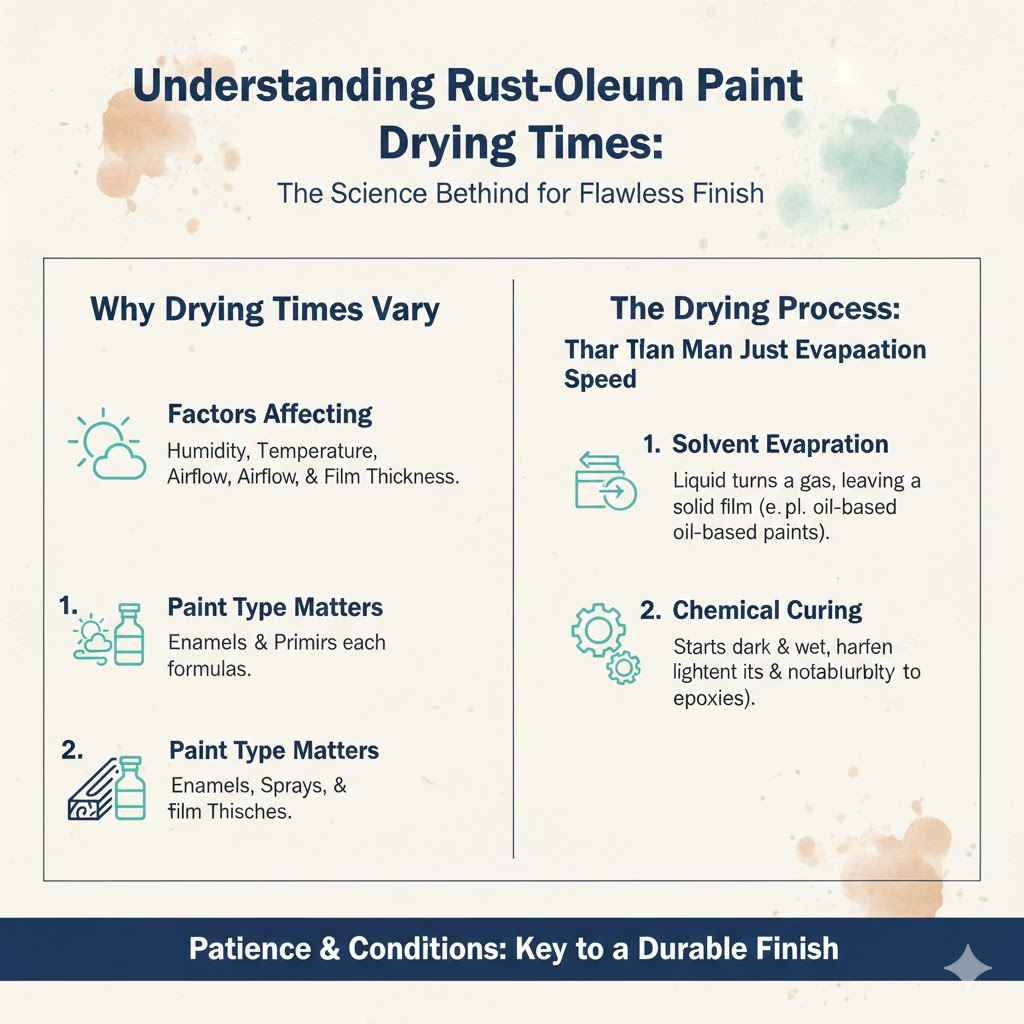
Paint drying isn’t just about the liquid disappearing. It’s a process where the paint film hardens. This happens through different methods depending on the type of paint.
Some paints dry as water or solvents evaporate. Others cure through chemical reactions. Understanding these basic ideas helps explain why drying times can vary.
Factors Affecting Drying Time
Several things can make your Rust-Oleum paint dry faster or slower. It’s like baking a cake; a little change in the recipe or oven temperature can change how it turns out.
Type of Rust-Oleum Product
Rust-Oleum makes many different kinds of paint. Some are for metal, some for wood, some for plastic, and some are special finishes like spray paints or chalk paints. Each type is made a bit differently, and this affects how fast it dries.
- Spray Paints: These often dry faster because they are thinner and spread into a thin layer.
- Enamels: These are known for being durable but might take a bit longer to fully harden.
- Latex or Acrylic Paints: These water-based paints usually dry to the touch quite quickly.
- Specialty Paints: Like heat-resistant or primer paints, their formulas can change drying needs.
Temperature and Humidity
The weather plays a big role. If it’s warm and dry, your paint will dry much faster. If it’s cool and damp, it will take longer.
High humidity means there’s lots of water in the air, and this slows down the evaporation of water-based paints. Cold temperatures can also slow down the chemical reactions that help some paints cure.
- Warm Temperatures (Above 70°F or 21°C): Paint dries faster.
- Cool Temperatures (Below 50°F or 10°C): Paint dries much slower, sometimes not at all properly.
- Low Humidity: Faster drying, especially for water-based paints.
- High Humidity: Slower drying times.
Airflow
Good airflow helps evaporate the solvents or water from the paint. If you’re painting in a closed-off space with no windows or fans, the paint will take longer to dry. Open windows or using a fan can speed things up, but don’t aim fans directly at wet paint, as this can cause uneven drying or imperfections.
Paint Thickness
Applying a very thick coat of paint will always take longer to dry than a thin, even coat. The solvent or water has more depth to travel through to escape. It’s usually better to apply multiple thin coats than one thick one for a smoother and faster-drying finish.
Surface Type
The material you’re painting can also matter. Porous surfaces like unsealed wood might absorb some of the liquid from the paint, which can affect drying. Non-porous surfaces like metal or plastic might have paint that sits on top more, and its drying time is more predictable based on other factors.
Typical Rust-Oleum Drying Times
It’s hard to give exact times because of all the factors above. But we can give you some general ideas for common Rust-Oleum products. Always check the can for the most accurate information for the specific paint you are using.
| Rust-Oleum Product Type | Dry to Touch | Recoat Time | Full Cure Time |
|---|---|---|---|
| Rust-Oleum Painter’s Touch 2X Ultra Cover (Spray) | 15-20 minutes | 1 hour | 24 hours |
| Rust-Oleum Gloss Protective Enamel | 20-30 minutes | 2-4 hours | 7 days |
| Rust-Oleum Universal All Surface Spray Paint | 20 minutes | 1 hour | 24 hours |
| Rust-Oleum Specialty High Heat Paint | 30-45 minutes | 1 hour | 24-48 hours (may need heat exposure to fully cure) |
| Rust-Oleum Stops Rust (Brush-on or Spray) | 20-30 minutes | 1-2 hours | 24 hours |
Dry to Touch means you can lightly touch the surface without getting paint on your finger. This is usually the first stage.
Recoat Time is the window you have to apply another layer of paint. If you wait too long, the first coat might harden too much, and the new coat won’t stick as well. Applying a second coat within the recommended time often helps the layers bond better for a stronger finish.
Full Cure Time is when the paint has reached its maximum hardness and durability. Even if it feels dry to touch and is ready for a second coat, it might still be soft and easily damaged until it fully cures. This can take days or even weeks for some paints.
How to Speed Up Drying (Safely)
While you can’t control the weather, you can create better conditions for your paint to dry. Here are some tips:
- Choose the Right Environment: Paint in a well-ventilated area that has a comfortable temperature. Avoid very humid or cold conditions.
- Ensure Good Airflow: Open windows or use a fan. Don’t point fans directly at wet paint.
- Apply Thin Coats: This is key. Thinner coats dry much faster than thick ones.
- Clean Surfaces: Make sure the surface is clean and dry before you start. Any dirt or grease can slow down drying.
When to Be Patient
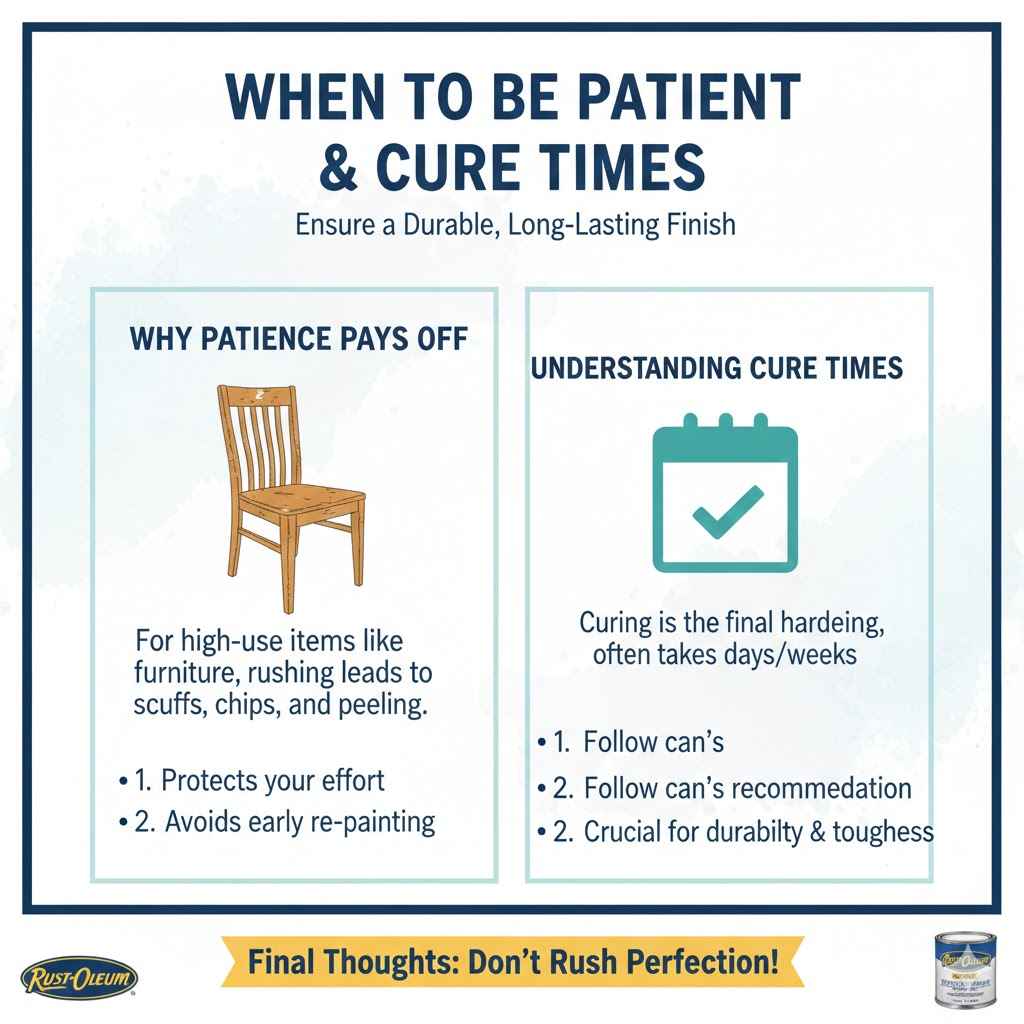
Sometimes, the best thing to do is just wait. For projects that will get a lot of use, like furniture or outdoor items, letting the paint fully cure is crucial. Rushing this can lead to scuffs, chips, or peeling later on.
It’s better to wait a few extra days than to have to repaint sooner than you expected.
For example, if you’re painting a chair, you’ll want it to be super tough. Let it cure for the full time recommended on the can, even if it feels dry. This ensures it can handle everyday wear and tear.
Frequently Asked Questions
Question: How long does Rust-Oleum spray paint take to dry?
Answer: Rust-Oleum spray paints generally dry to the touch in about 15-20 minutes. You can usually recoat within 1 hour. Full cure typically takes around 24 hours, but it’s best to check the specific product label.
Question: Can I paint over wet Rust-Oleum paint?
Answer: You can paint over Rust-Oleum paint within its recommended recoat time. This is usually within 1-2 hours, depending on the product. Painting too soon after it’s just dry to the touch, or waiting too long after it’s hardened too much, can cause problems.
Question: Why is my Rust-Oleum paint not drying?
Answer: Your paint might not be drying properly due to cold temperatures, high humidity, poor ventilation, or applying the paint too thickly. Ensure you are painting in optimal conditions.
Question: How long does Rust-Oleum chalk paint take to dry?
Answer: Rust-Oleum chalk paint typically dries to the touch within 30 minutes and can be recoated in about 1 hour. Full cure can take longer, so avoid heavy use for a few days.
Question: Does temperature affect Rust-Oleum paint drying time?
Answer: Yes, temperature significantly affects drying time. Warmer temperatures help paint dry faster, while colder temperatures slow down the drying process considerably.
Final Thoughts
Knowing how long Rust-Oleum paint takes to dry helps make your projects successful. Remember that factors like temperature, humidity, and airflow matter a lot. Always check the can for the best guidance.
Applying thin coats and allowing adequate drying time between layers will give you the best results. Be patient, and your painted items will look great and last longer.