How Many Square Feet in a 4×8 Sheet
Figuring out the exact amount of material you need for a project can sometimes feel like a puzzle. When you’re working with sheets of plywood, a common question people ask is “How Many Square Feet in a 4×8 Sheet of Plywood?”. It sounds simple, but for beginners, it’s an easy point of confusion. Don’t worry, we’ll break it down in a super simple way so you know exactly how much you’re working with. We’ll cover the calculation and some handy tips for your projects.
Calculating Square Footage of Plywood Sheets
This section helps you understand the basic math behind plywood sheets. Knowing this is the first step to planning any project. You’ll learn how simple multiplication gives you the total area.
Understanding Plywood Sheet Dimensions
Plywood is typically sold in standard sizes. The most common size you’ll encounter is the 4 foot by 8 foot sheet. This measurement refers to the length and width of the sheet in feet.
Understanding these measurements is key to calculating the total area. It means the sheet is 4 feet across and 8 feet long.
The Simple Multiplication Formula
To find the area of any rectangle, you multiply its length by its width. This is a fundamental concept in geometry. For a 4×8 sheet of plywood, the calculation is straightforward.
You take the width (4 feet) and multiply it by the length (8 feet). This gives you the total square footage.
The formula is Area = Length × Width.
Calculating Square Feet in a 4×8 Sheet
Applying the formula to a 4×8 sheet:
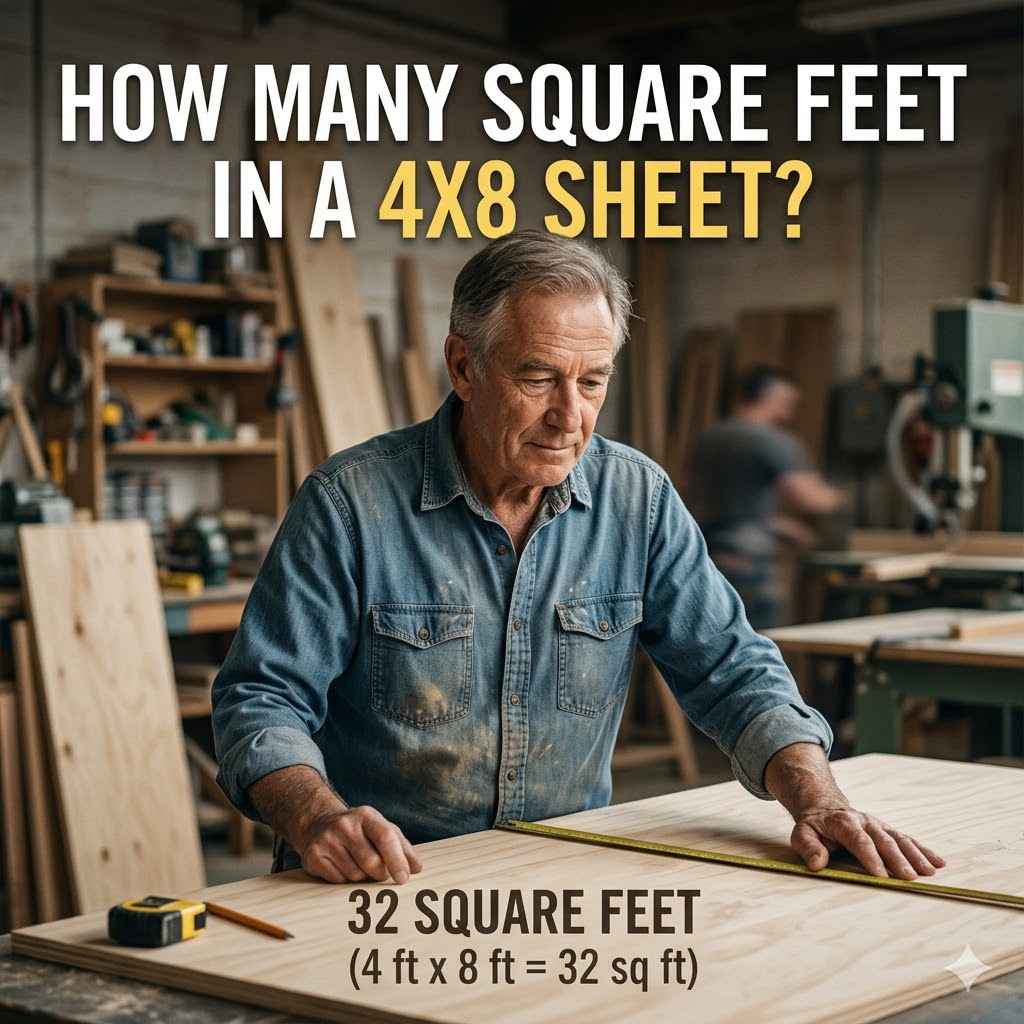
Area = 8 feet × 4 feet = 32 square feet.
So, a standard 4×8 sheet of plywood contains 32 square feet of material. This is the number you’ll use for all your project planning.
Practical Applications for Plywood Square Footage
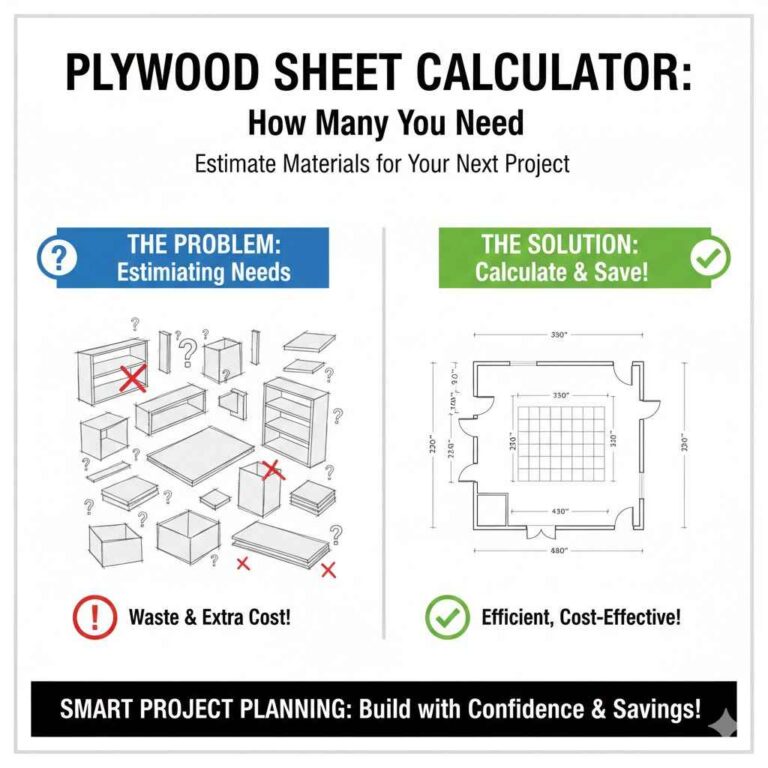
Knowing the square footage of a plywood sheet isn’t just for math class. It’s super useful for real-world projects. It helps you buy the right amount of material, saving you time and money.
Estimating Material Needs for Projects
When you start a DIY project like building shelves, a workbench, or even a small shed, you need to know how much plywood to buy. If you know a project requires, say, 64 square feet of plywood, you can easily figure out you’ll need two 4×8 sheets.
This prevents you from buying too much material, which can be wasteful. It also stops you from running out in the middle of a job, which is always frustrating.
Reducing Waste and Cost
Accurate measurement helps you cut your plywood pieces efficiently. You can plan your cuts so that smaller leftover pieces can be used for other parts of the project. This is called “nesting” your cuts.
For example, if you need a piece that is 2 feet by 4 feet, you can cut that from a 4×8 sheet. The remaining piece would be 2 feet by 4 feet, which is still a useful size.
A study by the Forest Products Laboratory found that optimizing cuts on plywood can reduce waste by up to 15%. This saving adds up, especially on larger projects.
Example Scenario 1 Building a Simple Workbench
Let’s say you want to build a workbench that is 6 feet long and 3 feet wide. You plan to use plywood for the top surface.
The area of the workbench top is 6 feet × 3 feet = 18 square feet.
Since each 4×8 sheet has 32 square feet, one sheet is more than enough for the top. You’d have plenty left over for other parts or even a second shelf.
Example Scenario 2 Creating a Custom Shelf Unit
Imagine you need to build a shelf unit with three shelves. Each shelf is 4 feet long and 1 foot deep.
The area of one shelf is 4 feet × 1 foot = 4 square feet.
For three shelves, you need 3 shelves × 4 square feet/shelf = 12 square feet.
One 4×8 sheet provides 32 square feet, so you have ample material. You could even make the shelves slightly deeper or wider if your design allows.
Understanding Plywood Thickness and Its Impact
While the square footage of a 4×8 sheet is always 32 square feet, the thickness of the plywood can affect how you use it. Different thicknesses are suited for different purposes, influencing structural integrity and ease of handling.
Common Plywood Thicknesses Explained
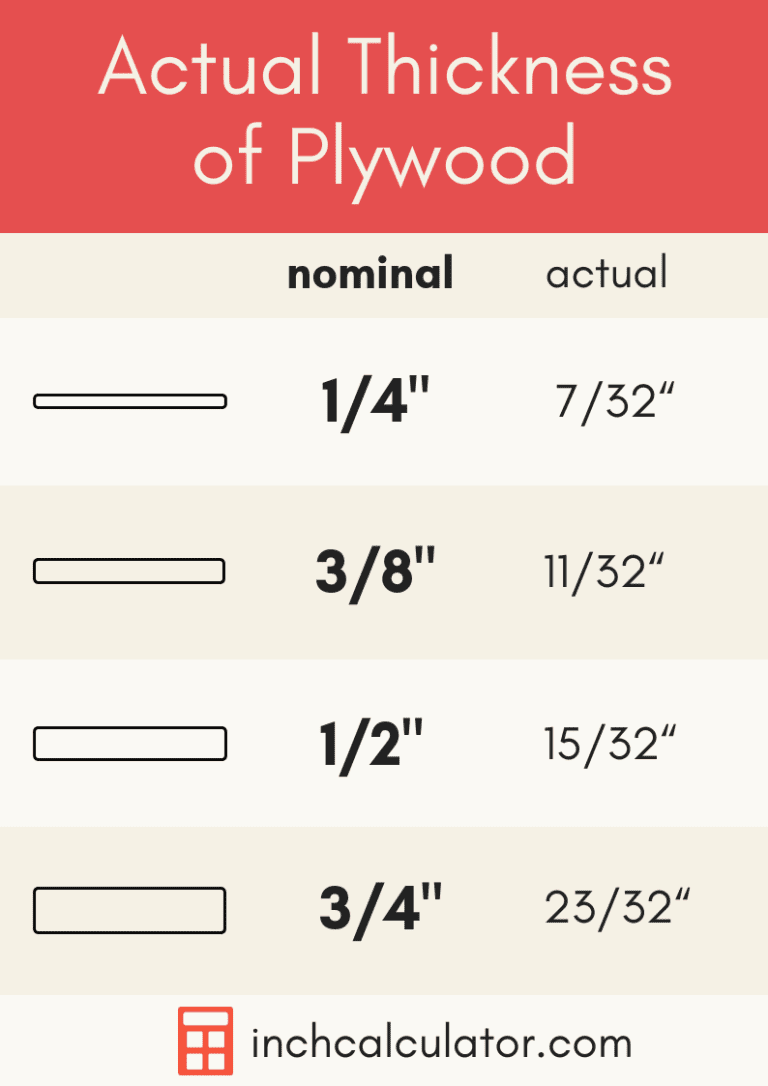
Plywood comes in various thicknesses, often measured in fractions of an inch. Common thicknesses include 1/4 inch, 3/8 inch, 1/2 inch, and 3/4 inch.
Thinner plywood, like 1/4 inch, is often used for backings of cabinets or decorative panels. It’s lightweight and flexible.
Thicker plywood, like 3/4 inch, is much stronger and is used for structural elements like floors, subfloors, and tabletops that need to support significant weight.
How Thickness Affects Project Suitability
The thickness you choose depends entirely on the demands of your project. For a simple decorative screen, 1/4 inch might suffice.
However, for a heavy-duty workbench or a floor, you’ll need at least 3/4 inch plywood to ensure it’s strong enough. Using too thin a plywood for a load-bearing application could lead to sagging or failure.
The Weight Factor of Different Plywood Sheets
While square footage remains constant, the weight of a 4×8 sheet varies significantly with thickness. A 3/4 inch sheet is considerably heavier than a 1/4 inch sheet.
This weight difference is important to consider when planning how you’ll transport and handle the sheets. A single 3/4 inch sheet can weigh upwards of 50-70 pounds, while a 1/4 inch sheet might only weigh 20-30 pounds.
Weight Comparison Table (Approximate)
| Plywood Thickness | Approximate Weight per 4×8 Sheet |
|---|---|
| 1/4 inch | 20–30 lbs |
| 3/8 inch | 30–45 lbs |
| 1/2 inch | 40–55 lbs |
| 3/4 inch | 50–70 lbs |
This table gives you an idea of how much weight you’ll be dealing with. Always plan for help if you’re moving heavier sheets.
Advanced Considerations for Plywood Projects
Once you’ve mastered the basic square footage calculation, there are a few more things to think about for your projects. These include how the plywood is graded and how to make the most of your material.
Understanding Plywood Grades
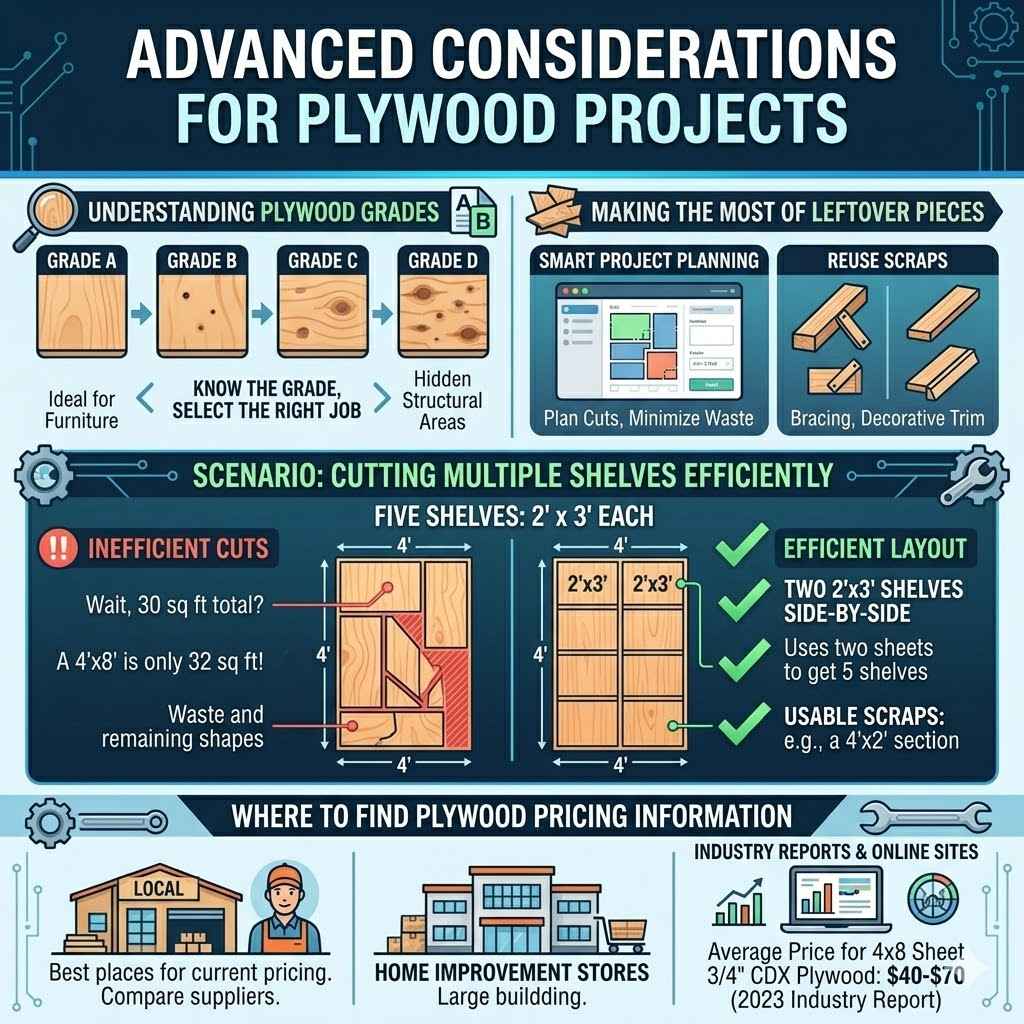
Plywood sheets are given grades based on the quality of their veneer (the thin wood layers). Grades like A, B, C, and D indicate appearance and the number of imperfections.
An ‘A’ grade surface is smooth and has very few knots or defects, making it ideal for visible surfaces like furniture. A ‘D’ grade might have numerous knots and larger defects, making it suitable for hidden structural areas.
Knowing the grade helps you select the right plywood for the right job. You don’t want to pay for a premium ‘A’ grade surface if it’s going to be covered up.
Making the Most of Leftover Pieces
When you cut large sheets, you’ll inevitably have smaller pieces left over. Smart project planning involves thinking about how these scraps can be used.
Can a leftover 2×4 piece be used for bracing? Can a 1×2 scrap be used as a decorative trim? Planning your cuts ahead of time, often by sketching them out on paper or using online layout tools, can minimize waste.
One common technique is to plan your cuts so that the largest required pieces are cut first. Then, use the remaining sections for smaller components.
Scenario: Cutting Multiple Shelves Efficiently
Let’s say you need to cut five shelves, each 2 feet by 3 feet.
Each shelf is 6 square feet. For five shelves, you need 30 square feet.
A single 4×8 sheet is 32 square feet. You might think one sheet is enough.
However, consider the dimensions. A 4×8 sheet is 4 feet wide and 8 feet long. You cannot perfectly cut five 2×3 pieces from it without some waste.
If you cut one 2×3 piece, you have a 2×3 piece and a 4×5 piece remaining. If you cut another 2×3 piece from the 4×5 piece, you’ll have a 2×3 piece and a 2×5 piece left.
A more efficient layout would be to cut two 2×3 pieces from one 4×8 sheet by placing them side-by-side along the 4-foot width. This would leave you with a 4×2 section. Repeating this would use two sheets to get your five shelves, with some usable scraps.
Where to Find Plywood Pricing Information
Prices for plywood can vary based on the type of wood, grade, thickness, and your location. Local lumber yards and large home improvement stores are the best places to check for current pricing.
It’s also a good idea to compare prices between different suppliers if you have multiple options. Sometimes buying in larger quantities can lead to discounts.
A 2023 industry report indicated that the average price for a 4×8 sheet of 3/4 inch CDX plywood ranged from $40 to $70, depending on market conditions and specific product features.
Frequently Asked Questions
Question: Is the square footage of plywood always 32 square feet
Answer: Yes, a standard 4×8 sheet of plywood always measures 32 square feet, regardless of its thickness. This is calculated by multiplying its length (8 feet) by its width (4 feet).
Question: Does plywood thickness change the square footage calculation
Answer: No, the thickness of plywood does not affect the calculation of its surface area in square feet. The 4×8 dimension refers to the length and width of the sheet.
Question: Why is it important to know the square footage of plywood
Answer: Knowing the square footage helps you accurately estimate how much material you need for a project, which prevents overspending and running out of supplies halfway through your work.
Question: What are common plywood thicknesses
Answer: Common plywood thicknesses include 1/4 inch, 3/8 inch, 1/2 inch, and 3/4 inch. The best thickness to use depends on the strength and support required for your project.
Question: Can I use leftover plywood scraps
Answer: Yes, leftover plywood scraps can often be used for smaller parts of a project, bracing, or decorative elements. Smart planning can help you use these pieces effectively and reduce waste.
Wrap Up
You now know that a 4×8 sheet of plywood contains exactly 32 square feet. This simple calculation is vital for planning any DIY or construction project accurately. Always measure twice and cut once. Use this knowledge to budget wisely and make your projects a success.