How Much Does It Cost To Build A Wood Fence In 2025?
The average cost to build a wood fence in 2025 typically ranges from $2,500 to $6,000. This includes materials like lumber and hardware, plus professional installation labor. Factors such as fence height, wood type, style, and your location will affect the final price. Simple picket fences might be on the lower end, while privacy fences with premium wood can go higher.
Understanding Wood Fence Costs
Building a wood fence involves more than just buying planks. You are investing in your home’s look. You are also adding security.
And perhaps a safe space for pets or kids. The overall price tag is a mix of several things. Knowing these parts helps you understand the estimate you get.
The biggest chunk of the cost comes from materials. This includes the wood itself. It also includes posts, concrete, and hardware like nails and screws.
Then there is labor. This is what you pay for skilled workers to build it. Finally, there are other factors that can push the price up or down.
Let’s look at these pieces closer. This will give you a clearer picture. It helps you plan your budget.
You can then make smart choices. Choices that fit your needs and your wallet.
Wood Fence Material Costs in 2025
The wood you pick is key to the price. Different types of wood have different costs. They also offer different looks and lifespans.
Cedar and redwood are popular. They are also more expensive. Pine is a cheaper option.
But it may not last as long without good care.
For example, cedar fencing is a favorite. It smells nice and resists bugs. It also looks great.
But cedar can cost more per foot. Redwood is similar. It’s beautiful and durable.
It often costs even more than cedar. These woods are good choices for a high-end look.
On the other hand, pressure-treated pine is very common. It’s treated to resist rot and insects. This makes it last longer.
It is usually much cheaper than cedar or redwood. Many homeowners choose it for its value. It’s a solid, budget-friendly choice for many.
The size of your fence matters too. Taller fences use more wood. They need stronger posts.
This means more material cost. The style of the fence also impacts how much wood is needed. A solid privacy fence uses a lot more wood than a spaced picket fence.
Wood Type Price Comparison (Approximate per Linear Foot)
Pressure-Treated Pine: $10 – $20
Cedar: $15 – $30
Redwood: $20 – $40+
Note: These are material costs only and can vary by region and grade of wood.
Don’t forget the smaller stuff. Posts are important. They hold the fence up.
They are usually made of wood or metal. Metal posts can be more durable. But wooden posts are more common for wood fences.
You also need concrete to set the posts. Nails, screws, and other hardware add up too.
I remember a job I helped with last year. The homeowner wanted a cedar privacy fence. They loved the natural look.
But they didn’t realize how much more cedar cost. We had to adjust the overall length a bit. We also went with a slightly simpler post design.
This helped keep them closer to their budget. It’s all about finding that balance.
Labor Costs for Wood Fence Installation
Labor is a significant part of the total price. Good fence builders know their stuff. They can build a fence that’s strong and looks good.
They also work safely. The cost of labor varies based on where you live. Busy areas with more demand often have higher labor rates.
A typical installation might take 1 to 3 days. This depends on the size and complexity of the fence. For a standard 150-foot fence, you might expect to pay $15 to $30 per linear foot for labor alone.
This sounds like a lot. But it covers skilled work, tools, and the time spent.
The installer’s experience matters. A company with a great reputation might charge more. But they often provide better quality.
They might offer warranties too. This is good for peace of mind. Always get quotes from a few different installers.
Compare what they include in their price.
What about the site itself? If your yard has a steep slope, it’s harder to build on. This takes more time and skill.
It will likely cost more. Same goes for rocky soil. Digging post holes becomes a challenge.
These issues add to the labor cost. A good installer will assess your site first.
Labor Cost Factors
- Geographic Location: Higher cost of living areas mean higher labor rates.
- Installer Experience: Reputable companies with warranties may cost more.
- Site Conditions: Steep slopes, rocks, or difficult terrain increase labor time.
- Fence Complexity: Intricate designs or features take more time to build.
In my own home, we had a fence installed last spring. It was a standard pine privacy fence. The crew was quick and efficient.
They finished in two days. The quote was right in the middle of what I expected. They did a great job cleaning up too.
That attention to detail is worth the money.
Common Wood Fence Styles and Their Costs
The look you want for your fence has a big impact on price. Different styles use different amounts of wood and require different construction methods. Some are simple and cheap.
Others are more elaborate and cost more.
The most basic style is the picket fence. These have evenly spaced vertical boards. They are often shorter and used for decoration.
They use less wood. So, they are usually the most affordable. A simple 4-foot picket fence is a popular choice for front yards.
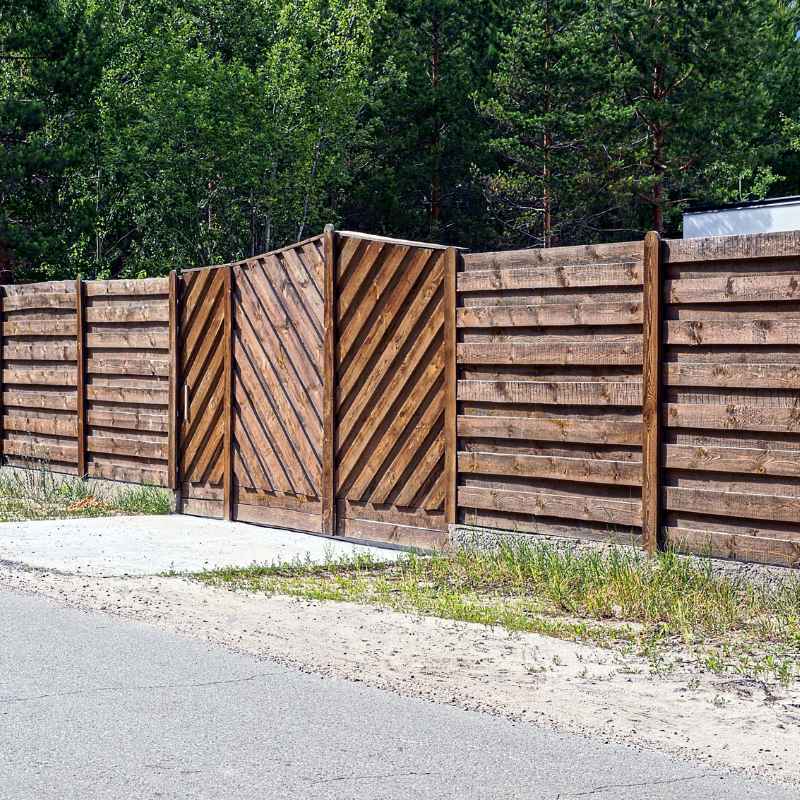
Next, we have the privacy fence. This is very popular for backyards. It has solid boards placed close together.
This blocks views. It offers security. It uses much more wood than a picket fence.
This makes it more expensive. A 6-foot privacy fence is a common height.
Then there are shadowbox fences. These are a bit different. Boards are on both sides of the fence frame.
They are staggered. This allows some air flow but still gives privacy. They use more wood than a simple privacy fence.
So, they cost a bit more.
Other styles include dog-ear fences. These have pointed tops on the pickets. Lattice tops add another design element.
They are decorative. They also add to the cost. More complex designs mean more materials and more labor time.
Fence Style Cost Ranges (per Linear Foot, installed)
- Picket Fence (4 ft): $15 – $25
- Privacy Fence (6 ft): $20 – $35
- Shadowbox Fence (6 ft): $25 – $40
- Lattice Top Fence (6 ft): $30 – $50+
Note: Wood type significantly affects these ranges.
I once quoted a customer who wanted a very specific look. They wanted a “farmhouse” style fence. It had wide boards and a rustic feel.
It also had a few custom-designed gates. This was a beautiful fence. But the custom work and the extra materials pushed the price much higher.
We ended up simplifying some of the gate details. This helped manage the budget. It’s always a trade-off.
Factors That Affect Wood Fence Cost
Beyond wood type, style, and labor, several other things can change the final price. Thinking about these upfront helps avoid surprises.
Fence Height: A taller fence needs more wood. It also needs stronger posts and deeper holes. A 6-foot fence costs more than a 4-foot fence.
A 8-foot fence will cost even more.
Gates: Gates are essential. But they add to the cost. A single walk-through gate might add $100 to $300.
A larger double gate for vehicles can cost $300 to $1,000 or more. The hardware for gates is also more expensive.
Site Preparation: If your yard needs a lot of work before building, it costs more. This could involve clearing brush, removing old fences, or leveling uneven ground. These tasks add labor time and expense.
Permits: Some towns or cities require permits to build a fence. The cost of these permits varies. It’s good to check with your local building department.
Warranties: A good installer might offer a warranty on their work. This might cover things like sagging or post instability. A longer or more comprehensive warranty could be included in a higher price.
Finishing: Will you stain or seal your fence? This is an extra cost. But it helps protect the wood and makes it look better.
Some installers offer this service. Others expect you to do it yourself.
Additional Cost Considerations
Gates: Each gate adds significant cost.
Site Prep: Clearing land or leveling terrain increases expenses.
Permits: Local government fees for building permits.
Finishing: Staining or sealing for protection and appearance.
Disposal: If an old fence needs removal, disposal fees apply.
I recall a client who didn’t consider the driveway gate. They had a nice budget for a cedar fence. But the large double gate they wanted was custom-made.
It used special hardware. It also needed a stronger frame. That gate alone was almost 20% of their total fence cost.
We had to discuss options. They decided to go with a simpler, standard gate. It still looked good.
But it fit their budget better.
DIY vs. Professional Installation
Should you build the fence yourself? Or hire a pro? This is a big decision.
It heavily impacts the cost.
DIY (Do It Yourself): If you have the time, skills, and tools, DIY can save you money. You’ll only pay for materials. But there are hidden costs.
You need to rent or buy tools. Mistakes can be costly. You might end up buying more materials.
And your time is valuable.
Building a fence is hard work. Digging post holes is tough. Ensuring posts are plumb and stable is crucial.
Attaching the fence boards evenly takes skill. A poorly built fence won’t look good. It might not last as long.
And it could be a safety hazard.
Professional Installation: Hiring pros costs more. But it gives you peace of mind. They have the right tools.
They have the experience. They know how to build a strong, lasting fence. They often offer warranties.
This protects your investment. For most people, the convenience and quality are worth the extra cost.
DIY vs. Pro: What to Expect
DIY Savings: Save on labor costs.
DIY Risks: Tool costs, time investment, potential for errors, lower quality results.
Pro Benefits: Speed, expertise, quality craftsmanship, warranties, less stress.
Pro Costs: Higher initial investment due to labor.
I once had a neighbor who tried to build his own fence. He was very handy. He underestimated the effort.
Digging post holes in his rocky yard took him days. He struggled to get the posts perfectly straight. By the time he finished, he said he’d never do it again.
He wished he’d just hired someone. It’s a tough job, especially for a big perimeter.
Average Costs for Different Fence Sizes (Examples)
Let’s look at some typical scenarios. These are estimates for 2025. They assume standard materials and professional installation.
Small Yard Fence (e.g., 50 linear feet): This could be for a small backyard or a side yard. For a 6-foot pressure-treated pine privacy fence, you might expect to pay $1,000 to $1,800.
Medium Yard Fence (e.g., 100 linear feet): This is more common for average-sized backyards. For a 6-foot pressure-treated pine privacy fence, costs could range from $1,800 to $3,000. If you upgrade to cedar, it could be $2,500 to $4,500.
Large Yard Fence (e.g., 150 linear feet): For larger properties, the cost increases significantly. A 6-foot pressure-treated pine privacy fence might cost $2,500 to $4,500. If you choose a premium wood like redwood, the cost could easily be $4,000 to $7,000 or more.
Remember, these are just examples. Your specific needs will change the numbers. Always get detailed quotes.
Example Cost Breakdown (100 linear feet, 6ft Privacy Fence)
| Cost Item | Estimated Range |
|---|---|
| Pressure-Treated Pine Materials | $500 – $1,000 |
| Cedar Materials | $800 – $1,500 |
| Labor (PT Pine) | $1,300 – $2,000 |
| Labor (Cedar) | $1,700 – $3,000 |
| Total (PT Pine) | $1,800 – $3,000 |
| Total (Cedar) | $2,500 – $4,500 |
I often see people surprised by the gate cost. They budget for the fence panels. Then they ask about adding a gate.
It’s like a whole separate project. For a 100-foot fence with one 4-foot gate, that gate could add $200 to $600 on top of the fence cost. It’s good to include that in the initial plan.
When Is It Normal to Worry About Wood Fence Costs?
Most of the time, the cost of a new wood fence is pretty standard. You get quotes. You pick the best one.
But sometimes, a price might seem too high. Or too low. This is when you should pay attention.
If a quote seems extremely low: Be very cautious. It might mean corners are being cut. The installer might use cheap materials.
Or they might not be properly insured. They could be cutting costs on labor. This could lead to a poorly built fence.
Or even safety issues on site. Always ask for details. Check reviews and references.
If a quote seems unreasonably high: It’s also worth questioning. Are they using a rare type of wood? Is the design incredibly complex?
Or is the installer just overcharging? Compare it with other quotes. Make sure you understand what you are paying for.
Don’t be afraid to ask for a breakdown of costs.
Unexpected extra fees: During the project, if the installer starts adding lots of extra fees. Things you didn’t discuss. This is a red flag.
Good communication upfront prevents this. Make sure the contract is clear about all potential costs.
Red Flags in Fence Quotes
- Unrealistically Low Prices: May indicate poor quality or missing services.
- Vague or Incomplete Quotes: Lacks detail on materials, labor, and timelines.
- Pressure Tactics: Being rushed to sign a contract without proper review.
- No Written Contract: Always get everything in writing.
- Lack of Insurance/Licenses: Ensure the installer is properly covered.
I once spoke to a homeowner who got a quote that was half of everyone else’s. They were excited. But the installer was not licensed.
They didn’t have insurance. They wanted a large cash deposit upfront. Luckily, the homeowner did some digging.
They found out the installer had a history of leaving jobs unfinished. It’s a good reminder to do your homework.
Quick Tips for Managing Wood Fence Costs
Want to keep your wood fence project affordable? Here are some smart ways to do it.
- Choose Pressure-Treated Pine: It’s the most cost-effective wood option. It offers good durability for the price.
- Opt for Simpler Styles: Picket fences or basic privacy fences cost less than elaborate designs.
- Keep Gates Simple: Standard-sized gates are cheaper than custom ones.
- Get Multiple Quotes: Compare prices from at least three reputable fence companies.
- Ask About Off-Season Discounts: Sometimes, installers offer lower prices in cooler months.
- Consider Your Needs: Do you really need an 8-foot privacy fence? A 6-foot one might be enough.
- DIY Some Tasks: If you’re handy, you could do site prep or staining yourself.
- Check for Local Sales: Keep an eye out for lumber sales at your local hardware stores if you are DIYing.
My own experience installing a small fence in my garden taught me a lot. I chose pine. I kept the design simple.
I did all the digging and setting of posts myself. Then I hired someone to install the actual panels. This saved money on labor for the hardest part.
I also did all the staining. It was a lot of work. But it saved me hundreds of dollars.
Frequently Asked Questions About Wood Fence Costs
What is the average cost per foot for a wood fence in 2025?
The average cost per foot for a wood fence installed in 2025 typically ranges from $15 to $35. This depends heavily on the wood type, fence style, height, and your location. Basic picket fences will be on the lower end, while premium wood privacy fences will be on the higher end.
Is cedar or pressure-treated pine cheaper for fences?
Pressure-treated pine is significantly cheaper than cedar. Cedar is a premium wood that costs more per board. While cedar offers natural resistance to rot and insects and a beautiful appearance, pressure-treated pine is treated with chemicals to achieve similar durability at a lower price point.
How much does labor typically add to the cost of a wood fence?
Labor costs usually account for 50% to 70% of the total project cost for a wood fence. For a typical 150-foot fence, you might pay anywhere from $15 to $30 per linear foot for installation labor alone. This covers the skilled work of site assessment, digging, post setting, framing, and attaching panels.
Are gates a big extra cost for wood fences?
Yes, gates are a significant added cost. A standard walk-through gate can add $100 to $300 to the total price of a fence. Larger double gates or custom-designed gates can cost $300 to $1,000 or more, depending on their size, style, and hardware.
What factors can unexpectedly increase the cost of a wood fence?
Several factors can increase costs. These include difficult site conditions like steep slopes or rocky soil, extensive site preparation needed, adding multiple or large gates, choosing premium wood types like redwood, or needing permits from your local municipality. Unexpected issues discovered during installation, like buried utilities, can also add costs.
Is it cheaper to build a fence in the winter?
Sometimes, fence companies offer discounts during slower seasons, which can include winter or early spring. This is because demand is lower. However, weather can be a factor, potentially delaying projects or making installation more difficult.
It’s worth asking about off-season pricing but be prepared for potential weather delays.
Conclusion
Building a wood fence is a smart investment. It adds beauty and function to your home. Understanding the costs involved helps you plan.
Wood type, fence style, and labor are big factors. Always get multiple quotes. Compare them carefully.
With a little research, you can get a beautiful, durable fence that fits your budget.
Sponsored / affiliate links. As an Amazon Associate I earn from qualifying purchases. I may earn additional commission from eligible campaigns.