How Much Does It Cost To Install A Wood Burner
Many people wonder about the cost of adding a wood burner to their home. It’s a common question, especially for those new to home heating upgrades. Figuring out How Much Does It Cost to Install a Wood Burner? can feel tricky with all the different parts involved.
But don’t worry! We’ll break it all down simply, step by step, so you know exactly what to expect. Get ready to learn about the costs and what goes into making your home warmer and cozier.
Understanding Wood Burner Installation Costs
Getting a wood burner installed involves more than just buying the stove itself. You need to consider the unit, the chimney system, and the labor to put it all together. The total price can change a lot based on the type of stove you pick and your home’s existing setup.
This section will explore the main cost areas so you can budget wisely.
Choosing Your Wood Burner
The price of the wood burner unit is a big part of the overall cost. There are many types, each with different price tags. Think about what size and style best fits your room and needs.
Basic Wood Stoves
These are often the most affordable options. They are made to burn wood and provide heat efficiently. You can find simple models that focus on function over fancy features.
They usually have a single door and a basic control system for airflow. These stoves are a great starting point for those on a tighter budget who still want the charm and warmth of wood heating. Their build quality is generally good, focusing on durability.
Multi-Fuel Stoves
These stoves can burn wood, coal, and other solid fuels. They are a bit more expensive than basic wood burners. They often have a grate system that allows ash to fall through, making them easier to clean when burning coal.
The ability to burn different fuels gives you more flexibility, especially if certain fuels are more readily available or cheaper in your area. They are built to handle the higher heat and different burning properties of various solid fuels.
Boiler Stoves
These are the most expensive type. They heat your home and also heat water for your radiators. They are like a central heating system powered by wood.
If you want to reduce your reliance on other heating methods and have hot water on demand, this is a great, albeit pricier, choice. Their complex internal design for water circulation adds to their cost. They are a significant investment for a comprehensive home heating solution.
The cost for the stove unit alone can range from $500 to $5,000 or more. A simple, efficient wood stove might be around $800. A high-end, multi-fuel or boiler stove could easily cost $3,000 or higher.
The materials used, the brand, and the finish all play a role in how much you’ll spend. Some stoves are made with cast iron, which is durable but heavier and more costly. Others use steel with a heat-resistant paint finish.
Decorative elements like ceramic tiles or glass doors can also increase the price.
Chimney and Flue System Costs
You can’t have a wood burner without a safe way to vent smoke. This usually means a chimney or a flue liner. The cost depends on whether you need a new system or are modifying an existing one.
Chimney Liners
If you have an old chimney, it likely needs a liner. This is a metal tube that goes inside the chimney to make it safe for burning wood. It protects the brickwork from heat and tar.
A stainless steel liner is a common and durable choice. The length and diameter of the liner needed will affect the price. For a typical two-story house, a liner could cost between $500 and $1,500.
Twin-Wall Flue Systems
If your home doesn’t have a chimney, you’ll need an external flue system. This is often a twin-wall insulated pipe that goes up the outside of your house. It’s designed to stay safe at high temperatures and doesn’t need a brick structure.
The cost depends on how high it needs to go and how many support brackets are required. A basic twin-wall system for a single-story home might start around $700. For a taller house, this could climb to $2,000 or more due to extra sections and supports.
Cowls and Terminations
You also need a cowl to stop rain and animals from entering the chimney. The top of the flue also needs a proper termination cap. These are usually smaller costs but are essential for the system’s function and safety.
A good quality cowl can add another $50 to $150 to your bill.
The chimney and flue are critical for safety and performance. A poorly installed system can be dangerous, leading to smoke filling your home or even a chimney fire. Always ensure your chosen system meets safety standards.
The materials are designed to withstand extreme temperatures and corrosive gases produced by burning wood.
Professional Installation Labor Costs
Getting a qualified professional to install your wood burner is key. They ensure everything is safe and up to code. This is not a DIY job for most people.
The labor costs can vary a lot by region and installer.
Certified Installers
Professional installers have the training and tools to do the job right. They understand building regulations and can certify the work. This certification is often required by insurance companies.
The cost for a certified installer can range from $500 to $2,500. This depends on the complexity of the installation and how many days the work takes.
Time and Complexity
A straightforward installation where an old flue is being lined might take a day. Installing a new twin-wall system through multiple floors or a difficult roof space will take longer. The installer will need to assess your home’s structure, plan the route for the flue, and ensure proper clearances from combustible materials.
This careful planning and execution add to the labor cost.
Building Regulations and Permits
In some areas, you might need building permits for wood burner installations. The installer can often handle this process for you, but there might be a fee. They will ensure the installation meets all local safety codes.
This might involve specific distances from walls, floor protection, and ventilation requirements. Failing to meet these can lead to safety issues and legal problems.
It’s important to get quotes from several qualified installers. Ask for a detailed breakdown of what their quote includes. This will help you compare prices and services accurately.
Some installers might include minor building works in their price, while others charge extra. Always check what is covered before agreeing to the work.
Factors Affecting the Total Cost
Several things can make the price go up or down. Understanding these factors helps you set a realistic budget. Your home’s current condition and your personal choices play a big role.
Existing Chimney or Need for New
This is one of the biggest cost drivers. If you have a disused, sound chimney that just needs lining, it’s cheaper. If you need a completely new flue system installed, especially an external one, it will cost much more.
Lining an Existing Chimney
This is typically the most cost-effective option if you have a chimney. The process involves cleaning the existing chimney and then inserting a flexible or rigid liner. The liner is usually made of stainless steel.
It creates a sealed system for the smoke to travel through. This prevents heat loss and reduces the risk of creosote buildup in the brickwork. The average cost for lining a chimney is between $1,000 and $2,000, including labor and materials.
Installing a New Twin-Wall Flue
If no chimney exists, a twin-wall system is necessary. This system is insulated and safe to pass through walls and ceilings. It can be routed externally up the side of the house or internally.
External installations often require more support and may be more visible. Internal installations can be cleaner but might require more structural work to pass through floors and the roof. The cost can range from $1,500 to $3,500 or more depending on the height and complexity.
Repairing an Existing Chimney
Sometimes, an existing chimney might be damaged or poorly constructed. Repairs like repointing brickwork, fixing the chimney pot, or reinforcing the structure can add to the cost. These costs can vary greatly, from a few hundred dollars for minor fixes to several thousand for major structural work.
It’s crucial to have any existing chimney inspected thoroughly before installation begins.
The choice between lining an existing chimney and installing a new system is often dictated by your home’s structure. Older homes often have chimneys, but their condition can be a gamble. Newer homes might not have them at all, requiring the more extensive twin-wall solution.
Location and Local Regulations
Where you live can affect prices. Labor rates vary significantly from one region to another. Additionally, some areas have stricter building codes and regulations for wood burner installations, which can add to the overall expense.
Regional Labor Rates
In major cities or areas with a high cost of living, you can expect to pay more for skilled labor. Installers in these areas often charge higher hourly rates due to demand and overhead. Conversely, in rural areas, labor might be more affordable, but specialized installers might be harder to find.
The travel time for installers can also add to the cost if you live far from a service center.
Building Codes and Permits
Some local authorities require specific types of installations or inspections. This might mean using particular brands of flue, needing specific fire clearances, or requiring a HETAS (Heating Equipment Testing and Approval Scheme) registered installer, which is a UK standard. Obtaining permits and inspections can add $100 to $500 to your total cost.
These regulations are in place to ensure safety and prevent fires.
Insurance Requirements
Your home insurance provider might have specific requirements for wood burner installations. They may insist on certification from a qualified installer or require specific safety features. Complying with these can sometimes mean choosing more expensive materials or installation methods, but it’s essential for peace of mind and to keep your insurance valid.
It is always best to check with your local council or building control department about any regulations that apply to wood burner installations in your area. This can save you from unexpected costs or having to redo work later.
Additional Features and Materials
Beyond the basic setup, you might want to add extras or choose premium materials, which will increase the cost. These can enhance the look and functionality of your wood burner installation.
Fireplace Surrounds and Hearths
You might want to update or install a new fireplace surround or hearth. Materials like stone, slate, or tile can look very appealing but are more expensive than standard concrete or brick. A custom-made stone hearth can easily add $500 to $2,000.
The design and material choice will greatly influence this cost. Some people opt for a simple slate hearth for a modern look, while others prefer a more traditional stone or brick surround.
Heat Shields and Fireproofing
Depending on your room layout, you might need extra heat shields or fireproofing materials to ensure safe clearances from combustible walls or furniture. These are often non-combustible boards or decorative metal panels. While essential for safety, they add to the material and labor costs.
The amount of area needing protection will determine the expense.
Glass Doors and Decorative Screens
Some stoves come with basic doors, while others offer upgraded tempered glass doors for a better view of the fire. Decorative screens or fireplace from $200 to $1,000 or more to the total price, depending on the design and quality.
Consider these additions carefully. They can make a big difference to the final look and feel of your installation, but they also add to the budget. Prioritize safety and efficiency first, then look at aesthetics.
Putting It All Together Average Costs
Now, let’s look at some typical price ranges for installing a wood burner. These numbers can give you a good idea of what to budget for. Remember, these are averages, and your specific situation might be higher or lower.
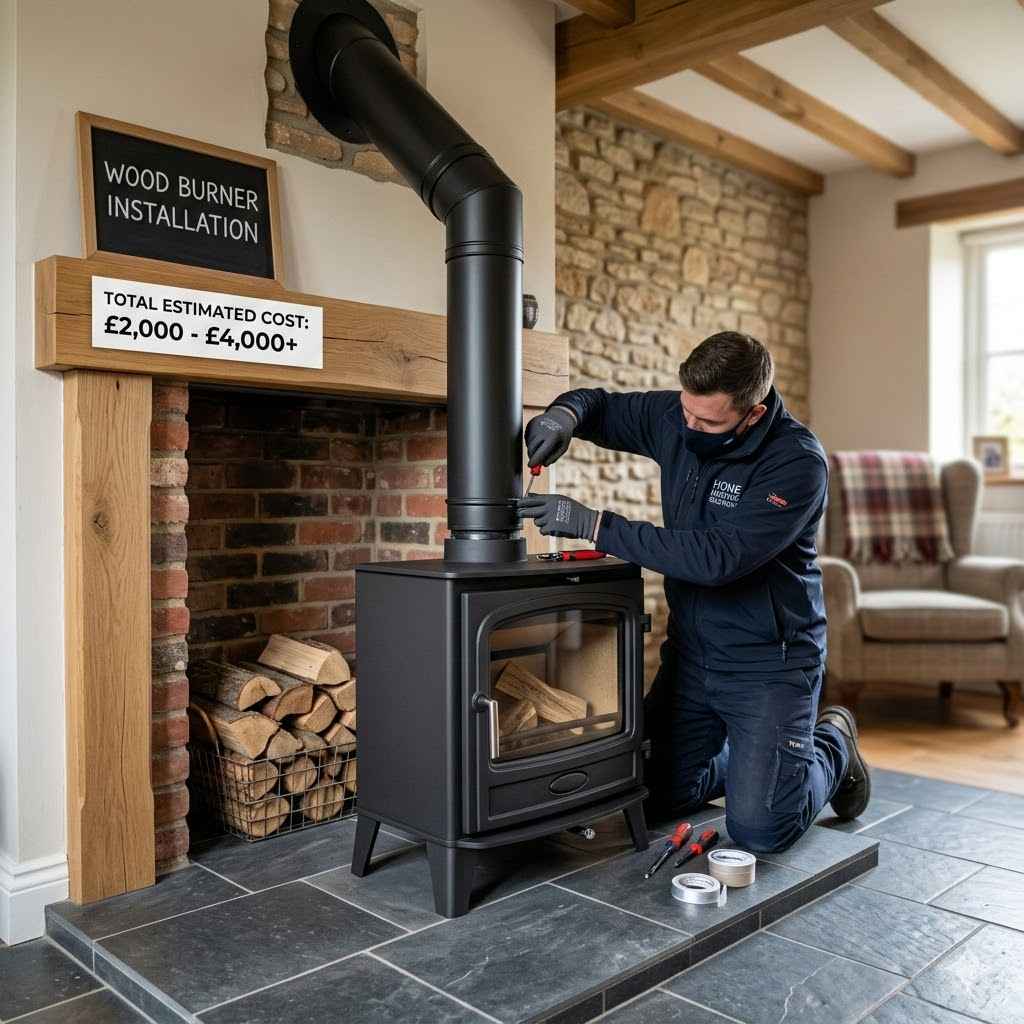
A very basic installation, perhaps lining an existing chimney with a standard stove and minimal labor, might cost between $2,000 and $3,500. This includes the stove, liner, cowl, and professional installation fees.
A mid-range installation, which might involve a better quality stove, a new twin-wall flue system that goes up the outside of a small house, and professional fitting, could cost from $3,500 to $6,000. This also accounts for any necessary minor building work and certification.
A high-end installation could easily exceed $6,000. This would typically include a premium multi-fuel or boiler stove, a complex flue system (perhaps internal and requiring more modifications), custom fireplace surrounds, and potentially more extensive building work. The cost can go up to $10,000 or more for very elaborate setups.
| Installation Type | Average Cost Range | Key Features |
|---|---|---|
| Basic (Lined Chimney) | $2,000 – $3,500 | Standard wood stove, chimney liner, basic cowl, professional installation. |
| Mid-Range (New Flue) | $3,500 – $6,000 | Quality stove, twin-wall flue system, professional installation, certification. |
| High-End (Premium Stove/Complex Flue) | $6,000 – $10,000+ | Premium stove, complex flue, custom surrounds, potential building work. |
It’s always best to get multiple quotes. A detailed quote should break down the cost of the stove, flue system, labor, and any other components. This helps you understand where your money is going and what you are paying for.
Example Scenarios
To help illustrate the costs, let’s look at a couple of typical scenarios.
Scenario 1: Sarah’s Cozy Cottage
Sarah lives in an older cottage with an existing brick chimney. She wants to install a simple, efficient wood burner for ambiance and backup heat. She chooses a mid-range wood stove costing $1,000.
Her chimney needs a stainless steel liner, which costs $1,200 installed. The professional installer charges $800 for fitting the stove, lining the chimney, and certifying the work. She also adds a basic slate hearth for $200.
The total cost for Sarah’s installation is $3,200.
Scenario 2: Mark’s Modern Home
Mark’s house was built without a chimney. He decides to install a sleek, contemporary multi-fuel stove that costs $2,500. He needs a twin-wall flue system to run up the outside of his two-story house.
This, including all sections, supports, and a cowl, costs $2,000. The installation labor, which involves drilling through walls and securing the flue system safely, costs $1,500. He also opts for a simple stone surround for $800.
Mark’s total installation cost is $6,800.
These examples show how the same basic goal – installing a wood burner – can lead to very different price tags based on home structure and chosen features.
Frequently Asked Questions
Question: How much does a wood burner installation typically cost?
Answer: The typical cost to install a wood burner can range from $2,000 to $6,000. This includes the stove itself, the flue system, and professional labor. More complex installations or premium stoves can push the cost higher, sometimes up to $10,000 or more.
Question: Is it cheaper to install a wood burner if I already have a chimney?
Answer: Yes, it is generally cheaper if you already have a chimney. You will likely only need to line the existing chimney, which is less expensive than installing a completely new twin-wall flue system. The cost to line a chimney usually falls between $1,000 and $2,000.
Question: What are the main components that add to the cost of installing a wood burner?
Answer: The main cost components are the wood burner unit itself, the chimney or flue system (liner or twin-wall pipes), and the professional labor for installation and certification. Additional costs can come from decorative surrounds, hearths, and any necessary building modifications.
Question: Do I need a building permit for a wood burner installation?
Answer: In many areas, you will need a building permit or require the installation to be certified by a qualified professional (like HETAS in the UK). This ensures the installation meets safety standards. Check with your local council for specific requirements, as permit fees can add $100 to $500 to the cost.
Question: Can I install a wood burner myself to save money?
Answer: It is strongly advised not to install a wood burner yourself unless you are a certified professional. Incorrect installation can be extremely dangerous, leading to fires or carbon monoxide poisoning. Professional installation ensures safety, compliance with regulations, and often is required for home insurance and warranties.
Summary
Knowing How Much Does It Cost to Install a Wood Burner? involves looking at the stove, flue system, and labor. Costs vary widely, from around $2,000 for a basic setup to over $10,000 for premium systems. Factor in your home’s existing chimney and local regulations.
Getting multiple quotes from certified installers is key for a safe and affordable installation. You can achieve a warm and inviting space within your budget.