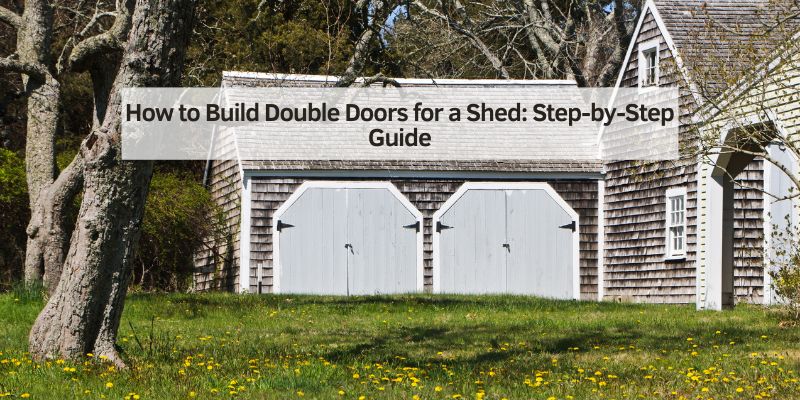
Double Doors for a Shed: Framing, Hinges & Cane Bolt Guide
Double shed doors need a 4-to-5-foot-wide opening, 2×4 framed panels, and at least three heavy-duty T-strap hinges per door — anything narrower works better as a single door. Skipping a cane bolt on the inactive leaf is the most common mistake, since without one the second door rattles loose in wind. This guide covers frame construction, hinge and hardware selection, hanging both doors level, and weatherproofing the finished pair.
Materials And Tools
Gather everything before you start cutting — stopping mid-build to make a hardware-store run is the easiest way to end up with mismatched hinges or the wrong screw length.
Materials
- Lumber: 2x4s for the door frames — pine or cedar both work; cedar resists rot better but costs more
- Plywood or solid wood panels: for the door faces
- Hinges: at least three heavy-duty T-strap hinges per door
- Door handles for opening and closing
- Cane bolt or flush bolt to pin the inactive leaf shut
- Exterior-grade screws and nails to hold parts together
- Weatherstripping to keep rain out of the gap between doors
- Paint, stain, or sealant to protect the finished wood
- Sandpaper and wood glue for smoothing edges and strengthening joints
Tools
- Screwdriver and drill for driving screws and boring pilot holes
- Hammer for nails
- Saw (circular saw or hand saw) for cutting lumber and panels
- Tape measure for checking sizes — measure twice on every cut
- Clamps to hold pieces still while fastening
- Level to keep lines straight and doors plumb
- Carpenter’s square to check that corners are true
- Pencil for marking cut lines
- Safety glasses and gloves
Planning And Design
First, measure the width and height of the shed’s opening. Use a tape measure for accurate numbers, and measure twice to avoid mistakes. As a rule of thumb, an opening wider than 3 feet works better as double doors than a single door — keep the total frame opening at least 4 feet wide, with 5 feet giving both doors more room to swing without binding. Leave enough room in the frame for hinges and clearance so the doors can open fully.
Pick a design that matches your shed style. Simple flat panel doors are easiest for beginners; some builders use metal for a more modern look. Think about the door’s weight — heavier doors need more hinges and a sturdier frame. Decide if you want windows in the doors for extra light, and choose a color or stain that blends with the rest of the shed.
Preparing The Frame
Start by measuring the opening for your shed doors again at the framing stage — lumber and framing shift slightly once the shed itself is built. Choose 2×4 lumber for the frame; it is the standard size strong enough to hold hinge screws without splitting. Mark your measurements on the lumber with a pencil, then cut carefully with a saw. Check each piece against its neighbor before assembly — a piece cut a little short is easy to fix now and very hard to fix later.
Lay out the cut lumber on a flat surface in a rectangle shape and join the corners with screws — a drill makes this faster and pre-drilling prevents the 2×4 ends from splitting. Check the frame is square by measuring both diagonals with a carpenter’s square or tape measure; if the two diagonal measurements match, the frame is square. Tighten every screw fully. This frame is the base for your shed doors, so it should not wobble at all before you move on.
Building The Door Panels
Use your opening measurements to cut both door panels to the same size, so they hang evenly. Cut with a saw for straight lines, then sand every edge smooth to prevent splinters — wear safety glasses while cutting.
Lay the panels flat, align the edges, and attach them to the frames with strong hinges and tightened screws. Check that everything is secure before standing the panels up, and use a level to confirm each door will hang straight once mounted.
📊 Plywood sold as “CDX” sheathing carries an Exposure 1 bond rating, not a full Exterior rating — it is designed to tolerate construction-stage moisture, not the long-term direct weather exposure a shed door face gets. — Source: APA – The Engineered Wood Association
If you are covering the panel with plywood, ask for a panel rated Exterior, not just Exposure 1/CDX, since the door face is exposed to rain and sun year-round rather than just during construction.
Installing Hinges And Handles
Choose heavy-duty T-strap or gate hinges rated for outdoor use — black wrought steel and stainless steel are the two common finishes and both resist rust well. Measure your door’s thickness first so you buy the correct hinge size, and use at least three hinges per door (top, middle, bottom) to keep a full-size panel from sagging.
Handles make the doors easy to open. Metal handles are the more durable choice outdoors; plastic handles are lighter but wear out faster in sun and rain. Center the handle on the door face and attach it with screws, then check that it doesn’t wobble.
Adding a Cane Bolt for the Inactive Door
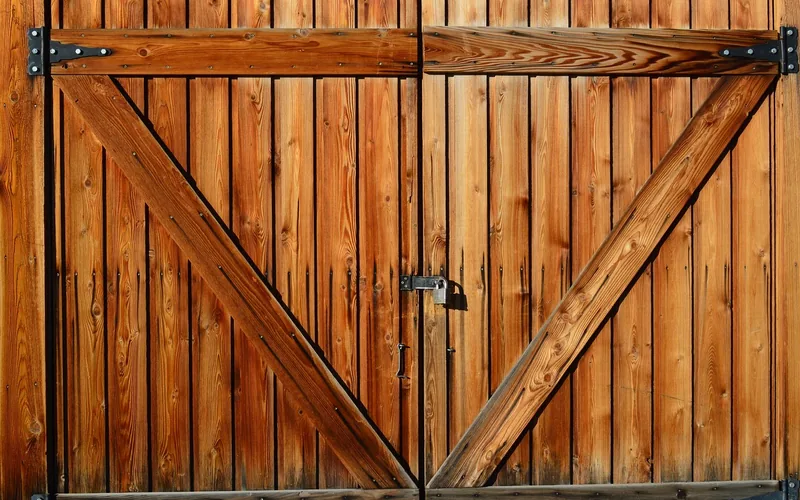
A cane bolt (also called a drop bolt) is a metal rod mounted on the inside of one door — the “inactive” leaf — that drops into a hole in the ground or threshold to pin that door shut. Without one, a double door has no way to hold the second leaf steady once the active door’s latch is unlocked, and it will swing loose in wind. Mount the cane bolt on the leaf you open less often, drill a matching hole in the sill or a buried pipe sleeve below it, and install your main latch or lock on the other, “active” leaf that gets used day to day.
“Flush bolts are always installed in the inactive leaf of the pair of doors. Flush bolts are meant to hold the inactive door secure when the door is closed.”
Best Double Shed Door Hinge Pick
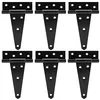
HILLMASTER 6″ T-Strap Heavy Duty Shed Door Hinges (6-Pack) – $29.99
A 6-pack covers both doors at three hinges each — the minimum this guide recommends for a full-size shed door panel.
- Best for: Standard plywood or solid-panel double shed doors
- Why we picked it: Black wrought steel, rustproof, sized for exactly the 3-hinges-per-door setup this guide covers
- Main drawback: Surface-mount only — not designed for mortised/flush installation
Compare more double shed door hardware
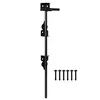 Option 1 HILLMASTER 18″ Cane Bolt Drop Rod – $14.99
|
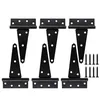 Option 2 Home Master 6″ Gate Hinges (6-Pack) – $24.99
|
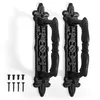 Option 3 Peohud Cast Iron Barn Door Handle (2-Pack) – $17.99
|
As an Amazon Associate we earn from qualifying purchases.
Mounting The Doors
Make sure the doors are straight using a level, and align them with the door frame, leaving a small, even gap between the two leaves so they open freely without hitting each other. Check the top and bottom are even and adjust as needed. Double-check that the hinge positions on both doors are at the same height so the pair looks and swings symmetrically.
Attach the hinges to the door frame with screws, tighten each one firmly, and test that the door swings well. Install your latch on the active leaf and the cane bolt on the inactive leaf as covered above, then check for gaps around the edges — closing them prevents drafts and keeps the shed dry.
Finishing Touches
Weatherproofing your shed doors matters because rain and wind will damage bare wood over time. Apply a sealant around the door edges, making sure every gap and seam is covered, and check the sealant yearly — replace it if it starts to crack.
Painting or staining your shed doors also protects the wood from sun damage and helps stop insects. Apply with a brush or roller and let it dry for 24 hours between coats. Staining shows the wood’s natural grain and beauty; two coats generally give the best, most even protection.
Frequently Asked Questions
How Wide Should Double Shed Doors Be?
Double shed doors are typically 60 to 72 inches wide combined. Consider your storage needs when choosing the width, and make sure the opening allows easy access for equipment and supplies. Proper door width enhances functionality and convenience — consult your shed manufacturer for specific recommendations.
How Much Gap Do You Need For A Double Shed Door?
Allow roughly a 1/4 to 1/2 inch gap between double shed doors for smooth opening and closing. This spacing prevents the doors from binding against each other as they swing.
Can You Use Two Single Doors To Make A Double Door?
Yes, you can combine two single doors to create a double door. Ensure proper alignment and structural support, and consider matching door hardware and hinges for seamless operation. Professional installation is recommended for optimal results, and double doors enhance accessibility and aesthetic appeal.
How To Build A Double Hinged Barn Door?
To build a double hinged barn door, measure the doorway, cut wood panels, and assemble the frame. Attach hinges to the door and frame, ensuring alignment, install handles, and secure the doors with a latch or cane bolt. Finish with paint or stain for durability and aesthetic appeal.
What Is A Cane Bolt And Do I Need One?
A cane bolt is a metal drop rod mounted on the inactive door of a pair that pins it shut into a hole in the ground or threshold. You need one on any double door where only one leaf has a working latch or lock — without it, the second door has nothing holding it closed when the first is unlatched.
Conclusion
Building double doors for a shed is a rewarding task that gains you extra space and style. Start with a clear plan and gather materials, then follow each step carefully for strong, durable doors — precision and patience lead to the best results. For more on hardware, see our full door hardware and locks guides, or read our guide on installing a single shed door if your opening turns out narrower than 3 feet.
Your shed will look better and function well with a properly built pair of doors. Double doors make access easy and enhance the shed’s look — with practice, you’ll get better and faster at woodworking projects like this one.
Happy building!
Sponsored / affiliate links. As an Amazon Associate I earn from qualifying purchases. I may earn additional commission from eligible campaigns.