How to Polish Door Hardware Safely by Finish Type
Use the gentlest method your finish allows: clean first, then polish only brass or unlacquered brass; never polish lacquered, plated, or PVD-coated hardware with metal polish. The wrong polish can strip coating, dull plating, or leave bare spots that corrode. This guide gives a finish-by-finish matrix, safe methods, and what to avoid.
Before you polish
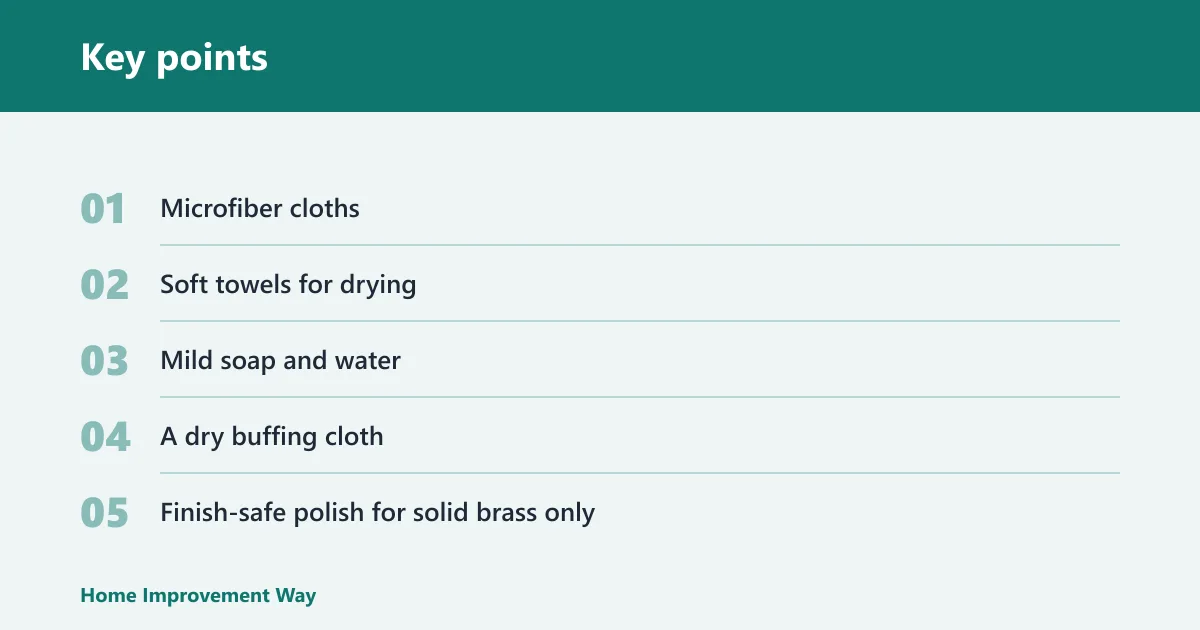

Start by removing grime with mild soap and water, because dirt can act like grit under a cloth or polish. A microfiber cloth is the safest wiping tool for most door hardware, and it also helps you buff without leaving fine scratches.
What you’ll need
- Microfiber cloths
- Soft towels for drying
- Mild soap and water
- A dry buffing cloth
- Finish-safe polish for solid brass only
- Test spot materials: cotton swab, soft cloth, and good light
- Optional DIY paste for solid brass: vinegar-based paste, salt and flour paste, or a lemon-based paste
Solid brass door hardware can take mild abrasives or a homemade paste, but it can still be damaged if you scrub too hard. Brass-plated hardware needs a lighter touch, because polish can remove the thin surface layer. Lacquered brass should stay on the soap-and-water path.
Door hardware finish matrix
| Finish type | Safe polish level | Test spot method | Red-flag damage signs | Recommended cleanup method |
|---|---|---|---|---|
| Solid brass | Yes, mild polish or a homemade paste | Rub a hidden edge for 10 to 15 seconds, then wipe clean | Patchy color, thin-looking spots, dark residue that keeps returning | Soap and water first; then polish lightly; buff dry with microfiber |
| Brass-plated | No aggressive polishing; gentle cleaning only | Touch a hidden edge with soap and water only | Cloudy spots, base metal showing through, color loss on edges | Soap and water; dry immediately; stop if color changes |
| Lacquered brass | No metal polish | Check a hidden spot for softening or lift after soap cleaning | Cloudy film, coating lift, sticky feel, dull patches | Soap and water; dry with microfiber |
| Unlacquered brass | Yes, mild polish | Test on the back side, then stop if color turns uneven | Burn-through to bright metal, streaks, uneven shine | Soap and water; polish only where tarnish needs removal |
| Oil-rubbed bronze | No bright polish | Clean with soap and water only | Color lightening, shiny wear marks, surface streaks | Soap and water; dry; leave the patina alone |
| Chrome | No abrasive polish unless labeled safe for chrome | Try a hidden spot with soap and water first | Micro-scratches, cloudy dullness, flaking at edges | Soap and water; microfiber buffing |
| Stainless steel | No steel wool; use non-abrasive cleaner only | Wipe a hidden area, then check for streaks | Scratches, dark spotting, rough feel | Soap and water; dry fully; avoid chloride or chlorine bleach cleaners |
| PVD-coated hardware | No metal polish | Use soap and water only | Color change, dull patches, edge wear | Soap and water; microfiber dry buffing |
Brass is the most common base metal in U.S. door knobs and levers, so finish checks matter. Bronze is also common and is strong, easy to cast, and good for coastal regions. Stainless steel is generally low maintenance, but it still needs the right cleaner.
How do you identify the finish?
Look at the edges, underside, and screw holes first. If the color is uniform and the surface feels sealed, you may be dealing with lacquer or PVD. If wear shows a different color underneath, plating is likely. Solid brass looks the same through the metal, while plated hardware reveals a different core when worn.
Solid brass vs. brass-plated hardware
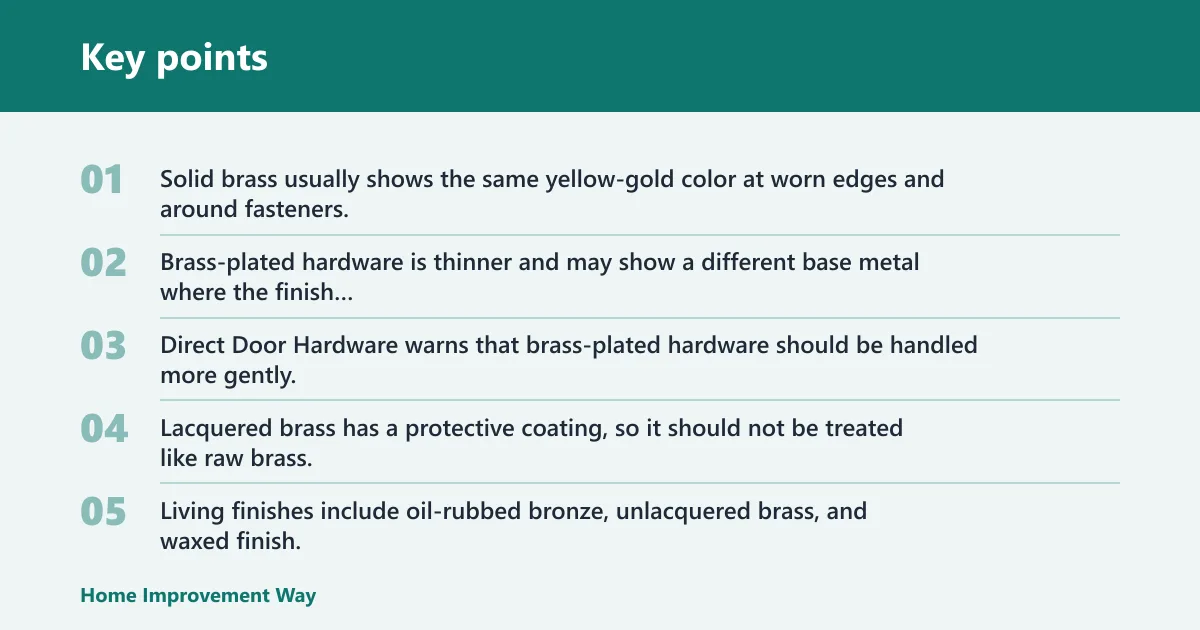
Solid brass usually shows the same yellow-gold color at worn edges and around fasteners. Brass-plated hardware is thinner and may show a different base metal where the finish has rubbed away. Direct Door Hardware warns that brass-plated hardware should be handled more gently, because polishing can remove the plating.
Lacquered brass vs. living finish
Lacquered brass has a protective coating, so it should not be treated like raw brass. Living finishes include oil-rubbed bronze, unlacquered brass, and waxed finish. Brennan notes that living finishes change color over time, and exterior living finishes oxidize or tarnish more quickly.
Chrome, stainless steel, and PVD clues
Chrome usually looks bright and mirror-like. Stainless steel often looks cool-toned and is generally low maintenance. PVD stands for Physical Vapor Deposition, and Brennan notes that PVD creates a durable, corrosion- and tarnish-resistant finish; that makes it a strong choice for coastal areas.
How do you polish brass safely?
Clean first, then polish only if the finish is solid brass or unlacquered brass. Use a microfiber cloth, work on a hidden spot, and stop as soon as the tarnish lifts. If the color turns patchy or thin, the finish is telling you to stop.
Step-by-step
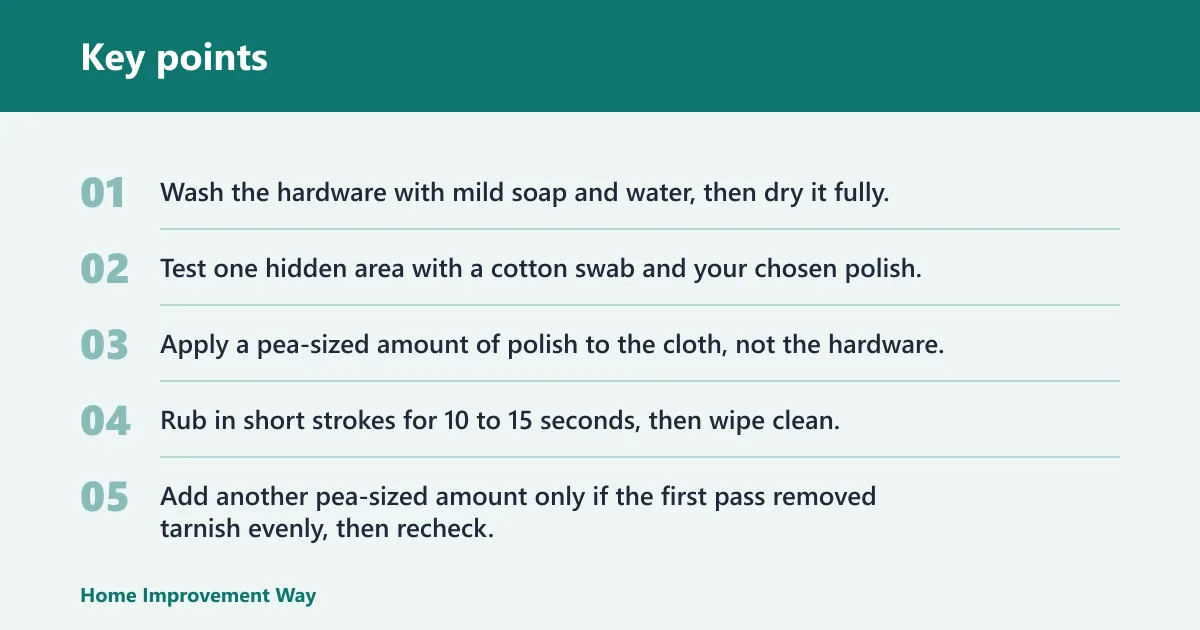
- Wash the hardware with mild soap and water, then dry it fully.
- Test one hidden area with a cotton swab and your chosen polish.
- Apply a pea-sized amount of polish to the cloth, not the hardware.
- Rub in short strokes for 10 to 15 seconds, then wipe clean.
- Add another pea-sized amount only if the first pass removed tarnish evenly, then recheck.
- Buff with a dry microfiber cloth until the surface looks even.
For solid brass, mild abrasives or a homemade paste can work. A vinegar-based polish paste often appears in DIY recipes with salt and flour or with lemon, but that does not make it safe for every finish. The more aggressive the paste, the more likely it is to strip lacquer or wear through plating.
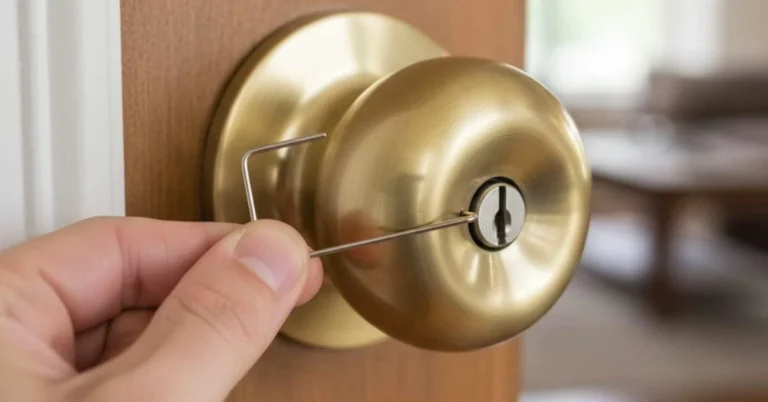
Picture a brass lever on an interior bedroom door that has darkened near the handle curve. If the finish is solid brass, a light polish on that curved area may bring back an even tone. If the same spot is plated brass, the same rub can leave a cloudy patch or expose the base metal.
How do you handle plated or coated hardware?
Plated, lacquered, chrome, stainless steel, and PVD-coated hardware all need more caution than bare brass. Soap and water is commonly used as a safer routine cleaner for these finishes, and microfiber is commonly used for drying and light buffing. Do not use an aggressive polish just to get a brighter shine.
Brass-plated knobs and levers
What’s the safest way to polish plated brass knobs? Usually, you do not polish them at all. Use mild soap and water, then dry immediately. If a hidden spot shows cloudy spots, color loss, or a darker base material, stop before more finish comes off.
Lacquered brass
Can I use Brasso on lacquered door hardware? No. Lacquer is a coating, not raw metal, so metal polish can haze it, soften it, or lift it. Treat lacquered brass with soap and water only, and use a dry microfiber cloth for wiping and buffing.
PVD, chrome, and stainless steel
PVD-coated hardware is corrosion- and tarnish-resistant, so it usually needs only routine washing. Chrome also prefers gentle cleaning. For stainless steel, avoid steel wool and other abrasives; Direct Door Hardware warns that they can scratch stainless steel knobs, and chloride or chlorine bleach cleaners can damage the surface.
What should you do if polishing removes the coating?
Stop immediately if you see bare spots, color burn-through, or a coating that starts lifting at the edges. Once a protective layer is gone, more polishing usually makes the damage larger. The right next move is cleaning, drying, and deciding whether the finish needs repair or replacement.
- Wipe off every trace of polish with a clean microfiber cloth.
- Wash the area with mild soap and water, then dry it fully.
- Do not keep rubbing the exposed spot.
- If the hardware is plated or lacquered, treat it as damaged coating, not as raw brass.
- If the finish is solid brass, recheck whether the shine is now uneven; if so, leave it as-is rather than chasing a mirror finish.
A common first-timer mistake is polishing antique entry hardware until the surface looks bright everywhere. On decorative pieces, patina can have value of its own. Should you polish living-finish hardware or leave the patina alone? If the color is even and the wear is intentional, leave it alone; if grime is the problem, clean it gently and stop there.
Common mistakes
Steel wool, abrasive pads, and harsh scrubbing can scratch sensitive finishes fast. Brass-plated, lacquered, chrome, and PVD-coated hardware are the most likely to suffer from over-polishing. Solid brass can tolerate more, but it is still possible to gouge or thin the surface if you keep going.
Using vinegar-based paste on the wrong finish is another problem. A paste with salt, flour, or lemon may help remove tarnish from solid brass, but it can dull lacquer, wear through plating, or leave streaks on coated hardware. Skip any cleaner that is not clearly safe for the finish you have.
Do not use bleach or chloride cleaners on stainless steel. Do not polish a living finish just because it is darker than when new. And do not skip the test spot, because that one step often tells you whether the finish can tolerate more than soap and water.
Frequently asked questions
How do I polish brass door hardware without removing the finish?
Clean first with mild soap and water, then test a hidden edge with a microfiber cloth and a tiny amount of polish. Use only light pressure on solid brass or unlacquered brass. Stop as soon as the tarnish lifts evenly, and wipe dry right away to avoid residue.
How do I tell if my door hardware is solid brass or brass-plated?
Check worn edges, screw holes, and the underside. Solid brass usually keeps the same color through the metal, while brass-plated hardware often shows a different base color where the top layer has worn away. If you see bright wear-through, treat it as plated, not solid.
What’s the safest way to polish plated brass knobs?
The safest answer is not to polish them with metal polish. Wash with mild soap and water, dry with a microfiber cloth, and stop if you see cloudy spots or color loss. Direct Door Hardware notes that brass-plated hardware should be handled more gently than solid brass.
Should I polish living-finish hardware or leave the patina alone?
Living finishes are meant to change color over time, so bright polishing is usually the wrong move. If the piece is oil-rubbed bronze or unlacquered brass, clean off dirt with soap and water, then leave the patina in place unless the finish is clearly dirty rather than aged.
What cleaner is safe for chrome or stainless steel door hardware?
Use mild soap and water, then dry with a microfiber cloth. For stainless steel, avoid steel wool, abrasive pads, chlorine bleach, and chloride cleaners. Chrome also prefers non-abrasive care, because harsh products can cloud the surface or leave fine scratches.
Sponsored / affiliate links. As an Amazon Associate I earn from qualifying purchases. I may earn additional commission from eligible campaigns.