How to Remove Rust From Door Hardware Safely
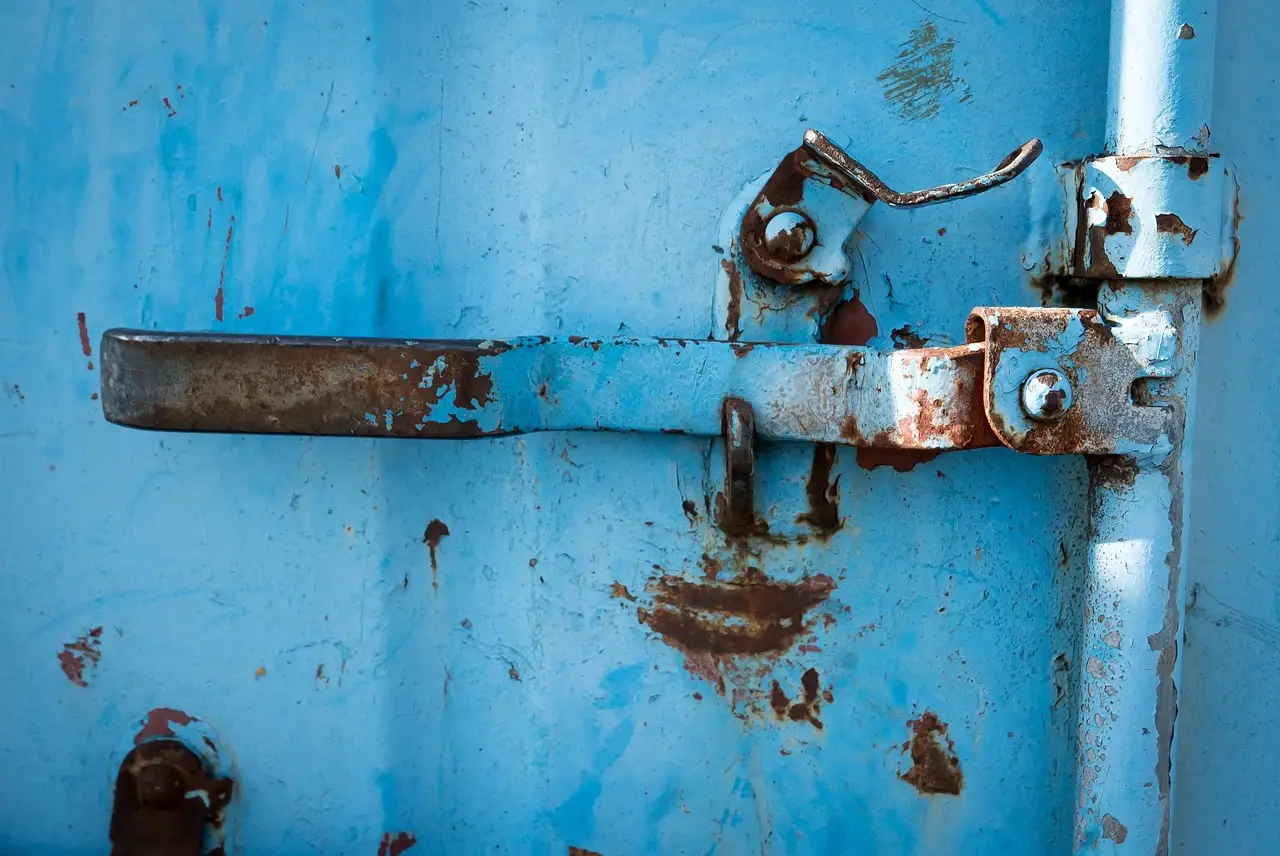
Light surface rust on door hardware usually comes off with a non-scratch pad and a rust remover. If the metal is pitted, flaking, or soft, replace it instead of scrubbing harder. Leave it alone, and rust can spread under the finish, stain the door, and weaken moving parts until the latch or hinge binds. The right method depends on the metal, the coating, and how far the corrosion has moved.
What you’ll need


- Gloves
- Mask
- Drop cloth
- Masking tape
- Ventilation
- Microfiber cloths
- Non-scratch pad
- Nylon brush
- Soft towel
- White vinegar
- Citric acid cleaner
- Commercial rust remover
- Metal polish
- Paste wax
- Clear protective spray
- Silicone protectant
- Thin oil film
How do you tell if rust is surface only?
Surface rust wipes off as orange-brown dust or residue. Deeper corrosion leaves pits, rough edges, or a dull spot that does not clean away. Check screws, backplate edges, the spindle, latch, and set screw too; rust there often means the problem is moving under the trim.
Look closely at the finish. Bubbling, flaking, and cloudy patches point to coating failure, not just loose rust on top. Loose knobs, rough movement, or metal that feels soft or swollen are reasons to stop cleaning and move to replacement.
Inspect the full hardware stack, not only the visible face. Rust around screw heads, under the escutcheon, or at the latch plate edge can mean moisture has been trapped for a while, especially on exterior doors, garage entries, and rooms with condensation.
How do you remove rust without damaging the finish?
Use the mildest method that fits the finish. Clean off dirt first, test the cleaner on a hidden spot, use the shortest contact time that works, then dry everything fully. If the rust remains in pits after a safe pass, stop and reassess instead of scrubbing harder.
- Cover the floor with a drop cloth and mask nearby paint or trim.
- Put on gloves and a mask, then open a window or run a fan.
- Wipe the hardware with a dry microfiber cloth to remove grit and grease.
- Apply the chosen rust remover to a hidden area first.
- Wait the shortest dwell time listed for that product or finish.
- Gently work the spot with a microfiber cloth, non-scratch pad, or nylon brush.
- Wipe clean, then dry with a soft towel.
- Add a protectant once the surface is fully dry.
Suppose a brass lever on an exterior door shows orange streaks near the thumb area and a rough patch at one screw head. A short citric acid treatment on the visible stain may clear the surface rust, but rust at the screw is the clue to check behind the plate before the hardware is put back in service.
Door hardware decision table
| Finish | Safest rust-removal method | What not to use | Dwell time | Buff? | Replace instead when… |
|---|---|---|---|---|---|
| Chrome | Microfiber cloth with a little white vinegar, then a chrome-safe metal polish | 0000 steel wool, acidic soak, hard scouring pads | 1 to 3 minutes max | Yes, lightly | Plating is lifting, pitted, or rust returns around edges |
| Stainless steel | Citric acid cleaner or metal polish, then rinse and dry | Steel wool on brushed finishes, chlorine cleaners | 3 to 5 minutes | Yes, along the grain | Deep pits, heavy staining, or loose fasteners appear |
| Brass | Metal polish or a brief citric acid pass on bare brass | Vinegar soaks, abrasive pads, ammonia-based cleaners | 30 seconds to 2 minutes | Yes, very lightly | The finish is lacquered and failing, or the metal is thin and scarred |
| Bronze | Dry microfiber cloth, then a mild metal polish on bare bronze only | Vinegar baths, aggressive scrubbing, polished abrasives | 1 to 2 minutes | Only if the finish is meant to shine | Patina is unevenly stripped or rust is under the coating |
| Painted or plated finishes | Spot clean with a barely damp cloth, then use a finish-safe cleaner made for coated metal | Steel wool, vinegar soak, citric acid on exposed paint edges | Under 1 minute on a test spot | No, unless the maker says so | Paint is bubbling, plating is peeling, or corrosion is under the film |
How to choose between vinegar, citric acid, rust remover, and polish
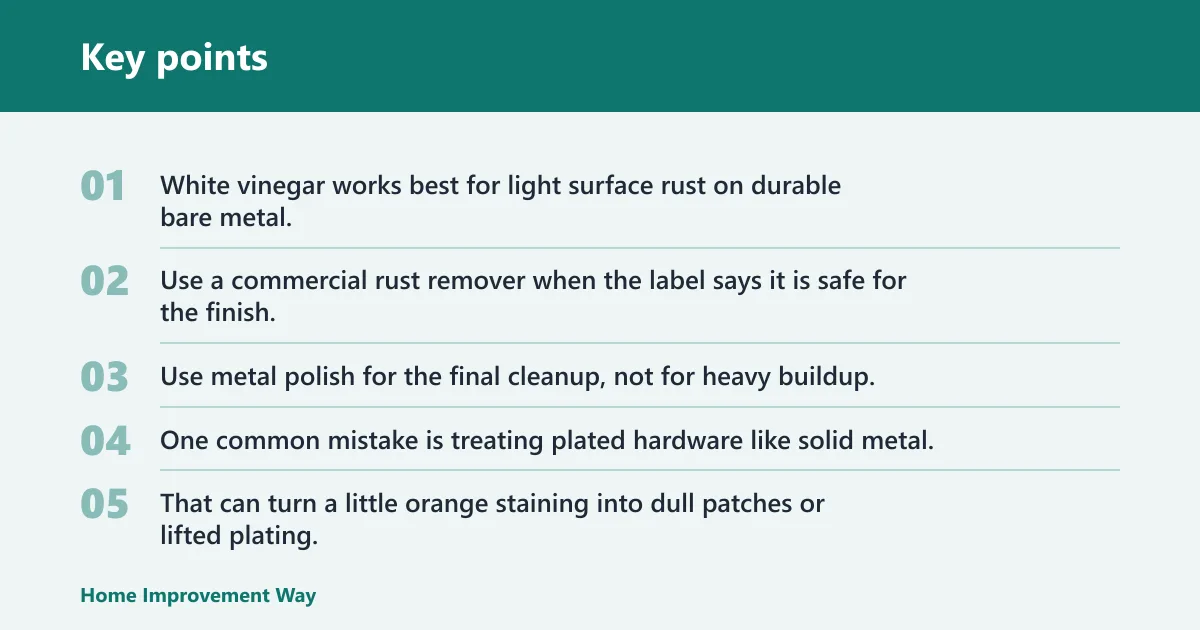
White vinegar works best for light surface rust on durable bare metal, and citric acid cleaner is usually gentler on stainless steel and some brass. Use a commercial rust remover when the label says it is safe for the finish. Use metal polish for the final cleanup, not for heavy buildup.
One common mistake is treating plated hardware like solid metal. That can turn a little orange staining into dull patches or lifted plating, especially around edges and screw heads where the coating is already thin.
When should you replace the hardware?
Replace the hardware when rust has gone beyond cleanup. Deep pitting that catches a fingernail, loose movement, weak metal, or rust that has spread under the finish are all signs that cleaning will only buy a short delay. The same goes for a latch or spindle that binds after drying.
When to stop before you damage the door
If the knob, lever, or latch body is swollen, bent, or badly seized, more scrubbing can strip the finish without fixing the problem. Exterior hardware that has corrosion around the screws and backplate edges often needs replacement because moisture has already reached the hidden parts.
Common mistakes
- Using 0000 steel wool on chrome, plated hardware, or painted metal
- Letting vinegar or rust remover sit too long on brass, paint, or thin plating
- Skipping the hidden areas around screws, trim edges, the spindle, and the latch
- Leaving the hardware damp after cleaning
- Stopping after the rust is gone and never adding a protectant
Will steel wool scratch door knobs or handles?
Yes, 0000 steel wool can still scratch chrome, painted finishes, and many plated parts, especially at corners and edges. A non-scratch pad is safer for most door hardware. If a finish already looks thin or cloudy, use a microfiber cloth and a finish-safe cleaner instead.
What is the best way to stop rust from coming back on door handles?
Dry hardware plus a light protective layer is commonly recommended for prevention. After cleaning, apply paste wax to bare metal, a clear protective spray to finishes that accept it, or a silicone protectant or thin oil film where the maker allows it. Recheck after 7 days, then again at 30 days.
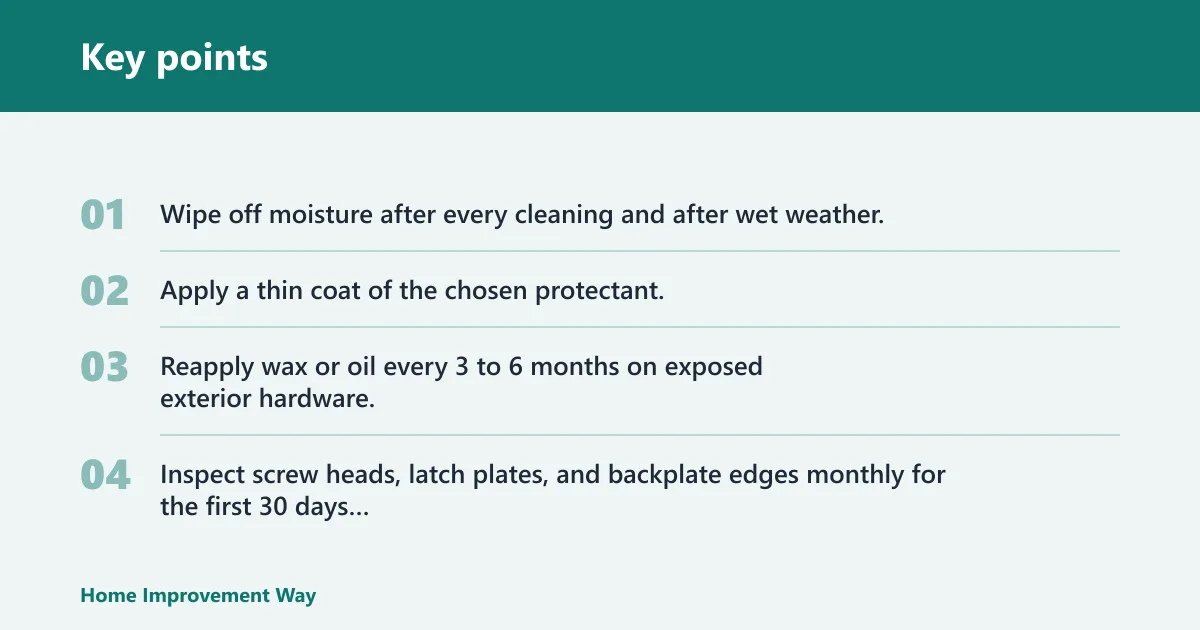
- Wipe off moisture after every cleaning and after wet weather.
- Apply a thin coat of the chosen protectant.
- Reapply wax or oil every 3 to 6 months on exposed exterior hardware.
- Inspect screw heads, latch plates, and backplate edges monthly for the first 30 days after treatment.
For exterior doors, also check for salt residue, condensation, and paint overspray from recent renovations. Those residues can keep metal damp or abrasive, which makes rust return faster than a normal indoor environment.
Frequently asked questions
How do you remove rust from door hardware without damaging the finish?
Use the mildest product that fits the finish, then keep the contact time short. Start with a microfiber cloth and a safe cleaner, work gently with a non-scratch pad if needed, and dry the part completely before adding a protectant. If the rust stays in pits, replacement may be safer.
How do you clean rust from chrome or stainless door hardware?
For chrome, a brief vinegar wipe followed by chrome polish is usually safer than abrasion. For stainless steel, a citric acid cleaner or stainless-safe polish works well, and you should rub along the grain only. Avoid steel wool on brushed stainless unless the maker explicitly allows it.
How do you remove rust from brass door hardware safely?
Use a brass-safe metal polish first, or a very short citric acid treatment on bare brass if the finish allows it. Keep the dwell time under 2 minutes, wipe clean, and buff lightly. If the piece is lacquered, treat it as a coated finish and avoid soaking.
What lubricant or protectant should I use after removing rust?
Use paste wax for bare metal, silicone protectant for many coated parts, or a thin oil film where the finish and maker permit it. Apply only enough to leave a light sheen, not a wet film. Recheck after 7 days, then renew the coating as needed every few months.
How often should door hardware be checked for rust?
Check interior hardware every few months, and check exterior hardware monthly if it faces rain, salt, or condensation. After a repair or renovation, inspect again within 30 days because paint overspray, dust, and trapped moisture can speed corrosion around screws, trim edges, and latch parts.
Sponsored / affiliate links. As an Amazon Associate I earn from qualifying purchases. I may earn additional commission from eligible campaigns.