How to Cut Bifold Doors to Size (Max 1/4 Inch Per Side)
A bifold door can be trimmed up to 1/4 inch off each side and roughly 1 inch total off a hollow-core door’s height — cut more than that and you risk exposing the honeycomb core or weakening the stiles. Removing the door from its track and scoring the veneer before sawing prevents splintering. This guide covers safe width and height limits, the right blade for a clean cut, and how to finish and reattach the hardware afterward.
Tools and Materials Needed
Gather everything before you remove the door — a hollow-core bifold is easy to chip if you stop mid-cut to hunt for a tool.
- Circular saw with a 40–60 tooth fine-finish (ATB) blade — a standard framing blade tears the veneer
- Utility knife and metal straightedge, for scoring the veneer before cutting
- Tape measure and pencil
- Painter’s tape, to reduce splintering along the cut line
- Clamps and a flat workbench or two sawhorses
- 120–150 grit sandpaper or a sanding block
- Paint, primer, or clear sealant to seal the exposed cut edge
- Safety glasses and gloves
Measuring the Bifold Door for a Trim
Measure the rough opening’s width and height in three spots — top, middle, and bottom for width; both sides for height — because framing is rarely perfectly square. Use the smallest measurement as your target, then subtract 1/4 inch on each side and 1/8 inch at the top for clearance. Before you assume the door needs cutting at all, double-check it against the manufacturer’s sizing chart; see our bifold door sizing guide if you haven’t already confirmed which size you actually need.
Slip a flathead screwdriver between the spring-loaded pivot pin and the upper track to compress it, then lift the door off the lower pivot. Doors cut in place on the track almost always end up crooked. Lay the door flat on a bench or two sawhorses before marking anything.
How to Cut a Bifold Door to Width
Most bifold panels can lose up to 1/4 inch per side — 1/2 inch total — before the stile (the vertical edge rail) gets too thin to hold its hinges securely. Trim in passes of no more than 3/8 inch at a time rather than removing it all in one cut.
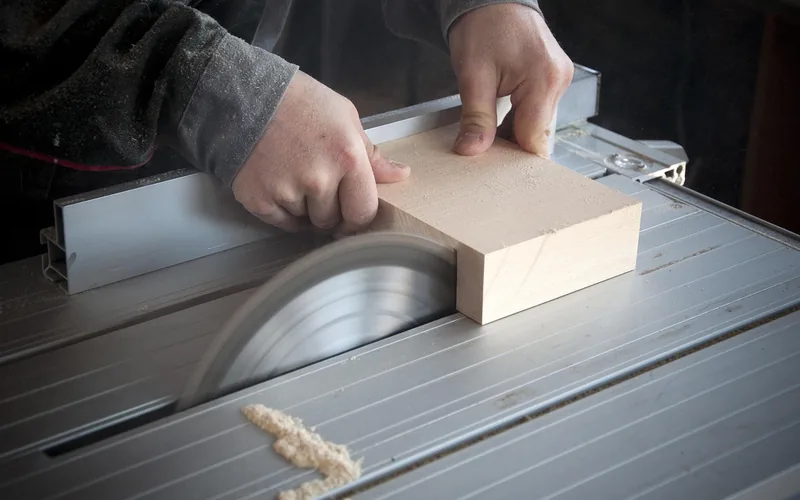
- Mark the cut line: Run painter’s tape along the line, then mark it in pencil over the tape on both faces of the door.
- Score the veneer: Guide a utility knife along a clamped straightedge to score both faces on the cut line — this keeps the surface layer from tearing as the blade exits.
- Clamp a saw guide: Clamp a straight board to the door so the saw’s base rides against it for a perfectly straight pass.
- Set blade depth: Set the circular saw’s blade depth about 1/8 inch deeper than the door’s thickness — 1-3/8 inches for most hollow-core doors, 1-3/4 inches for solid-core.
- Cut slowly: Let the blade reach full speed before it touches the door, then feed it through in one continuous pass along the guide.
“A maximum of 1/4 inch can be trimmed from each side of the door.”
Best Fine-Finish Blade Pick

FOXBC 7-1/4″ 60-Tooth Ultra Fine Finish Blade – $28.99
A 60-tooth ATB blade matches the fine-finish spec this guide recommends for cutting through veneer without chipping — sized for the standard 7-1/4 inch circular saw most DIYers already own.
- Best for: Clean cuts on veneered hollow-core or MDF bifold panels
- Why we picked it: 60-tooth ATB grind matches the fine-finish spec used in the cutting steps above
- Main drawback: Cuts slower than a low-tooth-count framing blade on thick solid-core doors
Compare more fine-finish blade options
 Option 1 WORKPRO 6-1/2″ 60T Fine Finish Blade – $12.99
|
 Option 2 7-1/4″ Ultra-Thin 60T Finishing Blade – $14.00
|
 Option 3 Diablo 8-1/4″ 60T Fine Finish Blade – $44.10
|
As an Amazon Associate we earn from qualifying purchases.
How to Cut a Bifold Door to Height
Cut length from the bottom of the door, not the top — the top rail holds the pivot pin and roller, and shortening it can throw off the track alignment. If a door needs more than about 1 inch removed, split the difference between the top and bottom rails instead so each pivot keeps enough solid material to grip.
How Much Can You Cut Off a Hollow Bifold Door?
A hollow-core bifold door is a wood-veneer or MDF skin wrapped around a cardboard honeycomb core with solid wood only at the stiles and rails — the solid framing around the edge is usually 1–1.5 inches wide. That means you can safely remove up to about 1 inch total from the height and 1/4 inch per side from the width before the cut line reaches the hollow core. Solid-core and paneled doors have solid wood or engineered wood all the way through, so they tolerate a bit more, but always cut in small passes and check what’s exposed before continuing.
📊 Standard interior bifold doors run 1-3/8 inches thick for hollow-core panels and up to 1-3/4 inches for solid-core — Source: Bifold Door Installation Instructions, Lowe’s
Finishing the Cut Edge
Sand the cut edge with 120-grit sandpaper first to knock down splinters, then 150-grit to smooth it. Run a finger along the edge — any rough spot you can feel will show through paint.
The exposed cut edge has no factory primer or veneer, so it absorbs moisture faster than the rest of the door. Seal it the same day you cut it — a coat of primer and paint for painted doors, or a matching clear sealant for stained or natural-finish doors. Let it dry fully before rehanging.
Reattaching Hinges, Pivots, and Tracks
Reinstall the hinges in their original screw holes so the panels still fold flush against each other. Set the top pivot pin back into the upper track bracket first, then swing the bottom of the door in and seat it on the lower pivot socket. Check that the track itself is still level — a track that sagged even 1/8 inch will make a freshly trimmed door drag again.
Open and close the door through its full range before calling the job done. If it still binds or won’t sit flush after trimming, the issue is usually pivot or track alignment rather than the cut itself — our guide to adjusting bifold closet doors covers how to fix that without re-cutting anything.
Troubleshooting Common Issues After Trimming
An uneven cut usually means the saw guide shifted mid-cut or the veneer wasn’t scored first. Sand a shallow uneven edge smooth; for a cut that’s visibly crooked, it’s faster to square it up with one more light pass along a fresh guide than to sand it flat.
A door that won’t latch or stay closed after trimming is almost never a cutting problem — it’s a hardware alignment issue. Check that the strike plate or magnetic catch still lines up now that the door sits differently in the frame. Our guide to keeping bifold doors closed covers catch and latch adjustments.
Maintenance Tips
Wipe the tracks and pivots clean every few months — sawdust from the trim job itself is a common cause of sticking right after installation. A drop of silicone-based lubricant on the pivots and rollers keeps the door swinging smoothly without attracting more dust the way oil-based lubricants do.
Frequently Asked Questions
Can You Cut Down Bifold Doors?
Yes. Most bifold panels can be trimmed up to 1/4 inch per side and roughly 1 inch total off the height without weakening the door, as long as you cut from the bottom and stay clear of the hollow core. Score the veneer first and seal the exposed edge afterward. For cuts larger than that, consult the door manufacturer or consider ordering a shorter panel instead.
How Much Can I Cut Off a Hollow Bifold Door?
Typically up to about 1 inch total off the height and 1/4 inch off each side of the width. Hollow-core doors have solid wood only at the outer stiles and rails, usually 1–1.5 inches wide, so cutting past that exposes the honeycomb core. Measure and mark carefully, and cut in small passes rather than removing it all at once.
Can You Trim the Length of a Bifold Door?
Yes, trim from the bottom whenever possible since the top rail holds the pivot pin and roller. Measure twice, score the cut line with a utility knife before sawing, and sand and seal the new edge. If more than about 1 inch needs to come off, split the trim between the top and bottom rails so both pivots keep enough material to hold on to.
Should You Trim the Top or Bottom of a Bifold Door?
Trim the bottom whenever the amount is small, since it keeps the top pivot and track hardware fully intact. Only cut the top — or split the trim between both ends — when the total amount removed would otherwise leave less than about 1 inch of solid material at the bottom rail.
What Is the New Trend Instead of Bifold Doors?
Sliding or pocket doors are a common alternative where floor space is tight, since they don’t need swing clearance in front of the opening. They cost more to retrofit into an existing wall than a bifold, so most homeowners only switch during a larger renovation rather than a simple door replacement.
Conclusion
Cutting a bifold door comes down to respecting two numbers: 1/4 inch per side off the width, and about 1 inch total off a hollow-core door’s height. Stay inside those limits, score the veneer before you cut, and seal the edge when you’re done, and a trimmed door will hang and swing exactly like a factory-sized one.
Sponsored / affiliate links. As an Amazon Associate I earn from qualifying purchases. I may earn additional commission from eligible campaigns.