How to Reinforce a Door Frame for Better Security
Reinforce a door frame by matching the fix to the failure: replace short strike screws with screws long enough to reach framing, add a metal strike box for split jambs, and use a wraparound reinforcement kit or hinge-side reinforcement when the jamb or hinges are failing. If the repair misses the weak point, the door can still split, kick in, or pull away from the wall, wasting time and money. Inspect the jamb, strike pocket, hinges, and trim first, then choose the right reinforcement for wood, steel, or damaged framing.
What fails first in a door frame?


The strike side usually fails first. Hinge-side pull-through is common too. Check for crushed screw holes, split jamb wood around the deadbolt, loose hinges, or a frame that has shifted so the latch and deadbolt no longer line up with the strike plates. If the damage reaches the wall stud, longer screws alone will not solve it.
Strike side vs. hinge side
On the lock side, force often splits the jamb around the strike plate and deadbolt. On the hinge side, repeated force can pull screws through the hinge leaf or split the jamb near the top hinge. Match the repair to the failure point, not just the most visible damage.
When the damage points to the framing
If the screws spin without biting, the jamb is crushed, or the door edge rubs after impact, inspect the king stud and jack stud behind the trim. The wall framing resists a kick, so screw length only matters when it reaches those members.
What you’ll need
- Phillips and square-drive screwdrivers
- Drill/driver with bits for pilot holes
- Tape measure and straightedge
- Utility knife
- Wood chisel, if the strike pocket needs cleanup
- 3-inch or longer structural screws
- Reinforced steel strike plate
- Door reinforcement plate or wraparound plate, if the jamb is split
- Security hinges or non-removable pin hinges in about 3-1/2-inch or 4-inch sizes
- Shims, if minor alignment correction is needed
- Wood filler or jamb patch material, for localized repair
How should you inspect the frame?
Check the jamb, lock pocket, and hinges before you buy parts. You need to know whether the problem is cosmetic damage, a split jamb, or a structural failure at the studs. That choice decides whether you replace hardware, patch the jamb, or replace the frame.
- Open the door and inspect the strike side, hinge side, and top corners for splits, movement, or crushed wood.
- Remove one strike screw and one hinge screw to see how much thread is actually in the jamb and framing.
- Measure the backset on the lockset, usually 2-3/8 inches or 2-3/4 inches, so the replacement strike matches the hardware.
- Check the trim and drywall edge for clearance. If the plate or wraparound part will hit trim, choose a narrower model or repair the jamb first.
- Close the door slowly and note where the latch, deadbolt, and weatherstripping bind.
In residential door hardware, the strike plate, latch, deadbolt, jamb, and studs all have to work together. If the deadbolt throws cleanly but the latch scrapes the strike edge, the issue is usually alignment, not weak hardware. Fix the fit first, then install reinforcement so the new plate does not lock in a bad position.
How do you reinforce the strike side?
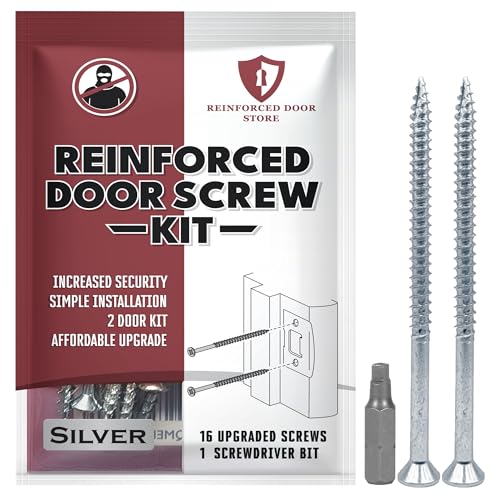
A reinforced strike plate with screws long enough to anchor into the king stud or jack stud is commonly the first upgrade when the jamb is intact. The International Residential Code requires exterior door hinges and strike plates to be fastened with screws that extend into the structural framing, not just the jamb, which is why screw length matters so much.
- Remove the existing strike plate and inspect the pocket for cracks or crushed fibers.
- Install the reinforced steel strike plate using 2.5-inch to 3-inch screws, not the short factory screws.
- Drive each screw until it bites the framing member behind the jamb, ideally the king stud or jack stud.
- If the jamb is split, fit a door reinforcement plate or wraparound style that bridges the damage and follows the existing screw pattern.
- Test the deadbolt throw and latch return before tightening the final screws fully.
For cylindrical locksets, match the strike to the deadbolt and latch spacing so the bolt extends fully into the reinforced pocket. A common residential deadbolt has a 1-inch throw, and the ANSI/BHMA hardware standards for deadbolts and the manufacturer’s installation instructions both assume full bolt engagement in the strike. If the bolt does not seat cleanly, the extra steel will not help much.
How do you reinforce the hinge side?
Hinge-side reinforcement matters as much as the lock side because a kick can split the jamb or pull the door leaf away from the frame. Security hinges, non-removable pin hinges, and longer hinge screws help tie the hinge leaves back into the framing, which reduces pull-through under repeated force. The same structural idea applies on both sides: fasteners must reach solid backing.
- Replace one short hinge screw per leaf with about a 3-inch or longer screw.
- Use the top hinge first, since it carries the most load and is often the first to loosen.
- If the hinge leaf is damaged, swap to security hinges or non-removable pin variants in 3-1/2-inch or 4-inch sizes.
- Drive the longer screws so they reach the jack stud or other structural backing, not just the jamb.
- Open and close the door several times to confirm the hinge side does not bind after the screws are tightened.
A common first-timer mistake is replacing only one screw on the latch side and leaving the hinge side untouched. That can leave the door easier to twist, which still stresses the strike and can open a split at the top hinge.
Door frame decision table

Use this table to match the damage to the fix. The cost range reflects common retail parts only, not labor, and the repair category tells you whether the job is hardware-only, needs a jamb patch, or calls for full frame replacement. Time ranges assume a typical DIY install on a standard exterior door opening; the quickest jobs are simple hardware swaps, while repairs that involve patching or realigning damaged material take longer.
| Failure scenario | Frame material | Weak point | Correct fix | Estimated parts cost | Install time | Repair level |
|---|---|---|---|---|---|---|
| Short strike screws only | Wood jamb | Factory screws stop in the jamb and do not reach framing | Reinforced steel strike plate with 3-inch screws into framing | $10-$25 | 20-40 minutes | Hardware only |
| Crushed screw holes around strike, no split | Wood jamb | Fasteners have loosened the screw pockets but the jamb is still intact | Replace strike plate and patch stripped holes with wood filler or dowels | $15-$35 | 45-60 minutes | Jamb patch |
| Split jamb around lock pocket | Wood jamb | Wood fibers have split around the deadbolt and latch opening | Wraparound reinforcement plate or full jamb reinforcement kit | $25-$60 | 45-90 minutes | Jamb patch |
| Hinge-side pull-through | Wood jamb | Hinge screws are pulling out of the jamb or missing the stud | Security hinges and longer hinge screws into the jack stud | $15-$40 | 30-60 minutes | Hardware only |
| Rotten or rotten-soft jamb wood | Wood jamb | Decay has destroyed the material that should hold fasteners | Remove damaged material and replace the jamb section before reinforcement | $30-$100 | 1-3 hours | Jamb patch |
| Out-of-square frame, major splits, or wall damage | Wood, steel, or mixed exterior frame | Opening is no longer square or structurally sound enough for alignment | Full frame replacement and rehang | $120-$300+ | 3-6 hours | Full frame replacement |
A door frame reinforcement kit can be a good middle ground when the opening is standard and the jamb is damaged but still sound enough to hold fasteners. Most kits include plates, screws, and hinge reinforcement, and many fit prehung exterior doors with 2-3/8-inch or 2-3/4-inch backset hardware. Check the manufacturer’s fit instructions before buying, because strike spacing, jamb thickness, and trim clearance can affect compatibility.
When should you repair versus replace the frame?
Repair the frame when the jamb is sound, the stud bite is solid, and the damage is limited to screw holes or a split pocket. Replace the frame when rot, severe splitting, or a badly out-of-square opening prevents the latch and deadbolt from lining up. Reinforcement cannot correct a frame that has lost its structure, and it cannot make a poorly sized or badly distorted opening behave like a square one.
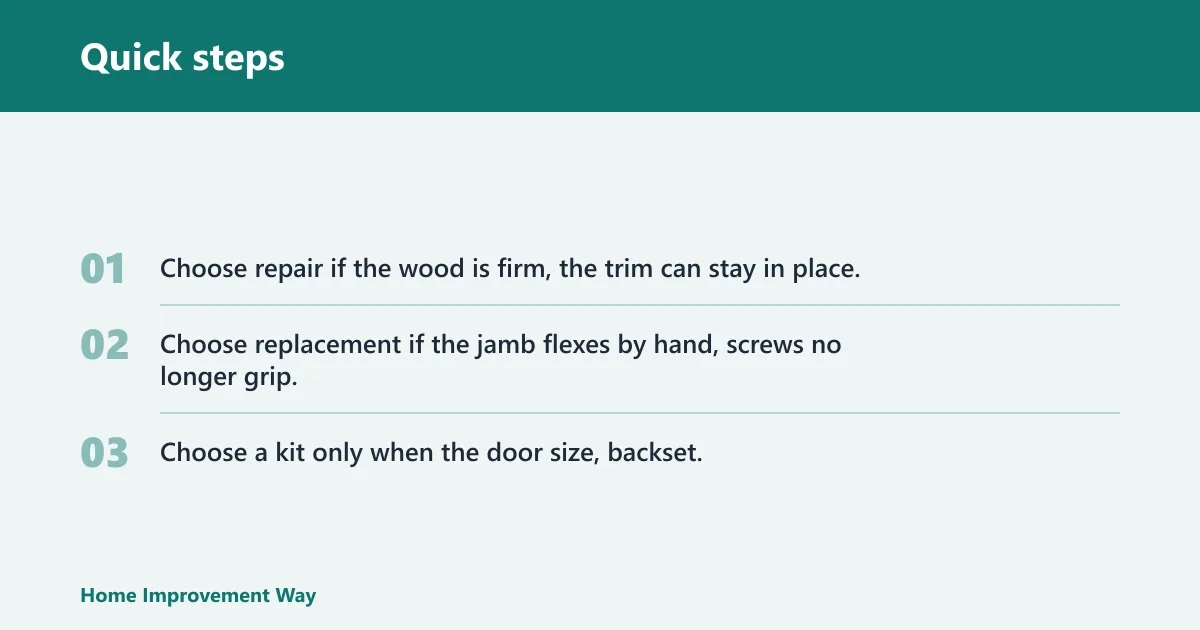
- Choose repair if the wood is firm, the trim can stay in place, and the strike and hinges still line up after adjustment.
- Choose replacement if the jamb flexes by hand, screws no longer grip, or the door must be forced shut.
- Choose a kit only when the door size, backset, and jamb condition match the kit’s fit range.
Wood frames usually split first. Steel frames often dent or distort around the strike, and fiberglass frames can crack the surrounding substrate if the fasteners are not backed by solid framing. In every case, the frame material changes the fix, and the right part has to match the substrate and the hardware geometry.
Quick pre-purchase
Before you buy, identify the frame material, measure the backset, confirm whether the strike and hinge screws can reach framing, and check for rot, crush, or distortion. Wood often accepts simple patch-and-reinforce repairs. Steel usually needs compatible hardware and clean alignment. Damaged exterior frames with visible movement or rot often need patching or replacement first.
How do you check alignment after reinforcement?
After reinforcement, the latch, deadbolt, and weatherstripping still need to work without drag. A stronger strike plate that sits out of alignment can make the door harder to close and can stop the deadbolt from throwing fully. Verify fit before you call the job done.
- Close the door slowly and confirm the latch enters the strike without rubbing.
- Throw the deadbolt fully and verify the bolt extends completely into the strike pocket.
- Check that the door seal compresses evenly against the weatherstripping.
- If the latch drags, loosen the strike plate and shift it by 1/16 inch before retightening.
- Repeat the latch and deadbolt test after every adjustment.
If that didn’t work, stop and inspect the door edge and hinges again. A warped door or sagging hinge side can make a good strike look wrong, and no plate will fix that on its own.
Common mistakes
The most common mistakes are easy to avoid. Match the weak point to the repair, and make sure the fasteners reach the framing that resists force.
- Using 3-inch screws that stay in the jamb only, which adds little kick resistance.
- Ignoring the king stud or jack stud and assuming longer screws alone are enough.
- Reinforcing the strike side while leaving loose hinge screws in place.
- Installing a plate over rotten or split wood without repair first.
- Skipping alignment checks and ending up with latch bind or deadbolt drag.
- Trying to force a wraparound plate past tight trim or drywall edges.
Check both sides of the opening once a year, especially if the door has started to stick or the hardware feels loose. Minor screw tightening now is easier than repairing a split jamb later.
Frequently asked questions
What is the cheapest way to reinforce a door frame?
The lowest-cost upgrade is a reinforced strike plate with screws long enough to reach framing, usually under $25 in parts. It only works well if the jamb is sound and the screws reach the king stud or jack stud. If the wood is split, spend more on a jamb patch first.
Should I replace the strike plate or the whole frame?
Replace the strike plate when the jamb is solid and the problem is limited to weak hardware or short screws. Replace the whole frame when the jamb is rotten, badly split, or out of square enough that the latch and deadbolt cannot align after adjustment.
Do door jamb reinforcement kits actually help against kicking?
Yes, when the jamb is still structurally sound and the kit ties the strike and hinges back into framing. They help most by spreading force over more material and moving fasteners into the studs. They are less effective on rotten, crushed, or badly out-of-square frames that need patching or replacement first.
Can I reinforce a door frame without replacing the door?
Usually, yes. Most security upgrades act on the frame, strike, and hinges, not the slab itself. If the door is warped, damaged, or too light for the hardware, replacing the door may still be necessary, but a sound door can often stay in place while the frame is upgraded.
How long should strike plate screws be for better security?
Use screws long enough to pass through the jamb and bite solid framing, which is commonly about 3 inches on exterior doors. The exact length depends on jamb thickness, trim, and what sits behind the jamb. The goal is not a specific number by itself; it is secure thread engagement in the king stud or jack stud.
Sources
- International Residential Code, door hardware fastening requirements for exterior doors
- ANSI/BHMA hardware standards for deadbolts and residential locksets
- Manufacturer installation instructions for reinforced strike plates, wraparound reinforcement kits, and security hinges
- Lockset manufacturer specifications for backset and deadbolt throw dimensions
Sponsored / affiliate links. As an Amazon Associate I earn from qualifying purchases. I may earn additional commission from eligible campaigns.