Best Security Hardware for Hollow-Core Doors (2026): We Compared
The best security hardware for a hollow-core interior door is hardware that anchors into the jamb or added blocking, not the thin door skin. Use a reinforced strike plate with 3-inch screws, a latch guard, or a surface-mounted lock only if the door and frame can support the load. This guide compares real reinforcement, privacy-only hardware, and the right fit for swing direction and door thickness.
Quick comparison
| Product | Badge | Best for | Price | ||
|---|---|---|---|---|---|
 |
Adjustable Door Security Lock Bar for 32"- 42" ExteriorCGENWDCH | Our pick | Adjustable lock bar · 32–42" opening · Keyed barrel lock | $105.99
Price as of 17 Oct 2026
|
View |
 |
Door Armor MAX 5 Piece Door Reinforcement Kit, Anti Kick inArmor Concepts | Also great | 5-piece steel reinforcement kit · Made in USA · Aged Bronze | $99.00
Price as of 17 Oct 2026
|
View |
Use the comparison below to sort hardware by the first part that fails on a hollow-core door, not by marketing terms. A privacy knob can control access, but it does little when the skin, latch edge, or jamb gives way.
How we chose
This guide ranks hardware by failure mode first, then by fit on inward-swinging doors, install invasiveness, and renter-friendliness. It also checks whether the upgrade addresses the door skin, the latch edge, the jamb, or only the lock cylinder.
Force rating matters, but only after the door and frame can hold the load. A strong lock mounted into weak material still fails at the screws, the latch block, or the jamb.

Can a hollow-core interior door be made more secure?
Yes, but only to a point. A hollow-core interior door has lightweight construction and limited screw-holding strength, so common upgrades reinforce the frame, latch area, or jamb rather than relying on the thin skins alone.
The right fix depends on your goal. Kick resistance calls for reinforcement at the jamb; access control for bedrooms or bathrooms may only need a privacy latch or emergency release; renters often need removable hardware.
What reinforcement can fix
Reinforcement hardware can improve resistance at the latch and strike side, which is where many interior doors fail first. On an inward-swinging door, a reinforced strike plate or reinforcement lock can spread load into the jamb instead of letting short screws bite into thin wood or filler.
That matters because the door skin is not the only weak spot. On hollow-core doors, the latch edge, the jamb, the latch block, and the fasteners can fail before the lock body does.
What the door cannot hold
Thin skins do not give screws much to grip, and loose jambs can still split or pull away even if the hardware itself is sturdy. If the frame is soft, damaged, or out of plumb, a strong lock can fail at the attachment point instead of at the mechanism.
Picture a 1-3/8 inch hollow bedroom door with a loose strike plate. Adding a heavy latch without fixing the jamb usually moves the weak point. It does not remove it.
Reinforcement lock: best for kick resistance
A reinforcement lock is the strongest security upgrade on this list for an inward-swinging hollow-core interior door, assuming the jamb and thickness are compatible. It uses metal alloy or aluminum alloy construction, multiple screws for installation, and a published force rating that should only be trusted when the door, jamb, and screws can carry the load.
It is best for a homeowner who wants real resistance to forced entry at a bedroom, office, or interior access point. The advantage is simple: it reinforces the side that usually fails first, rather than only improving the knob. A reinforced strike plate serves the same basic goal at the jamb side, just with a simpler part.
Why it fits inward-swinging doors
Many reinforcement devices are made for inward-swinging doors because the hardware works against inward pressure and lets the strike side take the load. Clearances at the frame matter, and hinge layout can limit where plates and bars sit.
Check that the door opens inward, the latch side has enough flat jamb surface, and the door edge lines up cleanly with the strike location. If the jamb is thin, split, or badly painted over, installation quality drops fast.
Thickness and jamb checks
Door thickness has to match the hardware range. A common compatibility range is about 1.25 to 1.75 inches, and many interior locksets are listed at 1-3/8 inches to 1-3/4 inches; if your door falls outside that band, shims, longer screws, or a different product may be needed.
The door jamb matters just as much. Pre-drilled holes help, included screws matter, and screw length should reach solid wood rather than just the surface layer.
When it is the right pick
Choose this when the goal is kick resistance, not just privacy. If you want the best chance of stopping forced entry on an inward-swinging interior door, a reinforcement lock is the clearest step up from a standard knob.
It is less attractive for renters because it usually means more permanent screw holes and more visible hardware. It also makes little sense on a privacy-only bathroom door where emergency release is the main need.
Slide bolt: best for a simple backup latch
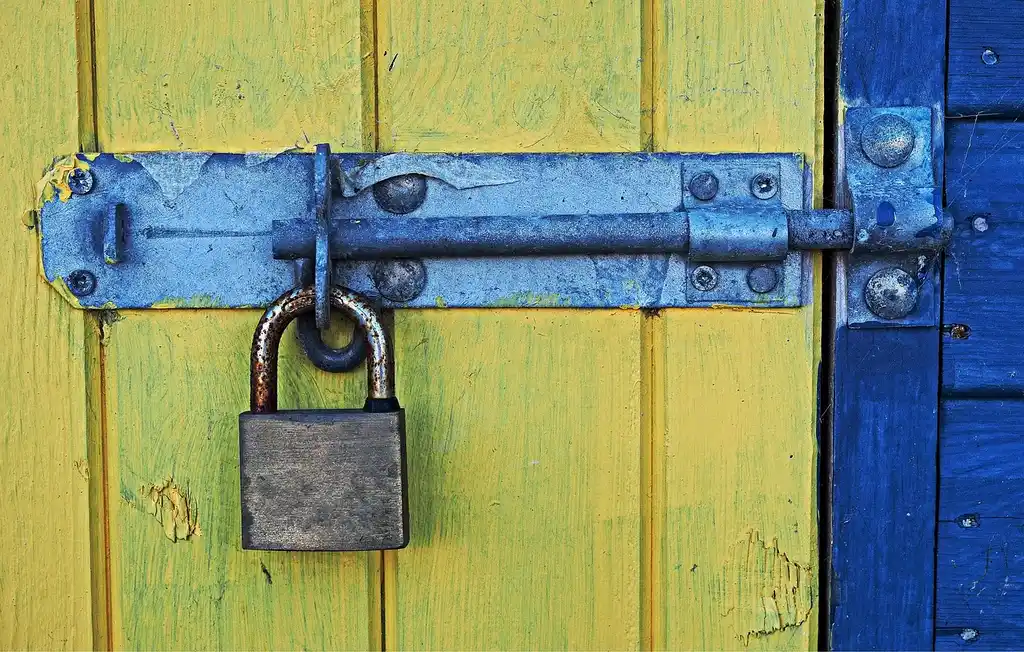
A slide bolt is a basic interior privacy or security add-on, usually made from stainless steel, with low installation complexity. It works best as an additional latch, not as the only defense on a hollow-core door.
That makes it useful for rooms where you want a second lock point without a full reinforcement kit. It is a weak answer to forced entry, but it can slow casual opening and improve closing security when used with better hardware.
Where stainless steel helps
Stainless steel resists corrosion and usually gives the bolt a firmer feel than plastic parts. That does not solve hollow-core weakness, but it does make the latch itself less likely to bend or fail under normal use.
The actual failure point is often the mounting surface, not the bolt. On a hollow door, screws that land only in thin skin can pull out, so the jamb or a reinforced backing area still matters.
Best interior use cases
Use a slide bolt for a home office, storage room, or similar interior space where you want a simple extra latch. It is also reasonable when you want a visible manual lock that does not depend on a knob mechanism.
It is not the best choice if the door needs real kick resistance. A slide bolt helps with access control, but it does not compare with a reinforcement lock that ties into the frame.
Limits on hollow skins
A hollow-core skin does not give much depth for fasteners. If the bolt plate sits on a thin edge or weak face, the first failure is often the screws or the surrounding skin, not the bolt.
For that reason, a slide bolt is better treated as a backup latch. It is not a substitute for a sound strike side, a sturdy jamb, or a door with enough thickness for proper mounting.
Door knob lock-out device: best for temporary control
A door knob lock-out device is a temporary, renter-friendly option that covers keyhole access with a removable diecast design. It is for blocking use of the existing keyway, not for strengthening the door itself.
That makes it useful when you need short-term control over a room or to prevent casual use of a keyed interior knob. It does not reinforce the hollow-core leaf, the latch edge, or the jamb.
How removable designs work
These devices cover the keyhole and then remove without permanent changes. Because they are diecast and temporary, they fit the rental-friendly need for reversible hardware.
They are a control measure, not a structural upgrade. If the concern is forced entry, the lock-out device leaves the same weak door and frame in place.
Rental and travel uses
Lock-out devices make sense for short stays, shared housing, and situations where you need temporary access control without drilling. They are also handy when a tenant wants to block use of a keyed entry knob for a limited period.
They work best when the goal is inconvenience, not resistance. If someone can push the hollow door open or break the latch side, the cover on the keyhole does not stop entry.
What hardware works on inward-swinging interior doors?
Hardware for inward-swinging interior doors must match the door’s swing direction, frame clearance, and jamb layout. Many reinforcement devices are built around inward swing because that is where the load path and strike geometry make sense.
Before you buy, check the space around the frame and the condition of the jamb. If the hardware collides with trim, molding, or a shallow reveal, the install may fail even when the product itself is sound.
Clearance around the frame
Clearance is the first fit check. A surface-mounted lock or reinforcement plate needs room to sit flat, and some doors with tight trim or uneven paint buildup will not give you that flat mounting area.
Hinge side clearance matters too. If the door swings inward but the hinges leave little room for the hardware profile, a plate or bar can bind before the latch engages.
Hinge and jamb layout
The hinge layout tells you whether the frame can take added load. On a hollow-core interior door, the jamb is often the real anchor, so the strength of the frame assembly matters more than the leaf itself.
Pre-drilled holes and included screws help, but only if the holes line up with solid wood. If the jamb is thin or damaged, longer screws, shims, or a different reinforcement point may be a better answer than more hardware.
Why swing direction matters
Inward-swinging doors can accept many reinforcement devices because the hardware can brace against the direction of force. Outward-swinging doors need different geometry, and some devices simply will not fit or work correctly.
That is why swing direction is not a small detail. It decides whether the device loads the frame in a useful way or just adds clutter to a weak door.
Best security hardware for hollow-core interior doors by failure mode
This matrix separates real reinforcement from privacy-only hardware. Use it to match the weak point to the fix, then check compatibility before you buy.
| Hardware | Weak point addressed | Compatibility requirement | Install invasiveness | Renter-friendliness | Estimated security gain | Best use case | When it will not work |
|---|---|---|---|---|---|---|---|
| Reinforcement lock | Kick-in force at the jamb and strike side | Inward-swinging door, sound jamb, door thickness in the listed range | Medium to high, with multiple screws and permanent mounting | Low | High | Homeowner wants the strongest practical upgrade for an interior door | Thin skins, loose jambs, or privacy-only doors |
| Slide bolt | Casual opening and secondary latch control | Flat mounting surface and enough edge space for screws | Low | Medium | Low to moderate | Extra latch for office, storage, or interior privacy | Thin skins, loose jambs, or privacy-only doors |
| Door knob lock-out device | Unauthorized use of the keyhole | Keyed knob keyway and removable fit | Very low | High | Low | Temporary rental control or short-term access control | Thin skins, loose jambs, or privacy-only doors |
| Privacy lock emergency release tool | Locked-out bedroom or bathroom privacy knob | Center-hole emergency release design, flat slotted tip | None | High | None for security, high for access recovery | Opening turn-to-disengage privacy locks or levers during lockouts | Push-to-disengage styles, thin skins, loose jambs, or privacy-only doors used as “security” |
Which one should you buy?
Choose based on who needs control and what part of the door is weak. Homeowners who want real forced-entry resistance should start with a reinforcement lock, then verify inward swing, jamb condition, and door thickness before drilling.
Renters should favor removable or low-impact options first. A door knob lock-out device is the easiest reversible choice, while a slide bolt makes sense only if you can accept screw holes and you mainly want a second latch.
For bedrooms and bathrooms, security and lockout recovery are different problems. A privacy lock or emergency release tool is for opening a turn-to-disengage privacy lock, not for making the room harder to force open.
A common first-timer mistake is buying the strongest-looking hardware before checking door thickness. If the door is outside the common 1.25 to 1.75 inch range, or 1-3/8 inches to 1-3/4 inches for many entry-style parts, you may need shims, longer screws, or a different product.
Say your hallway door is 1-3/8 inches thick, swings inward, and the jamb is sound. In that case, a reinforcement lock is the best structural upgrade, while a lock-out device would only block the keyhole and a slide bolt would add a weaker second latch.
Suppose your bathroom knob has a center-hole emergency release and the door is not meant to resist forced entry. The right tool is a flat slotted emergency release, not a reinforcement lock, because the need is access recovery, not kick resistance.
Frequently asked questions
What is the best security hardware for a hollow-core interior door?
The best option is a reinforcement lock that anchors into a solid jamb or added blocking, especially on an inward-swinging door. It addresses the failure point that matters most, the strike side and fasteners, instead of relying on the thin door skin.
Should I add a reinforcement lock or replace the knob on a hollow door?
Add a reinforcement lock if you want real resistance to force. Replace the knob only if the existing hardware is damaged or you need a different function, because a new knob alone does little for a hollow-core door’s weak skin and jamb side.
How strong should a hollow-door security upgrade be?
Strong enough to match the weak point, not just the label. A high force rating is only useful if the door, jamb, and screws can carry that load; otherwise the skin, latch edge, or fasteners fail first and the rating stops mattering.
Will security hardware damage a hollow-core door?
It can. Screw-mounted hardware leaves holes, and heavy plates can crush thin skins if the load is not spread into the jamb or backing. Renter-friendly options reduce damage, but they usually provide access control rather than true forced-entry resistance.
What’s the easiest non-destructive upgrade for a hollow-core door?
A removable door knob lock-out device is the easiest non-destructive option. It covers keyhole access and comes off later, which fits rental or temporary use, but it does not reinforce the door against force.
How do I choose between a lock-out device and a reinforcement lock?
Choose a lock-out device when you only need temporary or reversible access control. Choose a reinforcement lock when you need the door itself to resist pushing, kicking, or pry pressure, and the door is inward-swinging with a compatible jamb and thickness.
Are privacy latches enough for a hollow-core interior door?
Privacy latches are enough only when the goal is privacy, not security. For bedrooms and bathrooms, a turn-to-disengage privacy lock plus an emergency release tool can be appropriate, but those parts do not provide meaningful resistance to forced entry.
What hardware should I avoid on a hollow-core door?
Avoid treating a standard privacy knob, a keyhole cover, or an emergency release tool as security hardware. Those parts solve control or lockout problems, but they do not reinforce the door skin, latch edge, or jamb where hollow-core failures usually start.
Sponsored / affiliate links. As an Amazon Associate I earn from qualifying purchases. I may earn additional commission from eligible campaigns.