Best gate hardware for a wood fence: we compared
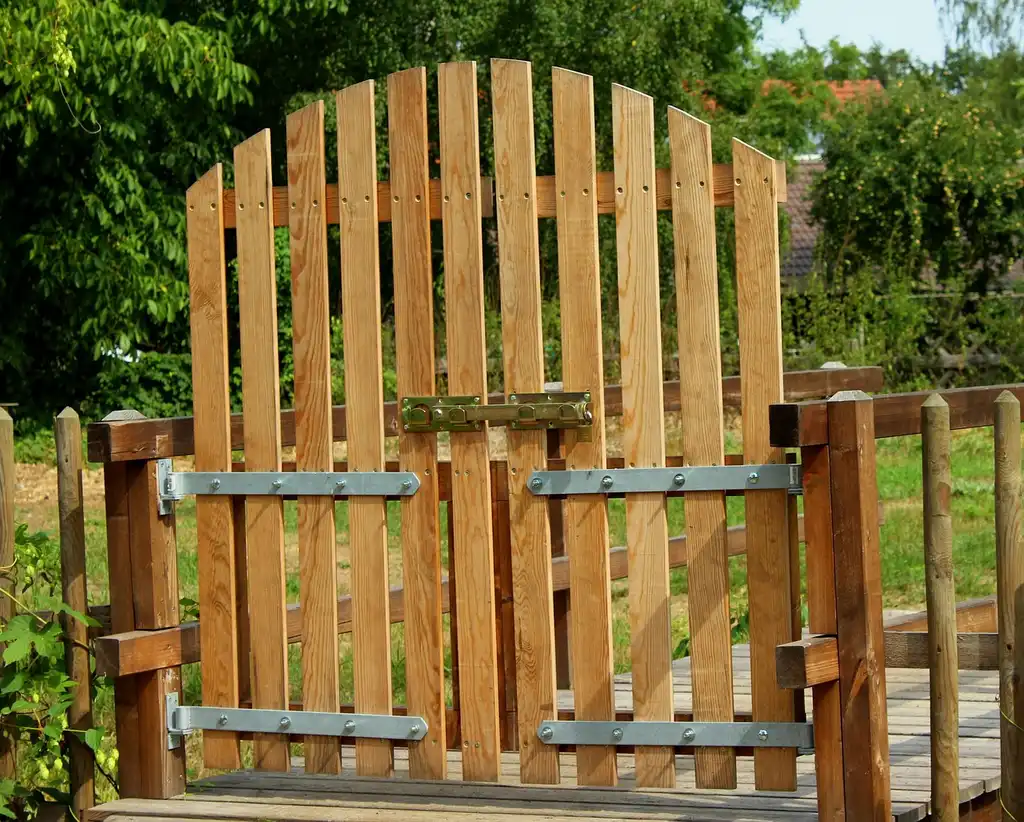
For a wood-fence gate, use heavy-duty strap hinges on wider gates or in exposed spots, T-hinges for smaller sheltered gates, and always add a diagonal brace, latch, and stop. In wet or coastal areas, choose galvanized or stainless hardware. Weak hardware lets the gate sag, drag, stick, and stop latching. This guide shows which gate hardware to buy by gate size, exposure, and failure risk.
This guide is part of our Fence gate hardware: types, parts, and installation series.
Best overall: adjustable stainless steel hinge kit for medium wood fence gates
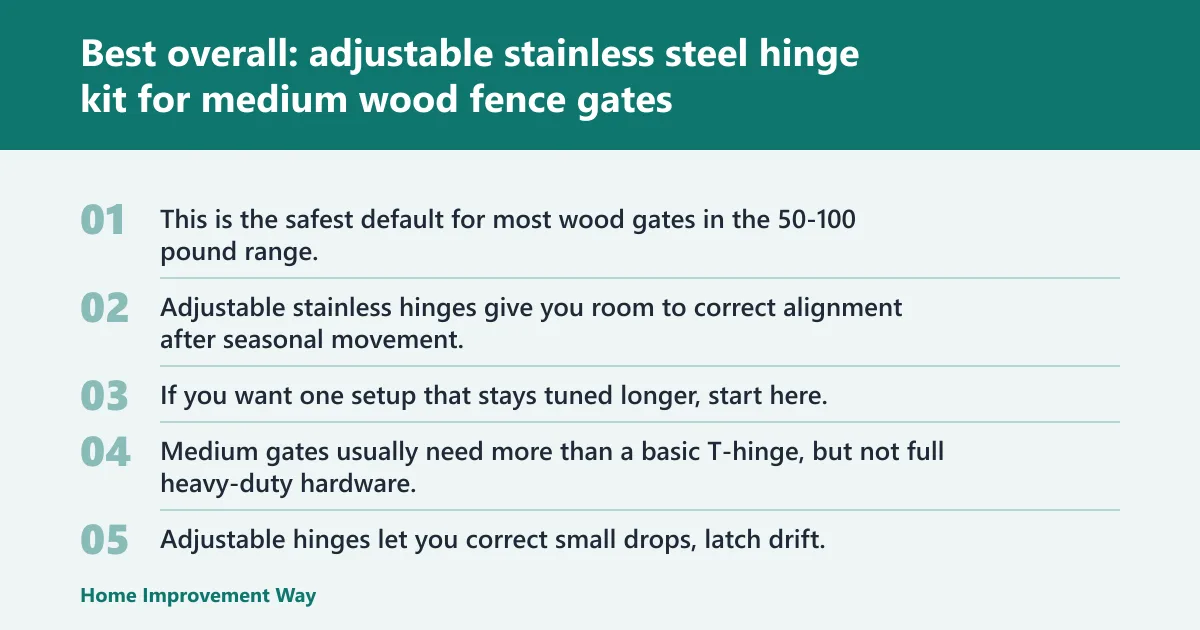
This is the safest default for most wood gates in the 50-100 pound range. Adjustable stainless hinges give you room to correct alignment after seasonal movement, and stainless resists moisture and corrosion well. If you want one setup that stays tuned longer, start here.
Why this is the safest default for 50-100 pound gates
Medium gates usually need more than a basic T-hinge, but not full heavy-duty hardware. Adjustable hinges let you correct small drops, latch drift, and post settlement without rebuilding the gate. That matters because outdoor wood moves, and a gate that opens cleanly in spring can bind by fall.
What makes adjustable hinges worth buying
Seasonal movement is the point. Even well-built wood gates can shift as posts move, hardware settles, and boards take on moisture. Adjustable hinges let you tune the reveal and latch line after installation, which helps keep the gate closing with a positive catch instead of slamming or hanging open.
When this is not enough and you should step up
If the gate is wider than 4 feet, lives in strong wind, or feels heavier than the post can comfortably hold, move up to a longer strap hinge set and stronger fasteners. If the post is undersized, no hinge upgrade will fully solve pull-out or sag.
📊 A typical gate should be 3-4 inches narrower than the opening for clearance. Source: Building a Gate for a Wood Fence (Innovative Techniques….
Quick comparison
| Product | Badge | Best for | Price | ||
|---|---|---|---|---|---|
 |
HOME MASTER HARDWARE 6 Inch Stainless Steel Gate Hinges forHOME MASTER HARDWARE | Our pick | 6 in · 100 lb · 4-pack | $32.99
Price as of 10 Oct 2026
|
View |
 |
KOKRYT Chain Link Double Gate Latch, Steel ResidentialKOKRYT | Budget pick | Chain link · Padlock holes · Steel | $17.99
Price as of 10 Oct 2026
|
View |
 |
TDCHINGES T Strap Black Gate Door Hinges for Wood Fence BoxTDCHINGES | Also great | 4 in · 132+ lb · 4-pack | $4.20
Price as of 10 Oct 2026
|
View |
 |
TB400 Hydraulic Gate Closer, Rust-Resistant & WeatherproofAffectnianly | Upgrade pick | Hydraulic · Weatherproof · Heavy-duty | $135.37
Price as of 10 Oct 2026
|
View |
 |
Guwezoy Self-Closing Gate Hinges with Standard LatchGuwezoy | Pair with it | Self-closing · Galvanized steel | $31.99
Price as of 10 Oct 2026
|
View |
Use the matrix below to match hardware to the gate, not the other way around. Gate width, estimated weight, and exposure tell you more than brand names do.
For wood gates, the right setup is usually the simplest one that still gives you alignment adjustment, corrosion resistance, and enough load spread to protect the post.
How we chose
We compared hardware by four things that actually decide whether a gate stays aligned outdoors: gate weight, gate width, post strength and fastener holding power, and corrosion resistance. Alignment adjustment and sag control were the tie-breakers when two kits looked similar on paper.
Also keep the buying guidance tied to common wood-fence use cases. That means privacy gates, picket gates, windy yards, and older posts get different recommendations.
Light-duty hinge-and-latch kit: best for small picket gates
This is the budget pick for narrow, lighter gates where wind load is modest and the post is in good shape. The 4-inch T-strap format works well on small picket gates that do not need much hardware spread. Based on the spec sheet and reviews, it is a practical low-cost choice when you want the gate to close cleanly without overbuying.
The main tradeoff is less capacity margin. A light-duty T-hinge can be the right buy for a sheltered gate, but it leaves less room for heavy boards, long spans, or a post that is already a little soft or out of plumb.
Use this style when the gate is narrow, the latch line is short, and you do not expect much wind pull. If the gate is a privacy panel or the post is older, step up instead of hoping the hardware will compensate.
Heavy-duty strap hinge set: best for wide privacy gates
This is the stronger everyday choice for larger wood gates that need more load spread across the frame. The 6-inch stainless steel strap design, wide rotation, and thicker connecting rod make more sense when the gate is heavy enough that short hinges would concentrate stress near the screws.
It suits wider privacy gates, taller gates, and installs where the post is strong enough to hold real fastener load. Heavy-duty strap hinges are also a better fit when you want stainless steel instead of coated hardware, especially in damp climates.
The drawback is simple: this is more hinge than a small gate needs, and you still need a solid post. A weak post can still pull out, even with good hardware.
Self-closing latch and spring hinge setup: best for safety-minded gates
This setup is for gates where positive closure matters more than easy opening. It is useful around pools, side yards, and any gate that should return to closed position without relying on the user. The galvanized steel parts are a sensible outdoor choice, and adjustable spring tension helps tune the closing action.
Fit matters here. Gate thickness and swing direction can limit what installs cleanly, and a self-closing setup can feel too firm on a light gate if the spring is set aggressively. It is also not the best answer for a rough, sag-prone gate that needs structural fixing first.
Buy this when closure discipline matters and the gate frame is already stiff enough to support spring action. If the gate is floppy, fix bracing before adding closing force.
Hydraulic gate closer: best for controlled closing
This is the premium option when you want controlled closing instead of a simple snap shut. The weatherproof, all-metal design and adjustable tension make it better suited to heavier outdoor gates, especially where slam control matters or wind keeps swinging the gate open.
It is most useful on wider, more exposed gates or places where you want closing speed set precisely. The drawback is cost and complexity; at this price, it should solve a real closing problem, not just replace a working latch.
If the gate is small and light, this is overkill. If the gate is heavy and must close predictably, it starts to make sense.
Chain-link double-gate latch: best for padlockable closure
This latch is a fit for chain-link double gates rather than typical wood privacy gates. The steel body and padlock holes add security options, and the design is aimed at a specific frame type. Based on the listing, it is a clear-purpose latch, not a general wood-gate fix.
The drawback is equally clear: it is not the right latch for a standard wood fence gate with board thickness and wood swing geometry. If your fence is wood, buy a wood-gate latch that matches the thickness and swing direction instead of forcing a chain-link solution.
What gate hardware do I need for a wood fence gate?
A wood fence gate needs four core parts: hinges, a latch, fasteners, and often a stop or drop rod on wider setups. Choose the hinge by gate weight and exposure, choose the latch by privacy or security need, and use fasteners that can hold in the post without pulling out.
The post matters as much as the hardware. It should be plumb, structurally sound, and sized to hold hinge fasteners with real bite. A weak post can make good hardware fail fast.
Core parts to buy
- Hinges: T-hinges for smaller gates, strap hinges for wider or heavier gates, adjustable hinges for alignment.
- Latch: Thumb latch, ring latch, gravity latch, or self-closing latch depending on privacy and use.
- Fasteners: Exterior-rated screws or lag screws sized for the post and hinge holes.
- Stop or drop rod: Worth adding on wide gates that need extra closed-position support.
Which hinges are best for a wood fence gate?
For wood fence gates, the best hinge is the one that matches gate weight, post type, and exposure. Stainless steel or galvanized hinges are the right outdoor choices. Adjustable variants are worth buying when you expect seasonal movement or need a little correction after installation.
Use strap hinges when the gate is wide or heavy, and use shorter T-hinges only when the gate is small and sheltered. The hinge should spread load well enough that the screws do not chew out the post over time.
Hinge selection rules
- Match hinge length and capacity to gate width and estimated weight.
- Check that the post can hold the fasteners without splitting or pulling out.
- Choose galvanized or stainless steel for outdoor use.
- Pick adjustable hinges if the gate is likely to shift with moisture and temperature changes.
- Step up to heavier strap hardware when the gate is over 4 feet wide or exposed to wind.
How do I choose gate hardware by gate weight?

Gate weight is one of the main sizing inputs. Many outdoor wood gates are in a moderate weight range, and heavier gates need reinforced hardware. If you undersize the hinge, the gate will sag, twist, or stop latching cleanly.
Weight also changes fastener choice and post demand. A heavier gate puts more pull on the hinge screws and more torque into the post, so hardware that looks fine on a light picket gate may fail early on a solid privacy gate.
Buying matrix by width, weight, and exposure
| Gate width | Estimated weight | Wind or sag risk | Recommended hinge type | Latch type | Fastener type | Upgrade trigger |
|---|---|---|---|---|---|---|
| Up to 3 feet | Under 50 pounds | Low if sheltered | Standard T-hinge or light strap hinge | Thumb latch or gravity latch | Exterior screws into a sound post | Upgrade if the post is soft, warped, or exposed |
| 3 to 4 feet | 50-100 pounds | Moderate | Adjustable stainless or galvanized strap hinge | Positive-closing privacy latch | Lag screws or heavy exterior screws | Upgrade if the latch line drifts or the gate binds |
| Over 4 feet | 100-150 pounds | High, especially in wind | Heavy-duty strap hinges with adjustment | Stout latch with optional stop or drop rod | Lag screws into a plumb, sound post | Upgrade if the gate slams, racks, or pulls the post |
| Wide privacy gate in open yard | 150 pounds or more | Very high | Heavy-duty galvanized or stainless strap hinges | Latch with strong positive closure | Lag screws plus reinforced post backing if needed | Step up to stronger hardware and bracing immediately |
What latch works best on a wood privacy fence gate?
A privacy fence gate usually does best with a latch that gives positive closure and fits the gate thickness and swing direction. Thumb latches and ring-style latches are common on wood gates, while self-closing or spring-driven options make sense when you want the gate to return shut on its own.
Security and privacy are not the same thing. A latch can keep the gate closed and maintain privacy without being a high-security device, so buy for the job at hand. If the opening should stay shut under wind, choose a latch with a definite catch instead of a loose hook style.
When to add a stop or drop rod
Add a stop or drop rod when the gate is wide, has twin leaves, or needs help staying aligned in wind. These parts keep the gate from drifting out of position and can take some stress off the latch. They are worth the small extra cost on bigger wood gates.
Do I need adjustable hinges for a wooden gate?
Yes, if the gate is likely to move, settle, or show seasonal drift. Adjustable hinges are especially useful on wood gates because wood moisture changes can shift the frame and move the latch line. They are one of the easiest ways to keep a gate closing without a rebuild.
They are less useful on a tiny sheltered gate with a stout post and stable wood, but on medium and large gates they usually pay for themselves in reduced fuss. If the gate already sits perfectly and the post is strong, fixed hinges can still be fine.
Why adjustment matters outdoors
Outdoor wood performs best around 12-16% moisture content. Wood above 19% can warp gates in 6 months, so hinge adjustment is a practical hedge against movement. A pin meter is the right tool if you want to check moisture before installation.
Say your 5-foot privacy gate closes well in dry weather but starts rubbing after rain. Adjustable hinges let you correct the reveal instead of planing the gate or remounting the latch.
How much clearance should a wood gate have?
A typical gate should be 3-4 inches narrower than the opening for clearance. That gap gives you room for the hinges, seasonal movement, and a clean swing without scraping the post or ground. For wood gates, that spacing is a practical target rather than a luxury.
Keep the gate square during build and hang. A common tolerance target is 1/16 inch for gate squareness, which helps the latch line up and reduces bind at the strike side.
Clearance checks before you buy hardware
- Measure the opening before you buy hinges or a latch.
- Confirm the gate is 3-4 inches narrower than the opening.
- Check that the post is plumb and not leaning.
- Leave room for seasonal expansion if the wood is fresh or damp.
What wood is best for a fence gate hardware setup?
Wood choice affects hardware demand because durability and moisture resistance vary. Cedar, redwood, pressure-treated pine, and ipe all behave differently, and that changes how much support your hinges and fasteners need over time. Better wood buys you more life, but it does not remove the need for good hardware.
Cedar costs $2-4 per board foot and lasts 20+ years untreated. Redwood is listed at 25-30 years expected lifespan. Treated pine is listed at 15-20 years expected lifespan. Ipe is listed as lasting 40+ years.
How wood species changes hardware needs
Cedar and redwood are strong choices for moisture resistance, so they pair well with outdoor gate hardware. Treated pine is common and practical, but it still needs solid fastening and periodic alignment checks. Ipe is much denser, which raises the bar for hardware and fastener holding power.
If the wood arrives damp, do not skip the moisture check. A gate built from stock above 19% moisture can move badly after installation, and hardware can only correct so much.
How do I stop a wood fence gate from sagging?
Use a diagonal brace or Z-brace, especially on gates over 4 feet tall. Sagging usually starts when the frame racks, the hinge side fasteners loosen, or the post is not strong enough to hold the load. Bracing reduces twist and helps the gate resist wind.
Hardware can slow sag, but it cannot replace structure. A stiff frame, a plumb post, and fasteners that hold are the real fix. On wider gates, brace first and size the hinges second.
Common failure modes to avoid
- Hinge pull-out: usually caused by weak fasteners or a soft post.
- Latch misalignment: often starts with a gate that is out of square or too tight to the opening.
- Wind-driven swing: common on wide gates with light hinges and little bracing.
- Sagging frame: often fixed with diagonal bracing before any hinge upgrade.
Picture a 4-foot-6 privacy gate on an exposed side yard. If it starts rubbing after a few windy weeks, the right fix is usually heavier strap hinges plus better bracing, not a stronger latch alone.
Which one should you buy?
For a low-cost repair, buy the light-duty T-strap hinge kit if the gate is small, sheltered, and the post is sound. For a new privacy gate in the 50-100 pound range, start with the adjustable stainless hinge kit. For a windy yard, choose the heavy-duty strap hinge set and plan on bracing.
If the post is older or undersized, do not overspend on fancy hardware first. Fix the post, then buy hinges that match the real support available. If you need automatic closure or controlled closing, choose the self-closing hinge kit or hydraulic closer only after the gate frame is stiff enough.
One common first-timer mistake is buying a latch before checking swing direction and gate thickness. Another is mounting strong hinges on a post that cannot hold them. Hardware choice only works when the post, wood species, moisture level, and gate width all line up.
Sponsored / affiliate links. As an Amazon Associate I earn from qualifying purchases. I may earn additional commission from eligible campaigns.