Fence Gate Hardware: Types, Parts, and Installation
Choose fence gate hardware by gate weight, width, and post material: use two hinges for smaller, lighter gates, three for wider or heavier ones, plus a latch matched to the gate gap and any code requirements. I measure the opening before I buy anything, at the top, middle, and bottom, because a gate opening that looks square from six feet away often varies enough to change hinge choice, latch fit, and ground clearance. Bad hardware or poor placement causes sag, drag, self-opening latches, split posts, and repeat repairs. This page maps every part to wood, vinyl, chain-link, and metal gates, then shows how to size, place, and install each piece to prevent those failures.
What you’ll need before you start



- Tape measure
- 4-foot level
- Speed square
- Drill/driver
- Drill bits for pilot holes and through-bolts
- Socket set or wrenches
- Screwdrivers
- Clamps for temporary alignment
- Shims or spacer blocks
- Safety glasses and gloves
- Chosen hinges, latch, keeper or strike, and any closer
- Fasteners sized for the gate and post: lag screws, carriage bolts, machine screws, self-tapping screws, washers, and lock nuts as needed
- Support hardware if needed: anti-sag kit, drop rod or cane bolt, gate stop, post reinforcement plate, backer plate
Measurements to record before buying
A small change in opening width can affect latch alignment, rubbing, and ground clearance. I always check top, middle, and bottom, because even a 1/4-inch change can decide if a latch lines up cleanly or if the gate rubs once the hinges settle. Measure hinge-side clearance, latch-side clearance, and the ground gap at the swing path, not only at the center.
A third hinge is often used on heavier gates. On most residential gates, one hinge sits near the top rail and one near the bottom rail; a third hinge belongs on tall gates, gates over 70 pounds, and gates that see hard daily use or strong wind.
Record latch height from grade and from the top of the gate. For pool gates, self-closing and self-latching requirements, latch height, and child-resistant operation should be checked before hardware is purchased, not after holes are drilled.
Hardware finish and fastener notes
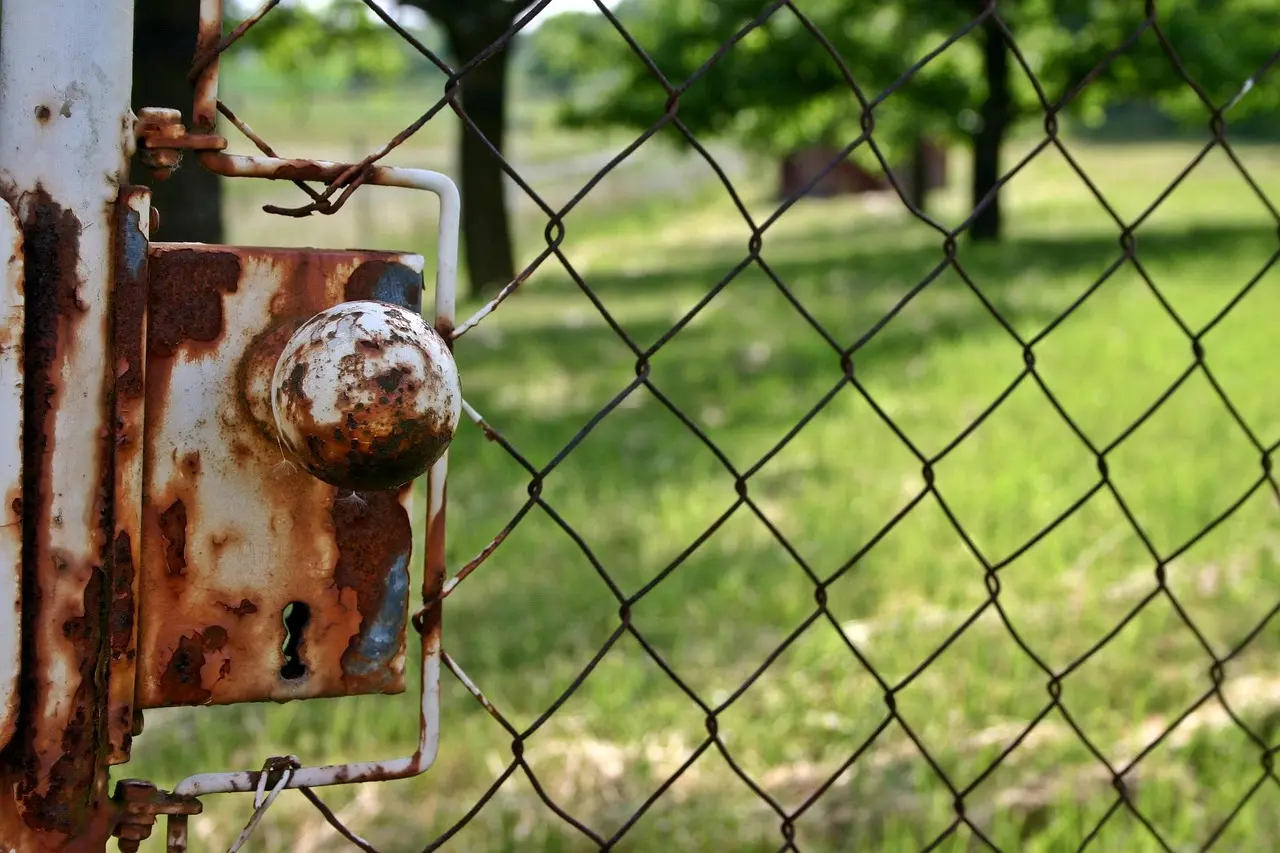
Wet climates can wear down cheaper finishes quickly. Zinc-plated hardware is often fine for dry, mild exposure, while exterior galvanized, powder-coated, or stainless hardware tends to hold up better outdoors. I have replaced plenty of rusty latches near sprinklers and along damp fence lines, and rust-resistant hardware lasts longer outdoors because it keeps its coating, clamping force, and moving parts longer. Near salt air or frequent irrigation overspray, stainless usually earns the extra cost.
Match metals where possible. Stainless fasteners with stainless hardware, or galvanized fasteners with galvanized hardware, reduce corrosion trouble. Mixed metals can stain, seize, or pit.
What parts do I need for fence gate hardware?
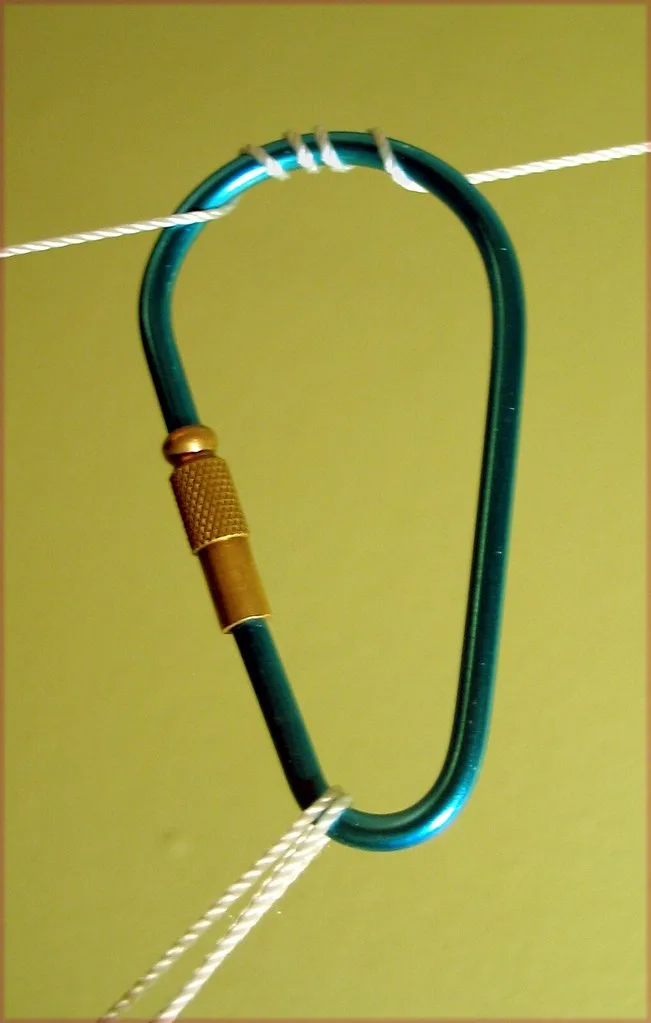
Most fence gates need several functional groups: hinges to carry weight, a latch to hold closed, fasteners to transfer load into the frame and post, a keeper or strike to receive the latch, and support hardware to reduce sag, bounce, or movement. Pool gates often need a self-closing hinge set or separate closer.
The core parts every gate uses
Hinges carry the load and control swing. Strap hinges spread load over more gate frame area, T-hinges work on lighter wood frames, butt hinges fit cleaner metal frames, and self-closing hinges add return force where code or convenience calls for it.
Latches hold alignment at the close point. Gravity latches work with modest movement, thumb latches are common on wood privacy gates, magnetic latches tolerate slight misalignment better, and keyed latches belong on access-control gates where outside entry needs to be limited.
Fasteners matter as much as the hardware body. A thick hinge leaf fixed with short screws into weak material still fails. Heavy gates and weak posts often need through-bolts, washers, and backer plates rather than face-fastened screws.
Which part prevents which failure
- Sag: longer strap hinges, third hinge, through-bolting, anti-sag kit, stiffer frame
- Drag on ground: correct ground clearance, proper hinge spacing, square hanging, stop overtravel
- Rattle in wind: adjustable latch or magnetic latch, gate stop, drop rod on double gates
- Latch slip: better keeper alignment, deeper latch engagement, self-latching hardware
- Bounce-back: stop placement, closer adjustment, magnetic latch, strike alignment
- Split post or crushed vinyl: washers, backer plates, pilot holes, reinforcement sleeves or inserts
When support hardware belongs on the list
A wide wood gate often needs more than hinges and a latch. Anti-sag kits help when the gate frame lacks diagonal bracing. Cane bolts or drop rods steady one leaf of a double gate. Gate stops keep the latch from taking the full hit every time the gate closes.
On older wood posts, reinforcement plates can stop fastener tear-out. On hollow vinyl posts, load-spreading plates or internal inserts are often the difference between a stable gate and a cracked sleeve.
Which hardware matches my gate and post?
Match hardware by looking at the gate frame first, then the post. A stiff metal frame can carry load well but still fail if mounted to a weak vinyl sleeve; a good wood post can still sag a gate if the hinge pattern is too short for the width and wind exposure.
Wood gate on wood or metal posts
For a wood gate on a sound 4×4 wood post, strap hinges or heavy T-hinges usually give the best load spread. Through-bolts with washers beat long screws on older, softer wood and on any gate over about 70 pounds.
For a wood gate on a steel post, use hinge brackets or hinge plates meant for metal, then fasten with machine bolts, weld-on tabs, or self-tapping screws only if the post wall thickness supports them. Thin-wall tube posts can flex even when the screws hold.
Vinyl gate on reinforced vinyl or metal posts
Vinyl should not be treated like solid wood. Hollow vinyl posts need reinforcement, usually an internal metal or wood insert, before hinges or latches are loaded hard. Backer plates and wide washers help spread force and reduce crush risk at the bolt points.
Vinyl gates benefit from hardware with wider mounting footprints. Self-closing hinges are common around pools, but the post needs enough internal strength to carry the closer force over time.
Chain link and round-post setups
Chain link gates move more than rigid framed privacy gates. Round-post hinge fittings such as fork-and-collar sets or bolt-on chain-link hinge assemblies are made for that geometry and can allow adjustment. Flat-mount strap hinges rarely sit correctly on round posts without adapters.
Use latch hardware that tolerates a little movement. Chain-link fork latches, drop fork latches, and magnetic latches with generous capture can work better than narrow keepers that demand perfect repeat alignment.
Metal frame gates and windy locations
Welded or tubular metal gates like compact hardware, but the hinge body still has to match the load. Butt hinges suit narrow metal frames when welded or bolted to proper plates. For exposed yards where wind pushes the gate hard, look for heavier hinge leaves, deeper latch engagement, and a stop that absorbs slam force.
Wind changes the decision. A light gate in a calm courtyard may live happily on two hinges. The same gate on a corner lot can shake, rack, and loosen fasteners unless the hardware pattern is upgraded.
Fence gate hardware selection matrix
How to read the matrix
Start with gate material and post type, then match the weight range. The failure-risk column points to what usually goes wrong first. The recommended hardware column names the hinge and latch style that best addresses that risk, while the tools column shows whether simple drilling is enough or through-bolting and reinforcement are likely.
| Gate material | Post type | Gate weight range | Likely failure risk | Recommended hinge and latch | Fasteners and reinforcement | Required tools |
|---|---|---|---|---|---|---|
| Wood picket/privacy | Wood 4×4 | Up to 50 lb | Sag at top latch corner | 2 strap hinges or heavy T-hinges; thumb or gravity latch | Exterior lag screws with pilot holes; washers on softer wood | Tape, level, drill, pilot bit, socket set, clamps, shims |
| Wood picket/privacy | Wood 4×4 | 50-90 lb | Sag, drag, hinge pull-out | Long strap hinges; magnetic or self-latching latch; 3 hinges if over 48 in. wide | Through-bolts with washers; anti-sag kit if frame lacks brace | Tape, level, drill, bits, sockets, clamps, shims, wrenches |
| Wood | Metal square post | Up to 90 lb | Post-side fastener loosening | Strap hinges on gate with metal-post hinge plate; magnetic or keyed latch | Machine bolts or self-tapping screws sized for post wall; backing plate if hollow | Drill, metal bits, tape, level, sockets, clamps, shims |
| Vinyl | Reinforced vinyl post | Up to 60 lb | Post crush, latch misalignment | Vinyl gate hinges or self-closing hinges; magnetic self-latching latch | Through-bolts, wide washers, backer plate, internal insert | Drill, bits, tape, level, clamps, shims, sockets |
| Vinyl | Metal post inside vinyl sleeve | 60-90 lb | Hinge-side flex, bounce-back | Heavy self-closing hinges or wide-body hinges; magnetic latch | Bolts into reinforced section; stop block or gate stop | Drill, bits, level, tape, clamps, shims, socket set |
| Chain link | Round steel post | Up to 80 lb | Rattle, latch slip, hinge bind | Fork-and-collar or round-post hinge set; fork latch or magnetic latch | Purpose-made clamp fittings; corrosion-resistant bolts | Wrenches, tape, level, drill if latch plate needs mounting |
| Tubular metal | Metal post | Up to 120 lb | Latch wear, weld-area stress, slam damage | Butt hinges or heavy bolt-on metal hinges; keyed or magnetic latch; closer if needed | Machine bolts, weld tabs, or rated self-tapping screws; stop plate | Drill, metal bits, level, tape, sockets, clamps |
| Double wood gate | Wood or metal posts | Each leaf 40-80 lb | Center rattle, drop at inactive leaf | Strap hinges; active-leaf latch plus cane bolt or drop rod on inactive leaf | Through-bolts on hinge side; center stop; keeper plate | Tape, level, drill, sockets, clamps, shims, wrenches |
How do I choose hinges, latches, and fasteners without guesswork?
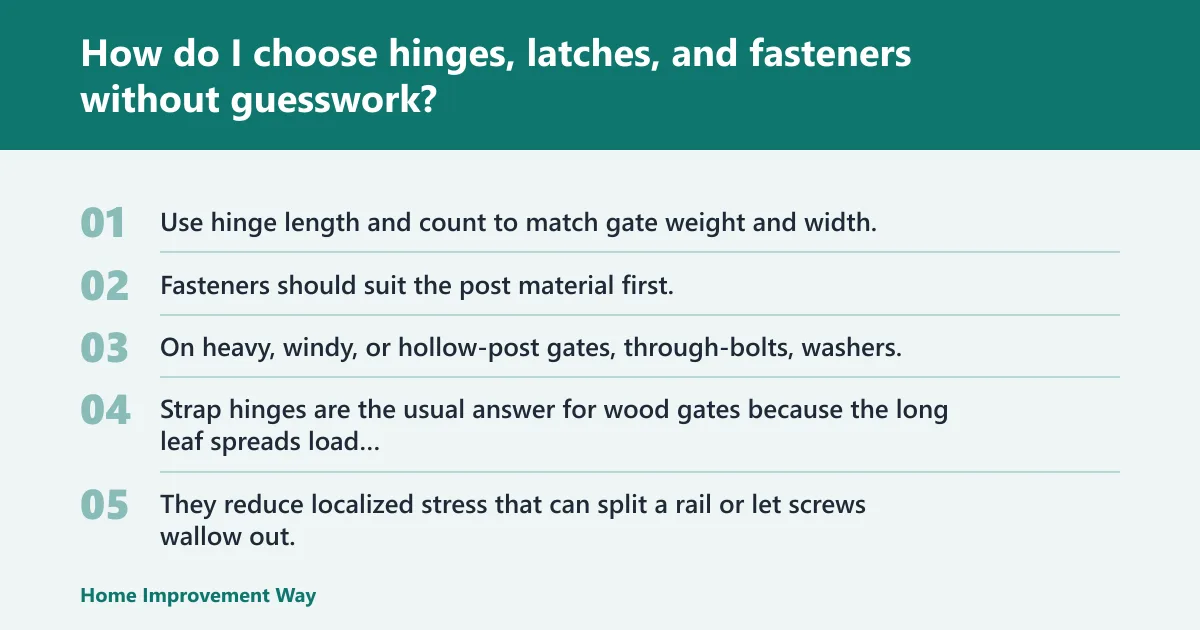
Use hinge length and count to match gate weight and width, then choose a latch based on alignment tolerance and safety needs. Fasteners should suit the post material first. On heavy, windy, or hollow-post gates, through-bolts, washers, and backer plates often prevent the failure that thicker hardware alone cannot stop.
Hinges by load, material, and swing control
Strap hinges are the usual answer for wood gates because the long leaf spreads load across the frame. They reduce localized stress that can split a rail or let screws wallow out.
T-hinges fit lighter wood gates. They work well on garden gates and narrow picket gates, but they are often too light for wide privacy gates in wind.
Butt hinges suit metal gates and some trim-looking wood gates where the frame is stiff and the mounting pads are solid. Their shorter leaves mean less load spread, so they need solid frame stock and proper backing.
Self-closing hinges belong on pool gates and some side-yard access gates. They add return force, but they also add stress to the post and latch. That makes post reinforcement and stop placement more important.
Two hinges are often enough on gates that are roughly this wide and not especially heavy. Add a third hinge above that width, above about 70 pounds, on six-foot-tall gates, or where the gate cycles many times each day.
Latches by operation and alignment tolerance
Gravity latches are simple and common, but they need the gate to land in a narrow range. If the gate settles or the post moves, they may stop catching cleanly.
Thumb latches suit wood gates and offer easy one-handed operation. They need good through alignment between the thumb piece and the latch bar.
Magnetic latches handle minor misalignment better and resist bounce-back well. They are a strong choice for vinyl gates, pool gates, and gates that see slight seasonal movement.
Self-latching latches close automatically when the gate reaches the keeper. For pool areas, pair them with self-closing hinges or a separate closer and verify latch height and child resistance against local rules.
Keyed latches add security but do not fix a poorly aligned gate. If the gate already sags, keyed hardware only becomes harder to operate.
Fasteners, washers, and backer plates
Lag screws work well into sound, solid wood posts and frames when the pilot hole is correct. They are a weak choice in punky wood or hollow vinyl.
Carriage bolts or other through-bolts are better on heavy wood gates, older wood, and any gate where screws have already loosened once. Use washers under both head and nut.
Self-tapping screws belong on suitable metal thickness and light-to-moderate loads. For heavier gates, machine screws with nuts or threaded inserts hold better.
Machine screws with backer plates are often the right answer for vinyl assemblies and thin-wall metal where load needs to spread over a wider area.
Pilot holes matter. Too small and the wood splits. Too large and the screw loses grip. Washers prevent pull-through, and backer plates prevent local crushing on hollow or brittle sections.
How do I install fence gate hardware without causing sag or misalignment?
Measure the real opening, support the gate on shims before drilling, mount hardware where load hits solid material, and set the latch only after the gate hangs freely. Most bad installs start by fastening one side too soon, skipping support blocks, or trusting nominal spacing instead of actual clearances.
- Measure the opening at top, middle, and bottom, then mark hinge-side clearance, latch-side clearance, and ground clearance on the posts.
- Set the gate in the opening on shims or spacer blocks so the bottom gap is consistent along the swing path.
- Clamp the gate in place and use a level to keep the latch stile plumb while the frame stays supported.
- Lay out hinge locations near the top and bottom rails; add a third hinge for wide, tall, or heavy gates.
- Mount the hinge leaves to the gate first when the frame face is flat and easy to keep square.
- Drill pilot holes in wood, or matched bolt holes in metal and vinyl, before driving any fastener.
- Through-bolt heavy hinges on wood or vinyl when possible, using washers and backer plates where the material is weak or hollow.
- Fasten the post-side hinge hardware into solid structure, not only trim, sleeve, or thin skin material.
- Test swing the gate before fully tightening; correct twist, bind, or uneven gaps while the hardware can still move slightly.
- Mark the latch position with the gate resting in its true closed position, then install the latch body and keeper or strike.
- Set a gate stop so closing force lands on the stop and keeper, not only on the latch tongue.
- Add an anti-sag kit, closer, cane bolt, or drop rod if the gate still racks, drifts, or needs better control.
- Tighten all hardware, then cycle the gate repeatedly and adjust until it closes cleanly without drag, rattle, or latch slip.
Shim strategy that keeps the gate square
Shims are not only for the bottom. A thin spacer at the latch side can hold the reveal while hinge screws are started. On double gates, matching spacer blocks at the center gap keep the leaves from drifting together during layout.
For wood gates, support the weight from underneath during the whole hinge install. I have seen plenty of sag built in on day one because the installer let the top hinge carry the gate before the bottom hinge was fully seated.
When backer plates are needed
Use backer plates on hollow vinyl posts, thin aluminum sections, and old wood where washers begin to sink into the face. A plate spreads the force over a larger area and keeps the fastener from crushing the skin or pulling through one weak spot.
Common mistakes that ruin gate hardware installs
Using light-duty hinges on wide or windy gates
Thin leaves, small knuckles, and short screws are warning signs. A wide gate may hang for a week and still fail once wind starts pushing on it. Upgrade hinge length, hinge count, and fastener size together.
Fastening into weak posts with no reinforcement
Hollow vinyl sleeves, rotted wood posts, and thin tube posts can all fool the installer at first. The screws bite, then loosen under load. Reinforce the post, through-bolt where possible, or replace the post before blaming the hinge.
Skipping clearances, shims, or latch alignment checks
Many sticky gates were built with the wrong bottom gap or no latch-side allowance. Gates need room to move through seasonal swelling, frost heave, and hinge settling. Magnetic and adjustable latches forgive a little movement, but they do not rescue bad geometry.
Choosing the wrong finish for the site
Zinc-plated hardware can rust quickly near sprinklers, coastlines, or shaded wet fences. Once fasteners corrode, they stain the fence and lose clamping force. Use galvanized, powder-coated, or stainless hardware where exposure is hard.
If that didn’t work, try this next

When the gate still sags after new hardware
Check the frame before replacing hinges again. A square frame with a loose post behaves like a hinge problem, and a racked frame on a solid post also behaves like a hinge problem. Confirm the post is plumb and stiff, then inspect the gate diagonals or anti-sag brace.
When the latch still misses or slips
Look for post movement and overtravel. Install or adjust a stop so the gate lands in the same place every time. If the gap changes slightly through the season, switch from a narrow gravity latch to a magnetic or adjustable self-latching style.
When chain-link hardware rattles
Clamp-fit chain-link hardware may need retightening after the first week of use. Add a stop or adjust the fork latch so the gate cannot rebound. If the post itself flexes, the fix is usually a better post or brace, not a different latch alone.
Prevention
Recheck hinge bolts, latch screws, and closer adjustment after the first few weeks of use. Gates settle early, and a quick retightening often prevents long-term hole wear and latch drift.
Frequently asked questions
Which hinge type is best for a wood fence gate?
For most wood fence gates, strap hinges are the best starting point because they spread load across more of the frame and resist sag better than short hinges. Use two on gates up to about 48 inches wide, and move to three or a heavier pattern above that or over about 70 pounds.
How do I choose latch hardware for a fence gate?
Choose the latch by gap tolerance, use pattern, and safety rules. Gravity and thumb latches suit stable wood gates, while magnetic latches handle slight movement better on vinyl, metal, or pool gates. For pool areas, use self-latching hardware and verify latch height and child resistance against local code.
What hardware do I need for a vinyl fence gate?
Vinyl gates usually need reinforced posts, through-bolted hinges, wide washers or backer plates, and a latch that tolerates small movement, often magnetic. Do not rely on long screws driven into a hollow vinyl sleeve. If the gate self-closes, the internal post reinforcement becomes even more important.
What hardware works best on a chain link fence gate?
Chain-link gates work best with round-post hinge hardware such as fork-and-collar sets and latches built for slight frame movement. Flat-mount hardware often fits poorly on round posts. Use clamp-fit or bolt-on galvanized parts, then add a stop or adjust the latch so rebound does not cause rattle or slip.
How do I tell if my gate hardware is too light-duty?
Look for thin hinge leaves, short screws, shallow latch engagement, flex at the post, or a gate that needs frequent readjustment. If the gate is over about 70 pounds, wider than about 48 inches, or exposed to strong wind, light-duty hardware often shows up first as sag, drag, or latch miss.
What tools are needed to install fence gate hardware?
You need a tape measure, level, drill/driver, drill bits, socket set or wrenches, screwdrivers, clamps, and shims or spacer blocks. Safety glasses and gloves belong on the list too. For metal posts or through-bolted vinyl hardware, add metal bits and enough wrench access for washers, nuts, and backer plates.
Sponsored / affiliate links. As an Amazon Associate I earn from qualifying purchases. I may earn additional commission from eligible campaigns.