3 Best Budget Fence Gate Hardware for Small Gates (2026): We Compared
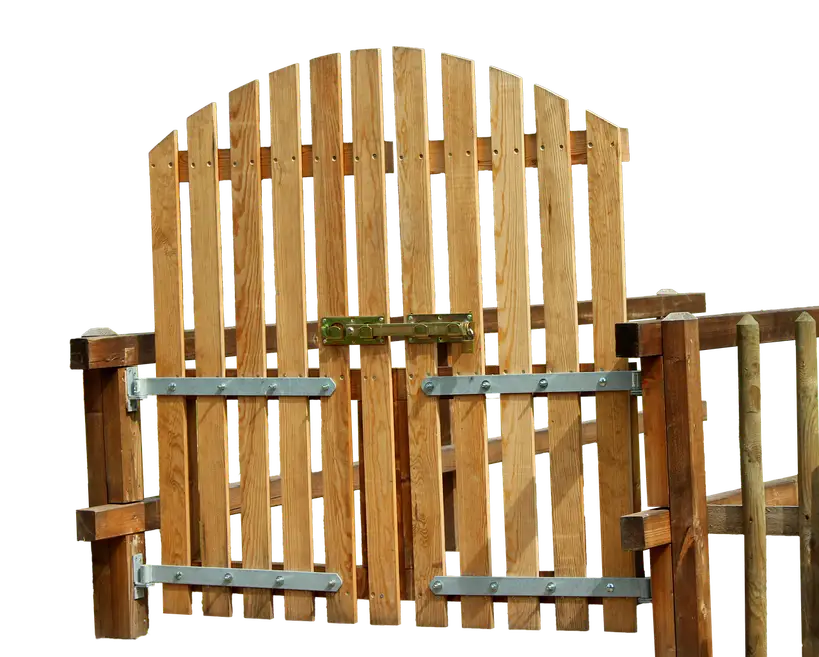
For a small backyard gate, a common low-cost reliable setup is a 6- to 8-inch strap hinge pair with a basic gravity latch, matched to the gate’s actual width and weight; skip 10-inch-plus hardware unless the gate is heavy. Wrong sizing leads to sag, latch misalignment, and wasted money on parts that never fit right. This guide shows the cheapest hardware choices that still fit common small gate dimensions and avoids obvious compatibility mistakes.
Quick comparison
| Product | Badge | Best for | Price | ||
|---|---|---|---|---|---|
 |
Rasugarlary Wall Mount Gate Hinges, 4 Pairs Heavy DutyRasugarlary | Our pick | 4 pairs · heavy duty · black | $46.99
Price as of 26 Oct 2026
|
View |
 |
Mustgood Gate Latch, Heavy-Duty Self-Locking Fence Lock,MustGood | Budget pick | Self-locking · padlockable · black | $13.99
Price as of 26 Oct 2026
|
View |
 |
Self Closing Gate Hinges for Vinyl/Wooden Fence Gates, FitsK KASONIC | Also great | Self-closing · adjustable · black | $29.99
Price as of 26 Oct 2026
|
View |
 |
skysen Stainless Steel Self Closing Vinyl Fence Single GateSKYSEN | Also great | 2 hinges + 1 latch · black | $45.99
Price as of 26 Oct 2026
|
View |
 |
Fence Gate Hardware Kit, 8" Heavy Duty Strap Hinges andHOME MASTER HARDWARE | Pair with it | 8-inch · heavy duty · black | $26.99
Price as of 26 Oct 2026
|
View |
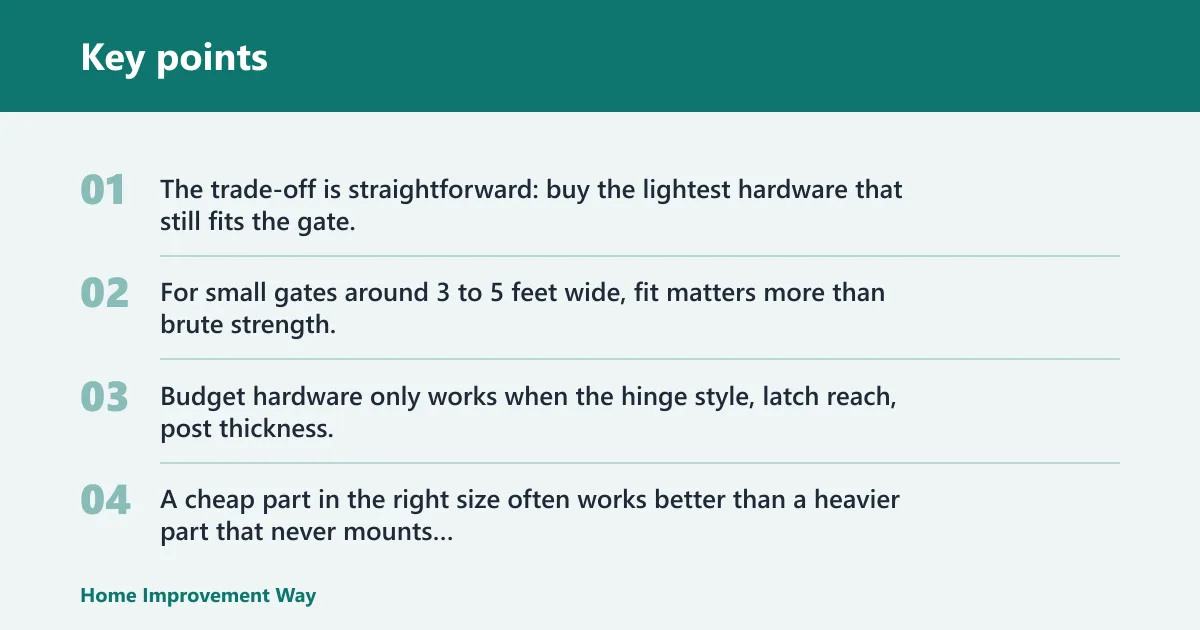
The trade-off is straightforward: buy the lightest hardware that still fits the gate, or spend more on oversized parts that add cost without fixing alignment. For small gates around 3 to 5 feet wide, fit matters more than brute strength.
Budget hardware only works when the hinge style, latch reach, post thickness, and finish all match the gate. A cheap part in the right size often works better than a heavier part that never mounts square.
How we chose
We compared options by small-gate fit first, not by hype. That means width range, likely gate weight, post type, corrosion resistance, and whether the latch will actually line up on a narrow backyard opening.
We also separated true small-gate hardware from driveway and farm-gate parts. Overbuilt hardware can be harder to align, heavier on soft posts, and more expensive than a homeowner needs.
Finally, we favored kits that include corrosion-resistant fasteners and avoid odd fitment traps like excessive hinge throw, long latch reach, or mounts that crush thin vinyl or light steel.
Best overall: budget hinge-and-latch kit
This is the safest value for a typical 3- to 5-foot backyard gate when you want one purchase to cover hinges and a latch. Based on the listed specs, the 8-inch strap hinges and two-sided spring latch make sense for wood or similar framed gates that need an easy, basic install.
What stands out is the complete hardware approach. You get the hinge pair, the latch, and mounting hardware, so you are less likely to miss a fastener or find the latch is too short for the post spacing.
The drawback is size. Eight-inch strap hardware can be more hinge than a very light gate needs, and the “heavy duty” label does not fix a weak post or a gate that is already out of square.
Strap hinge kit: best for wood gates
This fits wood gates that need a straightforward wall or post-mounted hinge set and do not need a specialty self-closing mechanism. The included screws and steel construction make it a practical budget choice for small backyard repairs where you want simple mounting and solid outdoor use.
Strap length matters because it spreads load across more of the gate frame. On narrow wood gates, that longer footprint can reduce pull-out risk better than a tiny hinge, especially if the frame is light or the gate sees daily use.
The main drawback is that this is a large, heavy-duty style sold as multiple pairs. For a very small gate, that can be more hardware than needed, and a thin post or soft wood can still strip if the pilot holes are wrong.
T hinge kit: best for narrow backyard gates
A T hinge is often the lowest-cost sensible choice for a lighter, narrow gate when you want a simpler look and less hinge bulk than a strap style. For short wood gates and light framed panels, it can do the job without paying for oversized driveway hardware.
The best use case is a gate that is not very heavy and does not need wide strap coverage. Use two hinges on light gates; add a third only if the frame is tall enough, the latch side is sagging, or the gate material is heavier than expected.
The downside is capacity. A T hinge can be too small if the gate is wider, the frame is softwood, or the post is slightly out of plumb. That is where sag and latch trouble show up first.
Self-closing hinge set: best for safety
This is the right buy when self-closing matters more than the lowest price, such as pool-adjacent gates, child-access gates, or any fence line where you want the gate to return on its own. The adjustable design is useful when you need to tune the closing force and the gate gap is in the listed 3/4-inch to 1-inch range.
The standout feature is adjustability. A tension-adjustable or spring-style hinge can help a gate close consistently without a separate closer, and the included tool and screws make setup less guesswork.
The drawback is that self-closing hardware is not ideal for very light gates or gates that are already misaligned. If the post leans or the latch line is off, more spring tension can make bounce and slam worse instead of better.
Stainless kit: best for wet climates
This is a better pick when rust resistance matters more than the lowest sticker price. The stainless construction and included hinge-and-latch package make sense for wood or vinyl fences in wet, humid, or coastal conditions where basic plated hardware tends to age faster.
Its main advantage is material choice. Stainless is the safer upgrade when you expect repeated rain, salty air, or sprinkler exposure, because corrosion on the hinge pin or latch spring can cause sticking and rattle.
The drawback is cost. It is one of the pricier options here, and if your gate is dry, sheltered, and mounted to a solid post, you may not need to spend this much.
Gate hardware decision table
| Gate scenario | Gate width | Approximate weight band | Cheapest safe hinge type | Latch type | Finish | Fastener type | Avoid |
|---|---|---|---|---|---|---|---|
| Light wood gate on a solid wood post | 3 to 4 feet | Light-duty, roughly 20 to 40 lb | Strap hinge pair or T hinge pair | Gravity latch | Zinc-plated or powder-coated for dry sites | Exterior wood screws or lag screws with pilot holes | Oversized 10-inch hinges, softwood post without predrilling |
| Small wood gate with daily use | 4 to 5 feet | Light to medium-duty, roughly 30 to 60 lb | 8-inch strap hinge pair | Thumb latch or basic gravity latch | Hot-dip galvanized or stainless in wet climates | Lag screws matched to post thickness | Thin decorative hinges and short screws that barely bite |
| Vinyl gate with boxed frame | 3 to 5 feet | Light-duty, roughly 20 to 45 lb | Self-closing hinge set or vinyl-rated hinge kit | Self-latching or magnetic latch | Stainless or powder-coated | Carriage bolts or through-bolts where the frame allows | Wood-only screws that can crack thin vinyl walls |
| Chain-link gate with round post | 3 to 4 feet | Light-duty, roughly 15 to 35 lb | Chain-link-compatible hinge set | Self-latching latch | Galvanized or stainless | Bolts and clamps sized for round tubing | Flat-mount hinges that do not match round tubing |
| Wet or coastal backyard gate | 3 to 5 feet | Light to medium-duty | Strap or stainless self-closing hinges | Lockable gravity or self-latching latch | Stainless preferred; hot-dip galvanized second | Stainless or galvanized corrosion-resistant fasteners | Zinc-plated parts where salt spray or standing moisture is common |
What the table is telling you
Light gates do not need driveway hardware. A 3-foot gate with a light frame can often use simple strap or T hinges, while a 5-foot gate with more weight usually needs longer hinges and better fasteners to keep the latch aligned.
Post material matters just as much as gate weight. Vinyl and thin metal posts can crush or flex if you use the wrong screws, and chain-link usually needs round-post-compatible hardware rather than flat-mount parts.
How climate changes the buy
Zinc-plated parts are acceptable only in dry, sheltered spots where the gate is not constantly wet. In damp, snowy, or coastal areas, galvanized is the minimum practical upgrade, and stainless is the safer buy when you want slower rusting and less latch sticking.
Suppose you have a 4-foot cedar gate on a wood post in a rainy yard. A basic plated hinge may work for a while, but a galvanized or stainless set is a better budget because it avoids replacing rusted hardware after a short season.
Fasteners and fitment basics
Use the fasteners the kit includes when they are corrosion resistant and sized correctly. If you need replacements, match the length to the post thickness and use pilot holes so the screw does not split wood or strip out in soft material.
Carriage bolts are a better bet when the frame can accept through-bolting, while lag screws suit solid wood posts. Vinyl needs care: avoid overtightening, and use backing support or a reinforcement insert if the wall thickness is thin.
Which one should you buy?
Buy the cheapest setup that still matches the gate’s width, weight, and post type. For many small backyard gates, that means a strap hinge pair with a gravity latch or a basic hardware kit, not a heavy-duty driveway package.
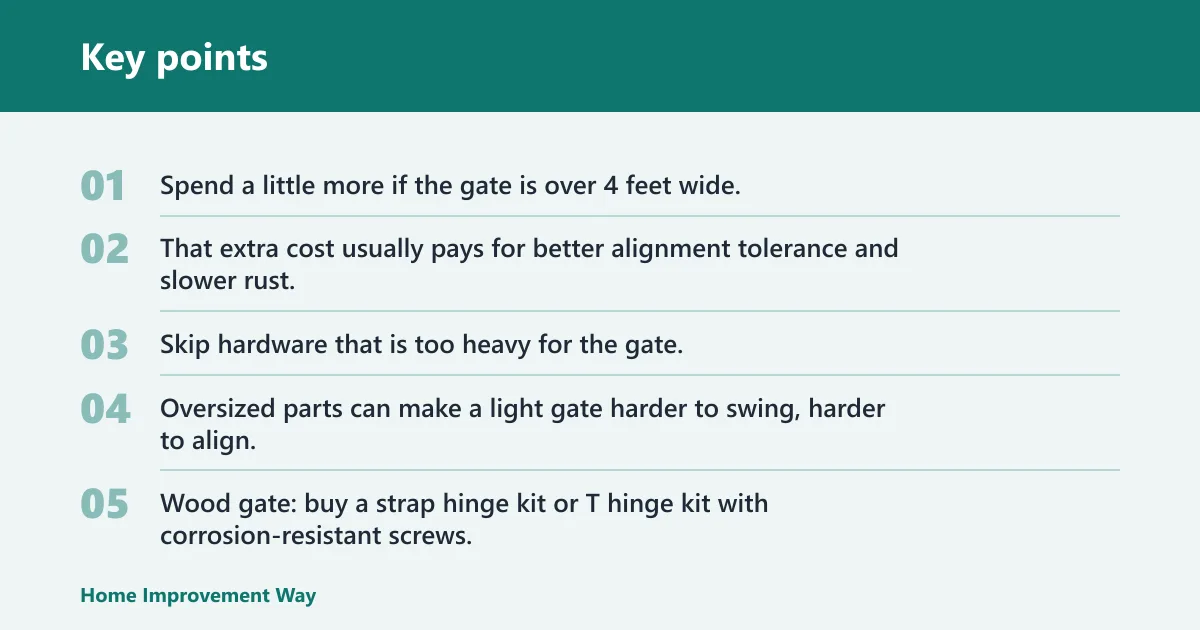
Spend a little more if the gate is over 4 feet wide, if the latch has to close against a slightly uneven post, or if you need stainless for wet or coastal exposure. That extra cost usually pays for better alignment tolerance and slower rust.
Skip hardware that is too heavy for the gate. Oversized parts can make a light gate harder to swing, harder to align, and more likely to pull screws out of a thin post.
Buy-this-not-that by gate type
Wood gate: buy a strap hinge kit or T hinge kit with corrosion-resistant screws. Do not jump to oversized self-closing hardware unless you actually need closing force or child-safety behavior.
Vinyl gate: buy a vinyl-rated self-closing or self-latching kit with stainless or powder-coated parts. Do not use wood-only fasteners that can crack the surface or rely on a mount that crushes the post wall.
Chain-link gate: buy round-post-compatible hardware and a self-latching latch. Do not choose flat-mount parts unless the post has the right adapter or mounting plate.
Wet or coastal site: buy galvanized at minimum, stainless if the gate sees repeated moisture. Do not assume zinc-plated hardware will stay smooth for long in salt air or constant rain.
Common failure modes to avoid
A loose post is the first problem to fix. If the post moves, even a good latch will misalign and the gate will sag or drag no matter how much hardware you buy.
Latch rattle usually means the striker and latch are not meeting squarely, while bounce often means the closing force is too strong for the gate’s weight. A common first-timer mistake is buying a spring hinge to solve a crooked gate, then finding the gate slams harder and still misses the catch.
Frequently asked questions
What is the best budget fence gate hardware for a small backyard gate?
The best budget setup is usually a strap hinge pair with a basic gravity latch, sized to the gate’s real width and weight. For many small gates, that is cheaper and more reliable than heavy-duty driveway hardware that adds cost without solving alignment or sag problems.
Can I use cheap gate hinges on a small wood gate?
Yes, if “cheap” still means correctly sized and corrosion resistant enough for outdoor use. A small wood gate can work with lower-cost hinges, but the post must be solid, the screws must bite well, and the hinge size must match the gate’s weight so it does not pull out or sag.
What size gate latch do I need for a backyard gate?
Choose a latch that reaches the striker without forcing the gate out of position. For small backyard gates, the main issue is not length alone but tolerance: the latch should close cleanly even if the gate shifts a little with humidity, wind, or post movement.
Are self-closing gate hinges worth it for a small fence gate?
They are worth it when you need the gate to return on its own, such as for safety or convenience. They are less useful on very light gates or gates that already sit out of alignment, because added spring force can cause bounce, slam, or unreliable latch engagement.
How much should I spend on fence gate hardware?
For a small backyard gate, budget hardware should stay low enough to fit a repair-minded purchase, but not so low that rust or strip-out is likely. In practice, the right spend is the smallest amount that gets you a properly sized hinge pair, a latch that lines up, and corrosion-resistant fasteners.
Should I buy galvanized or stainless gate hardware?
Galvanized is the better budget default for outdoor use, especially in ordinary rain exposure. Stainless is the better upgrade for wet, humid, or coastal conditions, or when you want to reduce rust risk around moving parts like hinge pins and latch springs.
Will universal gate hardware fit my wood, vinyl, or chain link gate?
Not always. Universal hardware can work on more than one material, but you still need the right mounting surface, post thickness, and latch reach. Wood, vinyl, and chain-link gates often need different fasteners and different hinge geometry to avoid crushing, pull-out, or misalignment.
Sponsored / affiliate links. As an Amazon Associate I earn from qualifying purchases. I may earn additional commission from eligible campaigns.