Best Security Hardware for Sliding Patio Doors (2026): We Compared
For most sliding patio doors, a keyed foot lock or auxiliary pin lock is the best first upgrade for lift-out and forced-slide attacks; choose a door bar or track lock if you need the strongest visible barrier. Weak patio-door hardware can leave a home easy to pry, rack, or lift open, turning a low-cost upgrade into a costly break-in. This guide ranks security hardware by the attack it stops first, then matches each option to common door styles, budgets, and installation limits.
Quick comparison
| Product | Badge | Best for | Price | ||
|---|---|---|---|---|---|
 |
Sliding Door Security Bar, 17-50 inch Adjustable, WindowPovtulu | Our pick | 17-50 in · 1 in steel · Adjustable | $13.99
Price as of 19 Oct 2026
|
View |
 |
Prime-Line U 9919 White, Sliding Patio Door Keyed with BoltPRIME-LINE | Budget pick | Single pack · White · Keyed | $9.60
Price as of 19 Oct 2026
|
View |
 |
Rerishom 2 Pack Door Security Bar, Heavy Duty Patio DoorRerishom | Upgrade pick | 2 pack · White · 17.5-46 in | $36.99
Price as of 19 Oct 2026
|
View |
 |
Hardware Essentials 852224 Patio Door Security Pin, SilverHardware Essentials | Pair with it | Silver · Durable · Rust-resistant | $5.65
Price as of 19 Oct 2026
|
View |
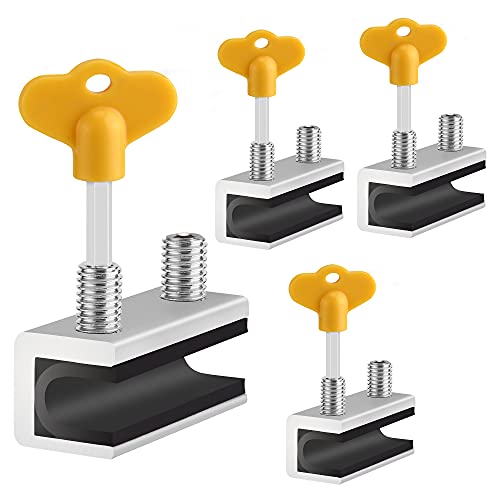 |
Window Locks, 4 Sets Sliding Security Window Lock with KeyPENMAMA | Our pick | $12.89
Price as of 10 Nov 2026
|
View |
Use the table below to compare the main hardware types by the attack they stop first. The best choice depends on whether your biggest risk is a pry attempt, a lift-out, or a need for no-drill protection.
For many homes, the right answer is layered: a primary lock for closing security plus anti-lift or a secondary bar for forced-entry resistance.
Security decision matrix
| Door type | Primary risk | Best hardware | Measurement needed | Drill/no-drill | Estimated cost tier | Common compatibility warning |
|---|---|---|---|---|---|---|
| Aluminum frame sliding patio door | Latch pry and loose track fit | Sliding patio door mortise lock plus anti-lift protection | Center-to-center spacing and door thickness | Usually drill for replacement, add-on options may avoid drilling | Low to medium | Mortise case depth and keeper geometry often vary by brand |
| Vinyl frame sliding patio door | Lift-out and follow-through after glass breakage | Security bar with anti-lift stops | Clear opening width and track height | No-drill | Low | Some bars need a flat sill and enough floor clearance |
| Wood frame sliding patio door | Forced slide and latch attack | Sliding patio door handle set with keyed backup | Center-to-center spacing, handedness, and door thickness | Usually drill for replacement | Low to medium | Handle shape and screw reach can differ even when spacing matches |
| Glass-only retrofit or renter setup | Lift-out and temporary access | Security bar plus surface-mounted patio door lock | Door thickness, opening width, and mounting surface | No-drill or minimal-drill | Low | Track obstructions and uneven frames can stop bar placement |
| High-convenience home entry | Unauthorized use and shared-access mistakes | Smart sliding door lock with backup key and weather resistance | Door thickness, cylinder reach, and center-to-center spacing | Usually drill for install | Medium to high | Battery compartment, outdoor exposure, and latch alignment must all fit |
A common failure case is a good lock on a poor-fit door. If the rollers sag, the keeper misses the latch, or the door lifts in the frame, the hardware can be bypassed faster than the label suggests.

How we chose
The ranking below follows the attack that each device stops first, not the marketing language on the box. That means lift-out protection, pry resistance, and child-safety use cases get separate treatment.
We also weighed installation limits, because a renter-friendly bar is not the same answer as a full mortise replacement. Compatibility matters too: center-to-center spacing, door thickness, handedness, keeper geometry, and screw reach can decide the outcome before the first screw goes in.
Finally, the list favors hardware that solves a specific weakness cleanly. If a product is only useful when several other parts are already perfect, that limitation is called out.
Sliding patio door mortise lock: best for primary replacement
The sliding patio door mortise lock is the right first replacement when your existing latch is worn, sloppy, or easy to defeat by prying at the handle. Sliding doors commonly use a mortise lock mechanism plus a pull handle, so this style restores the original locking function instead of layering on a separate add-on.
It fits best when you can match center-to-center spacing and door thickness. Sliding patio doors commonly use 4-15/16, 3-15/16, or 11 inch screw spacing, and typical patio door thickness is 1-3/8 inches to 2 inches.
Why it stands out: it replaces the weak point directly, which helps when the latch or hook is no longer engaging cleanly. That makes it a stronger first choice than a surface add-on for a door that already feels loose at the handle.
Drawback: replacement fit can be unforgiving. If the keeper shape, screw spacing, or cylinder reach does not match, the door may need extra parts or a different model.
Sliding patio door handle set: best for worn handles
The sliding patio door handle set is the better pick when the interior and exterior pull handles are cracked, loose, or mismatched with the existing mortise lock. It is the visible part of the system, and on many doors the lock and pull must work together for the bolt or hook to close correctly.
This Prime-Line unit is listed as a keyed surface-mount replacement, which makes it useful when you want a straightforward swap rather than a full rebuild. The diecast construction and painted white finish suit common residential doors.
Why it stands out: it can restore the hand feel and key access of an aging entry without moving to a specialty retrofit. For many homeowners, that is the simplest path when the handle is the failed part, not the whole door assembly.
Drawback: it still depends on the door’s existing spacing and mortise layout. A handle set alone does not solve lift-out risk or a bad track fit.
Surface-mounted patio door lock: best for secondary security
The surface-mounted patio door lock is the best add-on when the main goal is a secondary barrier, child safety, or an extra point of resistance above the factory latch. It works well when you do not want to replace the whole mortise set but still need a second lock point.
This Hardware Essentials pin lock uses a simple adjustable format and includes matching screws and instructions. It is a practical way to add a backup layer to a sliding door that already closes correctly.
Why it stands out: it is a low-cost way to make the door harder to move after the primary latch is set. Because it is a small add-on, it can be easier to fit than a full handle-and-lock replacement.
Drawback: it is not a complete answer by itself. If the rollers are worn or the door can be lifted off the track, a surface mount lock should be paired with anti-lift protection or a bar.
Security bar: best for no-drill protection
A security bar is the best no-drill option when you need visible resistance fast. It is adjustable, track-compatible, and useful in apartments, guest rooms, and other places where you want a temporary barrier without changing the door hardware.
The Povtulu bar is listed as adjustable from 17 to 50 inches and uses a 1-inch steel body. That makes it a broad-fit choice for many sliding door openings, as long as the floor and track layout allow the bar to seat properly.
Why it stands out: it stops the door from opening even if the latch is bypassed. In many homes, that makes it the best immediate upgrade when drilling is not practical.
Drawback: it only works when it is in place. It also occupies floor space, so daily use can be less convenient than a built-in lock.
Rerishom security bar: best for renters and wide openings
This two-pack security bar is a strong renter-friendly option when you want the same basic barrier as a single bar, but with a second unit for another door or a backup placement. It is also a practical fit for wider openings that need more adjustment range.
The listed 17.5-46 inch adjustment range and 1.57-inch diameter bar suggest a heavier feel than many light-duty braces. That can be useful when you want a more substantial visible deterrent.
Why it stands out: buying two bars at once can cover a patio door and a second sliding entry or window. That can be a better value than buying one bar now and another later.
Drawback: it is bulkier than a pin or handle replacement. If you need a clean, permanent-looking upgrade, a bar will not blend in the way a mortise or handle set does.
Smart sliding door lock: best for convenience
A smart sliding door lock is worth it when access control matters more than a purely mechanical upgrade. It is a good fit for households that want fingerprint, keypad, or app access, but it should still have battery power, backup key access, and weather resistance.
Smart hardware is not automatically stronger than a good mechanical lock. If the door can be lifted, pried, or left with a sloppy keeper fit, app control will not fix the frame problem.
Why it stands out: it reduces key sharing and makes it easier to lock and unlock the door for family, guests, or service people. That convenience can matter more than a stronger deadbolt-style feel for some homes.
Drawback: batteries need attention, and outdoor exposure can shorten the margin for error. If the door is in direct weather or the frame is uneven, installation and maintenance both get harder.
Anti-lift protection: best for sliding glass doors
Anti-lift protection is the right answer when the concern is a sliding glass door being lifted off the track. It blocks the upward movement that can bypass even a decent latch, which is why it belongs on the door with the primary lock, not instead of it.
Use it when the door has enough play to rise slightly or when the track fit feels loose. It is often paired with dual-bolt or bar-style hardware because a latch alone does not stop lift-out.
Why it stands out: it addresses a specific attack method that many people miss. If the door can come up, a thief may not need to defeat the lock at all.
Drawback: anti-lift parts work best when the rollers, track, and keeper are already in decent shape. A badly sagging door may need adjustment first.
How do I stop a sliding patio door from being lifted off the track?
Stop lift-out with anti-lift blocks or stops, then make sure the door rollers and track are adjusted so the panel sits low enough to catch those stops. A security bar helps after entry begins, but anti-lift hardware addresses the move that happens before the latch matters.
If the door rises easily when you pull up on the handle, start there. A good lock is useful, but a door that can be lifted clear of the track has already bypassed the main line of defense.
What to check first
- Pull up gently on the sliding panel to see whether it lifts noticeably.
- Inspect the top of the frame for anti-lift screws, clips, or stops.
- Check roller wear and track alignment if the panel feels loose.
- Add a secondary lock or bar after the lift path is controlled.
Picture a sliding door that closes but still rises a quarter inch when pushed upward. In that case, a new latch alone is not enough; the door needs lift control before the replacement lock can do its job.
Can you secure a sliding patio door without drilling?
Yes. A security bar is the cleanest no-drill choice, and some surface-mounted locks can also work if you only need secondary protection. No-drill options are usually best for renters, temporary setups, or doors where you do not want to alter the frame.
That said, no-drill hardware is usually an added layer, not a full substitute for a proper mortise replacement. If the existing latch is weak, a bar helps, but the worn lock still needs attention.
Surface-mounted patio door lock
A surface-mounted patio door lock gives you secondary security without replacing the full handle assembly. It is useful for child safety or as a backup lock when the main hardware is still serviceable.
The limit is fit. Some mounted options need drilling for maximum strength, and a weak frame or bad keeper location can reduce the benefit quickly.
Anti-lift protection
Anti-lift protection is often a better no-drill goal than a full lock swap when the real problem is a door that can be lifted. It does not replace the primary latch, but it can close the most obvious gap in a sliding-glass setup.
For a renter, this is often the least disruptive way to improve security before adding a bar.
Which one should you buy?
If budget is tight, start with a security bar or a simple pin-style add-on. If the door is worn but the frame is sound, replace the mortise lock or handle set first, then add anti-lift protection if the panel can still move upward.
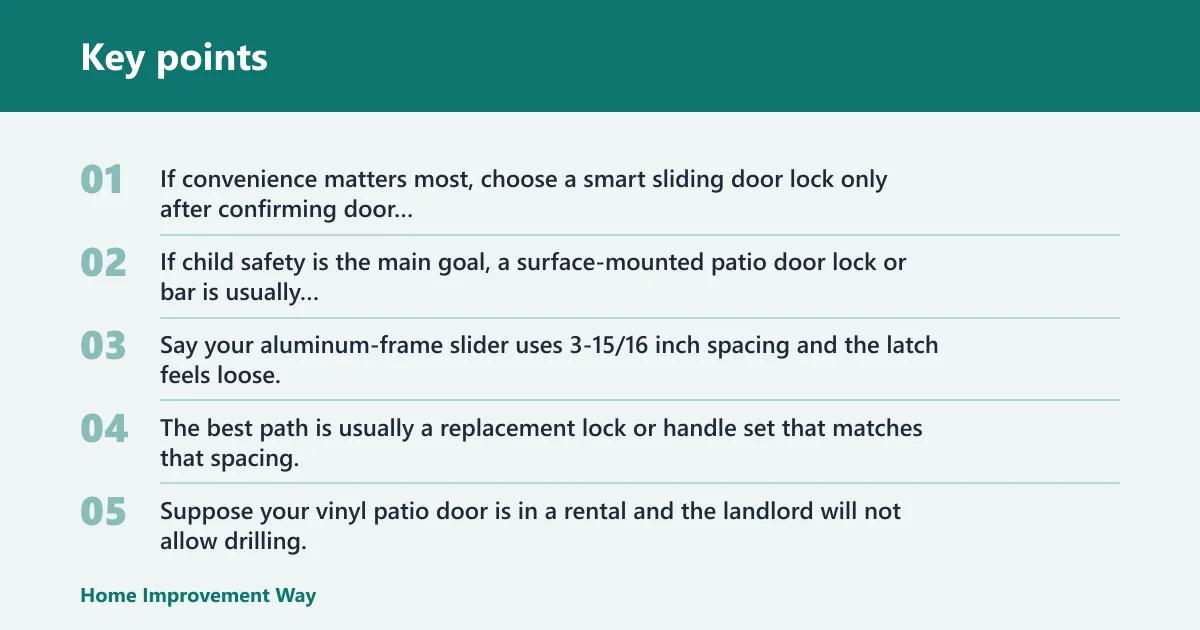
If convenience matters most, choose a smart sliding door lock only after confirming door thickness, cylinder reach, and weather exposure. If child safety is the main goal, a surface-mounted patio door lock or bar is usually the faster answer because it is simple to see and simple to set.
Say your aluminum-frame slider uses 3-15/16 inch spacing and the latch feels loose. The best path is usually a replacement lock or handle set that matches that spacing, then a secondary bar if the door still feels easy to force.
Suppose your vinyl patio door is in a rental and the landlord will not allow drilling. A track-compatible security bar is the cleanest first move, with anti-lift protection only if you can install it without changing the frame.
Best choice by budget
Lowest budget: choose a security pin or a basic security bar. Low-to-medium budget: choose a mortise lock or handle set that matches the existing spacing. Higher budget: choose a smart lock only when the installation and weather limits make sense.
Best choice by door type
Aluminum frames often need exact spacing matches and careful keeper alignment. Vinyl frames usually pair well with add-on protection because they are more sensitive to frame fit. Wood frames are more forgiving for drilling, but screw reach and thickness still matter. Glass-only retrofits benefit most from bars and anti-lift hardware.
Best choice by threat level
If the threat is pry attack, prioritize a keyed mortise or handle replacement with a better keeper fit. If the threat is lift-out, prioritize anti-lift protection first. If the threat is casual access or child safety, a surface-mounted lock or bar is usually enough.
How do I know if my sliding patio door hardware is compatible?
Check center-to-center spacing, door thickness, handedness, and keeper geometry before you buy. Sliding patio doors commonly use 4-15/16, 3-15/16, or 11 inch screw spacing, and typical patio door thickness is 1-3/8 inches to 2 inches, so the replacement has to match those dimensions closely.
The quickest mistake is to measure only the visible handle and ignore the screw-hole pattern or the cylinder reach. A lock can look right and still fail to line up with the mortise body, the latch, or the keeper.
Use this compatibility checklist
- Measure center-to-center spacing from screw hole center to screw hole center.
- Confirm door thickness so the cylinder and screws reach cleanly through the panel.
- Check whether the handle is reversible or non-handed before ordering.
- Compare the keeper shape and latch style with the existing door.
- Inspect the track and rollers so the new hardware is not fighting a sagging door.
Compatibility is more than a number on the box. The mortise style, screw spacing, handedness, and keeper shape all have to agree, or the best-looking lock may never close correctly.
What is the best security hardware for sliding patio doors?
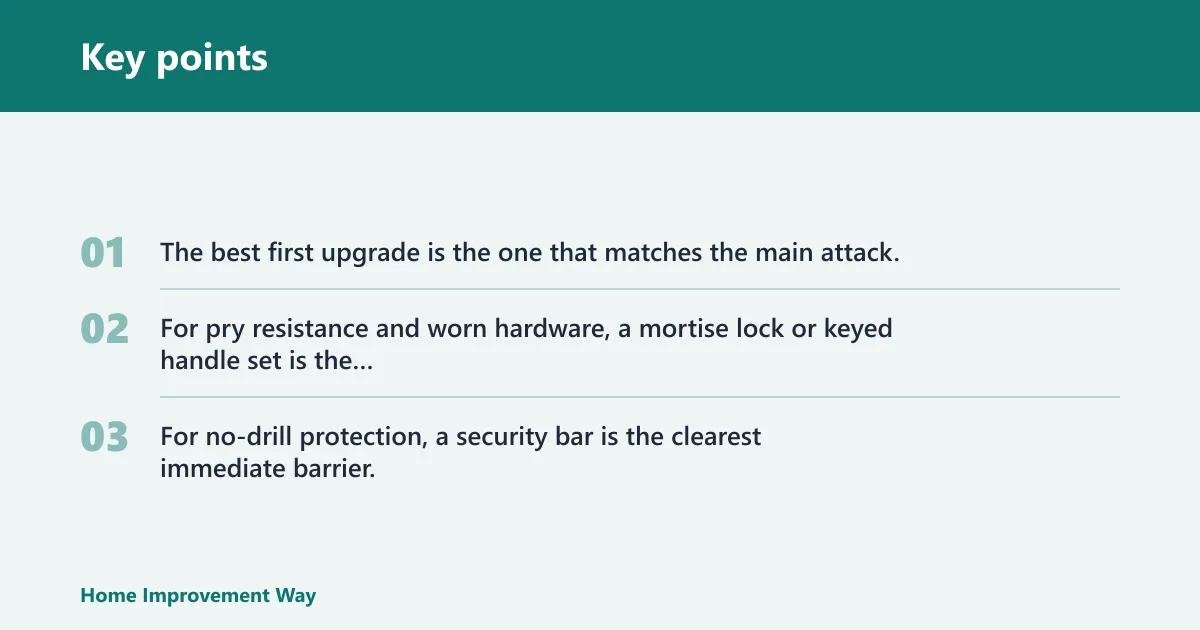
The best first upgrade is the one that matches the main attack. For pry resistance and worn hardware, a mortise lock or keyed handle set is the strongest starting point. For lift-out risk, add anti-lift protection. For no-drill protection, a security bar is the clearest immediate barrier.
Are sliding patio door smart locks worth it?
They are worth it when convenience matters and the door already fits well. Battery power, backup key access, and weather resistance are necessary, not optional, and the door still needs solid mechanical alignment. If the frame is loose or the rollers are worn, fix that first.
What is the difference between a patio door lock and a security bar?
A patio door lock is part of the door’s closing system, while a security bar is a secondary brace that blocks opening from the inside. The lock helps secure the latch; the bar helps resist forced movement after the latch is set. They work best together.
Which patio door lock is best for child safety?
A surface-mounted patio door lock or a security bar is usually best for child safety because both are visible and easy to use as a second layer. A keyed mortise or smart lock can help, but those are better answers for entry control than for simple child restraint.
What security hardware fits a 3-15/16 inch patio door handle spacing?
Look for hardware listed for 3-15/16 inch spacing or a close published match, and verify door thickness before buying. Some listings use 3.94 inches or 4.94 inches as published spacing values, so even a small mismatch can matter when screw holes and the mortise body must line up.
Sponsored / affiliate links. As an Amazon Associate I earn from qualifying purchases. I may earn additional commission from eligible campaigns.