Best Gate Latch for a Crooked Post: Based on Specs and Reviews
The best latch for a wood gate with a slightly out-of-plumb post is an adjustable gate latch with slotted mounting holes and a keeper that tolerates about 1/2 inch of side-to-side shift. If you ignore that tolerance, the gate can be hard to close, prone to rattling, or stuck on the strike. This guide shows which latch styles forgive small misalignment and how to measure the adjustment range before you buy.
Quick comparison
| Product | Badge | Best for | Price | ||
|---|---|---|---|---|---|
 |
Goaylate 9-Inch Heavy Duty Flip Gate Latch with 4 PadlockGoaylate | Our pick | 9" · Adjustable · Carbon steel with padlock | $26.99
Price as of 23 Oct 2026
|
View |
 |
WINSOON 304 Stainless Steel Self Locking Gate Latch andWINSOON | Also great | Stainless steel · Self-locking · Hinge kit | $89.99
Price as of 23 Oct 2026
|
View |
 |
Slide Gate Latch,Heavy Duty Door Latch with Padlock Hole,MEEMENG | Budget pick | Slide latch · Adjustable · Powder-coated steel | $18.90
Price as of 23 Oct 2026
|
View |
For a near-plumb wood gate, start with adjustment range, not style. Then check the failure mode: lean, sag, warp, or closing-force problem.
How we chose
We compared the products on four things that matter on a slightly crooked wood gate: adjustment tolerance, strike forgiveness, installation flexibility, and whether the hardware helps with small alignment errors or only looks right on paper.
We also separated latch fit from gate repair. A latch can compensate for a small error, but it cannot fix a leaning post, a sagging frame, or a warped rail by itself.
Finally, we gave extra weight to safety use cases. Self-closing and self-latching hardware matters on pool gates and child-access gates, but the latch does not make the gate self-closing on its own.
Gravity latch: best overall for a slight lean
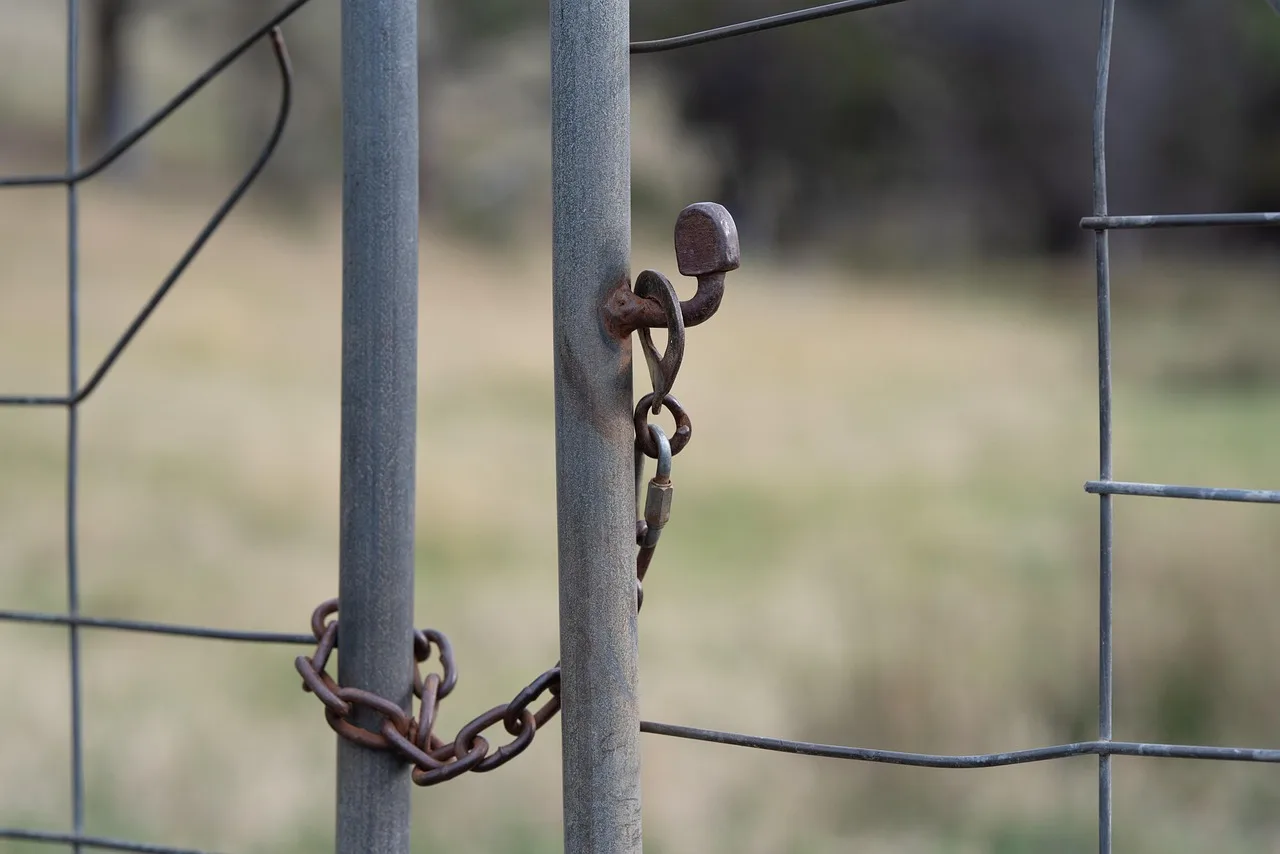
For a wood gate that is close to plumb but not perfect, a gravity latch is often the best starting point. Gravity latches use gravity to drop into place when the gate swings shut, so they are forgiving when the reveal is close and the catch is aligned well enough to fall home.
This Goaylate 9-inch latch suits homeowners who want a straightforward exterior gate latch with some built-in adjustment. The four adjustment holes give you some room to tune the keeper position, and the padlock hole adds an extra locking option. Its 4mm carbon steel body should also hold up better than thin, light-duty hardware on a busy backyard gate.
The drawback is that it still depends on decent geometry. If the post leans enough to change the strike depth, or if the gate has dropped at the latch-side corner, the latch may still miss unless you correct the hinge height or square the frame first.
Thumb latch: best for everyday backyard use
A thumb latch is a traditional choice for wooden privacy gates, and it fits a gate that has normal clearance and a near-straight closing path. It uses an outside handle and an inside arm, so it is especially convenient for daily backyard use where convenience matters more than security.
The MEEMENG slide latch gives you a simple, adjustable layout with two strike plates, which can help when the latch side needs a little repositioning. The powder-coated forged steel also makes sense for outdoor use where corrosion resistance matters.
The drawback is that this style is more about easy operation than forceful correction. If the post is visibly leaning or the gate is sagging, the latch can only cover a small error before the arm and strike stop meeting cleanly.
Self-closing latch set: best for pool or child safety
When safety rules matter, the latch choice has to work with the hinges, not against them. Self-closing wood gates often pair spring hinges with gravity latches, and pool gates generally must be self-closing and self-latching. The latch alone does not close the gate; the hinge tension does that job.
The WINSOON kit is the right kind of product when you need both latch hardware and hinge adjustment in one package. Adjustable tension hinges can compensate for minor plumb issues, and 304 stainless steel is the right material class for outdoor exposure where rust resistance matters.
The drawback is that it demands more setup discipline than a simple latch swap. If the gate does not close with the right spring tension, the self-latching part will not matter. For a pool gate, that is not a detail to ignore.
Gate latch decision table
Use this table to match the problem you see to the fix that usually makes the most sense. Start with the failure mode, then choose hardware that fits the amount of correction you actually need.
| Misalignment scenario | Best latch style | Use shims or adjustable hinges? | Reset the post? |
|---|---|---|---|
| Slight post lean; gate reveal still close and even | Gravity latch with slotted keeper or adjustable gate latch | Yes, if the hinge side needs a small height correction | No, unless the post keeps moving or the lean is growing |
| Minor sag; latch-side corner has dropped | Gravity latch or thumb latch after frame correction | Yes, and add a diagonal brace if the frame is out of square | Only if the hinge post is also moving |
| Warped wood gate; latch side rubs or twists on close | Adjustable latch with a forgiving keeper | Sometimes, but only after checking the rails and bottom clearance | No for the warp itself; fix the frame before resetting the post |
| Closing-force issue; gate does not shut fully on its own | Self-closing hinge with self-latching hardware | Yes, small spring-tension adjustments first | Only if the hinge post is too far out of plumb |
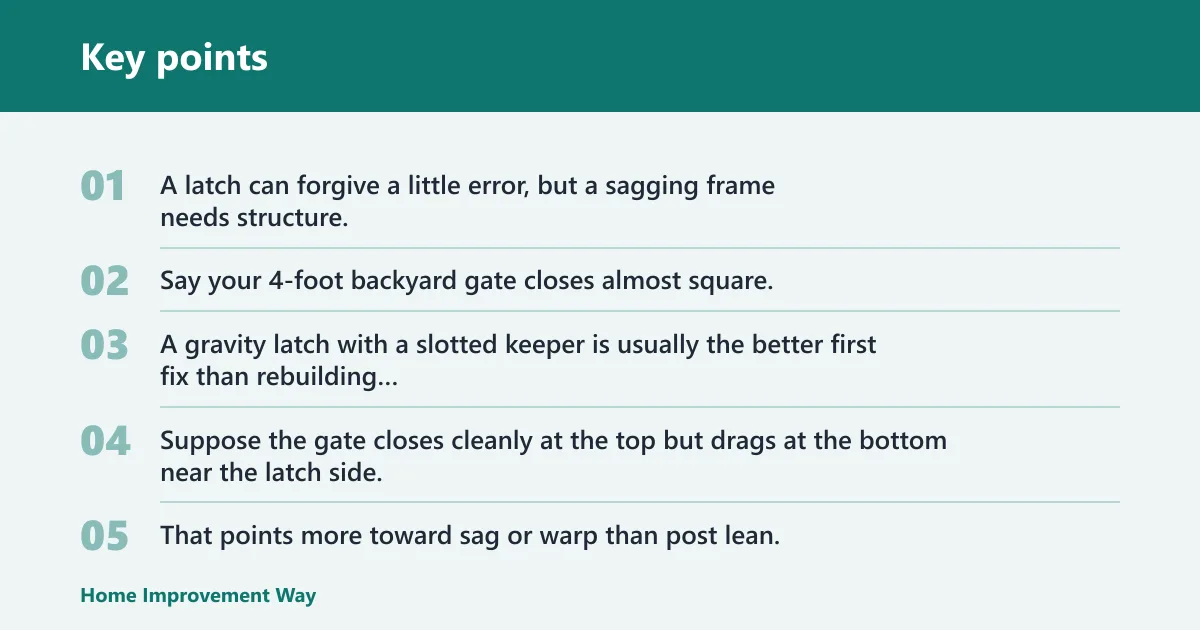
That table is the practical shortcut. A latch can forgive a little error, but a sagging frame needs structure, and a closing problem needs hinge tension, not a fancier catch.
Say your 4-foot backyard gate closes almost square, but the post leans just enough that the keeper misses by a fraction of an inch. A gravity latch with a slotted keeper is usually the better first fix than rebuilding the post, because the remaining error is small and the reveal is still close.
Suppose the gate closes cleanly at the top but drags at the bottom near the latch side. That points more toward sag or warp than post lean, so the better fix is usually a diagonal brace and hinge adjustment before you blame the latch.
Should you fix the post first?
If the post is only slightly out of plumb, start with the hardware that can absorb the error. Shims and adjustable hinges are the first moves when the reveal is close and the latch side does not bind. If the gate still closes without forcing, you may not need a post reset at all.
Reset the post in a concrete footing when the lean is large enough that the keeper position keeps drifting, or when the gate reveal changes from top to bottom in a way that hinge adjustment cannot correct. Soil movement and rot can both move a wood gate post, and a new latch will not stop that movement.
Use the reveal as your guide. A healthy gate has an even reveal along the latch side, and bottom clearance should stay consistent enough that the gate does not scrape. If the latch side is tight at one point and wide at another, the problem is geometry, not just hardware.
How to judge the reveal
Stand back and check the gap between the gate and the post on the latch side. If the gap is even, the latch usually has a fair chance of closing cleanly. If the top is tight and the bottom opens up, or the opposite, the gate is out of square or the post is moving.
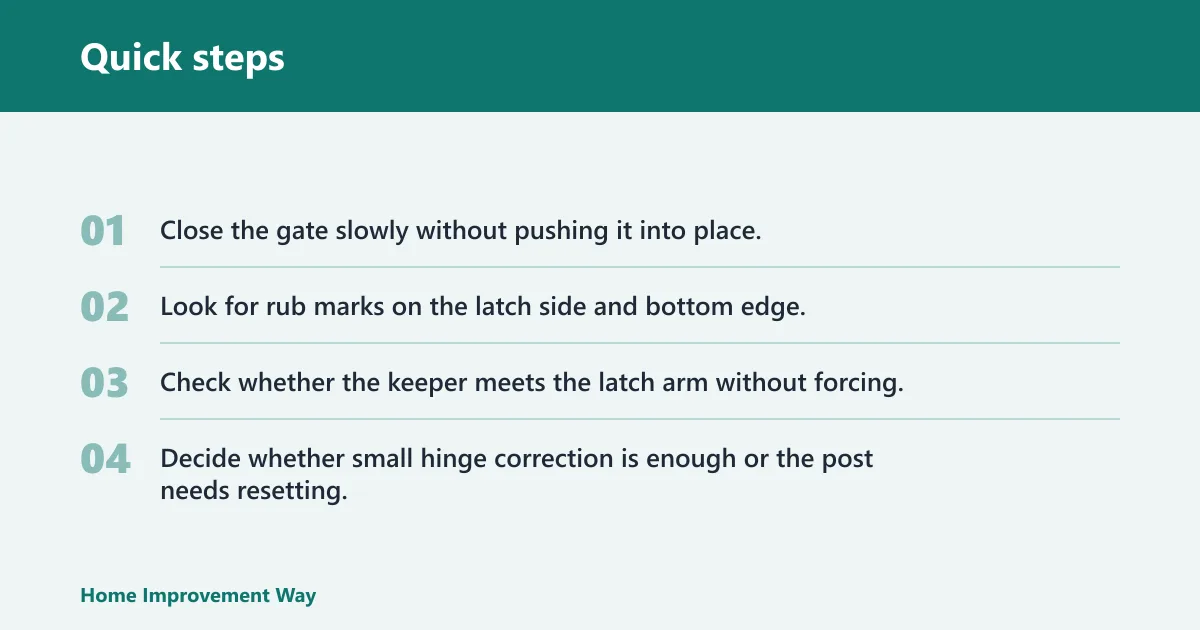
- Close the gate slowly without pushing it into place.
- Look for rub marks on the latch side and bottom edge.
- Check whether the keeper meets the latch arm without forcing.
- Decide whether small hinge correction is enough or the post needs resetting.
When hinge changes are enough
Small hinge changes make sense when the post is nearly plumb and the problem is a slight height mismatch. Adjustable gate hinges are useful here because they let you raise or lower the gate in small increments. That can bring the strike back into line without disturbing the post.
Do not use hinge adjustment to hide a major frame problem. If the gate is twisted or the rails are loose, the latch may line up for a day and miss again the next time the gate sags.
What is the best latch for a wood gate when the post is slightly out of plumb?
The best latch for a wood gate with a slightly out-of-plumb post is usually a gravity latch or an adjustable latch with a forgiving keeper. Those styles are better when the reveal is close and the gate only needs a little tolerance at the strike, not a full structural correction.
That recommendation changes if the problem is not the post. A sagging gate wants brace and hinge correction first. A warped gate wants frame correction. A closing-force issue wants spring tension or a closer, not a different catch shape.
Gravity latch fit
A gravity latch works best when the gate and post alignment are already close. It falls into place by gravity, so the gate only needs to arrive near the keeper opening, not slam into a narrow target. That makes it a strong fit for small lean and normal backyard use.
It also pairs well with self-closing gates when spring hinges are installed correctly. The hinge provides the close; the latch provides the catch.
Thumb latch fit
A thumb latch is a good choice when you want the traditional wood-gate look and easy one-hand operation. It is common on wooden privacy gates, and it works well when the latch side has enough room for the arm and bar to meet naturally.
Its weakness is that it is less about security than convenience. If the post lean is the main problem, the thumb arm can miss more easily than a more adjustable latch body.
Adjustable hinge fit
An adjustable gate hinge is often the quiet fix that makes a latch work again. It allows height adjustment, which helps when the post is only slightly out of plumb or when the gate has settled just enough to change the closing line.
Adjust it in small increments. A little movement at the hinge can change the latch alignment more than expected, especially on a narrow wood gate with a tight reveal.
How do I align a gate latch so it closes without forcing?
Align the latch by matching the gate’s actual closing path, not by pulling the gate sideways into place. A latch should meet the keeper with the gate at rest. If you have to lift, shove, or twist the gate every time, the latch position or the hinge height is wrong.
Start by checking the reveal, then the bottom clearance, then the hinge line. If the gate is hanging square but the keeper is too high or too low, move the strike. If the top and bottom gaps are uneven, fix the gate or post first.
Installation details that matter
Use through-bolts with washers on wood gate hardware when the load is more than a light duty screw can handle. On wood frames, longer exterior-rated structural screws or lag screws are recommended, but through-bolts with washers reduce pull-out risk when the hardware takes repeated force.
That matters most on the latch side, where a misaligned keeper can work a fastener loose over time. Thin screws can hold a light catch for a while, then slip after a season of use.
When a brace is the real fix
If the gate is sagging, a diagonal brace can restore squareness. On a wood gate, the brace should run from the lower hinge-side corner to the upper latch-side corner when you are using a tension-brace layout, and it must attach to solid rails or frame members. The brace only helps if it is anchored to structure that can carry the load.
A sagging gate can show a dropped top latch-side corner. That symptom usually points to frame movement, not a bad latch. Fix the frame first, then install the latch.
Will an adjustable latch work better than a thumb latch on a crooked post?
Usually, yes, if the post is slightly out of plumb and the gate needs extra forgiveness at the strike. An adjustable latch can give you more room to tune keeper position, while a thumb latch is more dependent on the gate meeting the arm at the right angle.
That does not make the adjustable style a cure-all. If the post is leaning enough to change the reveal visibly, the real answer may still be hinge adjustment or a post reset.
Catch forgiveness versus appearance
Think about catch forgiveness before style. A thumb latch can look right on a wood gate and work well when the alignment is close. An adjustable latch is less traditional, but it often gives you better strike depth control and more room to fine-tune a slightly crooked opening.
For everyday backyard use, that tradeoff is often worth it. The gate closes cleanly. That matters more than hardware symmetry.
What latch is safest for a self-closing wood gate?
The safest choice is a self-latching setup built around the hinge tension, usually a gravity latch paired with spring hinges. Self-closing wood gates often pair spring hinges with gravity latches, and pool gates generally must be self-closing and self-latching. The hinge does the closing; the latch completes the catch.
Safety hardware only works if the spring tension is correct and the latch catches without a shove. If the gate is dragging or the hinge tension is too weak, the self-latching function becomes unreliable.
What the latch can and cannot fix
A self-latching latch can secure the gate after it closes. It cannot create closing force by itself. If the gate hangs open a little or stops short, the spring hinge or closer needs adjustment first.
For pool use, the latch height matters too. Pool gate latches are typically required to be at least 54 inches above the ground or on the pool side, so placement is part of the safety check, not just the latch style.
How do I stop a wood gate from missing the latch after it sags?
Fix the sag, then reset the latch. A gate that misses its latch can indicate sagging or misalignment, and a sagging gate can show a dropped top latch-side corner. If the frame has shifted, a latch change alone will usually fail again.
The usual repair order is frame correction, hinge correction, then latch placement. Add a diagonal brace if the frame is out of square, and attach it to solid rails or frame members so it can actually hold the shape.
Practical repair order
- Check whether the gate sags at the latch-side corner.
- Confirm whether the post is still plumb enough for the existing keeper.
- Add or tighten a diagonal brace if the frame is racked.
- Adjust the hinge height in small increments.
- Move the latch only after the gate closes cleanly by itself.
Which one should you buy?
Buy the Goaylate gravity latch if the post is only slightly out of plumb and you want the best balance of adjustment and simplicity. It is the strongest fit for a near-plumb wood gate where the keeper only needs a little forgiveness.
Buy the WINSOON kit if the gate also needs hinge correction or if safety rules require a self-closing, self-latching setup. The hinge adjustment is the key advantage here, not the latch alone.
Buy the MEEMENG thumb latch if you want an easy, traditional backyard gate latch and the opening is already close to square. It is a good convenience-first option, but it is not the first pick for larger alignment errors.
If the gate is badly out of line, reset the post instead of trying to buy around the problem. Hardware can handle small errors. It cannot turn a leaning structure into a straight one.
Frequently asked questions
Can I use a gravity latch if my gate post leans a little?
Yes, if the lean is small and the gate still closes close to the keeper opening. Gravity latches use gravity to drop into place, so they tolerate minor error well. They work best when the gate and post alignment are close, and they pair well with spring hinges on self-closing gates.
How much misalignment can a latch handle before I need to reset the post?
There is no universal correction number. Judge by function: if the gate closes without force, the reveal is even, and the latch catches cleanly, hardware may be enough. If you must push the gate sideways, the keeper keeps drifting, or the reveal changes top to bottom, resetting the post is smarter.
Should I fix the post or choose different hardware first?
Choose hardware first when the post is only slightly out of plumb and the gate geometry is otherwise sound. Fix the post first when the lean is large, the reveal is uneven from top to bottom, or the keeper position keeps changing. A leaning post from soil movement or rot is a structural problem, not a latch problem.
Sponsored / affiliate links. As an Amazon Associate I earn from qualifying purchases. I may earn additional commission from eligible campaigns.