Best Faucet Finishes for Fingerprints (2026): Research Shows
Brushed nickel and brushed stainless steel are the safest low-maintenance faucet finishes for hiding fingerprints. For the least visible smudges, choose a matte or brushed finish with a PVD coating instead of polished chrome. A bad pick means constant wiping, visible water spots, and a faucet that looks dirty minutes after use. This guide ranks the best fingerprint-resistant metal finishes for kitchens and baths, explains which ones resist hard-water marks best, and notes the tradeoffs by color and upkeep.
Brushed nickel: best overall for busy homes
Brushed nickel usually gives the best mix of fingerprint hiding, soft water-spot control, and easy upkeep. It has a warm, slightly matte look that sits quietly on the sink, and it is durable and corrosion-resistant enough for daily kitchen or bath use.
Why it tops the list for fingerprints and water spots
Brushed nickel and stainless steel are top picks for resisting water spots, and both hide fingerprints and smudges because their surfaces are less reflective. WOWOW also says brushed nickel hides fingerprints and water spots well, which is why it keeps appearing in low-maintenance recommendations.
It still needs wiping in hard-water homes. Brushed surfaces hide the mark better than chrome, but mineral film can still build up around the faucet base, on the pull-down head, and along the handle where hands and spray hit most often.
Where it can still need wiping
In a kitchen with hard water, the finish matters less than the residue left behind. Soap film, calcium, and dried droplets can dull the surface even when the finish itself is doing its job. A quick microfiber wipe after heavy use keeps the look more consistent.
Say your kitchen faucet gets used 20 times before lunch, with sticky hands from cooking and a dishwasher that leaves the water slightly cloudy. Brushed nickel will still show a haze at the base if you skip drying, but the fingerprints on the handle stay far less obvious than they do on chrome.
Quick comparison
| Product | Badge | Best for | Price | ||
|---|---|---|---|---|---|
 |
Moen Conneaut One Handle Pulldown Kitchen Sink Faucet withMoen | Our pick | Moen Conneaut One Handle Pulldown Kitchen Sink Faucet | $133.49
Price as of 22 Oct 2026
|
View |
 |
KHQF Kitchen Faucet with Pull Down Sprayer Matte Black |KHQF | Budget pick | KHQF Kitchen Faucet with Pull Down Sprayer Matte Black | $35.99
Price as of 22 Oct 2026
|
View |
 |
OWOFAN Touchless Pull Down Kitchen Faucet LED LightOWOFAN | Upgrade pick | OWOFAN Touchless Pull Down Kitchen Faucet LED Light | $113.99
Price as of 22 Oct 2026
|
View |
 |
Tohlar Chrome Kitchen Faucets with Pull Down Sprayer andTohlar | Also great | Tohlar Chrome Kitchen Faucets with Pull Down Sprayer | $50.53
Price as of 22 Oct 2026
|
View |
Use this as a quick filter: brushed nickel and stainless steel are commonly considered low-maintenance choices, chrome is often easiest to wipe clean but the least forgiving, and matte or satin finishes sit somewhere in between. Hard water pushes the decision toward brushed nickel, satin brass, or coated stainless rather than polished chrome.
How we chose
These rankings use five checks: how visible fingerprints are, how visible water spots are, how likely the finish is to scratch, how well it handles hard water, and how much cleaning it usually needs. The goal is not to crown one perfect finish. It is to show which one fits your water quality and cleaning habits.
Two details matter more than many listings admit. First, finish and base material are not the same thing. Second, a coating can improve wear resistance without making a faucet spotless forever.
Fingerprint visibility
WOWOW says matte, satin, or brushed finishes are best at hiding fingerprints, and that brushed nickel and stainless steel resist fingerprints even though they are not fingerprint-proof. Chrome is the opposite: reflective and bright, but quick to show smears.
Water-spot visibility
Water spots are a separate problem from fingerprints. Salt and Umber says brushed nickel and stainless steel are top picks for resisting water spots, while WOWOW notes that chrome shows water spots easily and oil-rubbed bronze hides them well.
Scratch risk and coating durability
Finish durability depends on more than color. The same source says PVD coatings are highly resistant to scratches and wear, which matters in homes where rings, cleaning pads, and repeated spraying wear down the surface. A coated finish can keep its color longer than a plain plated finish.
Hard-water tolerance and cleaning effort
Hard water changes the ranking fast. A finish that hides prints can still need frequent wiping if your water leaves chalky residue. The easier finishes to maintain are the ones that hide both prints and mineral spots without asking for polishing.
Stainless steel: best for durability
Stainless steel is a smart pick when you want a faucet that stays clean-looking without babying the finish. It is highly durable and corrosion-resistant, and many spot-resistant models use lead-free 304 stainless steel as the base material.
When stainless steel is a smart pick
Stainless steel works well in kitchens that get heavy daily use, and it is often paired with finishes that resist fingerprints and water spots. It is a strong choice for families who want one surface that can take regular cleaning without looking fragile.
That said, stainless steel can still show water spots, especially in hard-water homes. The finish may hide fingerprints better than chrome, but it is not a no-wipe surface. If the faucet sits under a faucet-mounted filter or near a sink that air-dries with white residue, you will still notice buildup.
Why 304 stainless matters in faucet construction
Lead-free 304 stainless steel appears in several spot-resistant models because it is durable and corrosion-resistant. That makes sense for a wet fixture, but the surface finish still determines how often you wipe it. A strong base helps with longevity; it does not erase the need for care.
Moen Conneaut Spot Resist Stainless: best for kitchen durability
Based on the manufacturer’s specs and published product details, this Moen model fits a busy kitchen that needs low visual fuss. The Spot Resist Stainless finish is designed to resist fingerprints and water spots, and the faucet adds a pull-down spray plus quick-connect installation features.
It stands out if you want a familiar stainless look with lower upkeep than polished chrome. The drawback is the usual one for stainless finishes: hard water can still leave visible mineral marks, so the faucet is low-maintenance, not maintenance-free.
What faucet finish hides fingerprints the best?
Brushed nickel, stainless steel, and other matte or satin finishes usually hide fingerprints best. If your priority is the least visible smudges, start with a brushed finish rather than a polished one, and consider a PVD-coated option when scratch resistance matters too.
Brushed nickel versus chrome
Brushed nickel is better than chrome for fingerprints. The same source says polished chrome tends to show fingerprints and water spots easily, while brushed nickel hides fingerprints and water spots well. Chrome wipes off fast, but it also makes every smudge obvious.
Does matte black hide prints well?
Yes, matte black hides fingerprints better than chrome. It is a strong option for modern and minimalist spaces, but it can still show scratches or mineral buildup. The darker the finish, the more obvious limescale and soap film can become if you let them dry on the surface.
Is brushed brass better than polished brass?
Yes. Brushed or satin brass hides fingerprints better than polished brass, and it usually looks softer in contemporary or upscale interiors. Polished brass is more reflective and more likely to show both fingerprints and water spots, so it asks for regular polishing if you want a bright look.
Matte black and bronze: best for style-first kitchens
Matte black and oil-rubbed bronze can both fit homes that want more contrast than brushed nickel. They handle fingerprints better than chrome, but they come with tradeoffs. Matte black can show mineral buildup and scratches, while bronze can wear unevenly over time.
Matte black tradeoffs in daily cleaning
Matte black is popular because it hides fingerprints better than chrome and looks sharp against light countertops. The catch is upkeep. If your water is hard, white mineral dust can stand out on dark surfaces, and abrasive scrubbers can mark the finish quickly.
Picture a black faucet in a bathroom used by kids every morning. Toothpaste splatter, damp hands, and dried droplets can all show up as pale specks by evening. A soft cloth clears most of it, but the finish rewards regular wiping more than chrome does.
Oil-rubbed bronze wear, spotting, and patina
Oil-rubbed bronze hides water spots well and suits classic or rustic rooms. The downside is that the finish can wear unevenly, especially on handles and edges that get touched a lot. Some homeowners like the patina; others see it as early aging.
Faucet finish decision matrix
The table below turns the finish choice into a practical household filter. Scores use a 1 to 5 scale, where 5 is best for that trait. Fingerprint visibility and water-spot visibility are scored for low visibility, so a higher score means the marks are harder to see.
| Finish | Fingerprint visibility | Water-spot visibility | Scratch risk | Hard-water tolerance | Cleaning effort | One-line recommendation |
|---|---|---|---|---|---|---|
| Brushed nickel | 5 | 5 | 4 | 4 | 4 | Best all-around choice for busy kitchens and baths. |
| Stainless steel | 4 | 4 | 5 | 3 | 4 | Choose it when durability matters as much as low upkeep. |
| Matte black | 4 | 2 | 3 | 2 | 3 | Good for style-first rooms, less forgiving in hard water. |
| Chrome | 1 | 1 | 4 | 1 | 5 | Pick it for shine and easy wiping, not for smudge control. |
| Oil-rubbed bronze | 4 | 4 | 3 | 4 | 3 | Works well in traditional rooms if you accept finish wear. |
| Brushed or satin brass | 4 | 3 | 3 | 3 | 3 | Best for upscale looks when you want softer smudge control. |
Households with hard water
For hard water, brushed nickel comes first, with stainless steel and oil-rubbed bronze close behind. Matte black can still work if you stay on top of wiping, but polished chrome is the hardest to keep clean-looking because spots jump out right away.
Households with kids or high-touch use
Choose brushed nickel or stainless steel if little hands use the faucet constantly. These finishes hide smudges better, tolerate repeated wiping, and do not ask for the frequent polishing that chrome or polished brass usually need.
Rental units and low-maintenance priorities
For rentals, use a finish that forgives missed cleanings and still looks respectable after heavy use. Brushed nickel is usually the safest default because it hides both prints and spots without pushing tenants toward a special cleaning routine.
Chrome: best for shine, not for fingerprints
Chrome is highly reflective, corrosion-resistant, and easy to clean, which is why it remains common. But it shows fingerprints and water spots easily, so it is a poor pick if you want the faucet to look clean between wipe-downs.
Why chrome still sells well
Chrome fits many rooms because it matches a wide range of hardware and looks bright. The clean-up is fast, but the need for clean-up is frequent. That tradeoff matters most in kitchens where several people touch the faucet all day.
How to keep chrome looking better
If you choose chrome, plan on wiping it more often than brushed finishes. A soft cloth after heavy use matters more than harsh cleaners. Chrome can be a practical choice in a guest bath, but it is the least forgiving in a busy family kitchen.
KHQF matte black: best for modern style
Based on the published product details, this KHQF faucet gives you a matte black look with a 304 stainless steel build and a fingerprint-resistant finish. It fits a modern kitchen that wants visual contrast, and the two spray modes add practical function.
The drawback is the same one matte black always brings: scratches and mineral buildup can stand out more than they do on brushed nickel. If your water leaves chalky residue, you will notice it faster on this finish than on stainless steel.
Which one should you buy?
If you have hard water, start with brushed nickel. If you want the toughest base material and do not mind occasional spotting, stainless steel is next. If style matters most, choose matte black or brushed brass, but expect more visible mineral film than on brushed nickel.
Best pick for hard water
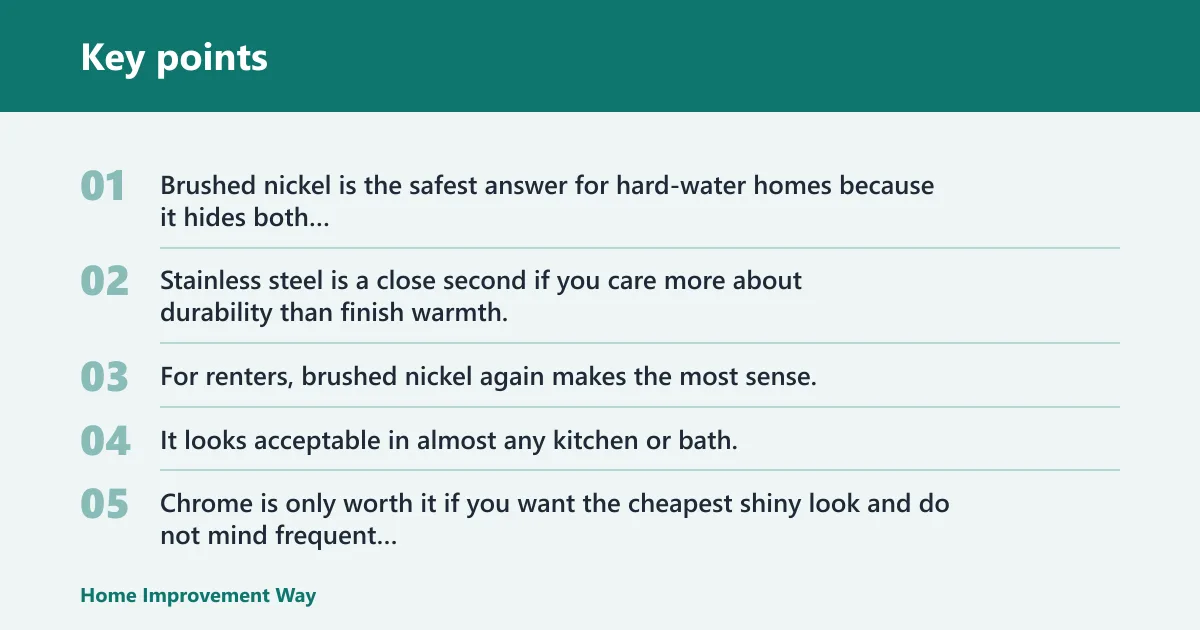
Brushed nickel is the safest answer for hard-water homes because it hides both fingerprints and water spots better than chrome, while still looking soft and neutral. Stainless steel is a close second if you care more about durability than finish warmth.
Best pick for renters
For renters, brushed nickel again makes the most sense. It looks acceptable in almost any kitchen or bath, and it forgives missed wiping without making the room look neglected. Chrome is only worth it if you want the cheapest shiny look and do not mind frequent cleaning.
Best pick for style-first remodels
If the room design is the top priority, matte black, brushed brass, or oil-rubbed bronze can be the right fit. Just match the finish to your cleaning tolerance. A stylish faucet that needs constant polishing becomes annoying fast.
When to pay more for PVD or anti-fingerprint coating
Pay more when the faucet will get heavy daily use or when you want the finish color to hold up longer. PVD means physical vapor deposition, a coating process that helps color last longer and resist wear. Anti-fingerprint coatings add a water-repellent barrier that can reduce smudges and water spots, but they still need cleaning.
A common first-timer mistake is buying a dark faucet for a hard-water bathroom and assuming the finish will hide everything. It may hide fingerprints better than chrome, but dried mineral rings around the spout can still appear after one shower-heavy week.
OWOFAN brushed nickel: best for touchless convenience
This OWOFAN model is a strong fit if you want brushed nickel plus hands-free operation. The published details point to a lead-free stainless steel build, a brushed nickel finish, and motion-sensor control, which can reduce how often hands touch the handle in a busy kitchen.
The drawback is that touchless convenience does not erase water spots. You may touch the faucet less, but you still need to wipe dried droplets from the spout and neck, especially if your water is hard.
Are stainless steel faucets fingerprint-resistant?
Yes, many stainless steel faucets are fingerprint-resistant, but not fingerprint-proof. Salt and Umber and WOWOW both place stainless steel among the top finishes for hiding prints and resisting water spots. The effect is strongest when the surface is brushed or satin rather than mirror-like.
What finish is easiest to clean on a faucet?
Chrome is usually the easiest to wipe clean because the surface is smooth and highly reflective. The problem is that it also shows fingerprints and water spots easily, so “easy to clean” does not mean “stays clean.” For less frequent wiping, brushed nickel is the better balance.
Oil-rubbed bronze and brass: best for classic looks
Oil-rubbed bronze and brushed brass work well when you want a finish that feels warmer than chrome. Bronze hides water spots well, and brushed or satin brass hides smudges better than polished brass. Both can look upscale, but they ask for a bit more attention than brushed nickel.
Oil-rubbed bronze and brass finish tradeoffs
Bronze can wear unevenly over time, especially on high-contact edges. Brass brings the same basic tradeoff: brushed or satin finishes are friendlier than polished brass, but any bright polished surface will reveal fingerprints and water spots faster.
Tohlar chrome: best for budget shine
Based on the manufacturer’s specs, this Tohlar faucet gives you a chrome look with an eco-friendly SUS304 stainless steel body and a pull-down sprayer. It fits buyers who want a lower-cost option and do not mind a brighter finish that needs more frequent wiping.
The drawback is the finish itself. Chrome is easy to clean, but it shows fingerprints and water spots quickly, so it asks more of you than brushed nickel or satin options do. That tradeoff is especially obvious in a kitchen used by several people each day.
Do anti-fingerprint coatings really work on faucets?
Yes, but with limits. Anti-fingerprint coatings can reduce smudges and water spots by creating a hydrophobic, water-repellent barrier. They help most on high-touch faucets, but they do not remove the need to wipe away soap film, mineral residue, or dried splash marks.
What the coating can and cannot do
Factory-applied coatings usually last longer than an aftermarket spray or wipe-on product. Even then, the finish still depends on cleaning habits and water quality. If a label promises zero maintenance, treat that as marketing, not a realistic outcome.
Frequently asked questions
Is brushed nickel better than chrome for fingerprints?
Yes. Brushed nickel is much better than chrome for fingerprints and water spots. Chrome looks bright and polished, but that reflectiveness makes smudges easy to see. Brushed nickel gives you a softer look and less visible daily marking.
Does matte black hide fingerprints on faucets?
Yes, matte black hides fingerprints better than chrome and many glossy finishes. It is popular for modern kitchens and baths. The tradeoff is that scratches, limescale, and soap residue can stand out more, especially in hard-water homes.
Which faucet finish shows the least water spots?
Brushed nickel and stainless steel are usually the best choices for limiting visible water spots. Oil-rubbed bronze also hides spots well. Chrome is the weakest here because water marks stand out quickly on the reflective surface.
What should I choose if I have hard water and kids?
Choose brushed nickel first, then stainless steel. Both hide fingerprints and water spots better than chrome and usually need less fuss in daily use. If you want a darker color, matte black can work, but it will need more regular wiping.
Is brushed brass or polished brass better for hiding smudges?
Brushed brass is better. It hides fingerprints more effectively and has a softer look that works in contemporary or upscale interiors. Polished brass is brighter and more formal, but it shows smudges and water spots much more readily.
Sponsored / affiliate links. As an Amazon Associate I earn from qualifying purchases. I may earn additional commission from eligible campaigns.