Best Metal Finishes for a Kitchen (2026): Based on Specs
Stainless steel is the safest primary finish for a modern kitchen because it stands up to sink runs, appliance fronts, and prep areas without fighting the rest of the room. Start with one cool or neutral workhorse finish, then add one warm or dark accent only where it improves contrast or makes upkeep easier.
Quick comparison
| Product | Badge | Best for | Price | ||
|---|---|---|---|---|---|
 |
Kerty 430 Stainless Steel Sheet Metal 96 x 48 Inch 24GAKerty | Our pick | 96 x 48 in · 24 GA · Brushed | $169.99
Price as of 18 Oct 2026
|
View |
 |
ZLINE 30 in. Designer Series Hand-Hammered Wall Mount RangeZLINE Kitchen and Bath | Also great | $962.99
Price as of 18 Oct 2026
|
View |
This guide uses a zone-based finish strategy, so you can choose finishes by sink, cabinet, lighting, and appliance use instead of by looks alone. That matters because fingerprints, water spots, scratching, and replacement compatibility show up differently across the room.
How we chose
The comparison below weighs five things that affect daily use: fingerprint visibility, water-spot visibility, scratch forgiveness, warmth, and modernity. It also checks whether a finish works as a dominant metal or should stay in a smaller accent role.
Research and product guidance for modern kitchens repeatedly points to stainless steel, brushed brass, and matte black as core finishes. Stainless is commonly recommended for sink zones and utility areas, while brass is better for handles and focal accents, and powder coat is often used for visible structural elements.
Mixing metals is now common in modern kitchen design, but the useful version of that trend is controlled. Two metals are usually enough, and three is generally the upper limit when the room has strong reasons for it.
Kitchen finish comparison matrix
| Finish | Fingerprint visibility | Water-spot visibility | Scratch forgiveness | Warmth | Modernity | Zone recommendation |
|---|---|---|---|---|---|---|
| Stainless steel | 4/5 | 3/5 | 4/5 | 2/5 | 5/5 | Sink, appliances, prep/work zones |
| Brushed nickel | 4/5 | 3/5 | 4/5 | 3/5 | 4/5 | Faucets, cabinet hardware |
| Polished chrome | 2/5 | 2/5 | 2/5 | 2/5 | 4/5 | Budget faucets, select hardware |
| Matte black | 5/5 | 4/5 | 3/5 | 2/5 | 5/5 | Hardware, taps, small accents |
| Brushed brass | 3/5 | 3/5 | 3/5 | 5/5 | 4/5 | Handles, trim, focal highlights |
| Polished nickel | 2/5 | 2/5 | 3/5 | 4/5 | 4/5 | Faucets, layered cabinet hardware |
| Oil-rubbed bronze | 4/5 | 3/5 | 4/5 | 4/5 | 3/5 | Pulls, taps, depth against white |
| Copper | 3/5 | 3/5 | 2/5 | 5/5 | 3/5 | Small accents, range hood details |
Stainless steel, brushed nickel, and matte black are the easiest to live with across multiple zones. Brass, copper, and polished nickel work better when you want a warmer note or a more tailored look.
Chrome is the budget-friendly classic, but its bright reflectivity shows flaws faster than brushed or matte finishes. Copper is the most specialized choice here because it develops a unique patina over time, which is useful in the right accent role and awkward in a full-room finish plan.
Stainless steel: best for sinks and work zones
Stainless steel is often a safe dominant metal for high-touch areas because it is durable, has good corrosion resistance, and is easy to clean. It fits sinks, appliances, and prep areas better than bright decorative finishes, and it already belongs in industrial and contemporary kitchens.
Use stainless where hands, water, and utensils meet most often: the sink run, dishwasher front, range splash area, and under-counter detailing. It also works well when you need the finish to age quietly beside existing stainless appliances.
Keep stainless as the main finish when your kitchen already has stainless appliances and you want replacements to stay easy. If the room feels too cool, add warmth with a smaller brass, bronze, or polished nickel accent rather than switching the whole hardware package.
Brushed nickel: best for soft, low-glare hardware
Brushed nickel is a strong choice for faucets and cabinet hardware when you want a soft gray tone with less visual noise. Its satin-like texture helps hide fingerprints, and the finish reads as a warmer silver than chrome without drifting into gold.
This finish works especially well on drawer pulls, cabinet knobs, and faucet bodies in kitchens that need a quieter metal than polished chrome. Bristan describes brushed nickel as a softer, textured alternative to chrome, and that description matches its practical role in mixed kitchens.
Choose brushed nickel if you want a cool-leaning finish that still feels less stark than stainless. The main drawback is subtlety: in a very bright room, it can disappear more than matte black or brushed brass, so it may not give enough contrast on light cabinets.
Matte black: best for contrast
Matte black is one of the strongest modern contrast finishes because it reads clean against white cabinets and warm wood tones. It also has a smudge-resistant appearance, which makes it useful where hands touch hardware often.
Use it for taps, pulls, pendant details, or a limited set of accents rather than for every visible metal in the room. It works well when you want the kitchen to feel sharp and current without relying on shine.
The drawback is weight. Too much matte black can make a small or low-light kitchen feel heavy, especially if the countertops and cabinets are already dark. It performs best as a controlled accent, not a full-room default.
Should you mix metals?
Yes, but keep the mix disciplined. Pick one dominant metal for roughly 70% to 80% of the high-touch hardware, then use one secondary finish for contrast, with a third only in very small doses. That keeps the kitchen coherent and avoids replacement headaches later.
A good mix balances warm and cool finishes across faucets, pulls, lighting, and appliance accents. For example, stainless can anchor the sink and appliances, brushed brass can warm the hardware, and matte black can handle a few visual anchors such as pendants or a pot filler.
Common mistakes are easy to avoid. Do not mix many sheens in the same sightline, do not combine metals with clashing undertones, and do not use an accent finish in every zone just because it is available.
- Choose the dominant finish based on the sink and appliance zone first.
- Match the secondary finish to cabinet color and countertop tone.
- Limit the room to two metals, or three only if one is very small-scale.
- Keep faucets, pulls, and lighting in the same temperature family unless contrast is intentional.
- Check replacement compatibility before ordering specialty hardware.
Brushed brass: best for focal accents
Brushed brass brings warmth without the glare of polished brass, which makes it useful for handles, trim, and focal highlights. Modern kitchens commonly use brushed brass as one of the core finishes because it adds warmth without taking over the room.
It pairs especially well with dark blues and greens, where the gold tone gives the cabinet color more depth. It is also a strong way to soften a kitchen that otherwise relies on stainless appliances and pale stone.
The drawback is overuse. Brass can drift decorative if it spreads into every fixture, so keep it in smaller roles unless the whole room is designed around it.
Polished nickel: best for a softer custom look
Polished nickel is warmer than chrome and has a soft white glow that works well with marble and white cabinets. It is a good choice when you want a more tailored look without moving all the way into gold.
It suits faucets, cabinet hardware, and any place where you want a gentle shine instead of a mirror-bright surface. In a modern kitchen, it can bridge cool appliances and warm cabinets better than chrome can.
The drawback is upkeep of appearance. Polished nickel shows more reflectivity than brushed finishes, so it may not be the easiest option in a very busy kitchen with hard water and constant handling.
Oil-rubbed bronze: best for depth
Oil-rubbed bronze is a dark, mixed-tone finish that hides fingerprints and smudges well while adding depth against white backgrounds. It fits both traditional and contemporary kitchens, especially when you want a finish that feels grounded rather than bright.
Use it for pulls, faucets, and trim where a darker metal can sharpen the outline of cabinetry. It is especially useful if your cabinet color is pale and you want a warmer dark anchor than matte black.
The drawback is that bronze can lean traditional if the rest of the room is very minimal. It works best when the kitchen already has some texture, warmth, or wood present.
Copper: best as a small accent
Copper is a warm reddish metal that develops a unique patina over time. That aging can be a feature, but only when you want the finish to change rather than stay perfectly uniform.
It works best on small details, a range hood, or other accent pieces where its color can pull attention without dominating the whole room. In a modern kitchen, copper usually reads as a specialty note rather than a base finish.
The drawback is predictability. Because patina changes with use and environment, copper is harder to coordinate with fixed finishes like stainless appliances and long-term cabinet hardware replacements.
Gun metal grey: best for subtle modern taps
Gun metal grey is a dark, sophisticated option with a subtle lustre that lands between black and stainless. It is a smart choice for taps when you want a modern look that feels less stark than matte black and less bright than chrome.
This finish works well in kitchens that need a darker metal but still want some visual depth. It is often a good compromise for homeowners who like contemporary hardware but do not want a full black-accent scheme.
The drawback is availability. Gun metal grey can be harder to match across all hardware categories than stainless or brushed nickel, so check replacement options before you commit.
Stainless steel sheet: best for backup panels
This Kerty 430 stainless steel sheet is for homeowners who want a durable brushed-metal panel for a wall, backsplash-style utility area, or a protected work surface. Based on the published product details, its 24 GA construction and protective film make it a practical choice for kitchen-adjacent metal use.
The main advantage is that it reinforces the same visual language as stainless appliances and sink hardware. That makes it useful when you want the room to stay coherent while adding a tough, easy-clean surface.
The drawback is that this is a sheet metal panel, not a decorative finish package for cabinets or faucets. It solves a specific surface problem, so it will not replace the need to choose a primary hardware finish.
Hand-hammered range hood: best for a statement accent
This ZLINE hand-hammered wall-mount range hood is for a kitchen that needs one strong focal metal element rather than a room full of shine. Based on the product details, the hand-hammered surface gives it visual texture that can anchor a modern layout with a single accent piece.
It works best in a zone where a dark or textured metal can act as the room’s visual break, especially above a range. That makes it useful if your hardware elsewhere stays restrained and you want one clearly defined feature.
The drawback is that it is a commitment piece. A sculptural hood can compete with other metal finishes if the rest of the kitchen already includes brass, black, and stainless in equal measure.
What finish should I choose?
If you are doing a full remodel with existing stainless appliances, stainless steel should usually stay the dominant finish. It is the easiest way to keep the room coordinated, and it gives you the best replacement compatibility when you later swap out a faucet, pull, or appliance.
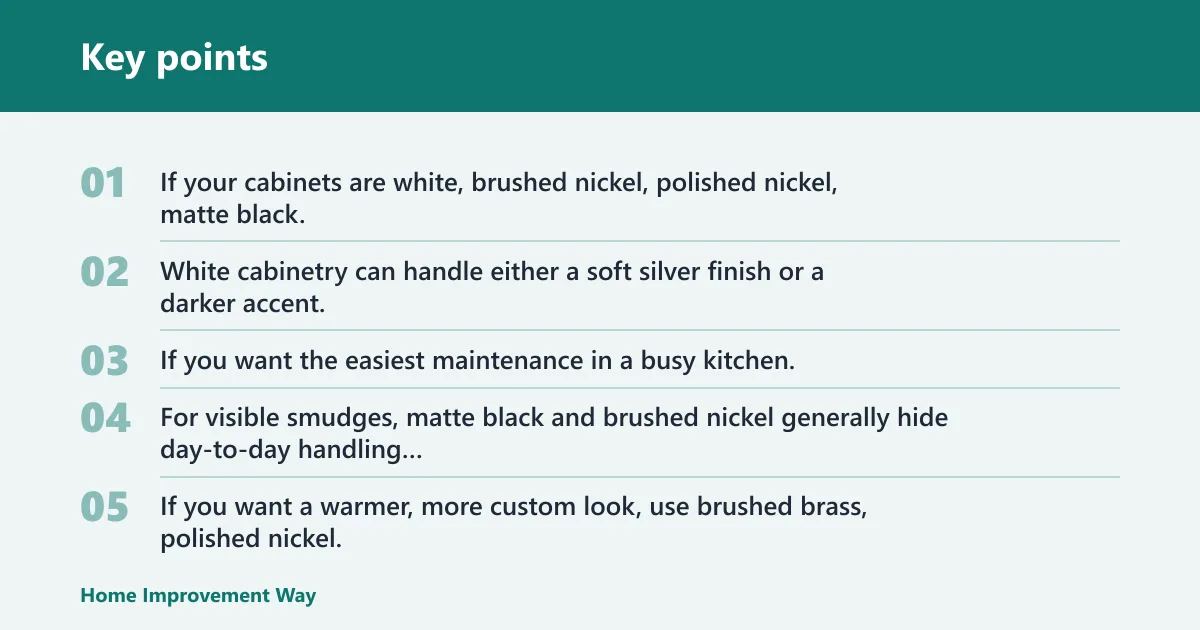
If your cabinets are white, brushed nickel, polished nickel, matte black, and brushed brass are the most useful alternatives. White cabinetry can handle either a soft silver finish or a darker accent, depending on how much contrast you want.
If you want the easiest maintenance in a busy kitchen, start with stainless steel or brushed nickel. For visible smudges, matte black and brushed nickel generally hide day-to-day handling better than polished chrome, while stainless remains the best all-around workhorse.
If you want a warmer, more custom look, use brushed brass, polished nickel, or oil-rubbed bronze as the secondary finish. Keep the dominant metal cool or neutral, then let the warmer metal handle the visual lift.
Say your kitchen has a 36-inch stainless range, white shaker cabinets, and a sink wall that gets splashed every day. Stainless on the sink run and appliances, brushed nickel on the pulls, and one brushed brass light fixture is a balanced answer that keeps cleaning simple without making the room feel cold.
Suppose the cabinets are deep green and the appliances are already stainless. A brushed brass faucet and a few matching pulls can warm the room, while matte black would make the space feel sharper and more graphic. The key is to let one finish lead and keep the other as a support note.
Frequently asked questions
What metal finish is best for a modern kitchen?
Stainless steel is the best default for a modern kitchen because it works in sinks, appliances, and prep zones, and it fits most cabinet colors. If you want more warmth, add brushed brass or polished nickel as a secondary finish instead of replacing stainless everywhere.
Which kitchen metal finishes hide fingerprints best?
Brushed nickel, matte black, and oil-rubbed bronze are the strongest fingerprint-hiding options here. Stainless steel is still practical, but bright chrome and polished nickel show handling more clearly, especially in strong light or near the sink.
What finish works best for kitchen faucets and pulls?
Brushed nickel is the safest all-around choice for faucets and pulls, followed by matte black if you want more contrast. Brass works well as a focal accent, while polished chrome is the budget classic when you want a brighter, more universal look.
Should I mix metals in my kitchen?
Yes, but keep it to two metals in most kitchens. Use one dominant workhorse finish and one accent finish, then limit a third metal to a very small detail if you need it. That approach keeps the room coordinated and easier to update later.
What finish is easiest to maintain in a busy kitchen?
Stainless steel and brushed nickel are usually the easiest maintenance choices because they handle frequent touch points well and do not depend on mirror shine. Matte black also hides smudges, but it can read heavy if overused, so it works best as an accent.
Which metal finishes work with white cabinets?
White cabinets work with almost every finish, but the most useful pairings are stainless steel, brushed nickel, matte black, polished nickel, and brushed brass. Choose brushed nickel or polished nickel for a softer look, or matte black for stronger contrast.
What finish should I choose for kitchen appliances?
If your appliances are stainless, keep stainless as the dominant finish around them. That makes the kitchen easier to coordinate and replace over time. If you want warmth, add it in the hardware and lighting rather than forcing the appliance finish to do everything.
How do I choose a warm or cool metal finish?
Use cool finishes like stainless, chrome, and brushed nickel when you want the kitchen to feel lighter and more technical. Use warm finishes like brushed brass, polished nickel, oil-rubbed bronze, or copper when cabinets and counters need more visual softness or contrast.
What finish is best for kitchen cabinets?
For cabinet hardware, brushed nickel is the safest choice if you want low glare and easy upkeep, while matte black gives the strongest modern contrast. Brass works well on focal cabinets or islands, but it is usually better as a secondary finish than as a whole-room default.
What finish is best for kitchen walls
For wall-adjacent metal surfaces, stainless steel is the most practical choice because it is durable, corrosion resistant, and easy to clean. If you mean decorative wall details, keep the finish aligned with the main hardware and avoid adding a fourth metal just for variety.
Sponsored / affiliate links. As an Amazon Associate I earn from qualifying purchases. I may earn additional commission from eligible campaigns.