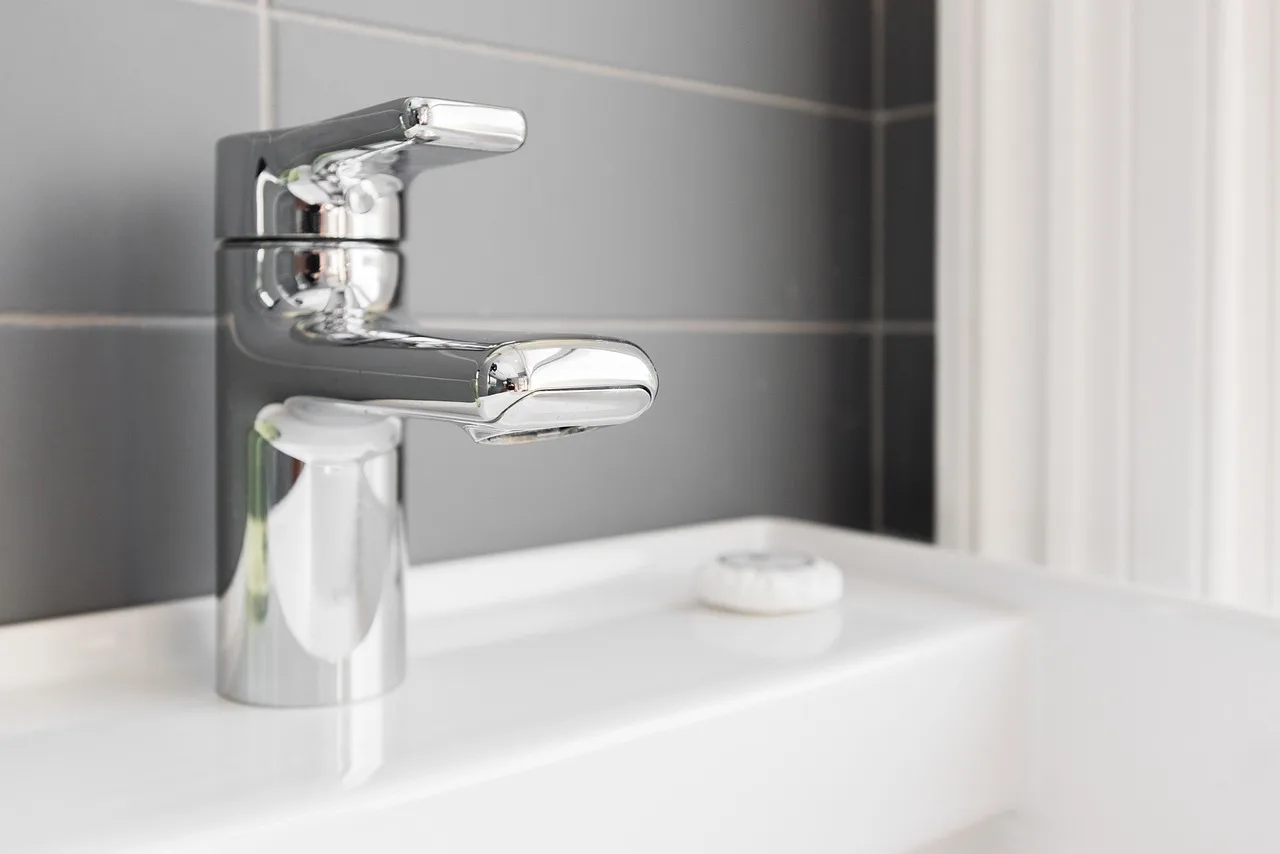
Brushed nickel vs stainless steel: key differences
Brushed nickel is often a plated finish over brass, zinc, or a similar base material. Stainless steel is a corrosion-resistant metal alloy. Use stainless steel in sinks, showers, laundry rooms, and other wet, high-touch spots. Use brushed nickel where you want a warmer look and the room sees lighter wear. Pick the wrong one, and you can get faster wear, mismatched repairs, or finishes that age at different rates. This guide explains how they’re built, how they look, and where each one fits in kitchens, bathrooms, and around appliances.
This guide is part of our Metal finishes for home hardware series.
Brushed nickel vs stainless steel: what’s the real difference?

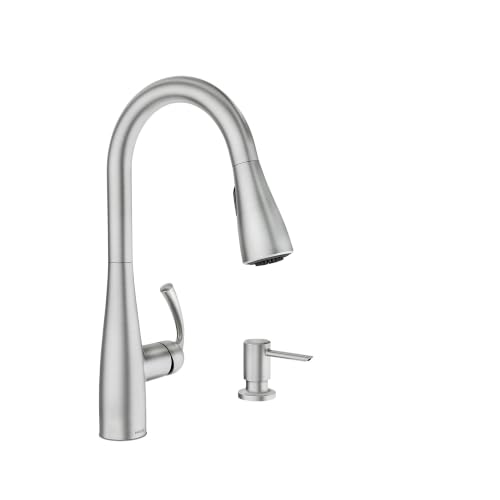

Brushed nickel is usually a decorative finish or color family. Stainless steel is the base metal itself, with at least 10.5% chromium in the alloy and a passive corrosion-resistant surface film. That difference matters more than the color shift, because it changes how each product handles moisture, cleaning, edge wear, and long-term repairs.
| Decision factor | Brushed nickel | Stainless steel | Winner |
|---|---|---|---|
| Material type | Decorative finish or coating system over a substrate | Corrosion-resistant steel alloy | Stainless steel |
| Undertone | Warm, slightly yellow, sometimes goldish brown | Cooler silver-gray, often slightly blue | Tie |
| Fingerprint visibility | Often hides marks somewhat, especially with matte texture | Low maintenance, but fingerprints may show more clearly | Brushed nickel |
| Moisture and corrosion risk | Depends on coating integrity and substrate | Depends on alloy grade, with 304 and 316L most relevant here | Stainless steel |
| Matching difficulty | Can be easier to blend with warm fixtures | Matches appliances and sinks more easily | Tie |
| Best fit by room type | Warm mixed-metal baths, lighter-use hardware | Kitchens, sinks, humid rooms, and chloride-heavy spaces | Depends on room |
Finish versus alloy: what you are actually buying
Brushed nickel usually names a surface treatment, not a metal category. LYH Steel describes it as a finish or coating system, and it is commonly used for decorative purposes on fixtures and hardware. Stainless steel is different: it is the actual alloy, so its corrosion resistance comes from the metal composition rather than from a decorative layer alone.
That difference explains why two products that look similar in a showroom can age differently. A brushed nickel faucet may wear through at edges or on handles if the coating system is thin or poorly bonded, while a stainless faucet or pull can keep the same material at the surface even after years of use.
Why the substrate and coating system matter
With brushed nickel, the substrate beneath the decorative layer matters. Products may use electroplating or PVD over a base material, and warranty language often excludes wear caused by abrasion, cleaners, or corrosion that starts once the coating is damaged. If the top layer fails, the exposed metal below can discolor or spot differently.
Stainless steel has its own fabrication variables, but the corrosion resistance is built into the alloy. LYH Steel identifies 304 and 316L as stainless steel grades, and that grade choice changes how well the item stands up to chlorides, salt air, and frequent wetting.
📊 LYH Steel says stainless steel has at least 10.5% chromium in its alloy. Source: Lyhsteel.
How they look in a room

Brushed nickel often reads warmer, while stainless steel tends to read cooler and more silver-gray. Room lighting can push either one in the wrong direction, so the real choice is finish temperature in your actual space, not on a shelf under store lighting.
Warm versus cool undertones
Brushed nickel tends to carry a slightly yellow or champagne-gray tone. Mr. Kitchen Faucets describes brushed nickel as having goldish brown undertones, which is why it often looks softer next to cream tile, oak, or brass accents. Stainless steel is usually cleaner and brighter in appearance, with a more neutral or slightly blue cast.
That difference can be subtle in one room and obvious in another. Under warm bulbs, brushed nickel may blend easily with cabinet hardware and lighting trim. Under daylight or cooler LEDs, stainless often looks closer to appliances and sinks.
How brushed texture and sheen change the read
“Brushed” does not mean the same sheen on both materials. A brushed nickel finish can be matte or low-gloss, and brushed stainless steel can be a No.4 or HL style finish, each with its own directional grain and reflectivity. The more diffuse the surface, the softer the apparent color.
That matters for matching. A brushed nickel faucet with a satin topcoat may look warmer than a brushed stainless cabinet pull even if both appear “silver” at first glance.
Why sample approval in the actual space matters
Check samples in the room before you buy. Hold them near the sink, vanity, appliance panel, and wall color during the day and at night, because warm bulbs, cool LEDs, and daylight can each change the finish temperature.
Say your kitchen has stainless appliances, white quartz, and warm undercabinet lighting. A brushed nickel faucet may soften the overall look, while a brushed stainless faucet may disappear more completely beside the refrigerator and sink.

Which finish hides fingerprints and water spots better, brushed nickel or stainless steel?
Brushed nickel usually hides fingerprints and light water spotting a bit better, especially when the finish is matte or low-gloss. Stainless steel can still be low maintenance, but it often shows fingerprints more clearly, and water spots remain a practical concern on both materials.
What texture does to visible marks
Texture breaks up reflections. That makes smudges less obvious on brushed nickel, especially on handles and faceplates with a softer satin look. Stainless steel can also be brushed, but the cooler tone and brighter reflectivity often make oily marks easier to spot in direct light.
The real question is not whether marks exist. It is whether the finish hides them well enough for the room and the amount of handling it gets.
Why water spots still need attention
Brushed surfaces help with smudges, not with mineral deposits. Water spots can still build up on either finish, especially around faucet bases, escutcheons, and shower trim where droplets sit and dry. In hard-water areas, any finish will need regular wiping to stay clean.
Where fingerprints show first on high-touch parts
High-touch points fail visually first: faucet handles, cabinet pulls, appliance pulls, and soap dispenser heads. A common first-timer mistake is choosing a beautiful low-gloss finish for a family bath, then finding that the most handled parts look uneven within a few weeks because every touch marks the same edge.
Which finish is more durable, brushed nickel or stainless steel?
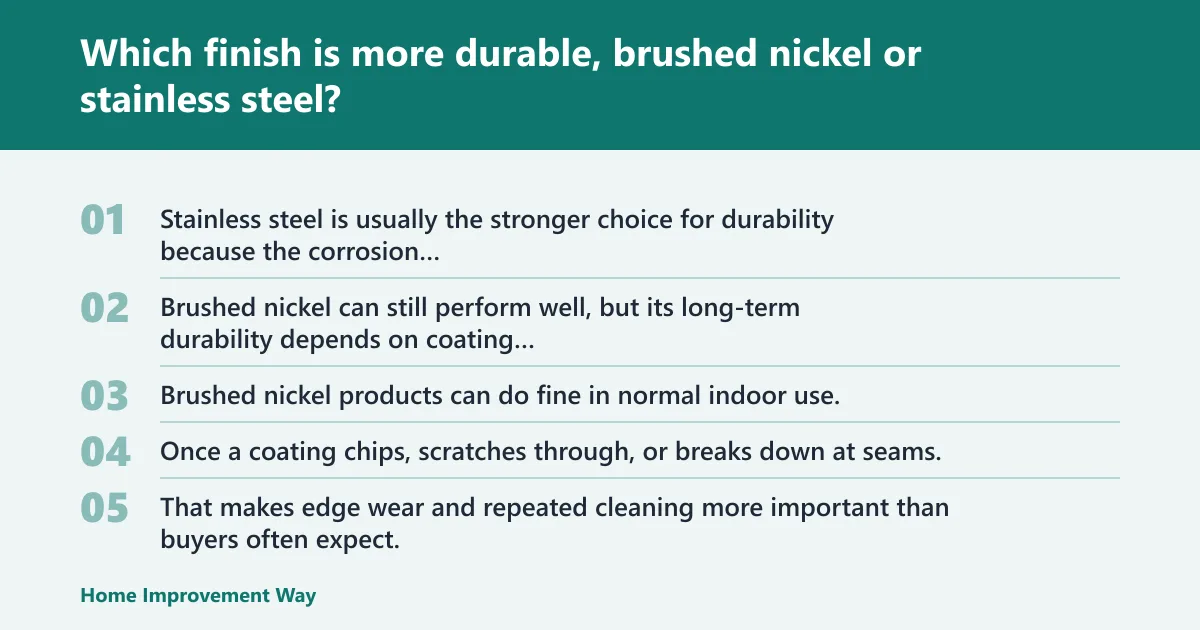
Stainless steel is usually the stronger choice for durability because the corrosion resistance is part of the alloy, not a surface layer that can wear away. Brushed nickel can still perform well, but its long-term durability depends on coating integrity, the substrate beneath it, and how hard the space is on finishes.
Corrosion resistance in brushed nickel products
Brushed nickel products can do fine in normal indoor use, but they are only as durable as the finish system on top of the base material. Once a coating chips, scratches through, or breaks down at seams, the substrate can become the weak point. That makes edge wear and repeated cleaning more important than buyers often expect.
304 versus 316L stainless steel
Grade matters with stainless steel. For stainless steel grades like 304 and 316L, that difference matters most in humid, coastal, or chloride-heavy spaces. In simple terms, 316L is often the safer pick when salt, pool chemicals, or strong moisture exposure are part of the room.
For a typical kitchen sink, 304 is often a practical standard. For a coastal bath, a pool house powder room, or a shower-adjacent accessory that gets constant spray, 316L deserves a closer look.
Why humid, coastal, and chlorinated spaces change the answer
Moisture alone is not the whole story. Chlorides from salt air, bleach-based cleaners, and some pool environments can attack finishes and metals faster than plain humidity. In those spaces, a coating on brushed nickel has more failure points, and even stainless steel needs the right grade to keep its corrosion resistance.
Picture a vanity in a beach house guest bath where the window stays open and the room gets salty air. A brushed nickel towel bar may look fine at first, but if the coating is thin at mounting points, the wear pattern can show there before it shows anywhere else.
How cleaning and maintenance compare
Both finishes are straightforward to maintain if you keep the cleaning routine gentle. Use a soft damp cloth and mild dish soap, then dry the surface. Avoid abrasive pads and unapproved chemicals on either finish, because harsh cleaning can damage brushed texture, protective layers, or the visible grain.
What to use on both finishes
A damp microfiber or soft cotton cloth is usually enough for daily care. For heavier residue, a small amount of mild dish soap in water is safer than strong detergents, scouring powders, or bleach-heavy cleaners unless the manufacturer explicitly approves them.
What to avoid on both finishes
Do not use abrasive pads, steel wool, or anything that can cut across the brushed direction. On brushed nickel, that can dull or thin the decorative layer. On stainless steel, harsh abrasion can still change the visible grain and make the finish look patchy.
How warranties and care instructions affect the choice
Care instructions matter because they tell you what the warranty considers normal use. Some brushed nickel finishes carry exclusions for improper cleaning, and some stainless products specify exactly which chemicals to avoid. If a product needs special care that does not fit the room, that is a sign to choose a different finish.
- Check the base material and finish system on brushed nickel products.
- Look for the stainless grade, especially 304 or 316L.
- Match the finish temperature to nearby fixtures in the same light.
- Confirm care instructions before buying, especially for wet rooms.
- Inspect edges, handles, and seams where wear shows first.
Side-by-side decision matrix for faucets, hardware, and bath accessories
This matrix turns the choice into a room-and-product decision. Faucets need the most moisture resistance, cabinet hardware needs the best wear behavior at touch points, and bath accessories sit somewhere in between depending on how wet the room gets.
| Product type | Decision factor | Brushed nickel | Stainless steel | Winner |
|---|---|---|---|---|
| Faucets | Moisture exposure | Good in dry to moderate-use baths | Better for wet, humid, or chloride-heavy spaces | Stainless steel |
| Faucets | Undertone | Warm, slightly yellow | Cooler silver-gray | Tie |
| Cabinet hardware | Wear risk at edges and grips | Decorative coating can show wear first on corners | More stable as a base material | Stainless steel |
| Cabinet hardware | Matching difficulty | Easier in warm, mixed-metal rooms | Easier with appliances and sinks | Tie |
| Bath accessories | Maintenance | Often hides marks better | Low maintenance, but marks may stand out more | Brushed nickel |
| Bath accessories | Best fit by room | Powder rooms and lower-splash baths | Showers, shared baths, and humid rooms | Depends on room |
Choose brushed nickel if… / Choose stainless steel if…
Choose brushed nickel if you want a warmer finish, plan to match other warm-toned fixtures, and are buying for a room with moderate wear rather than constant spray. Choose stainless steel if the space gets heavy handling, frequent moisture, or chloride exposure, or if you want the finish to track more closely with appliances, sinks, and modern hardware.
Choose brushed nickel if…
Pick brushed nickel for a warm mixed-metal interior, a powder room, or a bathroom where visual softness matters more than maximum corrosion resistance. It also makes sense when you want hardware that blends with brass, cream tile, warm paint, or wood cabinets.
Choose stainless steel if…
Pick stainless steel for kitchen sinks, appliance-adjacent hardware, laundry rooms, shared baths, and coastal or humid spaces. It is the stronger candidate when grade and corrosion resistance matter more than a warmer look, especially if you are matching a stainless sink or appliance front.
When mixing both in one room makes sense
Mixing can work if you assign each finish a job. A brushed nickel faucet with stainless appliances can feel intentional when the undertones are close, but you should sample both pieces in the same light before buying. Keep the visual gap small, or the mismatch will read as a mistake.
Frequently asked questions
Is brushed nickel the same as stainless steel?
No. Brushed nickel usually describes a decorative finish or coating system, while stainless steel is a corrosion-resistant alloy. The difference affects durability, repair behavior, and how the finish handles moisture, edges, and cleaning, so they should not be treated as interchangeable.
Which looks warmer, brushed nickel or stainless steel?
Brushed nickel looks warmer. It is commonly described as having a slightly yellow or goldish brown undertone, while stainless steel usually reads cooler, brighter, and more silver-gray. Room lighting can shift both, so judge them in the actual space.
Which finish hides fingerprints better, brushed nickel or stainless steel?
Brushed nickel usually hides fingerprints better, especially when it has a matte or low-gloss surface. Stainless steel can still be low maintenance, but fingerprints often stand out more clearly on its brighter surface. Water spots can still appear on both finishes.
Which is more durable, brushed nickel or stainless steel?
Stainless steel is usually more durable because the corrosion resistance is part of the alloy itself. Brushed nickel can perform well, but its lifespan depends on the coating system, the substrate underneath, and how often the surface gets scrubbed or wet.
Does brushed nickel rust or tarnish over time?
It can, if the coating wears through or the substrate is vulnerable and exposed to moisture. Brushed nickel’s long-term appearance depends on the finish system, so edge wear, chipped spots, and poor cleaning practices can lead to discoloration or tarnish-like changes.
What should I check before buying a brushed nickel or stainless steel faucet?
Check the substrate, the coating system, the stainless grade if applicable, and the care instructions. For stainless steel, look for 304 or 316L when the space gets humid or chloride exposure. For brushed nickel, confirm whether the finish is electroplated or PVD and how the warranty handles wear.
Sponsored / affiliate links. As an Amazon Associate I earn from qualifying purchases. I may earn additional commission from eligible campaigns.