Satin nickel vs chrome: which looks better at home?
Satin nickel usually looks better in most homes because it reads softer and warmer. Chrome looks sharper and brighter, so choose it only if you want a cooler finish with strong contrast. Pick the wrong one, and fixtures can fight with cabinets, tile, and room light, or demand more cleaning than you want. This guide compares how each finish looks in kitchens, bathrooms, and laundry rooms, plus which one fits warm, cool, and mixed-metal interiors.
Satin nickel vs chrome: the core trade-off


The core trade-off is simple: satin nickel cuts glare and softens nearby materials, while chrome reflects more light and creates stronger contrast. That makes satin nickel easier to blend into warm, mixed, or wood-heavy rooms, while chrome reads cleaner and more modern in bright spaces with cool finishes.
| Decision factor | Satin nickel | Chrome | Winner |
|---|---|---|---|
| Visual tone | Warm undertone, softer and less reflective | Cool undertone, bright and mirror-like | Tie |
| Reflectivity in real room light | Moderate reflectivity, lower glare | High reflectivity, stronger glare and contrast | Chrome |
| Fingerprint visibility | Less visible in daily use | More visible on high-touch pieces | Satin nickel |
| Water-spot visibility | More forgiving when wiped less often | Spots show faster on faucets and trim | Satin nickel |
| Mixability with other metals | Pairs well with brass, bronze, and warm wood tones | Pairs well with polished stainless, black, and cool tile | Tie |
| Best fit in mixed-light rooms | Handles warm light and window shade changes well | Looks crisp in bright, even light | Satin nickel |
Visual tone
Satin nickel has a soft sheen and a muted, warm feel. Chrome has a cool undertone and a mirror-like shine that reads more sharply against walls, tile, and countertops.
Reflectivity in real room light
Chrome sends back more of the room, so it can make a small bath feel brighter and more defined. Satin nickel reflects less, which cuts glare and keeps cabinet pulls, faucet bodies, and shower trim from taking over the view.
Fingerprint and water-spot visibility
Satin nickel is usually more forgiving on faucets, pulls, and towel bars because smudges do not stand out as much. Chrome shows fingerprints and mineral spots sooner, especially on sink faucets and shower fixtures that get touched and splashed often.
Mixability with other metals
Satin nickel works well with warm metals such as brass and bronze, and it can sit beside wood tones without feeling abrupt. Chrome mixes better with cool metals, polished stainless appliances, and black accents that already lean crisp and reflective.
What satin nickel and chrome look like on a fixture
Satin nickel finish reads as a softer, less reflective finish with edges that visually disappear into the room. Chrome finish is bright, shiny, and reflective, so it draws attention to the fixture shape and to anything nearby that catches the light.
Satin nickel finish: muted reflectivity and soft edges
On cabinet pulls and faucet bodies, satin nickel usually looks calmer because it spreads light instead of bouncing it hard. That makes it easier to place beside wood grain, stone veining, or patterned tile without adding another strong visual element.
Chrome finish: bright reflection and sharper contrast
Chrome puts more emphasis on clean lines and crisp geometry. On towel bars, shower trim, and sink hardware, it can make simple shapes look sharper, which is why it often reads more contemporary in rooms with white tile or glossy surfaces.
How light direction changes the look
Side light from a window or pendant can make chrome flash and flatten nearby details. Satin nickel changes more gradually with the light, so it tends to hold its color impression better across morning, afternoon, and evening conditions.
How do room materials change the result?
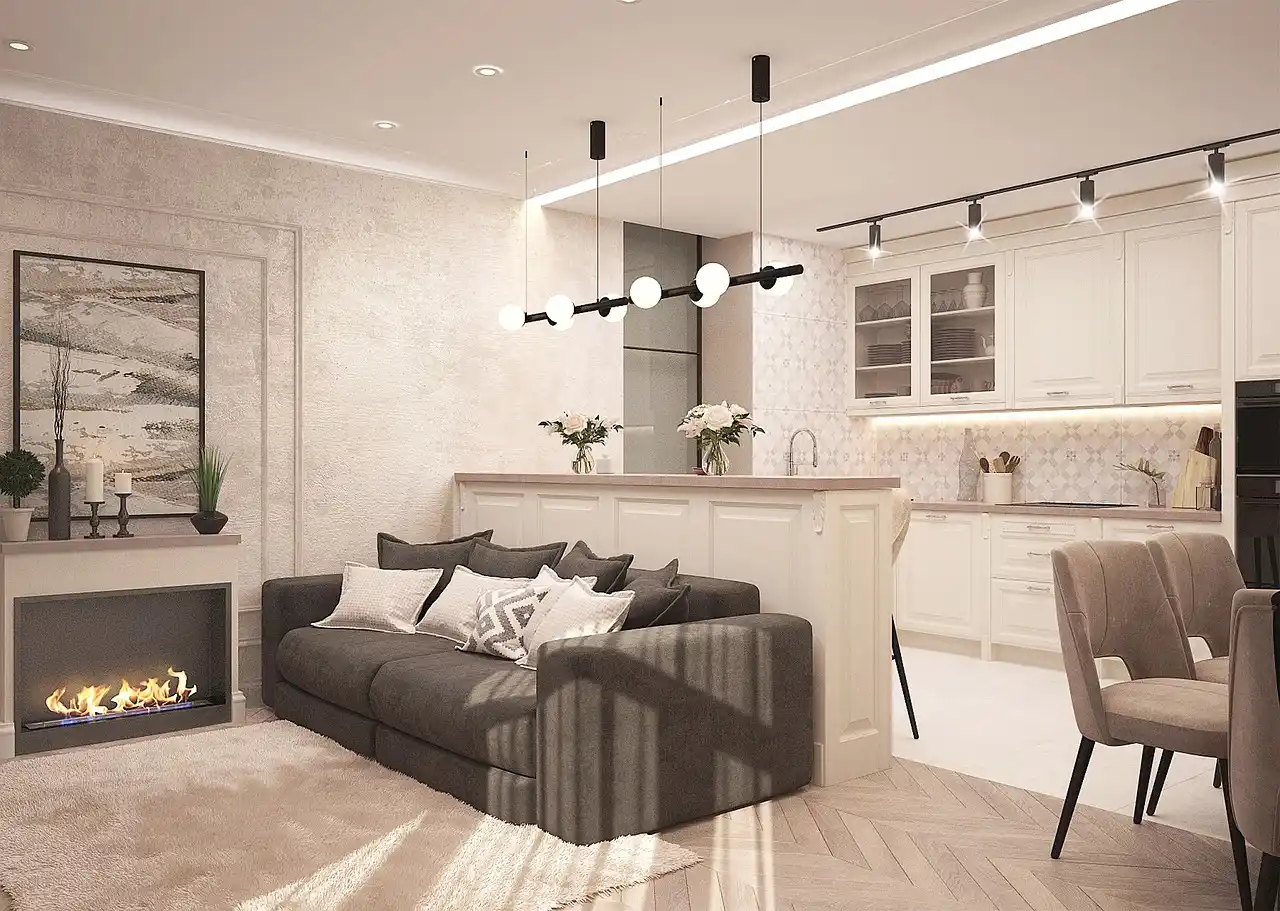
Room materials decide whether a finish looks natural or forced. White paint, wood cabinets, gray cabinets, and stone all change how warm or cool the metal appears, and that can matter more than the finish alone.
White paint and bright tile
Chrome often looks at home with bright white walls, glossy subway tile, and polished surfaces because its cool reflectivity matches the room’s clean contrast. Satin nickel can still work, but it softens the edge, which helps if the white space already feels stark.
Wood cabinets and warm stone
Satin nickel usually fits better with oak, walnut, maple, travertine, or warmer quartz and granite because its undertone does not fight the material color. Chrome can look too cold next to those surfaces unless the room already has other cool accents.
Gray cabinets and mixed-metal rooms
Gray cabinets can go either way, but the undertone matters. Cooler gray, black hardware, and stainless appliances often favor chrome, while greige, taupe-gray, and rooms with brass lighting usually read better with satin nickel.
Say your kitchen has matte white uppers, pale oak lowers, and a sunlit sink wall. Satin nickel will usually look calmer at midday and at dusk, while chrome may feel more broken up as the light shifts and hits each reflective edge.
Which finish works better in kitchens and bathrooms?
Bathrooms accept chrome more easily because the room already expects reflective plumbing and fixture parts. Kitchens often give satin nickel an edge when the goal is to soften cabinet hardware and cut glare from under-cabinet lighting, though chrome can work well in crisp, modern kitchens.
Kitchen hardware: cabinet pulls, sink faucet, and under-cabinet lighting
On cabinet pulls, satin nickel usually hides smudges better and avoids extra shine under task lights. Chrome can look excellent on a sink faucet or appliance-adjacent finish when the kitchen has cool counters, white cabinets, and a clean-lined backsplash.
Bathroom fixtures: faucets, towel bars, shower trim, and sink hardware
Chrome is common on bathroom fixtures because it matches the bright, clean look many homeowners want in a bath. Satin nickel often works better in primary baths with wood vanities, warm tile, or softer wall colors because it keeps the room from feeling overly cold.
Laundry rooms and utility spaces
Laundry rooms often favor satin nickel because the finish is less demanding when the space gets scuffed by baskets, detergents, and frequent handling. Chrome can still work if the room is bright, compact, and finished like a small utility bath.
Room-by-room decision matrix
Use this matrix as a practical filter, not a style rule. Scores use a simple numeric scale, with the higher number indicating better performance for that factor in that room.
| Room | Finish | Lighting | Warmth | Reflectivity | Fingerprint visibility | Water-spot visibility | Mixability | Winner |
|---|---|---|---|---|---|---|---|---|
| Kitchen | Satin nickel | 4 | 5 | 3 | 4 | 4 | 5 | Satin nickel |
| Kitchen | Chrome | 3 | 2 | 5 | 2 | 2 | 4 | Chrome |
| Bathroom | Satin nickel | 4 | 5 | 3 | 4 | 4 | 5 | Satin nickel |
| Bathroom | Chrome | 5 | 2 | 5 | 2 | 2 | 4 | Chrome |
| Laundry room | Satin nickel | 4 | 4 | 3 | 4 | 4 | 5 | Satin nickel |
| Laundry room | Chrome | 3 | 2 | 5 | 2 | 2 | 4 | Chrome |
The matrix favors satin nickel in rooms where people touch hardware often and lighting changes through the day. Chrome tends to work better when the room is already bright and cool-toned, and when reflection fits the overall design.
Which finish is easier to live with?
Satin nickel is usually easier to live with because it hides fingerprints, small smudges, and light wear better than chrome. Chrome is easier to read as clean when freshly wiped, but it asks for more frequent attention on high-touch pieces and splash zones.
Fingerprints and smudges
Cabinet pulls, faucet handles, and towel bars collect fingerprints quickly. Satin nickel makes those marks less obvious, while chrome tends to reveal them sooner, especially in homes with kids or shared baths.
Water spots and mineral marks
Water spots stand out more on chrome because the reflective surface catches every dried drop. Satin nickel still gets spots, but they usually blend better into the finish, which matters on sink faucets and shower trim.
Cleaning frequency and visible wear
Chrome can look excellent after a wipe, but its high shine also makes micro-scratches and streaks easier to see. Satin nickel tends to look consistent between cleanings, which helps in rentals, busy family kitchens, and laundry areas with constant use.
A common first-timer mistake is choosing chrome for a small bathroom because it feels brighter in the store. In a north-facing bath with hard water, that same finish can show spots on the faucet within a day and look harsher next to cool white tile.
Choose satin nickel if… / Choose chrome if…
Choose satin nickel if you want a softer, warmer finish that blends with wood, stone, brass, bronze, or mixed metals. Choose chrome if you want a brighter, cooler look with stronger contrast and a more polished read in white, tile-heavy, or modern rooms.
Choose satin nickel if…
Pick satin nickel if the room gets warm afternoon light, uses wood cabinets, includes greige or beige walls, or needs hardware that disappears more than it shines. It is also the better pick for high-touch kitchen pulls, family bathrooms, rental units, and laundry rooms where easier upkeep matters.
Choose chrome if…
Pick chrome if the room is bright, compact, and already filled with cool materials such as white tile, black accents, polished stainless appliances, or cooler gray cabinetry. It is a strong choice when you want faucets and shower trim to read crisp and modern instead of quiet.
When the room should decide for you
If your home already has one dominant metal on nearby fixtures, the safest choice is usually the finish that matches the existing plumbing, door hardware, or light fixtures. That approach keeps the room from feeling accidental, especially in open plans where the kitchen and bath finishes are visible from adjoining spaces.
Can you mix satin nickel and chrome in the same room?
Yes, you can mix satin nickel and chrome in the same room if the finishes have different jobs and one of them is clearly secondary. The mix works best when the room has a repeated metal elsewhere, such as light fixtures, cabinet pulls, or mirror frames, so the contrast feels planned.
Where mixing works best
Mixing often works in larger bathrooms and kitchens where one finish handles the faucet or shower trim and the other appears on a lamp, cabinet pull, or accessory. It also works when the finishes are separated by material changes, such as satin nickel on hardware and chrome on a vanity mirror frame.
Where mixing looks awkward
Mixing is harder when two metal finishes sit inches apart on the same wall or on a single fixture group. A chrome faucet beside satin nickel towel bars can look uncoordinated unless another metal repeats the chrome elsewhere.
Which finish feels more modern, satin nickel or chrome?
Chrome usually feels more modern because its higher reflectivity and cleaner contrast read as sharper and more architectural. Satin nickel can still feel current, but it tends to land in transitional spaces where the goal is softer coordination rather than a crisp, high-gloss statement.
Modern rooms with cool materials
Chrome fits modern spaces with flat-front cabinets, white quartz, black accents, and polished tile because the finish echoes that clean geometry. In those rooms, satin nickel can still work, but it often softens the line too much if the rest of the room is already sleek.
Transitional rooms with warm materials
Satin nickel often feels more at home in transitional interiors because it bridges traditional wood tones and newer surfaces without looking loud. It gives you a more neutral read when the room combines painted cabinets, stone counters, and warmer flooring.
Frequently asked questions
Satin nickel vs chrome: which looks better in a home?
Satin nickel usually looks better in most homes because it is easier to fit into warm, mixed, or softly lit rooms. Chrome looks better when the room is bright, cool, and built around white tile, polished surfaces, and a cleaner visual line. The better choice depends on the room, not the finish alone.
What is satin nickel supposed to look like?
Satin nickel should look soft, muted, and lightly brushed or diffused rather than mirror-bright. It usually has a warm undertone and a low-glare surface that reads as calm next to wood, stone, and painted cabinetry. It is common on faucets and cabinet hardware for that reason.
Is chrome shinier than satin nickel?
Yes. Chrome is brighter and far more reflective than satin nickel, so it catches light and nearby shapes much more strongly. Satin nickel has a softer sheen and lower visual contrast, which makes it feel less shiny in real room conditions.
Does satin nickel look warmer than chrome?
Yes. Satin nickel usually reads warmer because its undertone is softer and less blue than chrome. That warmth becomes more obvious next to oak, walnut, beige tile, and cream paint, while chrome stays cooler and more mirror-like.
Which finish hides fingerprints better, satin nickel or chrome?
Satin nickel hides fingerprints better in most daily-use settings. Its softer surface makes smudges and small marks less obvious on cabinet pulls, faucets, and towel bars. Chrome can look great when clean, but it shows fingerprints and water spots more quickly.
Which finish is better for bathrooms and kitchens?
Satin nickel is often better for kitchens because it is forgiving on high-touch hardware and works well with wood cabinets and warm counters. Chrome is often better for bathrooms because it suits bright tile, sink hardware, towel bars, and shower trim. The right answer depends on the room’s light and nearby materials.
Sponsored / affiliate links. As an Amazon Associate I earn from qualifying purchases. I may earn additional commission from eligible campaigns.