Best Metal Finishes for a Farmhouse Bathroom
For a farmhouse bathroom, a common approach is to use brushed nickel or polished nickel for faucets and shower trim, and oil-rubbed bronze or matte black for cabinet hardware and mirrors, while keeping the mix to about two finishes. Poor mixing can make the room feel split apart, and upkeep can rise because some finishes show water spots and wear faster. This guide breaks down the best metal finish by bathroom zone so you can choose for style, cleaning, and coordination.
Farmhouse bathroom finish choices
Start with the finish that has to work hardest, then choose one accent metal for the rest. Matte black can give a farmhouse style either a modern or rustic feel, antique brass brings a warmer rustic note, polished chrome reads classic and budget-friendly, brushed nickel gives a softer silver look, polished nickel stays timeless, and oil-rubbed bronze fits rustic wood-and-stone bathrooms.
Warm vs cool tones in farmhouse spaces
Warm metals, like brass, polished nickel, and oil-rubbed bronze, usually feel better with creamy paint, weathered wood, and stone. Cool metals, like chrome and many nickel finishes, pair better with whiter walls, gray tile, and crisp trim. The goal is not perfect sameness. You want enough contrast to keep the room from feeling flat.
Polished finishes reflect more light, while brushed and satin finishes soften the look. That matters in bathrooms with strong daylight, because a glossy finish is highly reflective in bright rooms. It also matters in bathrooms that get wiped constantly, because some matte finishes can show fingerprints and smudges more readily.
What changes when the bathroom is bright, small, or rustic
Room size changes how much metal you can see at once. In a small bathroom, fewer finishes usually read cleaner because every towel bar, hinge, faucet, and light fixture is close together. In a bright bathroom, reflective finishes can feel sharper. In a rustic bathroom, darker and warmer metals often look more natural against wood, stone, and textured tile.
Picture a 5-by-8 bathroom with a white vanity and strong morning light. Chrome faucet trim may feel brighter and more open than oil-rubbed bronze, while a black mirror frame can still anchor the room without crowding it. In a low-light powder room with reclaimed wood, the same black mirror and bronze hardware may feel more at home.
Which finish works best by bathroom zone?
The best finish depends on where the part lives, how often you touch it, and how hard it is to swap later. Bathroom faucets and shower fixtures are high-commitment choices, so they usually deserve the most timeless finish. Cabinet hardware and mirrors are easier to change, so they are the better place for a trend finish or a second metal.
Faucets and shower fixtures
Choose a finish here for longevity first. Polished nickel, brushed nickel, polished chrome, and matte black can all work, but the best pick depends on the room’s light and cleaning load. If you want one finish to stay put for years, polished nickel is a strong permanent choice, brushed nickel is softer and less shiny, and polished chrome is a classic, lower-cost option.
For shower trim, keep maintenance in mind. Frequent spraying, soap film, and hard water can make the wrong finish feel high-maintenance fast. That is why timeless finishes usually belong on the shower valve, arm, and control plate.
Cabinet hardware and mirrors
These are the easiest places to repeat a second metal. Matte black cabinet pulls can give a farmhouse bathroom either a modern or rustic look, and antique brass or aged brass can add warmth without taking over the room. Mirrors are useful too, because the frame finish repeats at eye level and helps the room feel planned.
Cabinet hardware is also where trend risk is lowest. If you later tire of brass pulls, they are easier to replace than a faucet set or shower trim kit. That makes them a good place for a stronger finish choice.
Towel bars, lighting, and small accents
Lighting, towel bars, toilet paper holders, and robe hooks are the best spots to repeat the accent metal. These parts are visible enough to matter, but they do not carry the same long-term cost or replacement hassle as plumbing fixtures. They also help you repeat a metal just enough to make mixed finishes look deliberate.
A common first-timer mistake is putting every small accessory in a different finish. That can make even good materials look scattered. Repeat the accent metal two or three times, then stop.
How do you mix metals without making the room feel random?
Mixing metals in bathrooms is common and acceptable. The room usually looks better when one finish leads and the other supports it. A common starting point is the 70/30 rule: about 70% of the room can use one dominant finish, and about 30% can repeat a secondary finish. That keeps the room coordinated without feeling stiff.
Use the 70/30 rule
Let the dominant finish cover the biggest items: faucets, shower trim, and perhaps the main vanity light. Use the accent finish on cabinet hardware, mirror frames, or a pair of towel bars. If both finishes show up in equal amounts, the room can feel accidental rather than planned.
Match warm metals with cool metals for balance
Chrome and brass is a common pairing because it balances cool and warm tone. Polished nickel and gold also work well together, and black and gold is another useful bathroom combination. You are not aiming for exact matching. You are aiming for contrast that still feels related.
One example uses polished nickel faucets with gold accents. That works because the faucet finish stays calm and permanent, while the gold reads as a deliberate accent on hardware or lighting. Another useful pair is brushed nickel with matte black, especially in a farmhouse bathroom with painted cabinets and black-framed mirrors.
Repeat the accent finish in two or three places
Do not scatter the accent metal in every corner. Pick two or three points and repeat it there. For example: black mirror frame, black cabinet pulls, and one black wall sconce. Or brass mirror frame, brass towel ring, and brass vanity knobs. Repetition is what makes mixed metals read as a plan.
Farmhouse bathroom finish selector
This selector maps finish to fixture type so you can choose by use, cleaning, and room conditions rather than by style alone. The dominant finish should usually go on faucets and shower fixtures. The accent finish is better for mirrors, cabinet hardware, and small accessories that are easy to change later.
| Fixture type | Best finish | Visual effect | Maintenance risk | Dominant or accent |
|---|---|---|---|---|
| Bathroom faucet | Polished nickel | Timeless, warm undertone | Medium; needs regular wiping | Dominant |
| Shower trim | Brushed nickel | Soft silver, less shine | Medium; hides glare better than chrome | Dominant |
| Vanity cabinet pulls | Matte black | Clean contrast, modern or rustic farmhouse fit | Medium; fingerprints can show on matte finishes | Accent |
| Mirror frame | Antique brass | Warm, rustic detail | Low to medium; finish choice matters more than shape | Accent |
| Towel bar | Oil-rubbed bronze | Dark brown, pairs with wood and stone | Low to medium; good for rustic wear | Accent |
| Light fixture | Chrome or brass mix | Balances cool and warm tones | Medium; polished parts show spots more easily | Accent |
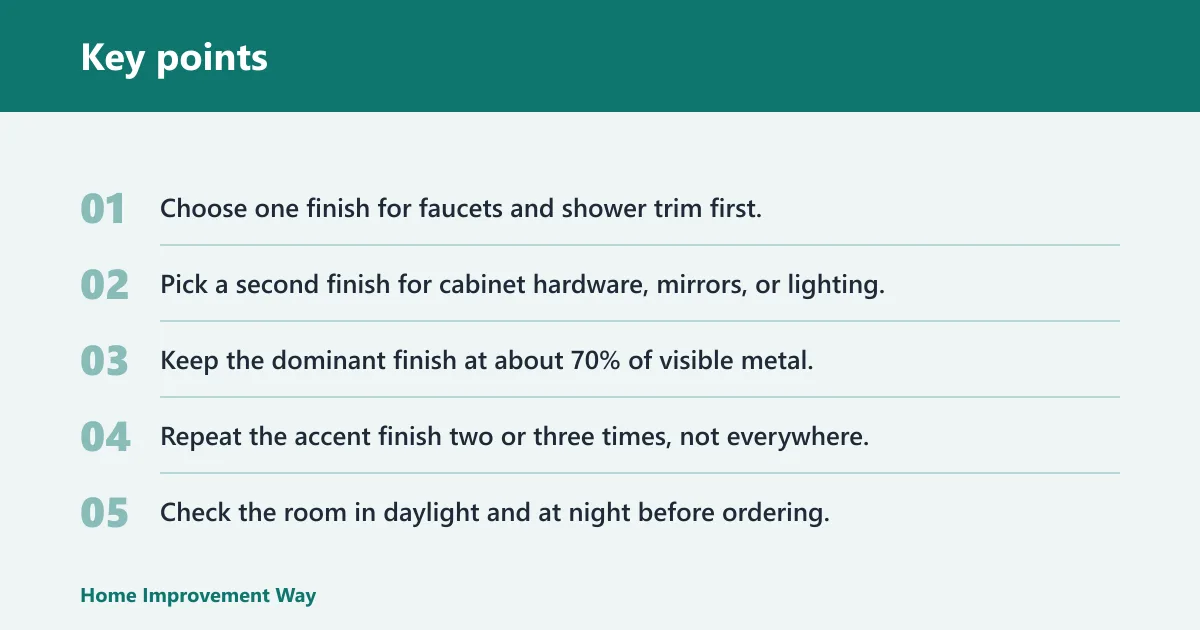
- Choose one finish for faucets and shower trim first.
- Pick a second finish for cabinet hardware, mirrors, or lighting.
- Keep the dominant finish at about 70% of visible metal.
- Repeat the accent finish two or three times, not everywhere.
- Check the room in daylight and at night before ordering.
Small bathroom path
In a small bathroom, choose one main finish and keep the second finish limited to hardware or a mirror. Brushed nickel or polished nickel usually feels safest because the room will not look overly busy. Matte black can still work, but use it as a controlled accent rather than on every fixture.
Bright bathroom path
In a bright bathroom, reflective finishes matter more. Polished chrome or polished nickel can look crisp, but they also show glare. If the room gets strong daylight, brushed nickel often gives a calmer look while still keeping enough light bounce. Avoid overusing matte finishes on the highest-touch parts if fingerprints are a concern.
Rustic bathroom path
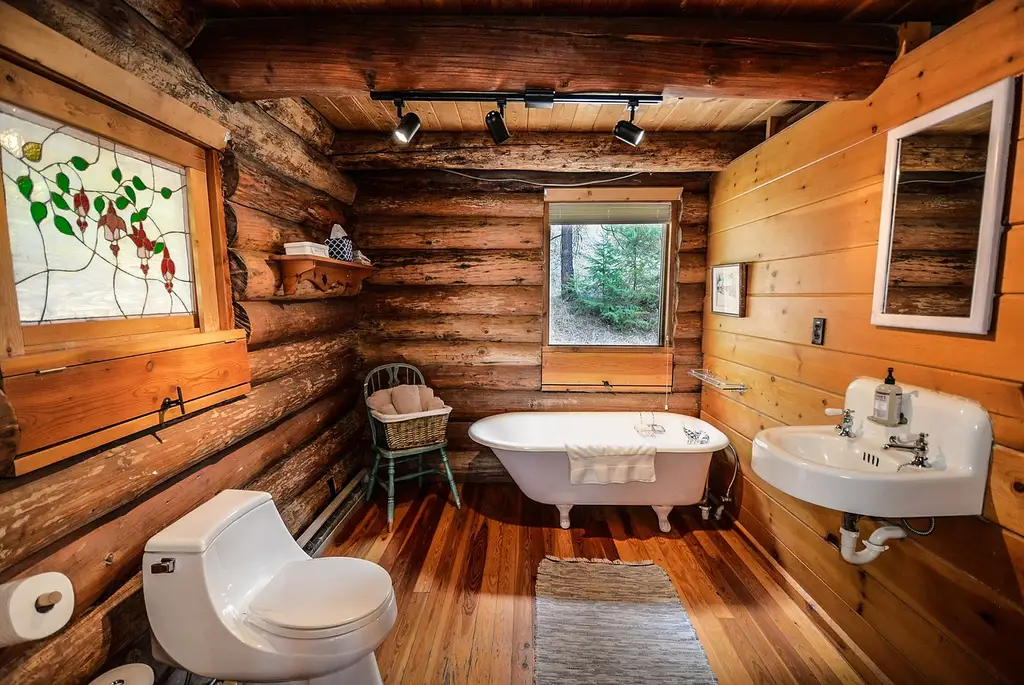
In a rustic bathroom, antique brass, aged brass, and oil-rubbed bronze fit naturally with wood vanities, stone sinks, and textured wall finishes. Matte black also works, especially if you want the room to feel a little cleaner and more graphic. A black-and-brass combination is often easier to balance than trying to force one shiny finish across every part.
What should you choose for faucets and shower fixtures?
For faucets and shower fixtures, choose the finish you can live with for the longest time. These parts are expensive to swap and most exposed to water, soap, and constant use. Timeless finishes belong here: polished nickel, brushed nickel, polished chrome, or, in the right farmhouse, matte black. Trendy choices are better saved for smaller accessories.
When polished chrome makes sense
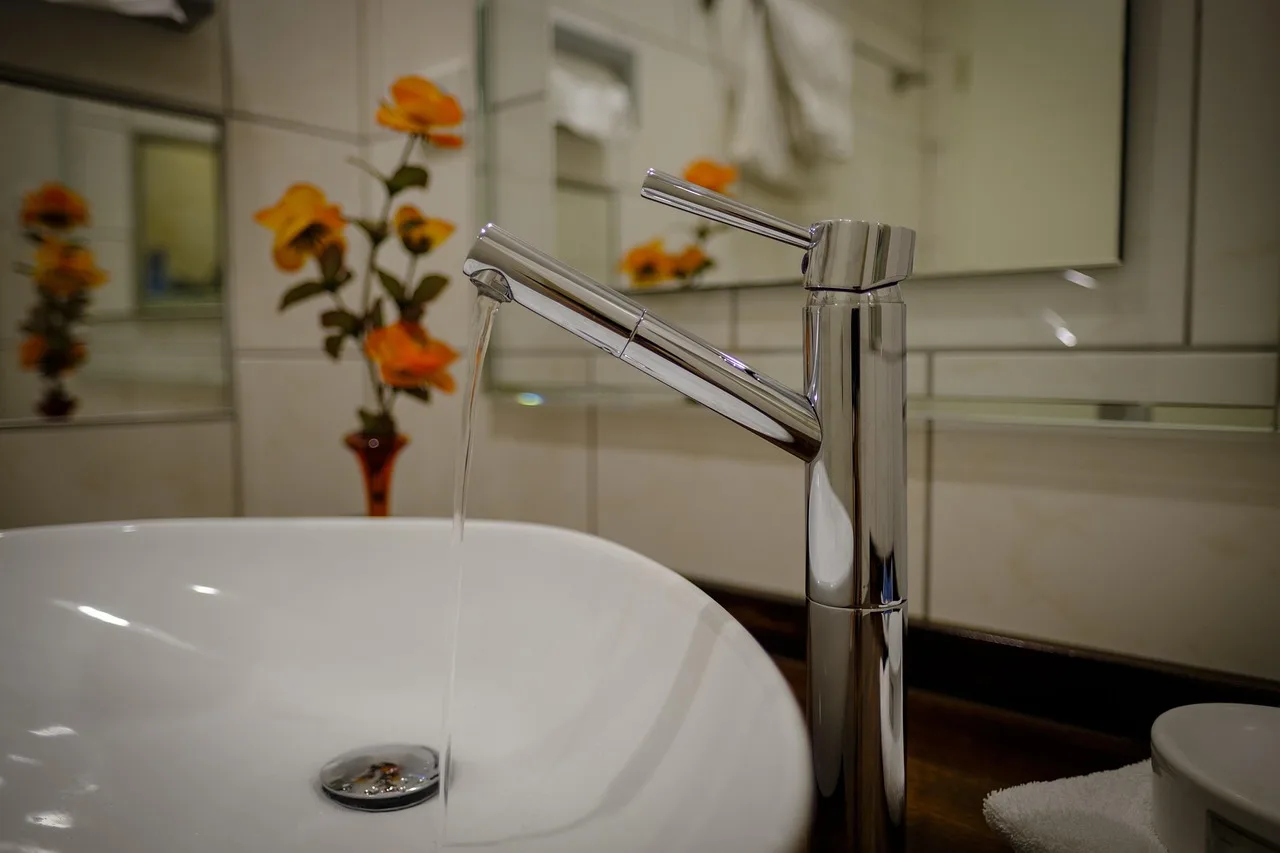
Polished chrome is a classic farmhouse-friendly choice and a popular finish for cottage style and a budget purchase. It is cooler than nickel, so it reads cleaner in white bathrooms and smaller spaces. If you want a crisp finish that does not fight painted trim or bright tile, chrome is a solid option.
When polished nickel, brushed nickel, or matte black is the better long-term pick
Polished nickel is a strong choice when you want warmth and permanence. Brushed nickel is better when you want silver without much shine, and its warmer hue than chrome helps it sit more comfortably in farmhouse spaces. Matte black works as a neutral in modern or rustic farmhouse bathrooms, but it is best used thoughtfully on high-use fixtures because fingerprints and smudges can be more visible on some matte finishes.
Suppose your bathroom has hard water and a shower used every day. A polished finish may need more frequent wiping to stay clear, while brushed nickel can soften the look of spots and streaks. That does not make polished chrome wrong. It just means the finish should match your cleaning tolerance as much as your style.
What finishes work with farmhouse paint colors?
Paint color changes how metal reads. Warm white, cream, and beige usually suit antique brass, aged brass, oil-rubbed bronze, and polished nickel. Greige, taupe, and soft gray can go either warm or cool, which makes them flexible with brushed nickel, chrome, and black. Deep wood tones and stone surfaces usually pair best with darker or warmer metals.
Warm white, cream, and beige
These colors support warm metals well. Brass feels more natural here, especially brushed or antique brass. Polished nickel also works because its warm undertone keeps the room from feeling too cold, while black gives you a useful point of contrast on mirrors and cabinet hardware.
Greige, taupe, and soft gray
These middle-ground paint colors make mixed metals easier. Chrome can stay classic, brushed nickel can soften the room, and matte black can add structure. If the room feels flat, add one warm accent metal so the finish plan does not drift too cool.
Deep wood tones and stone surfaces
Oil-rubbed bronze is one of the easiest matches here because its dark brown finish sits naturally with wood and stone. Antique brass also works well if you want more warmth. In this type of bathroom, chrome can still be useful, but it often looks best as the smaller supporting finish rather than the lead metal.
Frequently asked questions
What metal finish looks best in a farmhouse bathroom?
There is no single best finish, but brushed nickel and polished nickel are the safest starting points for faucets and shower trim. Matte black, antique brass, and oil-rubbed bronze work well as accents or in more rustic rooms. The best choice depends on light, cleaning, and which fixture is hardest to replace.
Can you mix metal finishes in a farmhouse bathroom?
Yes. Mixing metals in bathrooms is common and acceptable, especially in farmhouse style. Use one dominant finish for the main plumbing fixtures and one accent finish for mirrors, hardware, or lighting. Keep the mix intentional, not scattered, and repeat each finish in more than one place.
What finish should I choose for bathroom faucets in a farmhouse style?
For faucets, choose polished nickel, brushed nickel, or polished chrome if you want a finish that stays useful over time. Matte black can work too, but it is better when the rest of the room supports it. Because faucets are high-commitment fixtures, pick for maintenance and longevity first.
Is matte black good for a farmhouse bathroom?
Yes. Matte black can give a farmhouse bathroom either a modern or rustic feel, and it works well as a neutral for statement hardware and lighting. Use it carefully on high-touch parts if fingerprints and smudges are a concern, and avoid making every fixture black unless the room is very intentional.
Is brushed nickel or chrome better for farmhouse bathroom fixtures?
Brushed nickel is usually better if you want a softer silver look and less shine. It also has a warmer hue than chrome. Chrome is cooler, more reflective, and often a good budget-friendly choice. For farmhouse bathrooms, brushed nickel usually feels easier to live with.
How many metal finishes should a bathroom have?
Many farmhouse bathrooms are said to look best with two finishes. A 70/30 split is a practical target: one dominant metal for faucets and shower trim, and one accent metal for hardware, mirror frames, or lighting. Three finishes can work, but only if the room is larger and the finishes repeat on purpose.
Sponsored / affiliate links. As an Amazon Associate I earn from qualifying purchases. I may earn additional commission from eligible campaigns.