Polished Nickel vs Brushed Nickel: Key Differences
Pick polished nickel for brighter rooms and brushed nickel for high-touch spots when easier upkeep matters. Choose poorly, and you may end up with finishes that show fingerprints, look dull in your lighting, or need more cleaning than you planned. This guide compares appearance, maintenance, durability, and where each finish fits best in kitchens and bathrooms.
| Decision factor | Polished nickel | Brushed nickel | Winner |
|---|---|---|---|
| Look in bright light | High-gloss, mirror-like appearance with a warm gold/silver blend undertone | Soft satin matte appearance with a cooler silver-gray undertone | Polished nickel |
| Fingerprint and water-spot visibility | Shows smudges easily | Hides smudges well | Brushed nickel |
| Cleaning effort | Needs frequent polishing | Low maintenance | Brushed nickel |
| Best use on high-touch hardware | Good for low-to-moderate touch when appearance matters most | Often a better choice for frequent-touch spots like handles and pulls | Brushed nickel |
| Style fit | Traditional, classic, vintage luxury | Modern, transitional, contemporary, farmhouse | Tie |
Polished nickel vs brushed nickel: the core trade-off


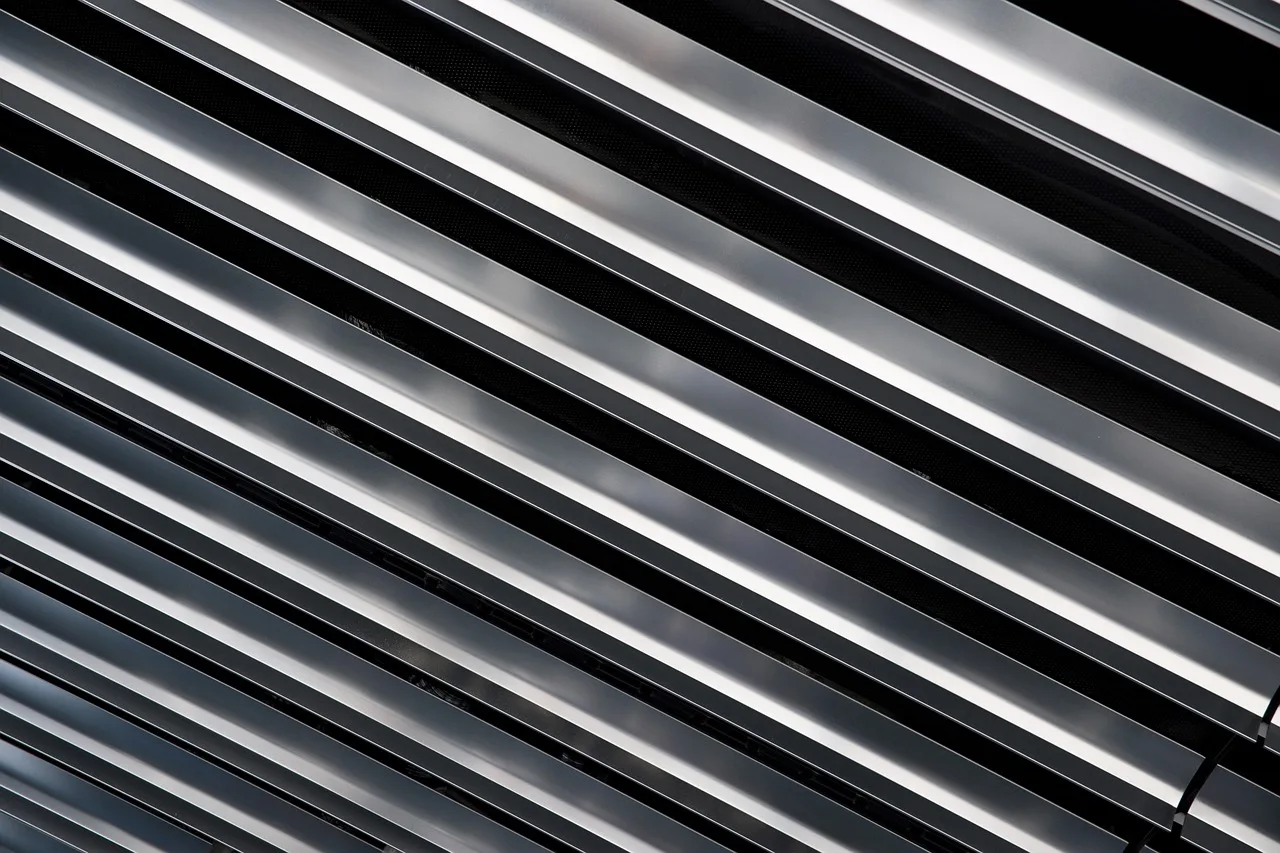
The main difference is shine. Polished nickel is a high-gloss, mirror-like finish with a warm undertone, while brushed nickel looks softer and more muted with a fine brushed texture. In bright rooms, polished nickel feels more reflective; in busy rooms, brushed nickel usually handles daily fingerprints and water spots better.
Why sheen matters more than the base metal
Both finishes are nickel plating over a base metal, usually brass or zinc. That means the visible finish does most of the visual work, while the substrate affects construction, not the surface look you notice across the room.
How lighting changes the look in real rooms
Lighting temperature matters. Polished nickel can read warmer under soft, warm bulbs and more reflective near windows or bright vanity lighting. Brushed nickel stays quieter in the same room, which helps when you want hardware that recedes instead of catching every reflection.
What is polished nickel, and how does it behave?
Polished nickel is a nickel-plated finish with a high-gloss, mirror-like appearance and a warm gold/silver blend undertone. It is often used on faucets, door hardware, shower fixtures, doorknobs, and cabinet hardware, especially when a more formal or classic look is desired.
High-gloss appearance and warm undertone
Polished nickel has more visual bounce than brushed nickel. That reflects light well, but it also means the finish reveals fingerprints and water spots more easily, especially on curved faucet handles and drawer pulls that get touched all day.
Where polished nickel is commonly used
This finish fits traditional, classic, and vintage luxury design, but it is not limited to those styles. In the right room, it can work on bathroom faucets, shower trims, and cabinet hardware where a brighter, more reflective surface helps the hardware stand out.
Why fingerprints and water spots stand out
The mirror-like sheen gives smudges a place to show up. On a kitchen faucet or powder-room lockset, polished nickel often needs more wiping than brushed nickel, especially in rooms with hard water or frequent hand contact.
What is brushed nickel, and how does it behave?
Brushed nickel is a nickel-based plated finish with a soft satin matte appearance and a fine brushed texture. It is commonly associated with modern, transitional, contemporary, and farmhouse interiors, and Mr. Kitchen Faucets notes that brushed nickel is not completely matte.
Soft satin look and brushed texture
The brushed surface diffuses light instead of bouncing it back sharply. That softer surface makes the finish feel quieter in a room, and it also helps blur small marks that would be obvious on polished nickel.
Where brushed nickel is commonly used
You may see brushed nickel on bathroom faucets, cabinet pulls, shower fittings, door hardware, and other everyday touchpoints. Its subdued sheen works well when you want a finish that blends into the room rather than taking attention away from tile, stone, or paint color.
Why it hides smudges better
Brushed nickel hides smudges well because its texture breaks up reflections. That matters in kitchens and bathrooms, where hands, soap residue, and water droplets land on hardware all the time.
How do nickel plating and base metal affect what you see?
Nickel plating is applied over a base metal, usually brass or zinc, so the visible finish and the structure underneath are different things. When you shop, the finish name tells you about sheen and surface behavior, while the base metal tells you about the product’s construction.
Nickel plating over brass or zinc
Polished nickel is described as nickel plating on a base metal, usually brass or zinc. Brushed nickel is also a plated finish, with the brushed surface created by a fine abrasive after plating or during finishing, depending on the manufacturer.
Why the finish is different from the substrate
A brass or zinc body does not make a fixture look polished or brushed by itself. The finish choice changes sheen, warmth, and how marks read in daylight. That is why two faucets with similar bodies can behave very differently in a room.
What construction details matter when you shop
Look for the finish description, the base metal, and where the piece will be used. High-touch hardware like faucet handles and cabinet pulls needs a finish that can handle repeated contact without looking blotchy after one busy morning.
Which finish works best in each room?
For bathrooms and kitchens, brushed nickel usually wins where moisture, hand contact, and daily wipe-downs are common. Polished nickel can work well when you want a brighter focal point and you do not mind cleaning more often. The best choice shifts with lighting, use, and how often the room gets touched.
Bathroom sinks, shower trims, and vanity hardware
Brushed nickel usually fits the bathroom better because it hides water spots and fingerprints more effectively. Polished nickel can look elegant on a vanity mirror light or a guest bath faucet, but it will show residue faster near sinks and shower spray.
Kitchen faucets, cabinet pulls, and appliance-adjacent hardware
Kitchen hardware gets touched constantly, and that is where brushed nickel tends to make life easier. Polished nickel can work on a focal faucet or a decorative cabinet latch, but it will need more attention on a kitchen island with heavy use.
Door hardware and other high-use touchpoints
Door handles, cabinet pulls, and other high-use touchpoints expose the difference quickly. On glossy polished nickel, wear shows faster because fingerprints and water marks catch the eye. Brushed nickel tolerates that kind of use with less visual noise.
Room-by-room decision matrix: polished nickel or brushed nickel?
This matrix puts the choice into room conditions instead of style labels alone. Lighting level, touch frequency, moisture, and cleaning tolerance often matter more than whether a finish sounds “formal” or “modern.”
| Room or use | Lighting level | Touch frequency | Moisture exposure | Cleaning effort | Best-fit hardware type | Winner |
|---|---|---|---|---|---|---|
| Primary bathroom vanity | Bright to moderate | High | High | Low tolerance for wiping | Faucet, handles, cabinet pulls | Brushed nickel |
| Powder room | Low to moderate | Moderate | Low to moderate | Moderate tolerance | Faucet, towel ring, latch | Polished nickel |
| Family kitchen sink | Bright | Very high | High | Low tolerance for marks | Faucet, pulls, appliance pulls | Brushed nickel |
| Formal dining room or entry | Moderate to bright | Low | Low | Moderate tolerance | Door hardware, lighting accents | Polished nickel |
| Guest bedroom or hall bath | Moderate | Low to moderate | Low to moderate | Low to moderate | Door hardware, vanity pieces | Tie |
How to read the matrix
Start with the room, not the catalog photo. A bathroom with bright vanity lighting and frequent use asks for a finish that hides spots and wipes clean quickly. A drier, lower-touch room can support polished nickel if you want more reflectivity.
Say your kitchen has a chrome faucet beside brushed nickel cabinet pulls and black pendant lights. In that setting, polished nickel may feel too shiny unless you want the faucet to act as a focal point. Brushed nickel usually sits more comfortably among mixed finishes.
Choose polished nickel if… / Choose brushed nickel if…
Choose polished nickel if you want a brighter, more reflective look and can accept more wiping. Choose brushed nickel if you want a lower-mark finish with simpler upkeep. Both can work well, but the right pick depends on how hard the room is used.
Choose polished nickel if…
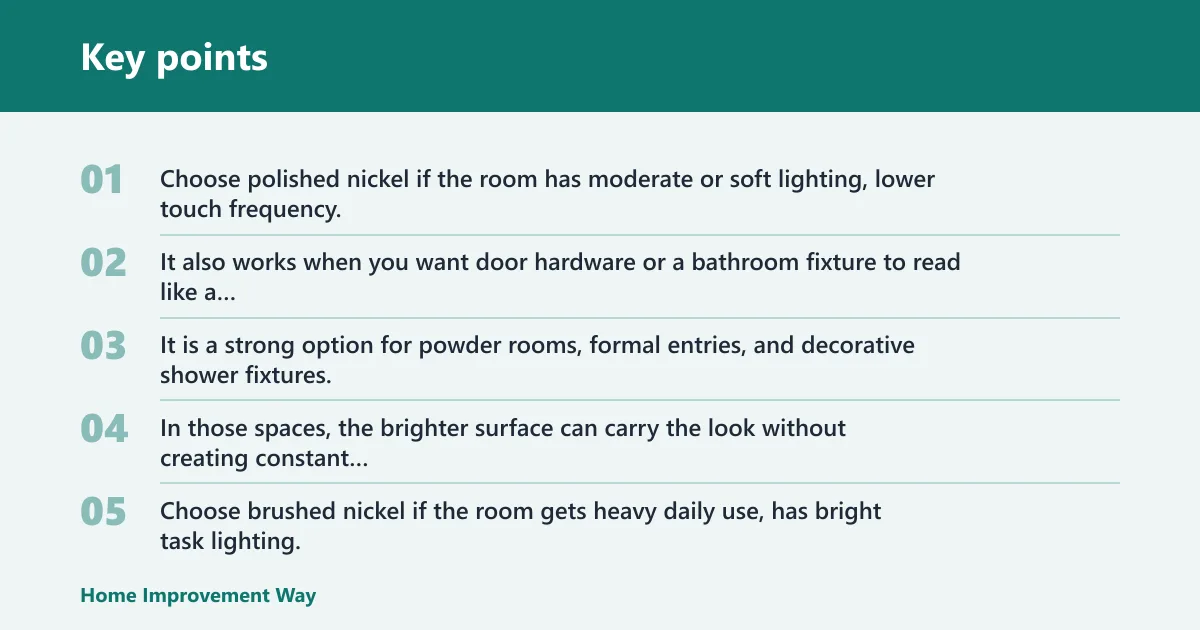
Choose polished nickel if the room has moderate or soft lighting, lower touch frequency, and a design goal that leans traditional, classic, or vintage luxury. It also works when you want door hardware or a bathroom fixture to read like a deliberate accent rather than background hardware.
It is a strong option for powder rooms, formal entries, and decorative shower fixtures. In those spaces, the brighter surface can carry the look without creating constant cleaning chores.
Choose brushed nickel if…
Choose brushed nickel if the room gets heavy daily use, has bright task lighting, or needs a finish that hides fingerprints and water spots better. Kitchens, family baths, and mudroom hardware usually benefit from the softer satin look and lower maintenance.
It is also a safer choice when you want one finish to sit beside other mixed hardware without drawing too much attention. That makes it useful in transitional homes, contemporary kitchens, and farmhouse spaces with lots of touchpoints.
How to mix both finishes in one home without conflict
Yes, polished nickel and brushed nickel can live in the same home. The key is to assign each finish a job: use polished nickel where you want sparkle or formality, and brushed nickel where you want wear tolerance and easier cleaning. Keep the mix intentional by repeating each finish in more than one room.
Say one bathroom uses polished nickel sconces, mirror trim, and a faucet, while the nearby hall bath uses brushed nickel on the shower trim and cabinet pulls. That split works if the polished pieces stay in lower-touch spots and the brushed pieces cover the busiest surfaces.
Cleaning and upkeep guidance
For routine cleaning, use a microfiber cloth with mild soap and water. That is the safest everyday method for both finishes. Skip abrasive cleaners and rough pads, because they can mar the surface or make the finish look uneven.
Why polished nickel asks for more maintenance
Polished nickel needs frequent polishing because its gloss shows residue quickly. If your household has kids, guests, or hard water, plan for more wiping on faucets, pulls, and handles.
Why brushed nickel is easier to live with
Brushed nickel is low maintenance because its texture hides smudges better and does not demand constant polishing. That does not make it maintenance-free, but it usually tolerates everyday use with less visible fuss.
Frequently asked questions
What is the difference between polished nickel and brushed nickel?
Polished nickel has a high-gloss, mirror-like appearance with a warm undertone, while brushed nickel has a soft satin matte appearance with a cooler silver-gray undertone. The biggest practical difference is how they handle marks: polished nickel shows smudges more easily, while brushed nickel hides them better.
Is polished nickel warmer than brushed nickel?
Yes. Polished nickel is typically described as having a warm gold/silver blend undertone, while brushed nickel reads cooler and more silver-gray. In the same room, polished nickel often feels warmer because the glossy surface reflects light with more warmth.
Which finish hides fingerprints better: polished nickel or brushed nickel?
Brushed nickel hides fingerprints better. Its fine brushed texture breaks up reflections, so smudges and water spots are less obvious than they are on polished nickel. That makes brushed nickel a stronger choice for cabinet pulls, faucet handles, and door hardware that get touched often.
Is polished nickel harder to clean than brushed nickel?
Usually, yes. Polished nickel needs frequent polishing because fingerprints and water spots stand out more on the shiny surface. Brushed nickel is low maintenance and usually only needs a microfiber cloth with mild soap and water for routine cleaning.
Does brushed nickel look more modern than polished nickel?
Brushed nickel often reads more modern, transitional, or contemporary, while polished nickel is commonly associated with traditional, classic, and vintage luxury design. That said, room lighting and nearby finishes can change how each one reads, so style is not the only factor.
Can polished nickel and brushed nickel be mixed in the same home?
Yes, and that can work well if you give each finish a job. Use polished nickel where you want a brighter focal point, and brushed nickel where you want lower maintenance on high-use hardware. The mix looks best when the finishes repeat in more than one place.
Sponsored / affiliate links. As an Amazon Associate I earn from qualifying purchases. I may earn additional commission from eligible campaigns.
 GOBEKOR 4 Pack Privacy Door Levers Brushed Nickel Interior Door Handles with Lock Square Lever Door Handles for Bedroom Bathroom Modern Privacy Lever Door Hardware
 GOBEKOR Brushed Nickel Door Handles Interior with Lock Privacy Door Levers for Bedroom Bathroom Nickel Keyless Reversible Square Door Locks 5 Pack