How to Measure a Fence Gate Opening Before Buying Hardware
Measure the opening at the top, middle, and bottom, then buy hardware for the narrowest clear width after subtracting the hinge gap and latch gap the gate needs, which are commonly about 1/2 to 1 inch total for a single swinging gate. Get this wrong and the gate can bind, sag, miss the latch, or need replacement hardware. This guide shows how to record width, height, diagonals, swing direction, post condition, and gate-specific clearances for wood, vinyl, metal, chain-link, and pool gates.
What to measure first


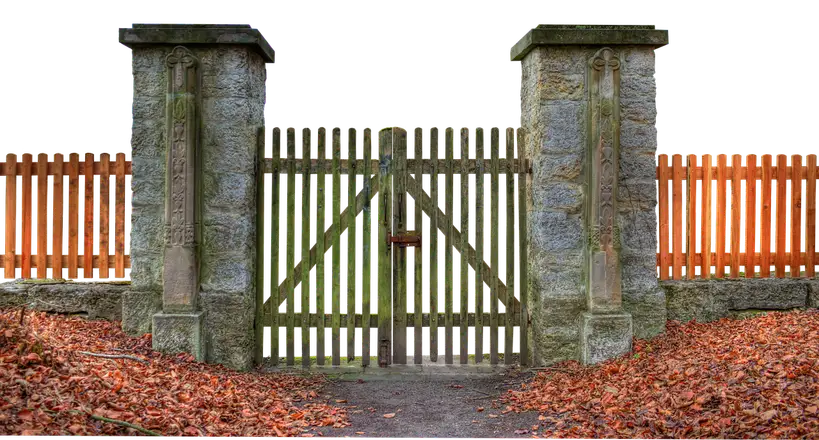
Start with the clear opening inside-to-inside between the posts. Record the top, middle, and bottom widths, then use the smallest number as the buying width unless the opening will be corrected before installation. That keeps you from ordering a gate that fits only at one point.
Do not stop at width. Measure the post height, the diagonal corner-to-corner distances, and the space around the swing path. Those numbers tell you whether the opening is square, whether the posts are plumb, and how much room the gate will need once the hinges, latch, and frame are installed.
Fence gate opening measurement worksheet
| Field | Measurement or check | Example |
|---|---|---|
| Top clear opening | Inside-to-inside width at the top | 47 1/4 in. |
| Middle clear opening | Inside-to-inside width at mid-height | 47 1/8 in. |
| Bottom clear opening | Inside-to-inside width near grade | 46 7/8 in. |
| Buying width | Smallest opening measurement | 46 7/8 in. |
| Post plumb check | Level against each post | Left post leans 3/8 in. at top |
| Diagonal check | Corner-to-corner measurement | Diagonal A 62 3/8 in., Diagonal B 62 7/8 in. |
| Gate leaf target | Finished gate frame width | 46 1/4 in. |
| Hinge-side gap | Space for hinge hardware and movement | 1/4 in. |
| Latch-side gap | Space needed for closing and latch engagement | 1/4 in. |
| Ground clearance | Bottom gap above grade | 1/2 in. |
| Hardware fit check | Post material, fastener type, load rating, latch type | Wood post, strap hinge, gravity latch |
Ordering formula
Use this field check: gate leaf width = smallest clear opening – hinge-side gap – latch-side gap. Then confirm the gate will still clear the ground, nearby walls, fence lines, and any slope along the swing path. For many single gates, the total side gap lands around 1/2 to 1 inch, but the hardware and gate weight control the final number.
Suppose the smallest opening is 46 7/8 inches, the hinge-side gap is 1/4 inch, and the latch-side gap is 1/4 inch. The finished gate leaf target becomes 46 3/8 inches. If the opening narrows at the bottom, that lower number controls the purchase unless you rebuild the posts or trim the opening first.
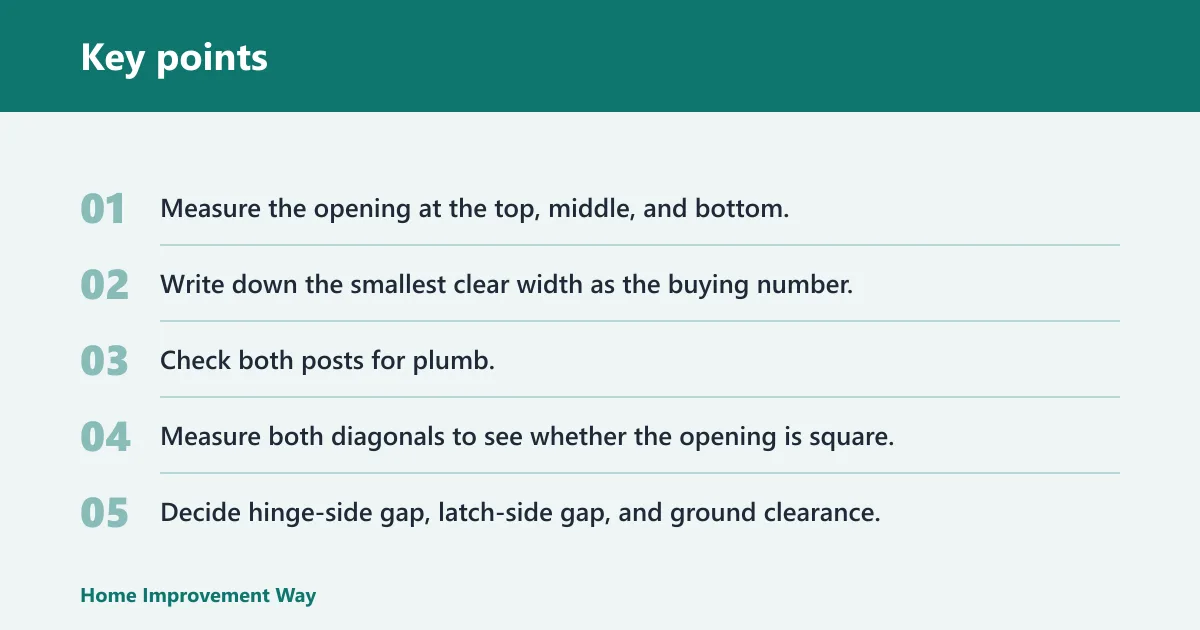
- Measure the opening at the top, middle, and bottom.
- Write down the smallest clear width as the buying number.
- Check both posts for plumb.
- Measure both diagonals to see whether the opening is square.
- Decide hinge-side gap, latch-side gap, and ground clearance.
- Match hinge type, latch type, fasteners, and brackets to the gate material and weight.
- Confirm swing path, slope, wall clearance, and fence-line clearance.
How do you size the gate leaf?
Size the gate leaf from the opening, not the other way around. The leaf is the finished gate frame width, and it must leave room for the hinges to move and the latch to catch cleanly. That makes the leaf slightly smaller than the opening on most single-swing installations.
The opening width and the gate width are different measurements. The opening is the clear space between posts. The leaf is the actual gate you build or buy, including the frame. If the gate is exactly the same width as the opening, the hardware usually has no room to work.
Set the gaps before cutting the frame
Use the chosen hinge and latch to set the gaps. Many common setups leave about 1/4 inch on the hinge side and 1/4 inch on the latch side, but thicker brackets, wider hinges, or a self-closing hinge can change that. Ground clearance is separate and should be checked against grade, snow, and frost movement.
A common first-timer mistake is cutting a 48-inch gate for a 48-inch opening, then discovering the latch side cannot close without scraping the post. The fix is not more force. It is rebuilding the leaf to match the real clear opening and the hardware gap the gate needs.
How do you choose hinges and a latch?

Choose hinges and a latch as a set. The hinge type must carry the gate weight and suit the post material, while the latch must work with the closing gap and mounting direction. A light vinyl gate and a heavy wood gate do not need the same hardware.
For hinges, strap hinges spread load over more frame area and are common on wood gates. Butt hinges fit many framed gates but need solid mounting and enough screw bite. Self-closing hinges and spring hinges are used where automatic closing is needed, including many pool or child-safety setups. Check the listed load rating and confirm the hinge material fits wood, vinyl, metal, or chain-link hardware brackets.
Latch fit and closing gap
Gravity latches, thumb latches, magnetic latches, pool-safe latches, and self-latching latches all need a specific closing gap to engage cleanly. Some mount on the pull side, some on the push side, and some need the striker and catch to align within a narrow range. If the gap is too tight, the latch binds. If it is too wide, it misses.
Fasteners matter here too. Use lag screws for many wood posts, through-bolts where added strength is needed, and machine bolts for metal hardware and some bracket systems. Match the length to the post thickness plus the hardware thickness, and choose corrosion resistance suited to the exposure. Galvanized or stainless hardware is often used outdoors, especially near sprinklers, pools, or coastal air.
Gate weight and sag risk
Gate weight affects hinge size, hinge quantity, and sag risk. Wider or taller gates put more torque on the hinges, so they often need heavier hardware, a third hinge, or a stronger frame. If the gate is heavy, do not rely on a single small hinge set just because the opening is narrow.
Wood gates can swell with moisture, so the gap that looks generous in dry weather may shrink after rain. Vinyl gates can move with temperature, and metal gates can transmit more force to the post if the hinge line is not set square. Build in enough clearance to keep the gate from dragging when conditions change.
What if the opening is out of square?
If the opening is out of square, correct the measurement plan before you order hardware. Check whether each post is plumb, compare the diagonals, and note whether the top is wider than the bottom or the bottom is wider than the top. The smallest width still controls the hardware choice unless you rebuild the opening.
Measure diagonals from opposite corners of the clear opening. If the numbers differ, the opening is not square. A small difference can be handled with hardware adjustment, but a larger difference often means bowed posts, a racked frame, or a grade issue that will affect the gate swing.
Account for slope and seasonal movement
Sloped ground changes ground clearance along the swing path. Frost heave can lift posts and pinch the gate near the bottom. A wall, planter, driveway lip, or fence line can also steal swing room. Check the full arc of the gate, not only the closed position.
Picture a 42-inch opening where the top reads 42 1/4 inches, the middle reads 42 inches, and the bottom reads 41 5/8 inches. If the bottom is the narrowest point, that is the number that protects the order. A gate cut to the top width will likely bind at the lower section once the hardware is installed.
How do I measure a vinyl, wood, or metal gate opening differently?
The measuring method stays the same, but the hardware fit changes with the post and frame material. Wood accepts many lag-screw hinge systems, vinyl often needs reinforcement or purpose-built brackets, and metal or chain-link setups usually depend on specific brackets, clamps, or bolt patterns. Measure the opening the same way, then match the hardware to the post.
Wood gate and wood post fit
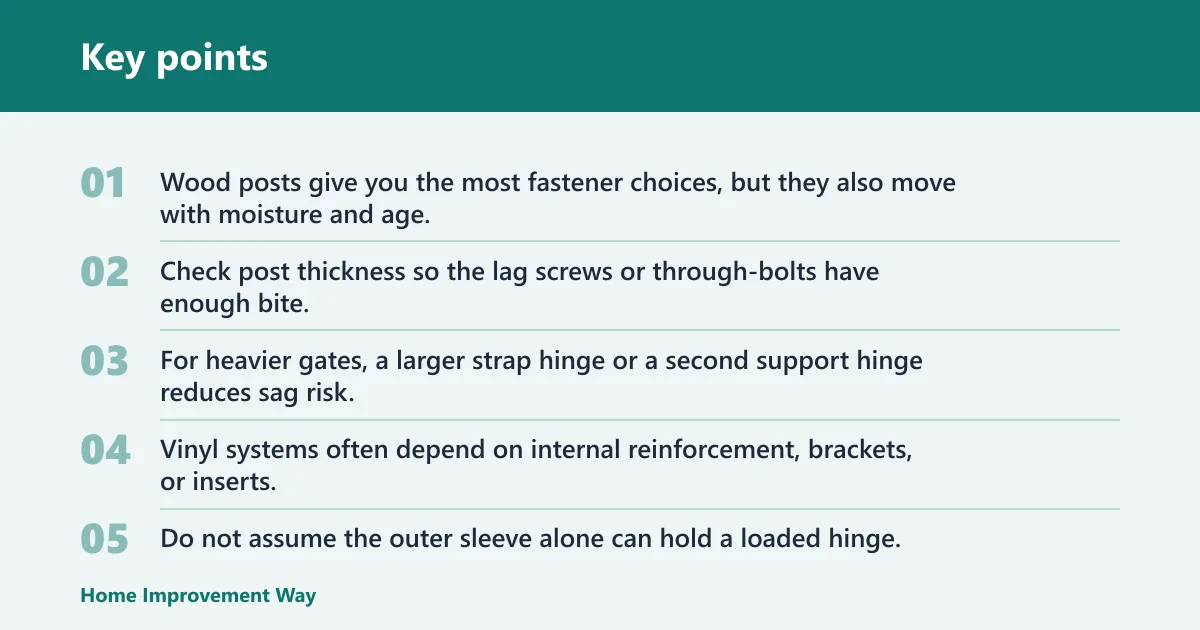
Wood posts give you the most fastener choices, but they also move with moisture and age. Check post thickness so the lag screws or through-bolts have enough bite, and make sure the hinge leaves sit flat on sound wood. For heavier gates, a larger strap hinge or a second support hinge reduces sag risk.
Vinyl gate and vinyl post fit
Vinyl systems often depend on internal reinforcement, brackets, or inserts. Do not assume the outer sleeve alone can hold a loaded hinge. Confirm the post wall thickness, internal reinforcement, and the manufacturer’s bracket pattern before buying. A latch that fits wood may not line up cleanly on a vinyl post without the correct mounting kit.
Metal and chain-link post fit
Metal posts and chain-link terminal posts usually need bolt-through hardware, clamps, or specific gate fittings. Check post diameter, wall thickness, and bracket compatibility before ordering. If the gate is chain-link, also confirm the gate frame diameter and the hinge and latch fittings that match that tubing size.
Frequently asked questions
How do I measure a fence gate opening for hinges and latch?
Measure inside-to-inside between the posts at the top, middle, and bottom, then use the smallest number as the buying width. After that, subtract the hinge-side gap and latch-side gap your hardware needs, then confirm ground clearance and swing room before ordering.
Do I measure the opening width or the gate panel width?
Measure both, but do not confuse them. The opening width tells you the maximum clear space available, while the gate panel width tells you the finished size you need to build or buy. The panel is usually slightly smaller than the opening once the hardware gaps are included.
How much clearance should a fence gate have on each side?
A common starting point is about 1/4 inch on the hinge side and 1/4 inch on the latch side for a single swinging gate, but the hardware and gate weight can change that. Add enough room for the gate to move without rubbing, then confirm the latch still catches cleanly.
What size hinges do I need for my gate opening?
Choose hinge size by gate weight, width, and material, not opening width alone. Heavier or taller gates need larger hinges, more hinges, or both. Check the hinge load rating, confirm compatibility with wood, vinyl, metal, or chain-link hardware, and make sure the fasteners fit the post thickness.
What measurements do I need before ordering self-closing hardware?
Measure the clear opening, the hinge-side and latch-side gaps, the post material and thickness, and the gate weight. Also confirm the swing direction and the amount of closing force the hinge or latch requires. Self-closing and self-latching setups are less forgiving of a crooked post or tight gap.
How do I account for gate sag, swell, or frost heave when sizing hardware?
Leave a little extra clearance where movement is likely, especially on wood gates that swell or on posts that move with frost. Use stronger hinges for heavier gates, and recheck the opening after weather changes if the posts are set in soil. If the bottom gap is too tight now, it will likely get worse later.
Sponsored / affiliate links. As an Amazon Associate I earn from qualifying purchases. I may earn additional commission from eligible campaigns.