How to Protect Door Hardware From Salt Air and Coastal Corrosion
Within about 1/2 mile of open water, or anywhere hit by direct salt spray, many guides recommend 316 stainless or silicon bronze, corrosion-resistant fasteners, and monthly rinsing; farther inland, 304 stainless and quarterly care may be enough. Skip that, and hinges, latches, and screws can seize, pit, stain, or fail early. This guide shows how to match materials and maintenance to coastal exposure.
How chloride residue attacks fasteners and crevices


Salt spray and salt mist leave chloride residue on every exposed surface, then pull moisture from the air and keep metal damp. Chlorides are especially aggressive in crevices, under escutcheons, and around fasteners, where oxygen is limited and corrosion can start even when the visible face still looks fine.
At those points, corrosion often looks like white crust on stainless, brown rust on plated steel, dull gray tarnish on brass, or blisters and chips in coatings. Hidden buildup matters more than the visible face of the handle, because the back side and fastener holes are where the finish loses protection first.
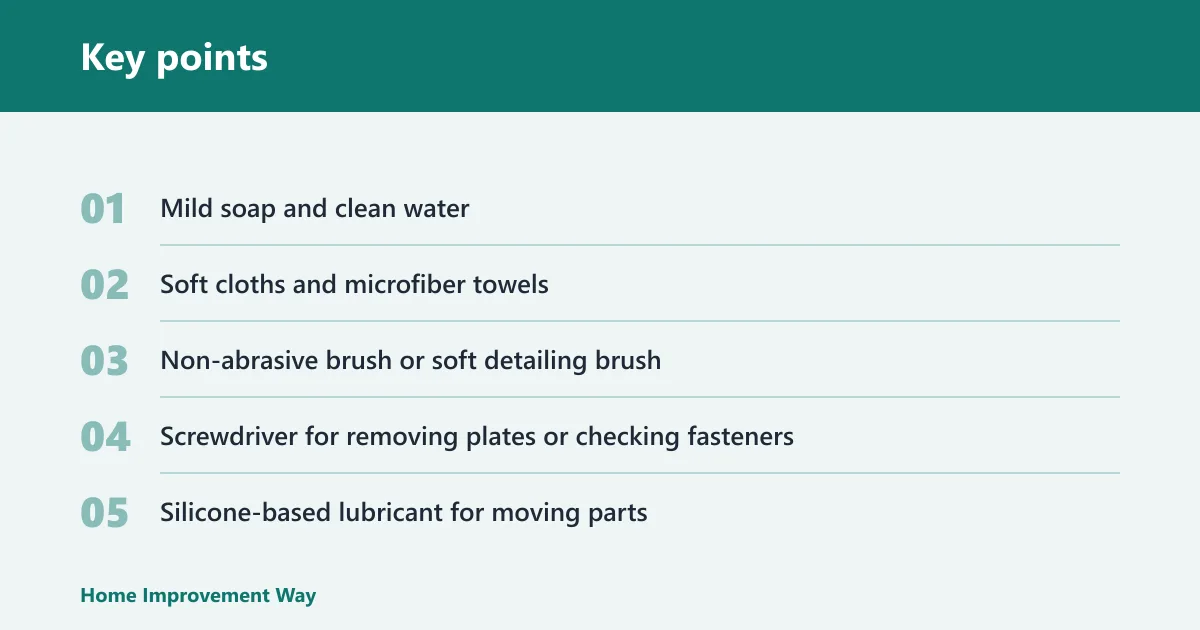
What you’ll need
- Mild soap and clean water
- Soft cloths and microfiber towels
- Non-abrasive brush or soft detailing brush
- Screwdriver for removing plates or checking fasteners
- Silicone-based lubricant for moving parts
- Marine wax or a corrosion inhibitor for exposed metal
How do you clean salt buildup?
Use mild soap and clean water, then flush the hidden edges where salt collects. Most corrosion guidance for metal finishes favors simple washing over harsh cleaners because salt residue keeps working until it is fully removed from seams, screw heads, hinges, and latch pockets.
- Mix mild soap with clean water and wipe the face of the handle, knob, and plate.
- Use a soft brush around screw heads, latch edges, hinges, and escutcheon seams.
- Rinse with clean water so loosened salt does not dry back onto the finish.
- Dry every surface, then open and close the door several times to move trapped moisture out of the latch and hinge areas.
Say your front door faces the harbor and shows a white film around the latch after a windy week. A quick wipe on the handle alone will miss the seam behind the plate, where salt often settles first. Remove the residue there, and the hardware usually stays functional longer.
How often should you inspect coastal hardware?
Inspect based on exposure, not price. Oceanfront doors need the shortest interval because direct salt spray reaches hinges, fasteners, and the latch more often. Near-coastal doors can usually go longer, while sheltered porches may need only periodic checks unless wind-driven mist reaches them.
Coastal hardware protection checklist
| Exposure zone | Recommended material | Finish | Cleaner | Lubricant | Inspection interval | Replacement trigger |
|---|---|---|---|---|---|---|
| Direct oceanfront | 316 stainless; silicon bronze if desired | Brushed or polished stainless; protected bronze finish if specified | Mild soap and clean water after salt events | Silicone-based lubricant every 1 to 2 months | Monthly | Pitting, frozen movement, recurring rust staining, or fastener corrosion that returns after cleaning |
| Near-coastal | 316 stainless, or 304 stainless on partially sheltered doors | Stainless, powder-coated, or PVD finish on a suitable base metal | Mild soap and clean water | Silicone-based lubricant every 2 to 3 months | Every 2 to 3 months | Rust staining, chipped coating, loosening around screws and strike plate, or sticky movement after cleaning |
| Sheltered inland | 304 stainless, powder-coated hardware, or lacquered brass | Powder coat, lacquer, or PVD finish for color retention | Mild soap and clean water | Silicone-based lubricant every 3 to 6 months | Quarterly | Tarnish that will not clean off, chipped finish at edges, visible corrosion around fasteners, or sticking hinges |
During each inspection, check hinge pins, latch movement, strike alignment, screw heads, and the back side of plates. If the handle feels gritty or returns slowly, the problem is often salt in the pivot or latch pocket rather than the visible finish. In coastal conditions, that is usually the first place failure shows up.
How should you protect hardware after salt exposure?
A good routine is simple: remove salt, dry hidden spaces, lubricate moving parts, then protect exposed metal. That order matters, because wax over salt residue can trap contamination, while lubricant on a wet latch can wash away too quickly.
- Clean all exposed hardware with mild soap and water.
- Dry seams, screw heads, hinge barrels, strike plates, and the back of the escutcheon completely.
- Apply a silicone-based lubricant to the latch, hinge pivot, and other moving contact surfaces; add 1 to 2 drops per hinge and recheck movement.
- Apply a thin film of marine wax or a corrosion inhibitor to exposed metal faces, then buff lightly on visible finishes.
Picture a side door with powder-coated handles and a sticky latch after a wet, windy week. Cleaning alone may free the surface, but a dry pivot and a fresh silicone film often matter more than the coating on the handle body. If the hardware is still rough afterward, inspect the screws, hinge barrels, and strike for corrosion.
Which coastal door hardware material is best?

For direct coastal exposure, 316 stainless steel is usually the safest common choice because it resists chloride attack better than 304 stainless in marine environments. That difference matters most where spray, mist, and salt residue reach the hardware often, not just on storm days.
304 stainless is common and useful, but it is less resistant than 316 in salty air, so it fits sheltered exposures better than beachfront ones. Solid brass can work in coastal homes, but it naturally patinas and tarnishes faster in salt air, especially if the finish is unlacquered. Lacquered brass slows tarnish until the coating wears through.
Powder-coated hardware can do well when the coating stays intact, but chips at edges and screw holes are weak points. Once the coating is breached, salt can creep underneath and attack the base metal. PVD finish is often wear resistant and color stable, but it depends on the substrate and any topcoat underneath it; once the base or top layer fails, the system loses protection.
Stainless fasteners matter as much as the handle body. Mixed metals can trigger galvanic corrosion, especially when moisture and salt create an electrolyte bridge between dissimilar metals. For coastal replacements, use matching or compatible stainless fasteners instead of old plated screws.
How do 316 stainless steel, 304 stainless steel, solid brass, powder-coated hardware, and PVD finish compare?
| Material / finish | Best exposure level | Pros | Failure modes | Maintenance burden |
|---|---|---|---|---|
| 316 stainless steel door hardware | Direct oceanfront and near-coastal | Strong chloride resistance; durable base metal; widely recommended for marine exposure | Can still pit or tea-stain if salt is left on seams or low-quality fasteners are used | Low to moderate; rinse and inspect regularly |
| 304 stainless steel door hardware | Sheltered inland and lightly exposed near-coastal areas | Common, affordable, and corrosion resistant in milder environments | More likely than 316 to show staining, pitting, or crevice corrosion in salt air | Moderate; needs more frequent cleaning near the coast |
| Solid brass hardware | Sheltered inland or design-driven coastal use with acceptance of patina | Classic appearance; can develop an even patina; useful when appearance is part of the design | Tarnish, darkening, lacquer wear, and pitting if exposed to salt and moisture over time | Moderate to high; finish care matters |
| Powder-coated hardware | Sheltered inland and some near-coastal settings | Color options; coating can shield the base metal when intact | Chipping at edges, scratches at screw holes, and underfilm corrosion after coating damage | Moderate; inspect chips and keep touchups timely |
| PVD finish | Near-coastal and sheltered inland, depending on base metal | Hard-wearing appearance; good color retention; often more scratch resistant than decorative plating | Protection depends on the base metal and underlying layers; damage can expose the substrate | Low to moderate; clean gently and avoid abrasives |
What are the most common mistakes?
Mixed metals are a frequent weak point. A 316 handle on cheap plated screws can still corrode early, and a stainless plate mounted with rusty fasteners will stain around the heads first. Replace screws with compatible stainless fasteners whenever you upgrade exterior hardware.
Another mistake is treating every finish the same. Brass, PVD, powder coat, and stainless fail in different ways, so cleaning and protection should match the material. Abrasive pads, steel wool, and harsh chemicals can scratch the finish or strip protective layers, which gives salt a better path in.
Do not skip the back side of plates, strikes, hinges, and latch pockets. Salt often settles where you cannot see it, then the hardware starts sticking before the face shows obvious damage. Also, do not assume a thick coating will save already pitted metal; pitting is usually a sign the base material has been compromised.
When is coastal hardware too far gone?
Replace the hardware when pitting is deep, movement stays stiff after cleaning and lubrication, or corrosion keeps returning around screw heads and seams. Surface residue can usually be cleaned, but active metal loss, frozen pivots, and flaking coatings usually mean the protective system has already failed.
For brass, heavy tarnish alone is not always a replacement signal. Unlacquered brass will darken naturally, while lacquered brass should still have a fairly even finish. If the brass is deeply pitted, loose, or corroding at the screws, replacement is the better call than polishing away metal.
Frequently asked questions
How do I protect door hardware from salt air?
Use corrosion-resistant hardware, rinse it on a regular schedule, and pay attention to hidden areas first. For direct ocean exposure, 316 stainless with stainless fasteners is the strongest general choice. Finish with a silicone-based lubricant on moving parts and a thin wax or inhibitor film on exposed faces.
What is the best finish for coastal door hardware?
For the harshest exposure, 316 stainless with a brushed or polished finish is usually the safest choice because the base metal matters more than color. PVD looks durable and color-stable, but it depends on the substrate and topcoat. In sheltered areas, powder coat or lacquered brass can also work.
How often should I clean door hardware near the ocean?
Direct oceanfront hardware usually needs monthly cleaning, especially after windy weather or salt spray. Near-coastal doors often do well with cleaning every 2 to 3 months, while sheltered doors can often be cleaned quarterly. If you can feel grit near the latch or hinges, clean sooner.
Can I use WD-40 on salt-corroded door hardware?
It can free stuck parts short term, but it is not the best long-term lubricant for coastal door hardware. After cleaning away salt and drying the area, switch to a silicone-based lubricant for hinges and latch parts. If the hardware is pitted or frozen, cleaning alone will not restore it.
How do I stop brass door hardware from tarnishing near the coast?
Choose lacquered brass if you want slower tarnish, and keep the coating intact. Unlacquered brass will patina naturally, which is expected in coastal air. Clean with mild soap, dry well, and apply a non-abrasive marine wax only if the finish allows it; do not polish aggressively.
Should I choose stainless steel or brass for coastal doors?
Choose stainless steel, especially 316, if the door faces direct salt spray or wind off the water. Brass is better for a specific look and can work in milder settings, but it needs more tolerance for patina and tarnish. In either case, use stainless fasteners and a regular cleaning schedule.
How do I remove salt buildup from door handles and hinges?
Wash the hardware with mild soap and clean water, then work into the seams, hinge barrels, screw heads, and latch pocket with a soft brush. Rinse thoroughly and dry completely, because residue left in crevices can keep attracting moisture and restarting corrosion. Use a silicone-based lubricant only after the parts are fully dry.
Sources
- U.S. General Services Administration, Green Procurement
- U.S. Navy, Corrosion Control and Prevention
- National Association of Corrosion Engineers (AMPP), Corrosion resources and standards
- NOAA, Ocean service and coastal environment information
Sponsored / affiliate links. As an Amazon Associate I earn from qualifying purchases. I may earn additional commission from eligible campaigns.