5 Best Door Security Hardware for Humid Climates: We Compared
For coastal exposure, choose 316 stainless door hardware with stainless fasteners; for inland humidity, 304 stainless or zinc-nickel coated hardware is usually enough, but use sealed lock cylinders and corrosion-rated screws either way. Wrong materials pit, seize, and loosen fasteners fast, turning a deadbolt into a repair bill. This guide compares materials, lock types, and screw grades by exposure level so you can match hardware to your climate.
Quick comparison
| Product | Badge | Best for | Price | ||
|---|---|---|---|---|---|
 |
Estmoon 2 Pack Exterior Door Lock Set with Deadbolt Lock,Estmoon | Our pick | Satin nickel · keyed alike · deadbolt set | $24.99
Price as of 28 Oct 2026
|
View |
 |
Signature Hardware Marconi Solid Brass Keyed Entry DoorSignature Hardware | Upgrade pick | Full plate · solid brass · keyed entry | $402.57
Price as of 28 Oct 2026
|
View |
 |
304 Stainless Steel Door Hinges 4 Inch Heavy Duty Ballqtanber | Also great | 4-inch · 304 stainless steel · ball bearing | $27.99
Price as of 28 Oct 2026
|
View |
 |
MOSECYOU Extended Lip Strike Plate 2" x 2-1/4", Heavy DutyMOSECYOU | Pair with it | 2×2-1/4 in. · stainless steel · strike plate | $9.49
Price as of 28 Oct 2026
|
View |
 |
ULTRALOQ U-Bolt Smart Lock, 5-in-1 Keyless Entry Door LockULTRALOQ | Also great | 5-in-1 · ANSI Grade 1 · smart lock | $69.99
Price as of 28 Oct 2026
|
View |
Start with exposure, not strength alone. A front door under a roof overhang fails differently than a door hit by wind-driven rain or salt spray every week.
The setup usually changes first at the screws, strike hardware, and finish, then at hinges and the lock body. The lock by itself is only part of the system.
How we chose
The comparison below follows four filters: corrosion resistance by material, fastener and strike-point quality, lock type and code concerns, and finish durability outdoors.
We also weigh where each part fails first in humid weather. That means screws, springs, finish, cylinder, hinges, strike hardware, and frame anchoring all matter.
One more filter matters here: exposure level. Inland humidity, coastal salt air, direct rain, and a semi-enclosed entry do not need the same hardware.
Humid-climate hardware selector table

| Exposure scenario | Recommended materials | Finish type | Screw specs | Upgrade priorities |
|---|---|---|---|---|
| Inland humidity | 304 stainless steel for hinges and strike parts; coated steel or zinc-nickel hardware acceptable for lower-cost trim | Powder-coated or high-quality painted finish over corrosion-resistant substrate | Corrosion-rated screws with enough length to reach solid framing at the strike; stainless fasteners where visible weathering is common | Reinforced strike plate, long strike plate screws, sealed lock cylinder, then 304 stainless hinges |
| Coastal salt air | Marine-grade hardware with stainless fasteners; 316 stainless is the safer target for exposed components | Durable exterior coating over corrosion-resistant substrate; avoid thin decorative plating on exposed parts | Stainless screws throughout the exposed assembly; use longer screws at strike and hinge locations where framing allows | Marine-grade hinges, reinforced strike plate, stainless fasteners, sealed cylinder, then door closer if the door tends to hang open |
| Direct rain exposure | 304 stainless steel for sheltered parts; marine-grade hardware for the most exposed faces and edges | Powder-coated or high-quality painted finish that protects the substrate from repeated wetting | Corrosion-resistant screws sized to anchor into framing, not just trim; replace any mismatched screws early | Strike plate and screws first, then hinges, then cylinder and finish on exposed hardware |
| Semi-enclosed entry | 304 stainless steel or coated steel with sealed edges; corrosion-resistant hardware on the outer face | Powder-coated or quality painted finish, especially on the exterior side | Long screws at strike and hinge points; use upgraded screws where the frame is soft or already distorted | Reinforced strike plate, security hinge pins, sealed lock pocket, and finish touch-up at worn edges |
Which hinges and strike hardware last longest?
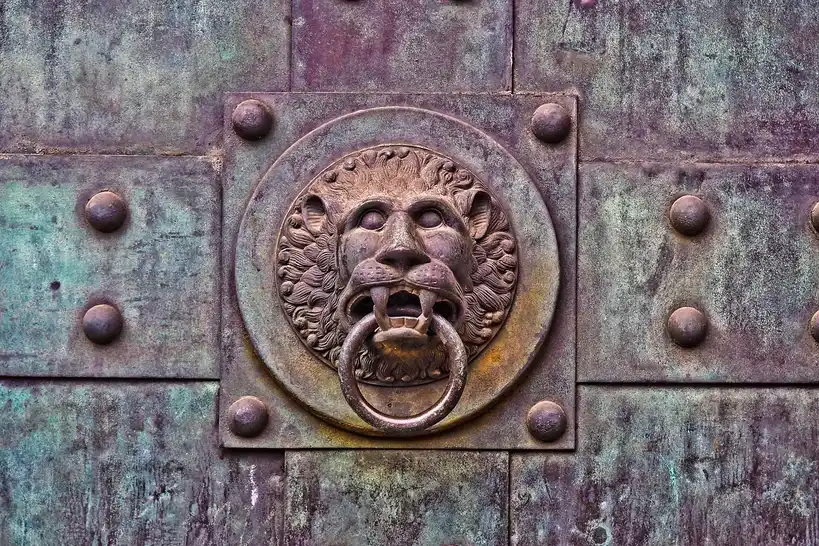
For most humid-climate doors, 304 stainless hinges, a reinforced strike plate, and long strike plate screws give the best mix of cost and durability. In coastal salt air, marine-grade hardware is worth the added cost because exposed parts fail faster there, especially screws, hinge surfaces, and strike hardware.
Security hinge pins
Security hinges often include non-removable pins to prevent lift-off from outside. That matters on exterior doors because a pry attack can target the hinge side when the lock side is reinforced.
Stainless or corrosion-resistant hinge bodies are the better choice in humid weather. Plated hinges can hold up for a while in inland humidity, but plating chips or wears and then rust starts at the exposed metal and hinge pin area.
Reinforced strike plates
A reinforced strike plate with long screws can increase resistance to forced entry. It also helps when humidity makes a door swell and the latch starts hitting the edge of the strike plate instead of seating cleanly.
That matters more than most buyers expect. A weak strike point can let a deadbolt bind, scrape, or fail to throw fully when the door frame shifts a little.
Long strike plate screws
Long strike plate screws matter because they reach the wall stud or other solid framing instead of only biting into the jamb trim. That gives the strike point a stronger anchor when the door sees kick force or repeated slamming. A 3-inch screw is a common long-screw upgrade for this job.
If the door frame is wood, this upgrade is one of the most cost-effective changes you can make. Steel frames are standard in commercial settings because they resist forced entry better than wood, but a well-anchored wood frame still benefits from longer screws and a reinforced plate.
Door frame anchoring
The door frame is the foundation of door security. If the frame is soft, swollen, split, or loosely anchored, a good lock will still perform poorly.
Check the frame first at the strike side and hinge side. If you see soft wood, stripped holes, or gaps after seasonal swelling, fix the frame before spending more on the lock body.
Which lock type fits your climate and security needs?
For many homes in humid climates, a corrosion-resistant single-cylinder deadbolt with a sealed cylinder and a reinforced strike is often the best balance. Double-cylinder deadbolts can add security on glassy or exposed doors, but they can conflict with the need for free egress from the inside in many settings, so they are not the default choice.
304 stainless steel vs marine-grade hardware
304 stainless steel fits inland humidity, covered entries, and many semi-enclosed doors because it resists corrosion well enough for those exposures. Marine-grade hardware, meaning 316 stainless, is the better call for coastal salt air and wet-room type exposure, where finish durability and corrosion resistance need a bigger margin.
Do not treat all stainless as equal. 304 stainless steel is a strong baseline for humid climates, but salt air is harder on exposed components, fasteners, and springs, which is why marine-grade hardware, meaning 316 stainless, earns its higher cost near the coast.
Deadbolt choices and fire-safety tradeoffs
Deadbolts can be single or double cylinder, but double-cylinder versions are less common in business where free egress from the inside must be maintained under applicable fire and life-safety rules. That same concern matters at home whenever an exit may need fast opening from inside.
Use a double-cylinder deadbolt only where the layout and local rules allow it and where break-in risk outweighs egress concerns, such as certain doors with nearby glass. For most exterior doors, a single-cylinder deadbolt is simpler, safer, and easier to live with.
Electric strike basics for access control
What should you replace first on a sticky exterior door?
Start with the strike screws, strike plate, and hinge hardware before replacing the whole lock. Humidity often shows up first as a sticky latch, a door that drags at the top or bottom, or a deadbolt that no longer lines up cleanly with the strike.
Can humid weather make door hardware less secure over time? Yes. Swelling changes alignment, corrosion weakens fasteners, and worn springs or cylinders stop the lock from engaging fully, even if the hardware still looks fine from the outside.
- Replace the strike plate and use long screws that reach solid framing.
- Check hinge condition and upgrade to security hinges with non-removable pins if the door is lift-prone.
- Replace a rough or loose cylinder before it starts binding in humid weather.
- Inspect the frame for soft wood, split holes, or movement around the strike and hinge points.
- Add or repair a door closer if the door is leaving a gap or staying partly open.
Say your front door in inland humidity starts rubbing the jamb after a wet week. A reinforced strike plate with long screws may help the latch seat more cleanly again, while a full lock replacement would do little if the real problem is frame movement.
Suppose a coastal side door has orange staining on the screws and a stiff latch. That points to fastener corrosion first, not a bad deadbolt design, and the replacement should move toward stainless fasteners and better exterior-rated hardware.
Which finish holds up best outdoors?
Powder-coated and high-quality painted finishes usually last longer outdoors than thin decorative plating because they protect the substrate from moisture. That protection matters on exterior hardware, but the finish is not a substitute for corrosion-resistant metal underneath.
Powder-coated and painted finishes
A corrosion-resistant finish helps slow moisture attack on the base metal. It is especially useful on exposed exterior hardware, door closers, and trim pieces that see rain or condensation.
Where the finish cracks, chips, or wears through, corrosion starts. That is why finish quality matters most on visible edges, screw heads, and parts handled often by hand.
What finish can and cannot protect
Finish protects the substrate. It does not rescue bad screws, a weak frame, a poorly sealed lock pocket, or steel that is already exposed at cut edges.
High-quality doors should specify edge and bottom-rail sealing, including treatment of cut faces and lock pockets. Moisture problems often show first at cut edges and the bottom edge of the leaf, and the lock pocket is a weak point if not sealed after machining.
For wet-room doors or direct-rain entries, sealing matters as much as the visible finish. A homogeneous WPC or PVC core can be a major help for humid climates, but the hardware still needs corrosion-resistant components and sealed hardware openings.
Best door security hardware for humid climates
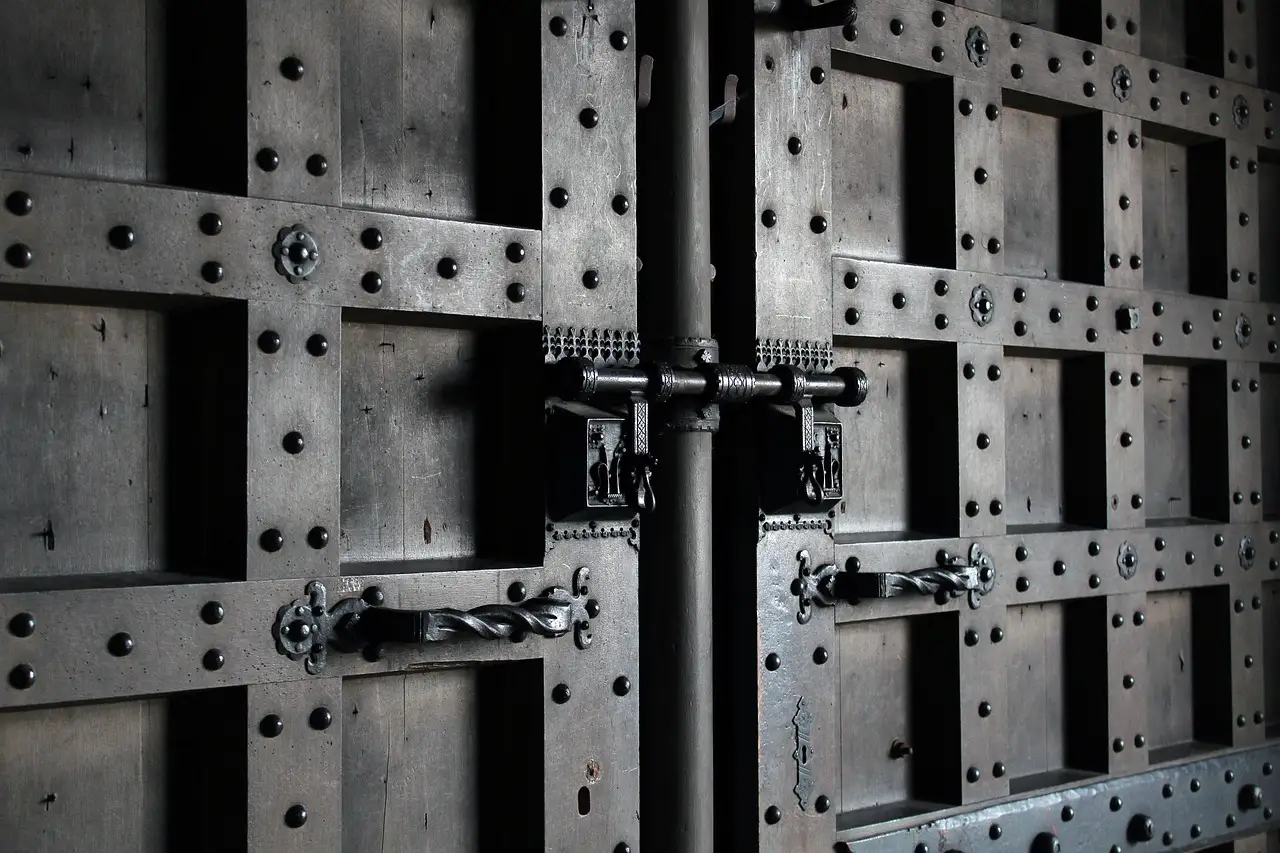
The best overall setup for most humid-climate homes is 304 stainless or coated corrosion-resistant hardware, a reinforced strike plate with long screws, security hinges with non-removable pins, and a single-cylinder deadbolt with a sealed cylinder. Near the coast, step up to marine-grade hardware, meaning 316 stainless, and stainless fasteners throughout exposed parts.
Best overall setup by exposure
Inland humidity: 304 stainless hinges, a reinforced strike plate, long strike plate screws, and a quality single-cylinder deadbolt usually give the best value.
Coastal salt air: marine-grade or 316 stainless exposed hardware, stainless fasteners, and a sealed cylinder are the safer long-life choice.
Direct rain exposure: prioritize finish durability, sealed edges, and strike-point reinforcement before spending on decorative trim.
Semi-enclosed entry: 304 stainless often works well if the frame is sound and the hardware is not taking direct spray.
Which door lock material resists rust in coastal humidity? Marine-grade stainless hardware is the better answer when salt air is present. For a covered entry inland, 304 stainless steel is often enough if the fasteners and cylinder are also corrosion rated.
Cost versus longevity
Brass can look good and resist corrosion reasonably well in some settings, but exposed coastal hardware still needs careful maintenance and the right finish. Coated steel is cheaper up front, yet it usually asks for earlier replacement in wet or salty exposure.
304 stainless gives a strong middle ground for many homes. Marine-grade hardware costs more, but it is the smarter buy where salt, wind, and spray shorten the life of exposed parts.
Quick picks
- Best budget entry set: Estmoon keyed-alike deadbolt set for inland humidity and simple replacement jobs.
- Best hinge upgrade: qtanber 304 stainless steel hinges for a rust-resistant exterior hinge swap.
- Best strike upgrade: MOSECYOU extended lip strike plate for a stronger frame-side reinforcement.
- Best smart-lock option: ULTRALOQ U-Bolt for access control where keyless entry matters more than a traditional handleset.
- Best premium traditional handleset: Signature Hardware Marconi solid brass handleset for a more substantial front-door look, with maintenance tradeoffs.
Estmoon keyed-alike deadbolt set: best for low-cost replacement
This is a practical pick if you want a low-cost entry set for inland humidity or a rental where keyed-alike convenience matters. Based on the manufacturer details, it includes both the deadbolt and keyed entry knobs, and the reversible fit helps on left- or right-handed doors.
The drawback is clear: at this price, it is better for value and convenience than for the longest coastal lifespan. Use it where the exposure is modest and the frame, strike, and screws are still in good shape.
Signature Hardware Marconi solid brass handleset: best for front-door style
This suits a front door where appearance matters and you want a full-plate handleset with a solid-brass build. It is a higher-end option for homeowners who want a traditional keyed entry with a matching interior knob.
The drawback is cost. It makes sense only if you want the brass look and are willing to maintain it, especially in humid or coastal air where exterior finishes take more wear.
Qtanber 304 stainless steel hinges: best for rust-resistant hinge replacement
This is the clearest hinge upgrade in the list for humid weather. The 304 stainless steel construction is the main appeal, and the ball bearing design should help the door swing more smoothly than worn basic hinges.
The drawback is that hinges alone will not solve a weak frame or a loose strike. If your door is sticking, pair these with strike hardware and screw upgrades instead of treating them as a full fix.
MOSECYOU extended lip strike plate: best for strike reinforcement
This is the best match for a sticky or vulnerable latch area because it focuses on the strike point. The kit includes reinforced Torx screws and a bit, plus wood dowels for worn screw holes, which helps when the jamb has already started to fail.
The drawback is that it is a strike upgrade, not a full security system. If the frame is soft, warped, or badly split, you still need to repair the substrate behind it.
ULTRALOQ U-Bolt smart lock: best for access control
This is the right kind of upgrade when you want keyless entry, app control, and a modern deadbolt package. Based on the manufacturer details, it offers five access methods and auto lock and auto unlock features, which can suit busy households and some secondary entries.
The drawback is that smart features do not remove humidity problems. You still need a sound frame, a good strike, and weather-aware installation so the lock can actually engage cleanly.
Which one should you buy?
If your climate is inland and the door is under cover, start with the qtanber hinges and the MOSECYOU strike plate before you spend on a full lock set. That combination addresses the parts that fail first in humid weather.
If you are near salt water, move up to marine-grade hardware or the strongest stainless option you can fit, then use stainless fasteners throughout the exposed assembly. The extra cost is easier to justify there because exposed screws, springs, and finishes fail sooner.
If you need the easiest low-cost full replacement, the Estmoon set is the simplest all-in-one answer for a basic exterior door. If you want access control, the ULTRALOQ is the better fit, but only after the frame and strike are stable.
A common first-timer mistake is replacing the deadbolt while leaving worn screws and a soft strike pocket in place. That solves the symptom, not the cause.
Frequently asked questions
What is the best door security hardware for humid climates?
For most homes, the best mix is 304 stainless or coated corrosion-resistant hardware, a reinforced strike plate with long screws, security hinges with non-removable pins, and a sealed single-cylinder deadbolt. Near salt air, move up to marine-grade hardware and stainless fasteners on exposed parts.
Which door lock material resists rust in coastal humidity?
Marine-grade stainless hardware is the safer choice in coastal humidity because salt accelerates corrosion on exposed parts, screws, and springs. 304 stainless steel works well farther inland or under cover, but it has less margin when salt spray and wet air are constant.
Are stainless steel hinges better than plated hinges in humid weather?
Yes. Stainless steel hinges usually last longer because the base metal resists corrosion better than plated hinges, which can chip, wear, and rust at the edges or pin area. For exterior doors, that difference matters most where humidity, condensation, or rain reach the hardware often.
Do I need a reinforced strike plate in a humid climate?
Yes, especially if the door already sticks or the frame has softened. A reinforced strike plate with long screws helps resist forced entry and also gives the latch a more stable target when humidity causes swelling or frame movement.
What hardware should I replace first if my exterior door is sticking from moisture?
Replace the strike plate and screws first, then inspect the hinges and frame. Humidity often shows first at the cut edges, bottom edge, and lock pocket, so a sticky door usually means the alignment or framing needs attention before the lock body does.
Should I choose 304 stainless or marine-grade hardware for a coastal home?
Choose marine-grade hardware for a coastal home if the door sees salt air or direct exposure. Choose 304 stainless only if the entry is well sheltered and you are comfortable with more maintenance. Salt exposure is the line where the extra cost usually starts to make sense.
Sponsored / affiliate links. As an Amazon Associate I earn from qualifying purchases. I may earn additional commission from eligible campaigns.