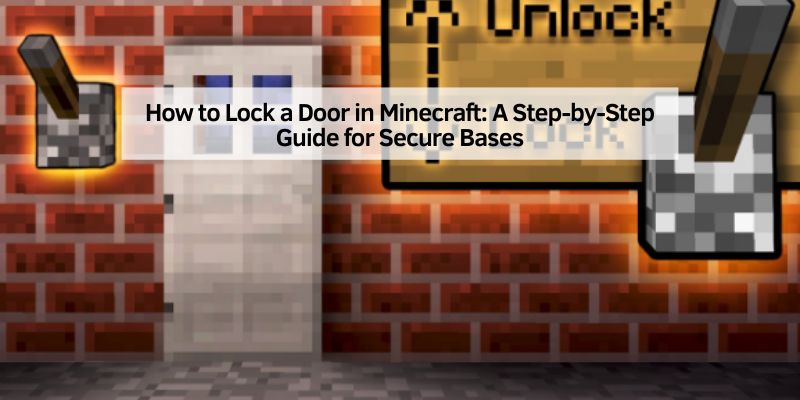
How to Lock a Door in Minecraft: 7 Redstone & No-Mod Tricks
Iron doors are the only real lock in Minecraft — crafted from 6 iron ingots, they open solely with redstone power, so zombies can never break them, even on Hard difficulty. Wooden doors, by contrast, splinter under zombie attacks within seconds on Hard mode. This guide covers all 7 practical locking methods: buttons, hidden levers, a full redstone passcode combination lock, trapdoor entrances, and defenses against human griefers on multiplayer servers.
Why Locking Doors in Minecraft Matters
Doors are a base’s first line of defense. Wooden doors can be broken by zombies on Hard difficulty, and even iron doors can be bypassed by clever players who dig around walls in multiplayer. Locking your door keeps mobs out and protects your loot from griefers — a zombie that breaks through a spruce door at 2 AM can wreck a chest room in seconds.
Whether you’re hiding from creepers or safeguarding diamonds in a well-built base, a properly locked door removes the single biggest weakness in an otherwise solid base.
Types of Doors in Minecraft
Before locking techniques, here’s what each door type actually does when a mob or player tries to get through:
| Door Type | Material Needed | Can Mobs Break It? | Opens by Hand? |
|---|---|---|---|
| Wooden (Oak, Spruce, etc.) | 6 Planks | Yes (Zombies, Hard mode) | Yes |
| Iron | 6 Iron Ingots | No | No — redstone only |
| Copper | 6 Copper Ingots | No | Yes |
| Trapdoor (Wood/Iron) | 4 Planks or 4 Ingots | No (if placed correctly) | Wood: yes / Iron: no |
Iron doors are the only door type that is both mob-proof and immune to being opened by hand — a player or villager standing next to one cannot right-click it open the way they can a wooden or copper door. That’s the detail that actually matters for a lock: copper doors are mob-proof but not player-proof, since anyone can walk up and open one with a simple right-click, the same as a wooden door. Copper’s four oxidation stages (unaffected, exposed, weathered, oxidized) only change its color, never its function — a fully oxidized copper door still opens by hand exactly like a fresh one, so oxidation is cosmetic, not a security feature.
📊 Iron doors respond only to redstone power and cannot be opened by hand or broken by any mob, including Hard-difficulty zombies. — Source: Minecraft Wiki, Door mechanics, 2026
Basic Ways to Lock a Door Without Redstone
You don’t need redstone wiring to secure a base. These three methods work with nothing more than a crafting table.
Using an Iron Door with a Button
Iron doors are the go-to for basic security. Unlike wooden doors, mobs can’t break them, and they only open with redstone power. Here’s the setup:
- Craft the door: combine 6 iron ingots in a 2×3 pattern on your crafting table.
- Place it: set the door in your doorway.
- Add a button: craft a button (1 wooden plank or 1 stone) and place it on a block next to the door.
- Open it: press the button — the door closes again automatically after a few seconds.
This setup is fully mob-proof since zombies can’t press buttons. In multiplayer, though, any player can use the button, so this works best for solo play or trusted servers.
Hiding a Lever Inside Your Base
Keep a lever hidden on the inside of your base so only you can open the door from within:
- Install an iron door.
- Place a lever on a block inside your base, next to the door.
- Flip the lever to open or close the door.
This works well for single-player games since the door stays locked while you’re out exploring. In multiplayer, other players can still break through walls to get inside, so pair it with hidden redstone (see the multiplayer section below).
The Painting Trick for Wooden Doors
This one’s sneaky: hide a wooden door behind a painting instead of relying on redstone at all.
- Craft a wooden door and place it in your doorway.
- Craft a painting (8 sticks and 1 wool) and place it on the wall in front of the door.
- Walk through the painting to enter your base.
The painting obscures the door, making it hard for others to spot. It’s not foolproof since players can break the painting, but it’s an effective way to hide your entrance on a busy server.
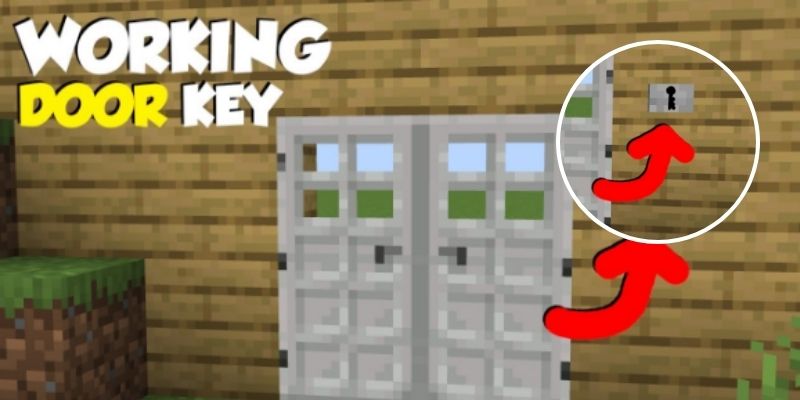
Redstone-Powered Locking Systems
Once you’re comfortable with redstone, you can build mechanisms that mobs and casual players can’t easily bypass. These take more setup time but hold up far better under real griefing attempts.
Pressure Plate Lock with a Hidden Switch
Pressure plates are handy, but mobs can trigger them by accident. Adding a hidden kill-switch fixes that:
- Place an iron door in your doorway.
- Put a pressure plate (2 stone or 2 wooden planks) in front of the door, outside.
- Dig a 2-block deep hole next to the door and place redstone dust at the bottom.
- Connect the pressure plate to the redstone with a trail of redstone dust.
- Place a lever on a block inside your base, connected to the redstone circuit.
- Flip the lever to “lock” the door by breaking the redstone connection.
When the lever is off, the pressure plate works normally. When it’s on, the door won’t open even if someone steps on the plate — effectively a deadbolt for when you’re away from your base for long stretches.
Simple Lever Lock with Redstone
A straightforward redstone lock, and usually the first one players master:
- Craft an iron door and place it in your doorway.
- Place a lever on a block next to the door, inside.
- Run a line of redstone dust from the lever to the door, underground or hidden behind walls.
- Flip the lever to power the door open or closed.
You can hide the lever anywhere — a secret room, under a block, or behind a furnace — since the redstone dust trail is what actually needs to stay concealed, not the lever itself.
Advanced Passcode: Redstone Lock
A passcode lock uses a row of levers to create a combination that only you know — the most secure option on this list, and the one that takes the longest to build.
Materials Needed
- 1 iron door
- 6 levers
- 6 blocks (any type, like stone or wood)
- Redstone dust (about 10–15 pieces)
- 3 redstone torches
- 1 redstone repeater (optional, for longer circuits)
Step-by-Step Guide
- Build the Frame: place your iron door in the doorway. In front of the door, place 6 blocks in a row (stone gives the cleanest look) — these hold your levers.
- Add Levers: place a lever on each block. Label them with signs (1 through 6) to keep track.
- Set the Passcode: decide your code — for example, levers 2, 4, and 6. Place redstone torches on the back of the blocks corresponding to your code.
- Wire the Circuit: place redstone dust on top of and below the blocks without torches. This creates a circuit that only activates when the correct levers are flipped.
- Connect to the Door: dig a trench from the circuit to your door and run redstone dust to a block under the door. Add a redstone repeater if the circuit is long.
- Test the Lock: flip your chosen levers to “on.” The door should open. Flip any other lever and the circuit breaks, keeping the door locked.
“I spent a whole weekend building my first passcode lock and set it up on a multiplayer server — my friends spent days trying to guess the lever combination and never cracked it. That’s the moment I stopped bothering with painting tricks and started wiring every base door this way.”
This lock is a genuine deterrent in multiplayer since guessing a 6-lever combination by trial and error means flipping through up to 64 possible combinations while a base owner watches the server log.
Locking Trapdoors for Secret Entrances
Trapdoors are smaller than doors and blend into floors or walls, making them ideal for hidden bases. Locking one works the same way as an iron door:
- Craft an iron trapdoor (4 iron ingots).
- Place it in a 1×1 hole in your floor or wall.
- Add a lever or button nearby, connected with redstone dust.
- Flip the lever to open or close the trapdoor.
Iron trapdoors hidden under a carpet or behind a waterfall add an extra layer of security since, unlike wooden trapdoors, they can’t be opened by hand and won’t show a visible interaction prompt to a player just walking past.

Tips for Multiplayer Server Security
Multiplayer changes the equation entirely — other players can break blocks or find hidden levers that would stop a mob cold. These tactics hold up against actual griefers:
- Hide Your Redstone: cover redstone circuits with blocks to keep them out of sight — bury dust trails underground or route them behind walls.
- Use Obsidian: surround your door with obsidian to make it harder to break — it takes far longer to mine without a diamond pickaxe than stone or wood.
- Add a Tripwire Alarm: place a matching pair of tripwire hooks up to 40 blocks apart and string them together, then run redstone from the hook to a note block or dispenser trap. Anyone crossing the line near your door trips the circuit before they ever reach it — a vanilla early-warning system most guides skip entirely.
- Build Traps: add a pressure plate trap near your door that drops intruders into lava or a pit.
- Secret Entrances: instead of a main door, use a hidden piston door, or build your whole base inside a woodland mansion-style structure with fewer obvious entry points — both are far harder to spot than an obvious front door.
Multiplayer security means assuming someone’s trying to sneak in and building your redstone accordingly — visible wiring is a map straight to your loot.
Common Mistakes to Avoid
These are the pitfalls that trip up most players locking a door for the first time:
- Exposed Redstone: leaving redstone visible makes it easy for players to break your circuit. Always hide it.
- Weak Doors: using wooden doors in Hard mode is asking for zombie trouble. Stick with iron or copper for mob-proofing.
- Relying on Copper for Player Security: copper doors block mobs but open by hand for any player — use iron if you need to keep other players out, not just zombies.
- Simple Codes: if your passcode is too obvious (like levers 1-2-3 in order), players will guess it. Mix up the pattern.
- No Backup Plan: always have a second way into your base, like a hidden tunnel, in case you lock yourself out.
Double-checking your setup before you rely on it avoids most of these headaches entirely.
Frequently Asked Questions
How do I craft an iron door in Minecraft?
To craft an iron door, you need 6 iron ingots. Open your crafting table and arrange the ingots in a 2×3 pattern (two columns, three rows). Drag the door to your inventory — it’s simple and mob-proof once placed.
Can zombies break iron doors?
No, zombies cannot break iron doors, even on Hard difficulty. That’s why iron is the standard for mob-proof bases. Wooden doors, though, are fair game for zombies on Hard mode, so avoid those in dangerous areas.
What’s the easiest way to lock a door for beginners?
The easiest way is an iron door with a button. Place the door, add a stone or wooden button next to it, and press to open. Mobs can’t use buttons, so it’s a quick, beginner-friendly lock.
Can other players bypass my locked door in multiplayer?
Yes — players can break blocks or find hidden levers, so no lock is 100% player-proof. Hiding redstone, using obsidian walls, and adding tripwire alarms make it significantly harder for griefers to get in.
Are copper doors as secure as iron doors?
No. Copper doors are mob-proof like iron doors, but unlike iron, they can be opened by hand with a simple right-click — the same as a wooden door. Oxidation only changes their color, not their function, so a fully oxidized copper door still opens by hand.
Try the painting trick or a piston door. Place a wooden door and cover it with a painting, or use sticky pistons and redstone to create a flush wall that opens with a lever. Both work well for concealing a base entrance — the same “keep intruders out” logic shows up in other games too, like the door lock mechanic in Granny 2.
What’s a redstone repeater, and why do I need it?
A redstone repeater boosts redstone signals over long distances and can delay them. In passcode locks, it keeps the circuit stable over longer wiring runs. Craft one with 3 stone, 2 redstone torches, and 1 redstone dust.
Conclusion
Locking a door in Minecraft is a small setup step with an outsized payoff. From a basic iron door and button to a full 6-lever passcode combination, these seven methods cover mob-proofing, hiding entrances, and holding up against multiplayer griefers. Iron stays the baseline for real security since it’s the only door type immune to both mobs and hand-opening — everything else here builds on top of that.
Start with an iron door and a hidden lever, then add redstone complexity as your base grows. Your loot room only needs to survive the next attempt, not every attempt forever.
Sponsored / affiliate links. As an Amazon Associate I earn from qualifying purchases. I may earn additional commission from eligible campaigns.