Yale Assure Lock 2 vs Schlage Encode
Choose Yale Assure Lock 2 if you want the more adaptable lock for backup options and add-on choices; choose Schlage Encode if you want the cleaner built-in Wi-Fi path with fewer decisions. If Apple Home Key is the deciding factor, stop here and check Schlage Encode Plus instead, because that feature belongs to the Plus model, not the standard Encode.
This guide is part of our Smart Lock and Keypad Deadbolt Problems by Brand: Schlage, Kwikset, Yale, August and More series.
| Decision factor | Yale Assure Lock 2 | Yale Assure Lock 2 Touch | Yale Assure Lock 2 Plus | Schlage Encode | Schlage Encode Plus | Winner |
|---|---|---|---|---|---|---|
| Connectivity | Bluetooth built in; Wi-Fi or Z-Wave depends on the exact variant or module. Yale’s literature separates model and module support, so you must verify the listing before buying. | Bluetooth built in; connectivity depends on the specific variant and any supported module. Yale treats Touch as a separate model family from standard Assure Lock 2. | Designed for Apple Home support on the Plus model, with the exact connectivity path depending on the configured package and listing. | Built-in Wi-Fi is the defining feature of the standard Encode line. | Built-in Wi-Fi plus Apple Home Key support. | Schlage Encode Plus |
| Apple Home Key priority | No Apple Home Key claim for the standard Assure Lock 2 line. | No Apple Home Key claim for Assure Lock 2 Touch. | Yale’s Apple Home support belongs to the Plus variant, not the base Assure Lock 2. | Standard Encode should not be treated as an Apple Home Key lock. | Apple Home Key support is the reason to buy this model. | Schlage Encode Plus |
| Guest-code capacity | Tom’s Guide reports up to about 250 codes for Yale in the cited comparison. | Same Yale code-management family, with the practical advantage of fingerprint access reducing code sharing. | Same Yale platform advantage for code-heavy households. | Tom’s Guide reports about 100 codes for Schlage Encode Plus in the cited comparison; standard Encode is not presented as the code-capacity leader. | Lower cited ceiling than Yale in the referenced comparison. | Yale Assure Lock 2 |
| ANSI/BHMA grade | Check the exact variant and listing; Yale’s grade can vary by package and door prep. | Check the exact variant and listing; the model family is not the one singled out as the Grade 1 winner in the cited guide. | Check the exact listing; Home Key support does not by itself determine grade. | Grade depends on the exact model family and listing. | Described as the only Grade 1 deadbolt in the guide. | Schlage Encode Plus |
| Emergency power | Yale documents a 9V emergency power option on supported deadbolts. | Same Yale emergency-power path on supported models. | Same Yale emergency-power path on supported models. | Standard Schlage backup path is keyed entry rather than emergency power. | Standard keyway backup; the guide does not treat 9V emergency power as the Schlage path. | Yale Assure Lock 2 |
Failure modes and backup entry options
The better buy depends on whether you value modular fallback choices and configuration control more than built-in simplicity. Yale’s own support pages separate standard Assure Lock 2, Touch, and Plus models, and Schlage’s pages separate Encode from Encode Plus.
| Failure mode | Yale Assure Lock 2 | Yale Assure Lock 2 Touch | Yale Assure Lock 2 Plus | Schlage Encode | Schlage Encode Plus | What the score means |
|---|---|---|---|---|---|---|
| Dead batteries | Physical keyway on keyed versions, key-free versions available, and Yale documents 9V emergency power on supported deadbolts. | Fingerprint-plus-keypad convenience, with the same Yale-family emergency-power and keyway considerations depending on variant. | Designed around Yale’s plus-model feature set, with backup behavior tied to the exact configuration. | Physical keyway on the Schlage side gives you a direct backup entry path. | Physical keyway plus the connected-plus feature set. | Yale has the most contingency paths across variants; Schlage’s story is simpler. |
| No phone | Keypad, touchscreen, and some fingerprint options keep entry local. Yale also supports Bluetooth and app control on listed models. | Fingerprint access reduces the need to open an app for daily entry. | Home Key reduces phone friction for Apple users. | Keypad entry keeps the lock usable without a phone. | Keypad plus Apple Wallet-style convenience through Home Key. | Tie for everyday use, with Plus models reducing phone dependence further. |
| No Wi-Fi | Bluetooth still works; Wi-Fi depends on the exact Yale variant or module. | Same module-based rule applies where the specific package requires it. | Home Key and Apple Home support depend on the Plus model configuration. | Schlage Encode’s built-in Wi-Fi is the straightforward path here. | Built-in Wi-Fi remains active as part of the Plus package. | Schlage Encode |
| Guest-code heavy use | Tom’s Guide reports up to 250 codes for Yale in the cited comparison. | The Touch model inherits Yale’s code-management advantage. | The Plus model inherits Yale’s code-management advantage. | Schlage Encode is not the model family cited for the highest code capacity. | Tom’s Guide reports 100 codes for Schlage Encode Plus in the cited comparison. | Yale Assure Lock 2 |
| Apple Home Key priority | Only certain Yale models, such as Assure Lock 2 Plus, are relevant here. | Assure Lock 2 Touch is not the Home Key model. | Yale’s Apple Home support belongs to the Plus model. | Standard Encode should not be treated as Home Key capable. | Apple Home Key belongs to Schlage Encode Plus. | Schlage Encode Plus |
| Rental turnover | More code capacity and modular networking make it a stronger fit for frequent resets and changing users. | Fingerprint access helps households that want less code sharing between repeat users. | Apple-friendly households may prefer the Plus model where the ecosystem is part of the turnover plan. | Works well for simpler households, but offers less flexibility for high-turnover setups. | Good for Apple-heavy homes, but fewer code-management advantages than Yale in the cited comparison. | Yale Assure Lock 2 |
What each score means in a real home
If the internet goes down, a lock with local keypad access still keeps the door usable. If batteries die, the question is whether you still have a physical keyway, a keyed variant, or a documented emergency-power path. Yale’s mix of variants makes those choices less one-size-fits-all, while Schlage’s path is more uniform across the product line.
Say your rental gets four short stays in a month and you need to swap codes often. Yale’s higher code capacity is the more practical fit, because you are less likely to run into code-management friction. If your priority is keeping the setup as simple as possible, Schlage’s fewer choices can be easier to live with.
Why these two locks fail differently
The core difference is how each lock handles failure. Yale Assure Lock 2 spreads the risk across variants and modules, while Schlage Encode keeps the experience more centralized and straightforward. That makes Yale easier to tailor, and Schlage easier to explain to a first-time buyer.
Built-in Wi-Fi versus module-based connectivity
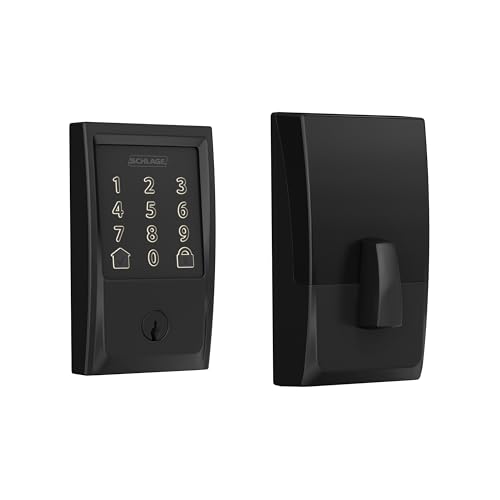
Yale Assure Lock 2 standard models are listed with Bluetooth built in and Smart Modules for added connectivity, and Yale offers Wi-Fi and Z-Wave networking modules. Yale also says the lock can be controlled with Bluetooth, the Yale Access app, or Apple Home app, but this review notes Yale still has not delivered Thread or Matter support here. Schlage Encode, by contrast, is sold as an integrated Wi-Fi deadbolt, while Schlage Encode Plus adds Apple Home Key on top of that base connectivity.
Schlage Encode is the cleaner choice if you want fewer add-on decisions at checkout. With Yale, you need to confirm the exact variant and whether Wi-Fi is built in or supplied by a module before you buy.
Physical keyway, key-free options, and dead-battery access
Yale Assure Lock 2 can be sold as keyed or key-free, touchscreen or button keypad. That matters because your backup plan changes with the model you pick. A keyed version gives you a mechanical fallback; a key-free version pushes more of your contingency planning onto codes, app access, and any emergency-power method the model supports. Yale’s support documentation includes 9V emergency power on supported deadbolts, which is an important recovery path when batteries are fully drained.
Schlage Encode keeps the backup story simpler to understand. If you want a lock that behaves like a connected deadbolt first and a modular platform second, Schlage fits that brief better.
If the app is down, the lock should still be usable at the door with the methods built into that model. That means keypad access, a physical key on keyed versions, or fingerprint on Yale Assure Lock 2 Touch. Remote control is the part that disappears first when the network goes down, so the local entry method matters more than the app marketing.
Picture a 36-inch entry door at the end of a long workday, with Wi-Fi out and your phone in another room. A keypad lets you get in. A phone-only plan does not.
Which Yale Assure Lock 2 variant are you buying?
The Yale name covers more than one product, and that is where many shoppers get misled. Standard Yale Assure Lock 2, Yale Assure Lock 2 Touch, and Yale Assure Lock 2 Plus are different purchases with different feature sets. If you do not sort that out first, you can compare the wrong lock against Schlage.
Standard Assure Lock 2
The standard Yale Assure Lock 2 is the most adaptable starting point in the line. It comes in keyed or key-free versions and in touchscreen or button-keypad formats, with Bluetooth built in and Smart Modules for added connectivity. Yale’s own listing structure makes this the most modular version of the group, and it is the one most often mistaken for the Touch or Plus models.
Assure Lock 2 touch
Yale Assure Lock 2 Touch adds a fingerprint reader and touchscreen keypad, and the review cited here says it measures fingerprint access at 0.4 seconds. The same review also calls it the smallest keypad smart lock tested. That makes it the most convenience-focused Yale variant in this comparison, but not the Home Key model.
Assure Lock 2 plus
Yale Assure Lock 2 Plus is a different model from the standard Assure Lock 2, and it is the Yale model to watch if you are chasing Apple Home Key. It reportedly starts at about $209.99 in the cited review and is available as a touchscreen variant with Wi-Fi module support. Yale’s variant naming is the main reason shoppers confuse the product family.
Wi-Fi module versus Z-Wave module
Yale offers Wi-Fi and Z-Wave networking modules, so the smart-home path is part of the purchase decision. That also means total cost of ownership is not just the sticker price. If you need Wi-Fi, confirm whether the model you are buying includes it or expects you to add a module later.
Does Schlage Encode mean the same thing as Encode Plus?
No. That model split changes the buying advice. Schlage Encode Plus is the version with Apple Home Key and built-in Wi-Fi, while the standard Encode should not be treated as an Apple Home Key lock. If Apple tap-to-unlock matters, the model name is not a small detail.
Standard Encode versus Encode Plus
Use standard Encode if you want the Schlage experience without assuming Apple Home Key support. Use Encode Plus if the Apple ecosystem is the reason you are looking at Schlage in the first place. Mixing those two up is the most common comparison error in this category, and it leads to the wrong expectations about both platform support and daily convenience.
Apple Home Key and built-in wi-Fi on Encode Plus
Schlage Encode Plus supports tap-to-access with an iPhone or Apple Watch, and Apple Home Key works through the Home app with Express Mode. That makes it the better Apple-first choice, but only if you buy the Plus model. Standard Encode does not inherit that feature, even though both are part of the Encode family.
Security ratings and hardware differences
Security certification and daily convenience are related, but they are not the same thing. Schlage Encode Plus is described as the only Grade 1 deadbolt in the guide, while Yale Assure Lock 2 should be checked by exact variant and listing. Grade language matters for durability and finish standards, not just for marketing copy.
ANSI/BHMA Grade 1 versus Grade 2
Grade 1 is the higher residential security rating in this comparison. That does not mean every Grade 1 lock feels better to use, only that the certification target is higher. Keep that separate from whether the lock has the cleaner app, the better keypad, or the backup path you prefer. The grade alone does not decide the winner.
Keyway, keypad, and alarm features
Schlage Encode Plus is reported to include a physical keyway, built-in alarm, and keypad entry. Yale Assure Lock 2 can be keyed or key-free, with touchscreen or button keypad choices, and Yale Assure Lock 2 Touch adds the fingerprint reader. If your household wants the fewest add-ons, Schlage’s bundle is easier to understand; if you want to choose the parts of the bundle, Yale is more adaptable.
Finish and door compatibility checks
Finish, trim, and door fit vary by model. Check the manufacturer’s listing for your exact door prep before you buy, especially if you are replacing an older deadbolt or covering up previous hardware marks. A smart lock that fits poorly is a worse buy than a simpler lock that fits cleanly.
What matters most for daily use?
Daily use usually comes down to codes, access habits, and who needs to get in without drama. Yale leans toward households that need many codes, more model choices, or a route to add connectivity later. Schlage leans toward buyers who want a cleaner box, fewer decisions, and a more direct setup path.
Guest codes and rental turnover
Yale is the stronger pick for rentals and short-term turnover. Tom’s Guide reports up to 250 codes for Yale versus 100 for Schlage Encode Plus in the cited comparison, and that kind of headroom matters when you are resetting access often. If you manage frequent guest changes, Yale reduces the chance of running into code limits.
Families usually need a mix of convenience and backup options. Yale works well if some users prefer keypad entry and others want a fingerprint or app-based route, while Schlage makes sense if you want one consistent pattern for everyone. Shared homes tend to reward clarity more than feature overload.
Apple Home Key priority
If Apple Home Key is the priority, the comparison changes immediately. Schlage Encode Plus is the relevant Schlage model, not standard Encode, and Yale’s comparable answer is Assure Lock 2 Plus rather than the standard Assure Lock 2. Do not buy the wrong model and expect the right Apple feature.
Touchscreen, keypad, or fingerprint preference
Choose Yale Assure Lock 2 Touch if fingerprint access is what you really want. Choose standard Yale Assure Lock 2 if you want keypad flexibility without committing to biometrics. Choose Schlage Encode if you want the simpler keypad-first setup and do not need Yale’s variant spread.
Test method and use-case observations
For this comparison, the most useful evidence comes from manufacturer specifications and the model differences they spell out: connectivity path, keypad style, recovery options, and Apple ecosystem support. The day-to-day takeaway is simple. Yale offers more configuration branches, while Schlage reduces decision fatigue by keeping the purchase path more unified.
What this article is checking
This comparison focuses on the real purchase variables that affect a smart deadbolt after installation: whether Wi-Fi is built in or modular, whether the backup path includes a keyed cylinder or 9V emergency power, and whether the exact model supports Apple Home Key. Those are the differences that change ownership, not just the product photos.
Choose Yale Assure Lock 2 if… / Choose Schlage Encode if…
Choose Yale Assure Lock 2 if you want modular control. Pick it if you expect to add Wi-Fi or Z-Wave later, want keyed or key-free options, need higher code capacity for rentals or shared homes, or want Yale Assure Lock 2 Touch for fingerprint access. It is the better recovery-first choice.
Choose Schlage Encode if you want built-in simplicity. Pick it if you prefer fewer configuration decisions, want a straightforward smart deadbolt path, or care more about a cleaner out-of-box setup than about module flexibility. If you actually want Apple Home Key, move up to Schlage Encode Plus instead of standard Encode.
Choose neither if your door or ecosystem needs a different format. If you need a specific trim style, a different door prep, or a platform tie-in that only one variant supports, check the exact model listing before buying. In smart locks, the wrong variant is often the wrong product.
Frequently asked questions
Yale Assure Lock 2 vs Schlage Encode Plus which is better?
For Apple-first homes, Schlage Encode Plus is the cleaner pick because it has Apple Home Key and built-in Wi-Fi. For households that want more variant control, Yale Assure Lock 2 is more adaptable. The better lock depends on whether you value Apple tap-to-access or modular options more.
Does Yale Assure Lock 2 support Apple Home Key like schlage encode plus?
Not the standard Yale Assure Lock 2. Apple Home Key is tied to specific Yale models such as Assure Lock 2 Plus, not every Assure Lock 2 version. If Apple Home Key is a must-have, confirm the exact Yale model before buying.
Which lock has built-in Wi-Fi, Yale Assure Lock 2 or Schlage Encode?
Yale Assure Lock 2 can be Bluetooth-only by default, with Wi-Fi available through supported modules on some variants. Schlage Encode is the simpler built-in-Wi-Fi path in this comparison, while Schlage Encode Plus explicitly lists built-in Wi-Fi. Check the exact Yale model if Wi-Fi is non-negotiable.
Yale Assure Lock 2 Touch vs Schlage Encode Plus
Yale Assure Lock 2 Touch is the better choice if you want fingerprint access and more modular Yale options. Schlage Encode Plus is better if Apple Home Key is the priority. Yale Touch also adds a biometric access path that Schlage Encode Plus does not provide.
Which is easier to install, yale Assure Lock 2 or schlage Encode Plus?
Schlage Encode Plus is usually the easier pick for buyers who want fewer setup branches, because it combines built-in Wi-Fi, Apple Home Key, and hardware features in one model. Yale Assure Lock 2 can be just as manageable, but only after you confirm which variant and module setup you are buying.
Schlage Encode vs Yale Assure Lock 2 which should I buy?
Buy Yale Assure Lock 2 if you want the more adaptable lock with keyed, key-free, keypad, touchscreen, and module-based options. Buy Schlage Encode if you want the simpler smart deadbolt path with fewer decisions. If Apple Home Key matters, compare against Schlage Encode Plus instead.
Sponsored / affiliate links. As an Amazon Associate I earn from qualifying purchases. I may earn additional commission from eligible campaigns.