Which Metal Finishes Are Best for Coastal Homes?
For direct salt spray, 316 stainless steel or hot-dip galvanized steel with a fluoropolymer or marine-grade powder coat is commonly recommended. For setback areas, 304 stainless or high-build powder coat is often reported to perform well. Wrong finishes pit, stain, seize, and fail early, especially on fasteners and door hardware. This guide sorts finishes by exposure zone and surface type, then shows what to use, what to avoid, and the upkeep each option needs.
Coastal finish decision matrix
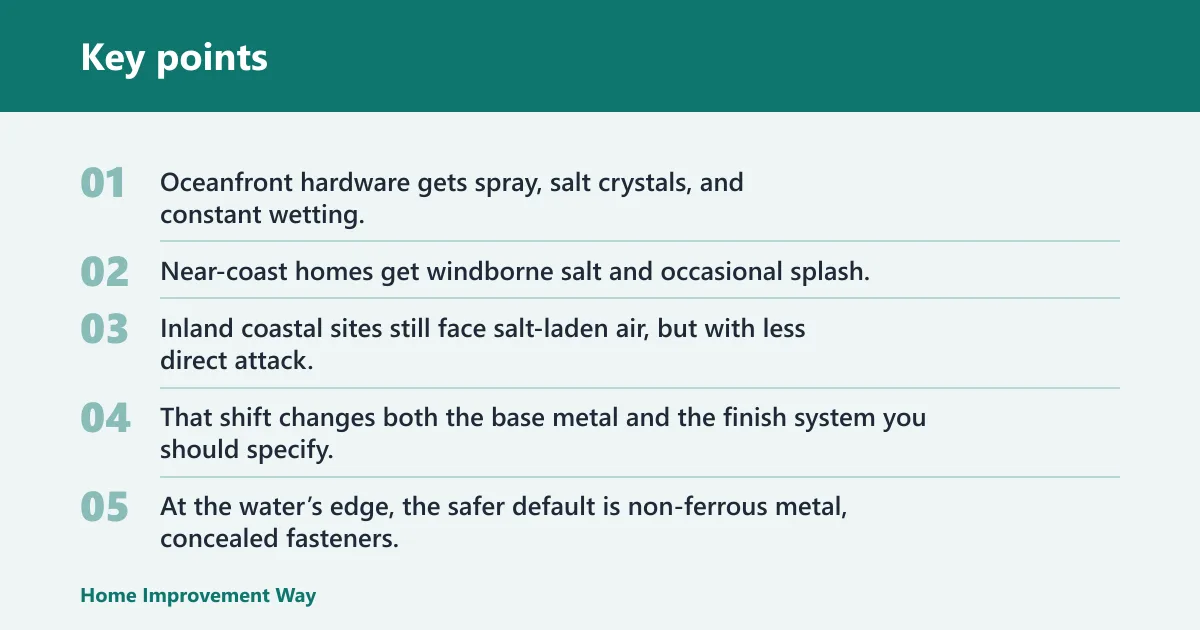


Start with exposure. Oceanfront hardware gets spray, salt crystals, and constant wetting. Near-coast homes get windborne salt and occasional splash. Inland coastal sites still face salt-laden air, but with less direct attack. That shift changes both the base metal and the finish system you should specify.
| Surface type | Direct oceanfront | Near-coast setback | Inland coastal |
|---|---|---|---|
| Roofing | Preferred: aluminum standing seam with concealed fasteners and a true 70% PVDF finish. Risk: low corrosion risk if details are sealed; moderate upkeep at cut edges. | Preferred: aluminum, 316 stainless trim, or coastal-engineered steel with PVDF or Tedlar PVF film. Risk: low to moderate, depending on penetrations. | Preferred: 304 stainless accessories, aluminum, or coated steel systems. Risk: moderate only where water sits or coatings are damaged. |
| Door hardware | Preferred: 316 stainless steel or architectural bronze. Risk: low for 316, moderate for bronze until the patina forms, high for plated hardware. | Preferred: 316 stainless, architectural bronze, or coated brass with careful upkeep. Risk: moderate if finish chips or scratches. | Preferred: 304 stainless or bronze finishes. Risk: low to moderate, mainly from fingerprints and water marks. |
| Cabinet hardware | Preferred: 316 stainless or bronze. Risk: low if the finish is unplated or properly sealed. | Preferred: 304 stainless, bronze, or high-quality powder coat. Risk: moderate because salts collect on touch points. | Preferred: 304 stainless or powder-coated pieces. Risk: low to moderate, mostly cosmetic. |
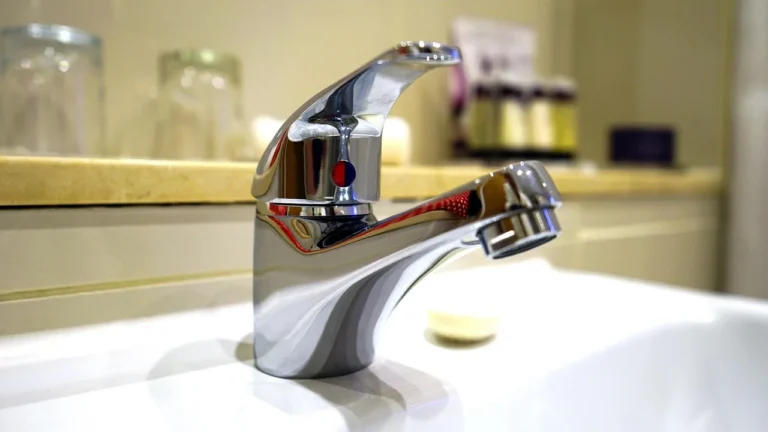
| Faucets | Preferred: 316 stainless components, bronze trim, or marine-rated coated brass. Risk: low if the finish resists spotting and seal failure. | Preferred: 304 stainless with a durable plated or coated finish, or bronze. Risk: moderate because water dries with salt residue. | Preferred: 304 stainless or coated brass. Risk: low if cleaned regularly. |
| Light fixtures | Preferred: 316 stainless, aluminum with a PVDF finish, or bronze. Risk: low for sealed fixtures, high for bare fasteners. | Preferred: aluminum, 304 stainless, or bronze with sealed lenses and gaskets. Risk: moderate around seams and screw heads. | Preferred: 304 stainless or coated aluminum. Risk: low to moderate, mostly finish fade and spotting. |
| Railings | Preferred: aluminum or 316 stainless with concealed connections and compatible fasteners. Risk: low when joints are sealed; high if mixed metals touch. | Preferred: aluminum, 304 stainless, or coated steel if drainage is good. Risk: moderate from scratches and trapped salt. | Preferred: 304 stainless, aluminum, or coated steel. Risk: low to moderate, depending on maintenance. |
Direct oceanfront: what to specify first
At the water’s edge, the safer default is non-ferrous metal, concealed fasteners, and a finish built for chloride exposure. Aluminum is recommended for homes within about 1,500 feet of saltwater, and under 300 feet from breaking surf, aluminum or a coastal-engineered steel system is advised. Use 316 stainless for exposed small parts whenever the assembly needs a metal fastener or trim piece that must stay dimensionally stable.
Standing seam matters here. A standing seam profile hides fasteners from direct spray, so salt has fewer paths into the assembly than it does with exposed-fastener panels. That does not make the roof maintenance-free. It does reduce the number of places where corrosion starts first.
Near-coast setback: what is acceptable
Farther back from the beach, 304 stainless becomes more usable, especially on pieces that you can inspect and wipe down. It contains 18-20% chromium and 8-10.5% nickel, while 316 stainless contains 16-18% chromium, 10-14% nickel, and 2-3% molybdenum. That molybdenum gives 316 better pitting resistance in chloride-rich environments.
Architectural bronze is another strong choice for visible hardware. It contains 57-60% copper and 37-40% zinc, forms a stable patina, and does not rust because it contains no iron. For homeowners who dislike bright spots and finger marks, bronze often ages more evenly than polished steel.
Inland coastal: where you can trade up or down
In inland coastal areas, you can widen the material pool, but finish quality still matters. A low-grade coating over the wrong substrate can fail faster than a better finish on a simpler metal. That is why the finish system, not only the base metal, should drive the spec.
Say your house sits on a bay side street with no direct surf, but the front porch railing still gets salt on windy days. A 304 stainless rail may be acceptable if the joints drain well and the fasteners are compatible. Swap that same rail to the oceanfront, and 316 stainless or aluminum becomes the safer choice.
Which finish wins in salt spray?
316 stainless steel wins most often in direct salt spray when the part needs a hard, exposed metal surface and high resistance to pitting. Aluminum wins where the priority is rust resistance, lighter weight, and a wider choice of coated systems. Architectural bronze wins when the goal is stable appearance over time rather than a bright, mirror-like look.
Why 316 stainless beats 304 in chloride exposure
The extra molybdenum in 316 is the difference that matters near the ocean. On exposed fasteners, latches, hinge barrels, and rail parts, 304 can still spot and pit sooner than 316 when salt sits on the surface or reaches crevices. That is why 316 is the better default for marine-grade fasteners and coastal trim details.
Where aluminum is the better choice than steel
Aluminum is non-ferrous, so it does not rust the way carbon steel does. That makes it a strong option for roofing, trim, light fixture housings, and railing components, especially within about 1,500 feet of saltwater. It is often the better call when the piece has broad surface area and needs a finish that resists corrosion without heavy upkeep.
Why architectural bronze holds up visually over time
Bronze changes color rather than failing abruptly. The patina can be desirable because it lowers the glare of fingerprints, water marks, and small salt spots. For front-entry hardware and door pulls, that visual stability often matters more than a bright factory sheen that can break down unevenly.
How do PVDF and PVF compare?
For coated metal near the coast, PVDF and PVF are both better than ordinary paint systems, but they are not the same. True PVDF finishes use 70% resin content and are known for stronger color retention and chalk resistance. Tedlar PVF film is a laminated finish that also resists surface chalking and is used on coastal steel systems.
70% PVDF resin and color retention
PVDF is usually the safer pick when fading matters on roofing, fascia, and exposed trim. Its value is long-term color stability, especially where UV exposure and salt work together. On large roof planes, that matters more than a glossy new look on day one.
Tedlar PVF film and chalk resistance
PVF film is a different type of protection: a laminated surface layer rather than a painted finish. It is useful on coastal steel systems where surface chalking is a concern. It does not make poor detailing acceptable, but it can keep the visible surface cleaner for longer than a basic coating.
Which coating is better for fading, spotting, and UV?
For fading, PVDF usually has the edge. For chalking, PVF film is also strong. For salt spotting, neither coating can save a design that traps water, uses exposed fasteners, or mixes incompatible metals. If the part gets touched often, the underlying finish quality and cleaning schedule matter as much as the coating chemistry.
How far from the ocean changes the spec

Distance matters because salt load drops as you move inland. Around 1,500 feet from saltwater, coastal-grade aluminum becomes the safer default for many exterior parts. Under 300 feet from breaking surf, you should assume a harsher environment and narrow the choices to aluminum or a coastal-engineered steel system for the larger exposed elements.
Breaking surf, windborne salt, and splash zones
Breaking surf throws fine chloride onto surfaces that may look dry only minutes later. Windborne salt can reach farther than visible spray, especially on roof edges, railings, and upper-story trim. Splash zones around decks, pool edges, and open balconies can be just as punishing as a waterfront facade.
A common first-timer mistake is choosing a pretty finish for the front door and a cheaper plated finish for the matching side latch. The door hardware and the latch are exposed to the same salt cycle, so the cheaper part often fails first and makes the entire entry look worn.
What setback language to verify in warranties and submittals
Check the written distance language before you buy. Some coastal warranties depend on distance from breaking surf, not just “near the coast.” COASTALUME carries warranty coverage as close as 300 feet from breaking surf, Armored Coast offers zero setback from brackish inland water, Nu-Ray cites a 50-year warranty for its coastal-grade finish system, and Sea Island Builders notes that many manufacturers provide no warranty within 3,000 feet of the coast while recommending product use up to a mile from the shore.
Why fasteners and profiles matter
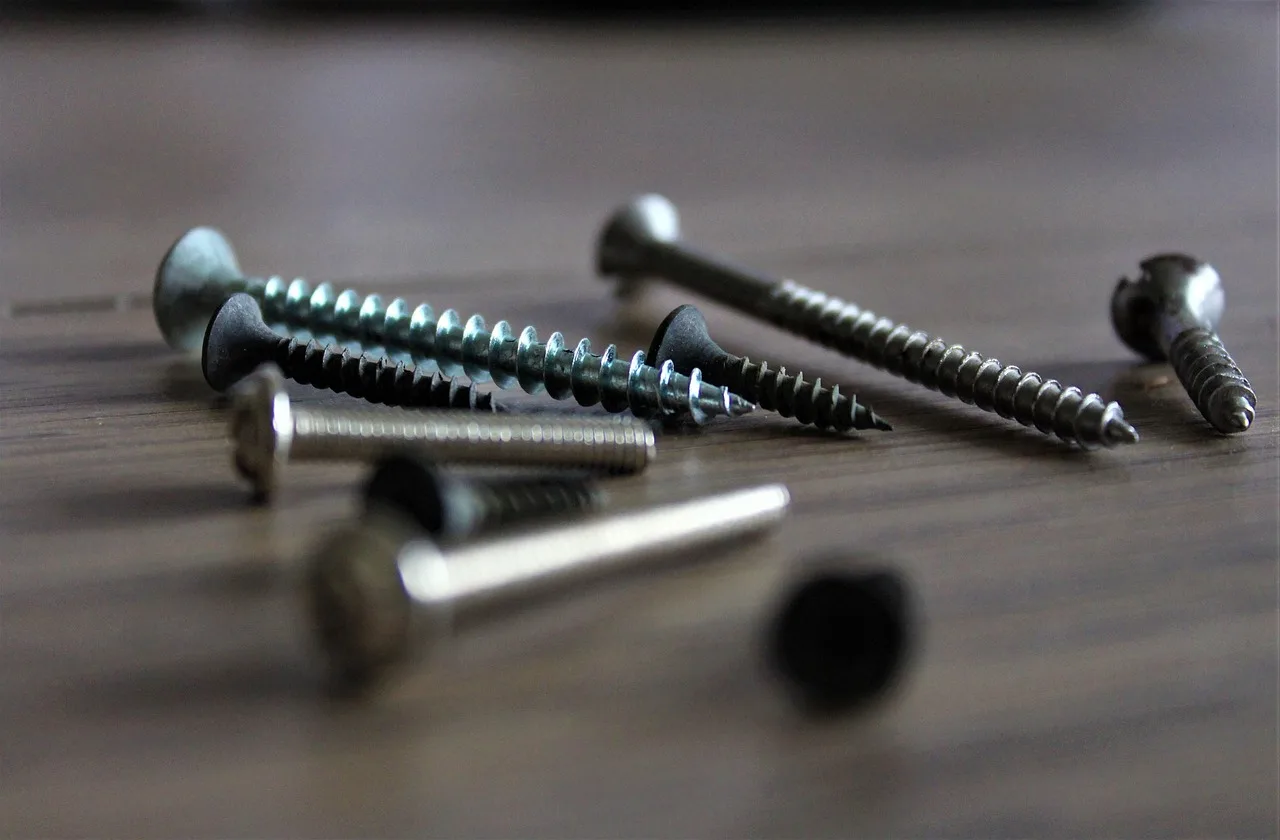
Fasteners often fail before the main panel or fixture. That is why the connection details deserve the same attention as the visible finish. A good coating on a bad fastener choice still leaves you with staining, loosening, and rust streaks at the attachment points.
Standing seam profile and concealed fasteners
Standing seam roof panels use concealed fasteners, which reduces salt intrusion compared with exposed-fastener systems. Fewer penetrations mean fewer sites for trapped moisture, sealant breakdown, and corrosion creep. That is one reason standing seam is a common coastal roof profile.
Type 316 stainless fasteners for coastal assemblies
Type 316 stainless fasteners are the marine-grade choice for coastal metal systems. Use them with standing seam, sealed flashings, and other assemblies where the fastener is exposed to salty moisture or wash-down water. If the fastener is cheaper than the panel, the assembly is often only as good as the fastener.
Sealed flashings and mixed-metal contact points
Seal the flashings and isolate dissimilar metals where possible. Mixing aluminum, plain steel, and stainless without proper separation can set up accelerated corrosion at the contact point. The failure often starts as staining, then pitting, then loosening around the screw or edge detail.
- Match the fastener metal to the most corrosive part of the assembly, not the least visible one.
- Keep water from sitting at seams, bends, and screw heads.
- Separate dissimilar metals with compatible washers, isolators, or sealants.
- Inspect cut edges, penetrations, and touched-up spots first.
What should you choose by surface type?
Roofing, hardware, fixtures, and railings do not need the same finish. Roofs need durability and low upkeep. Hardware needs resistance to pitting and fingerprints. Fixtures need sealed construction and stable appearance. Railings need both corrosion resistance and tolerance for repeated touch.
Roofing and trim
For roofing, aluminum with a true 70% PVDF finish is a strong default near the coast. Where steel is specified, a coastal-engineered system with a PVDF or Tedlar PVF film finish is the safer route. Keep the profile standing seam when possible, because concealed fasteners reduce salt intrusion.
Door hardware and cabinet hardware
For door hardware, 316 stainless steel or architectural bronze is the cleanest answer in salt spray. For cabinet hardware near the beach, 304 stainless can work at setback, but 316 and bronze hide spotting better and resist seizure longer. Bright plated finishes show fingerprints and salt marks quickly.
Faucets, light fixtures, and railings
For faucets and light fixtures, choose sealed assemblies with 316 stainless components, bronze trim, or coastal-rated coated metal. For railings, aluminum and 316 stainless are the most dependable in direct exposure. Aluminum gives strong rust resistance; 316 handles chloride better at exposed joints and fasteners.
Maintenance for coastal finishes
Coastal finishes need routine care. Regular rinsing removes salt before it dries into crystals that pull moisture back to the surface. Inspection should focus on fasteners, sealant joints, cut edges, and dissimilar-metal contact points, because those are the places where failure begins.
Rinsing schedule and inspection points
Use fresh water rinse-downs after major salt events and during dry periods when residue builds up. Check screws, hinges, door pulls, roof flashings, and railing posts for staining or rough spots. If a finish starts to chalk, flake, or pit, that is a sign the protection layer is no longer doing its job.
What salt spotting and early failure look like
On bright hardware, salt spotting appears as dull white specks or hazy rings. On stainless, early failure can show up as tea staining, then tiny pits near creases and fasteners. On coated surfaces, watch for edge wear, chalky residue, and blisters around drilled holes or seams.
When to replace worn sealant or compromised fasteners
Replace sealant when it cracks, shrinks, or pulls away from the substrate. Replace fasteners when heads corrode, strip, or leave rust trails. Do not wait for a full panel failure; the repair window is usually at the first stain, not after the stain has spread.
Frequently asked questions
Which metal finish is best for a coastal home?
There is no single finish for every coastal home. For direct salt spray, 316 stainless steel, aluminum with a true 70% PVDF finish, and architectural bronze are the strongest common choices. For setback areas, 304 stainless and high-build coated systems become more acceptable.
Is aluminum better than stainless steel near the ocean?
Often yes for roofing, trim, and large exterior parts because aluminum is non-ferrous and resists rust well. For small exposed hardware, 316 stainless usually outperforms 304 and can be the better choice where chloride exposure is constant. The surface type decides the winner.
What finish lasts longest in salt air and UV exposure?
For large exterior surfaces, a true 70% PVDF finish on aluminum or coastal steel is one of the longest-lasting options for color stability. For exposed small parts, 316 stainless and architectural bronze tend to hold up better than plated or lightly coated hardware.
How far from the ocean do you need coastal-grade metal finishes?
Within about 1,500 feet of saltwater, coastal-grade aluminum is commonly recommended. Under 300 feet from breaking surf, the spec should tighten to aluminum or a coastal-engineered steel system. Warranty language often uses distance from breaking surf, so verify the written threshold before ordering.
Does PVDF or Kynar hold up better on coastal homes?
They are commonly used to describe the same family of fluoropolymer finish, but the important detail is the resin content and the system build. True PVDF finishes with 70% resin content are preferred for color retention and chalk resistance on coastal metal systems.
What metal finish should I use for exterior hardware near the beach?
Use 316 stainless steel or architectural bronze for the most exposed hardware near the beach. These finishes handle salt spotting and corrosion better than plated hardware. For doors and latches that get touched often, bronze and 316 also age more evenly than bright chrome-like finishes.
Do coastal metal finishes need special maintenance?
Yes. Regular rinsing, visual inspection, and prompt repair of sealant and fasteners are part of coastal ownership. Check cut edges, screw heads, seams, and places where different metals touch. Salt residue that stays on the surface is a common path to early failure.
Which finishes are safest for homes in direct salt spray?
The safest choices are 316 stainless steel, aluminum with a coastal-rated fluoropolymer finish, and architectural bronze for visible hardware. Use concealed fasteners where possible, especially on standing seam roofing and sealed flashings. Exposed plated parts are the first to corrode or seize.
What fasteners and coatings matter most in coastal environments?
Type 316 stainless fasteners matter most because they hold up better in chloride-rich air and spray. For coatings, true 70% PVDF and Tedlar PVF film are the most useful coastal options for color retention and chalk resistance. Both still need good detailing and regular inspection.
Sponsored / affiliate links. As an Amazon Associate I earn from qualifying purchases. I may earn additional commission from eligible campaigns.
 12 Pack Heavy Duty Stainless Steel Hinges, 4 x 4 Inch Brushed Nickel Ball Bearing Door Hinges with Non-Removable Pin for Residential & Heavy-Duty Door Hardware, 5/8" Radius Corners
 Stainless Steel Stove Pipe Roof Bracket Support Heavy Duty Weatherproof Chimney Tube Clip Durable Fixing Holder for Residential Building Roof Wall Mount Boiler Flue