Which Metal Finishes Work Best in Humid Bathrooms?
For humid bathrooms, polished chrome and PVD-coated stainless steel usually perform best; avoid unlacquered brass and raw copper if you want low maintenance, and choose solid metal or plated hardware with a clear protective layer. Poor finish choices can spot, pit, or corrode fast, which means more cleaning, dull hardware, and earlier replacement. This guide ranks common bathroom metal finishes by corrosion risk, spotting, upkeep, and whether they are plated, sealed, or left to patina.
Which finishes hold up best in humidity?
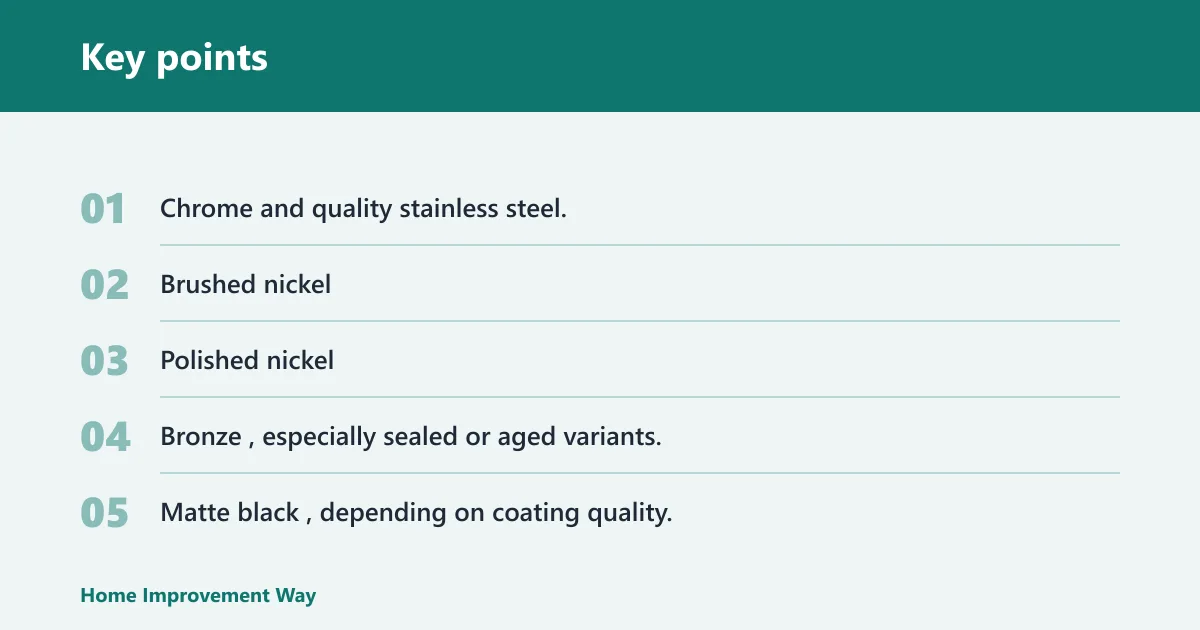


In a steamy bathroom, the best finishes resist corrosion, dry quickly, and keep their coating intact. Chrome and stainless steel usually lead the list, followed by brushed nickel and polished nickel, then bronze, matte black, and brass, with unlacquered brass at the lowest end for easy care.
That ranking separates three things that often get blurred together: corrosion resistance, water spotting, and cleaning effort. A finish can resist rust yet still show every droplet. Another can hide spots well but need gentle care to avoid scratching a coating.
Best-to-least suitable ranking
- Chrome and quality stainless steel.
- Brushed nickel.
- Polished nickel.
- Bronze, especially sealed or aged variants.
- Matte black, depending on coating quality.
- Lacquered brass.
- Unlacquered brass, if you want the least upkeep.
For a low-ventilation bath, start with chrome or stainless steel on the faucet and shower trim, then use brushed nickel or chrome for towel bars and cabinet pulls. In a well-ventilated primary bath, polished nickel and bronze become easier to live with because the room dries faster and condensation lingers for less time.
Bathroom metal finish decision table
The table below focuses on how each finish behaves in humid rooms, not just how it looks. The 1-5 score is a simple suitability rating for humid bathrooms, with 5 being the strongest choice.
| Finish type | Humidity tolerance | Water-spot visibility | Fingerprint visibility | Corrosion risk | Maintenance level | Best fixture type | Score |
|---|---|---|---|---|---|---|---|
| Chrome | High | High | Medium | Low | Low to medium | Faucets, shower trim | 5 |
| Brushed nickel | High | Low | Low | Low | Low | Towel bars, pulls, faucets | 5 |
| Stainless steel | High | Low to medium | Low to medium | Low to medium | Low | Faucets, accessories | 5 |
| Polished nickel | Medium to high | High | High | Low to medium | Medium | Faucets, cabinet hardware | 4 |
| Bronze | Medium | Low | Low to medium | Medium | Medium | Pulls, towel bars, accents | 3 |
| Matte black | Medium | Low | Low | Medium | Medium to high | Accents, pulls, towel bars | 3 |
| Lacquered brass | Medium | Medium | Medium | Medium | Medium to high | Cabinet hardware, light-use trim | 2 |
| Unlacquered brass | Low to medium | Medium | Medium | Higher | High | Dry-zone accents only | 1 |
Shortlist for low-ventilation bathrooms
- Chrome on faucets and shower trim.
- Brushed nickel on towel bars and cabinet pulls.
- Stainless steel with a bathroom-rated protective finish.
Shortlist for easiest day-to-day cleaning
- Chrome for frequent wipe-downs.
- Brushed nickel for fewer visible spots.
- Stainless steel when the grade and finish are suited to wet rooms.
How humidity affects bathroom hardware
Steam and splashes hit every surface in a bathroom. Moisture sits on metal, then dries unevenly and leaves mineral residue behind. If ventilation is weak, condensation lingers longer on faucets, shower trim, towel bars, and cabinet hardware.
That extra time matters. Steam and standing droplets can weaken coatings at seams, screw heads, and edges first. Fixtures near the shower or tub see more direct wetting than a cabinet pull across the room, so they age at different speeds even when the finish matches.
Why ventilation changes finish life
Ventilation is essential in high-moisture spaces. An exhaust fan shortens drying time, reduces condensation, and lowers the chance that water sits on the surface long enough to etch a coating or feed corrosion at a chip.
Say your guest bath has no window and only a small fan. A polished finish on the faucet may still be fine, but towel bars, shower trim, and cabinet pulls will need more wipe-downs because they cool, collect moisture, and dry more slowly than hardware in a drier room.
Are chrome and brushed nickel the safest choices?
Yes, for most bathrooms they are the safest all-around choices. Chrome usually offers very good corrosion resistance when the base metal and plating are sound, while brushed nickel hides spots better and feels less glossy. Both work well in bathrooms with regular shower use and normal cleaning.
Chrome
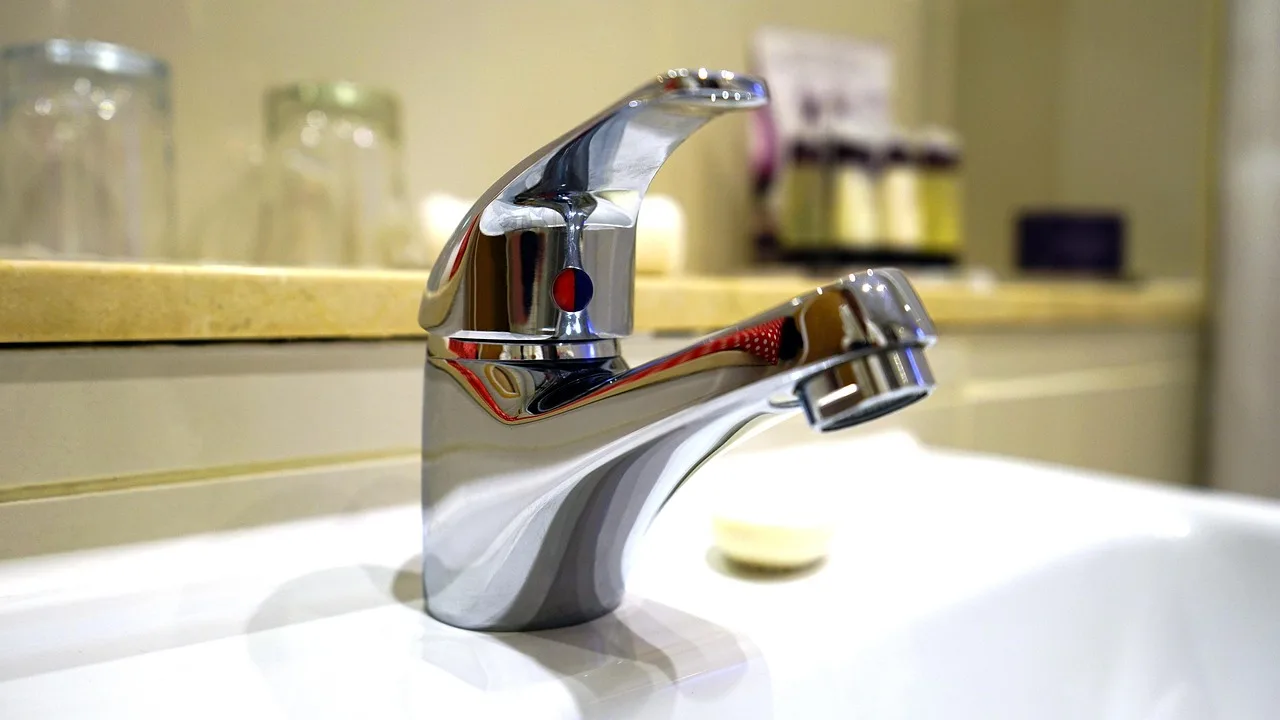
Chrome has a cool-toned, high-shine surface that fits many bathroom styles. It tends to resist corrosion well, especially on quality plated fixtures, but it also makes water spots easy to see. That makes it a strong choice when you want a clean look and are willing to wipe it dry.
Chrome is especially practical for faucets and shower trim, where smooth surfaces are easy to rinse and dry. It can also work well for towel bars and accessories if the room gets decent airflow and you do not mind fingerprints on frequently touched parts.
Brushed nickel
Brushed nickel has a satin or brushed texture with a warm-neutral undertone. That texture hides fingerprints and water spots better than chrome, which makes it a common bathroom hardware option for busy family baths and powder rooms that still get some steam.
It is often a better pick than chrome for towel bars and cabinet hardware because those pieces get touched constantly. The softer sheen also buys you some forgiveness in a room where someone forgets to run the fan.
How do stainless steel and polished nickel compare?
Stainless steel is usually the more practical humid-room choice, while polished nickel is the more decorative one. Stainless steel’s bathroom suitability depends on grade and finish; better grades resist corrosion far better than lower-grade versions, and a PVD-coated or otherwise sealed surface usually needs less upkeep.
Polished nickel brings more shine than brushed nickel and a warmer metallic tone than chrome. It can hold up in a steamy bathroom, but it will show spotting more readily and needs more regular drying to keep that glossy appearance. In a well-ventilated primary bath, it makes sense on faucets and cabinet hardware.
Stainless steel grade matters
Not all stainless steel behaves the same. The grade, surface treatment, and quality of the coating or polish all affect how well it resists humidity. For a bathroom, choose a product specifically rated for wet use rather than assuming any stainless piece is equally resistant.
Its maintenance needs are usually light: wipe off water, avoid harsh abrasives, and dry the surface after cleaning. That keeps the finish from looking streaked and helps preserve the protective layer.
When polished nickel makes sense
Polished nickel works best when you want a warm metal with more shine than brushed nickel. It pairs well with classic and luxury bath styles, but it is less forgiving than chrome or brushed nickel in a room that stays steamy for long periods.
For a primary bath with a good fan, polished nickel can be a strong fit on faucets and cabinet pulls. In a cramped bath with frequent showers and weak airflow, it will need more wiping and more attention to drying time.
Do matte black, brass, and bronze work in steamy bathrooms?
Yes, but with more tradeoffs. Matte black can work in humid bathrooms if the coating is strong, yet it often shows spotting, wear at edges, and touch-up issues sooner than plated bright finishes. Brass and bronze depend heavily on whether the finish is sealed, lacquered, or meant to patina.
Matte black
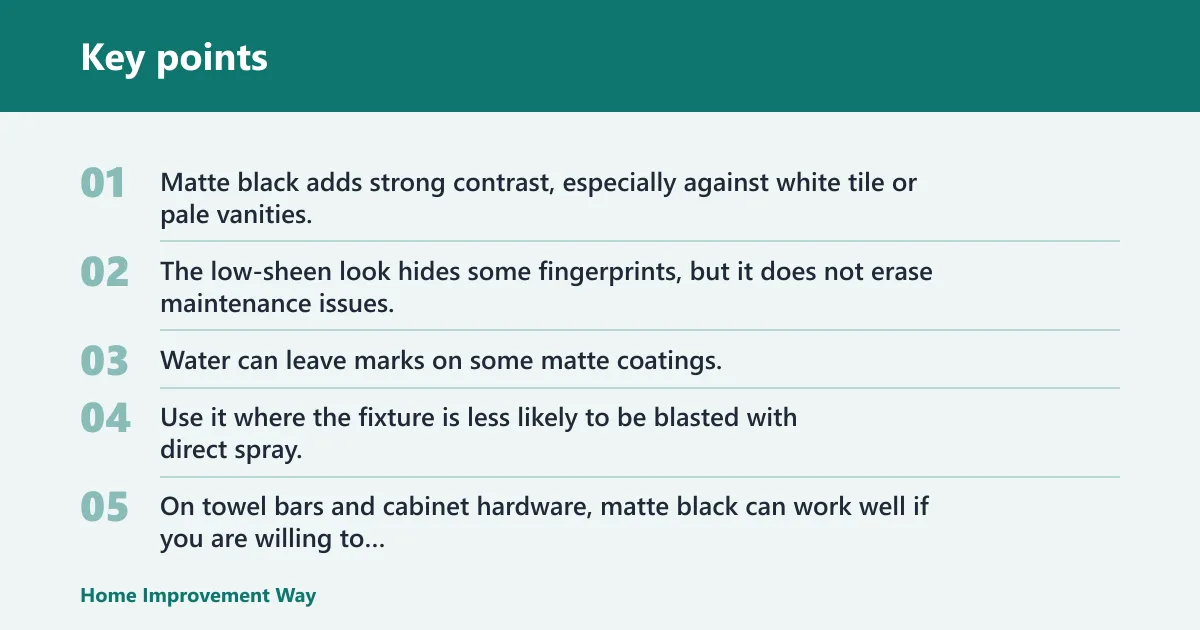
Matte black adds strong contrast, especially against white tile or pale vanities. The low-sheen look hides some fingerprints, but it does not erase maintenance issues. Water can leave marks on some matte coatings, and chips or rub-through show more clearly at corners and around handles.
Use it where the fixture is less likely to be blasted with direct spray, or choose a quality coated product meant for bathroom use. On towel bars and cabinet hardware, matte black can work well if you are willing to clean gently and check for wear at the high-touch edges.
Brass
Brass comes in two very different bathroom behaviors. Lacquered brass has a protective clear layer that slows tarnish, while unlacquered brass is meant to change over time and develop patina. In humidity, the unlacquered version reacts faster and asks for more care if you want to keep a brighter look.
Are brass finishes okay in bathrooms with showers? They can be, but the answer depends on the type. Lacquered brass is the safer choice near a shower. Unlacquered brass can work in a bathroom if you accept darkening, fingerprints, and periodic polishing.
Bronze
Bronze is a dark warm finish that fits kitchens, bathrooms, and mixed-metal schemes. Aged and dark bronze variants usually hide water spots well, but the finish can still wear at edges and high-touch points. Whether it performs well depends on the seal and the quality of the top layer.
Bronze often suits cabinet hardware and towel bars better than shower trim, since those pieces see less constant wetting. It brings visual depth, but it still needs regular wiping and careful cleaning to keep the surface from dulling unevenly.
How should you choose fixtures and cleaning routines?
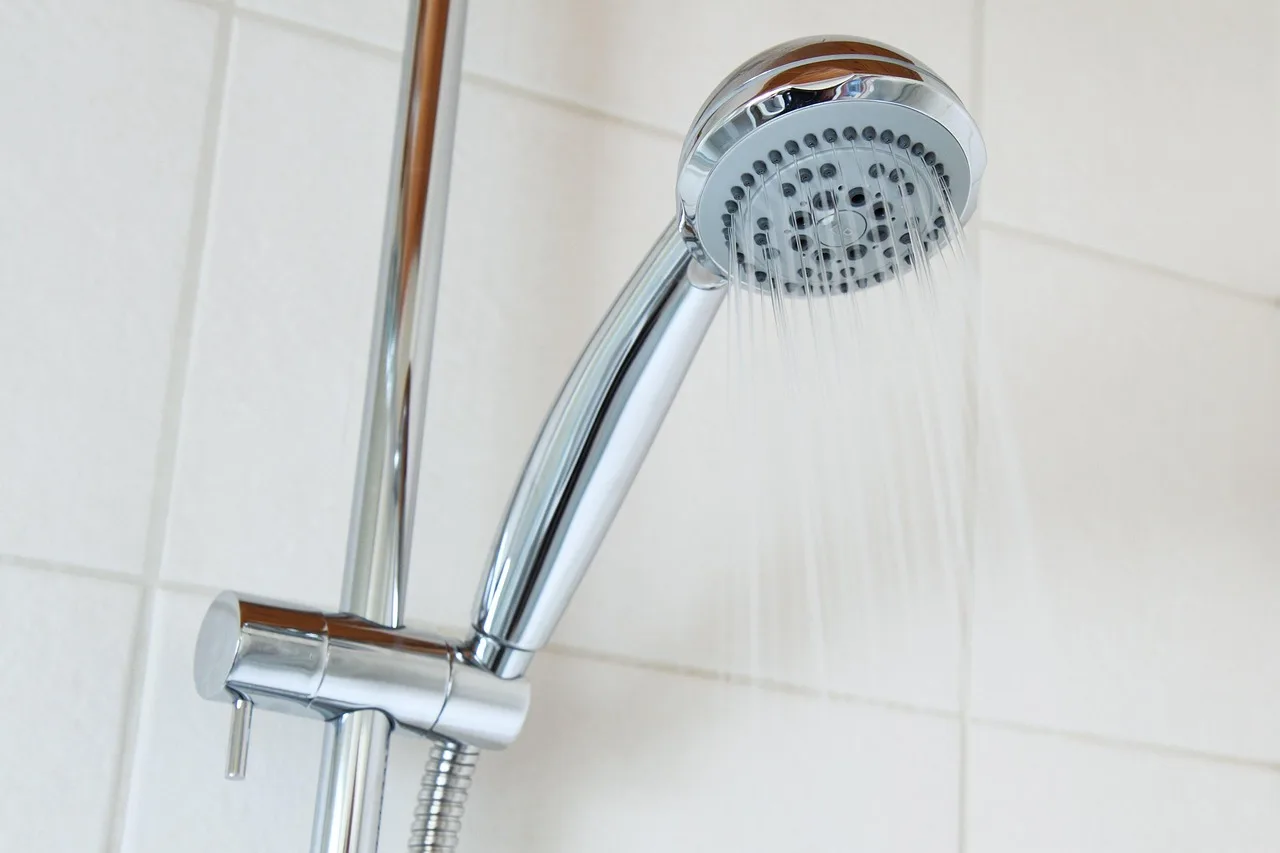
Match or mix finishes based on exposure, not just style. Faucets and shower trim take the hardest moisture load, so they should get the most corrosion-resistant finish. Towel bars and cabinet hardware can be a little more decorative because they usually sit farther from direct spray.
A common first-timer mistake is choosing one finish for every piece in the room, then putting the most fragile coating on the wettest fixture. If the shower trim is polished nickel, the towel bars do not have to be polished nickel too. Use the best-performing finish where the water hits hardest.
Cleaning methods that protect the finish
- Wipe fixtures dry after showers when practical.
- Use a soft cloth and mild soap for routine cleaning.
- Avoid abrasive pads, powdered cleansers, and harsh acids on plated or lacquered surfaces.
- Do not scrub unlacquered brass if you want it to patina evenly.
- Rinse cleaners off completely, then dry the fixture.
Cleaning chemistry matters as much as the cloth. Strong acidic cleaners can attack plating, dull lacquer, or strip the surface of some coatings. On matte black and painted finishes, use the mildest cleaner that removes soap film and mineral residue without scratching the top layer.
Ventilation and drying habits
Run the exhaust fan during showers and for a short period afterward if the room tends to stay damp. That simple step cuts condensation and helps the finish last longer. Open a door or window when possible, and dry faucets, trim, and towel bars before mineral residue builds up.
For bathrooms with a shower door, wipe the nearby hardware after the glass has cleared. The goal is not perfection. It is reducing the time moisture stays on the metal.
Frequently asked questions
Which metal finish is best for a humid bathroom?
Chrome and stainless steel are usually the best choices because they handle humidity well and are relatively easy to clean. Chrome is especially common on faucets and shower trim, while brushed nickel is a strong second choice when you want a warmer look with better spot hiding.
Is brushed nickel better than chrome in a bathroom?
Brushed nickel is often better if you care more about hiding water spots and fingerprints than about maximum shine. Chrome usually wins for corrosion resistance and easy wipe-downs, but brushed nickel looks softer and is often more forgiving on towel bars and cabinet hardware.
Does polished nickel hold up in a steamy bathroom?
It can, especially in a well-ventilated primary bath. Polished nickel has a warm, upscale look, but it shows spotting more readily than brushed nickel or chrome. In a bathroom with weak ventilation, expect more frequent drying and maintenance to keep it looking clean.
Are brass finishes okay in bathrooms with showers?
Yes, if you choose the right type. Lacquered brass is usually the safer bathroom choice because the coating slows tarnish. Unlacquered brass can work, but it will darken and patina faster in shower humidity, so it suits people who want that changing look.
Which hardware finish resists corrosion in bathrooms?
Chrome and stainless steel usually resist corrosion best, provided the product quality is good and the finish is meant for wet rooms. The base metal, plating quality, and ventilation all matter. A thin or poorly sealed finish can fail sooner even if the material sounds corrosion-resistant.
What finish is easiest to maintain in a bathroom?
Brushed nickel is often the easiest balance of looks and upkeep because it hides spots well and does not demand constant polishing. Chrome is also easy to clean, but its shine makes dried droplets more visible. For minimal upkeep, avoid unlacquered brass in humid rooms.
Sponsored / affiliate links. As an Amazon Associate I earn from qualifying purchases. I may earn additional commission from eligible campaigns.