How to Choose Door Security Hardware for Homeowners
Choose door security hardware by fixing the easiest failure point first: the strike plate, screws, hinges, door material, glazing, and lock should all be matched to the door, with the deadbolt only as strong as the weakest part. Bad choices speed up forced entry and can waste money on a stronger lock that still fails at the frame. This guide ranks upgrades by failure point, door type, risk, cost, and invasiveness so you can buy in the right order for a front, side, back, or utility entrance.
Door security decision matrix

The best order is usually lock support hardware first, then frame strength, then hinge-side reinforcement, then smart-access extras. Consumer Reports says most tested locks can be defeated with kicks or drills, and it also notes that a basic do-it-yourself upgrade improves security for any lock. That means the surrounding hardware matters as much as the lock body. (Consumerreports)
| Upgrade | Impact on forced-entry resistance | Invasiveness | Cost tier | Best order for standard homes | Best order for budget homes | Best order for higher-risk homes |
|---|---|---|---|---|---|---|
| Reinforced strike plate + longer screws | High | Low | Low | 1 | 1 | 1 |
| Lock grade upgrade | Medium to high | Low to medium | Low to high | 2 | 3 | 2 |
| Frame reinforcement | High | Medium | Low to medium | 3 | 4 | 2 |
| Security hinges | Medium | Medium | Low to medium | 4 | 5 | 3 |
| Smart-lock add-ons | Low to medium | Low to medium | Medium to high | 5 | 6 | 4 |
For a standard front door, start with the strike plate and screws, then move to the lock itself. For a tight budget, spend on the frame-side hardware before replacing a working lock. For a higher-risk home, treat the door as a system and strengthen both sides of the opening. If the use case is a double front doors setup, the inactive leaf, astragal, and flush bolts need the same attention as the active lock leaf. For a utility entrance, see the fit guidance in garage man door security hardware.
- Check whether the latch closes cleanly and the deadbolt throws fully.
- Replace a weak strike plate with reinforced hardware and long screws.
- Inspect the jamb, frame, and hinge side for looseness or split wood.
- Upgrade the lock only after the frame can support it.
- Add smart-access hardware only if the use case really needs it.
Say your front door has a solid deadbolt but the latch rattles in the strike opening. A stronger lock will not solve that gap. A reinforced plate and screws that reach the stud behind the frame usually matter more than a cosmetic lock change in that situation.
What matters most for a secure door?
The lock body matters, but the strike plate, frame, hinges, and door fit often decide whether the door resists a shove or splits at the jamb. Kisi’s overview says a secure door system includes the frame, hinges, strike plate, and locking mechanism. That is the right way to think about a front or side entry door.
Lock body versus strike plate versus frame
The lock controls access, but the strike plate takes the force when someone pushes the door. If the screws are short or the jamb is weak, the door can fail before the lock does. A reinforced strike plate is often the first upgrade to pair with a new lock, because it directly improves the weak spot the lock depends on.
Why hinge-side strength matters too
Security hinges with non-removable pins help stop the door from being lifted off from outside, which matters on exterior and entrance doors. Kisi notes that this hinge style often uses non-removable pins. If the hinge side is accessible from the exterior, weak hinges can undercut an otherwise good lock set.
How door fit changes the result
A door that drags, has excessive play, or leaves a loose latch fit can still be easier to defeat. The best hardware performs poorly if the door does not seat tightly in the frame. In practice, a good fit reduces the chance that the latch and deadbolt are carrying uneven load when the door is forced.
Which lock type fits your door?
Pick the lock type that matches the door construction first, then compare security grade and fit. Consumer Reports groups door locks into conventional deadbolts, smart locks, and retrofit smart locks. That is a useful starting point, but door thickness, existing bore holes, and use case should decide the final choice.
Deadbolt: single-cylinder, double-cylinder, and when to use one
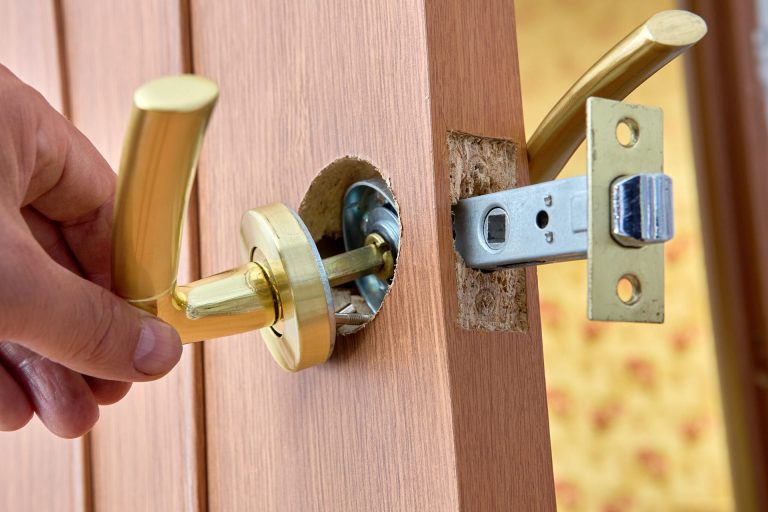
A deadbolt is a key-operated lock without a spring latch. Single-cylinder models use a key outside and a thumbturn inside. Double-cylinder models use a key on both sides, which can help where there is nearby glass, but they also reduce quick exit convenience and can be a poor fit where fast egress matters. In life-safety terms, the concern is egress: occupants should be able to exit quickly from inside without searching for a key in an emergency. NFPA 101 treats egress as a core safety requirement, so a double-cylinder deadbolt is generally a bad match for bedrooms, occupied exits, and any door where emergency escape could be delayed.
Deadbolts are best used for main entry security, especially when paired with a reinforced strike plate. On a standard front door, that pairing is usually the first mechanical step worth paying for.
Mortise lock: older and thicker doors
Mortise locks are built into the door and are common in older homes and on thicker doors. Higher-security versions often use 5-lever or stronger configurations, and they are frequently paired with a night latch. If your door already has a mortise case, matching the replacement to the existing cutout may matter more than chasing a different style.
Cylindrical lock: common newer flats and easier rekeying
Cylindrical locks combine the handle and lock in one unit and are common on newer flats. They are often easier to rekey than older mortise hardware, which can help if you have tenant turnover or moved into a home with unknown key copies. These are usually used with lever handles, so check the existing bore and handle layout before buying.
How do you read lock grade?
Use lock grade as a comparison tool, not as a promise. Grade 1 and Grade 2 help you sort residential hardware quality, but the rating does not fix a weak door, loose frame, or shallow screws. If the surrounding hardware is poor, a higher grade lock can still underperform. ANSI/BHMA grading is the main reference point here: Grade 1 is the highest residential/commercial-duty performance class, Grade 2 is a strong residential level, and Grade 3 is the lightest residential class.
Grade 1 versus Grade 2
Grade 1 is the stronger residential security rating signal, while Grade 2 is still a common home option. That difference helps when you are comparing similar products, especially for a front door or another exterior entry point. It should not replace a check of strike plate depth, frame strength, and hinge security.
What the rating does and does not tell you
The grade tells you something about the hardware standard, not the whole opening. It does not tell you whether the jamb is split, whether the screws reach a stud, or whether the door itself flexes too much. For that reason, grade should be one input, not the decision by itself. Manufacturer sheets also matter: if a lock is rated to an ANSI/BHMA grade but the strike plate and screws are still builder-grade, the opening can remain the weak point.
When grade should decide the purchase
Choose Grade 1 when the door is a primary entry point, the opening is exposed, or the hardware sees frequent use. Grade 2 can be fine for lower-risk residential doors if the frame and strike side are solid. If budget is tight, a better strike plate often beats paying extra for a higher grade lock on a weak jamb.
Strike plate and frame upgrades
Reinforced strike plates matter because they spread force across more material and let the screws bite deeper. How long should strike plate screws be for better security? Long enough to reach the stud behind the frame, not just the trim or shallow jamb wood. That simple change is often the most cost-effective upgrade. In practical terms, that usually means using the longest screws the door and jamb can accept without splitting the wood, with 3-inch security screws being a common minimum reference point for many retrofit kits.
Why reinforced strike plates matter
A standard strike plate can bend or pull free when the door is kicked. Reinforced versions are built to resist that kind of load better, especially on exterior doors. CR’s point that a basic do-it-yourself upgrade improves security for any lock fits this exact repair.
Suppose a side door has a deadbolt but the plate is fastened with short screws into soft jamb material. The lock may look solid, yet the jamb can split around the opening. Replacing the plate and anchoring it deeper often changes the failure point more than changing the lock itself.
How long should screws be?
For better security, use screws long enough to pass through the jamb and bite into the stud behind it. The exact length depends on the frame depth and wall build, but the goal is simple: do not stop at the trim or thin jamb wood. That is why products that include longer security screws are useful. As a rule of thumb, if the kit only includes short decorative screws, it is a cosmetic replacement; if it includes 3-inch security screws, it is more likely to reach structural framing.
When the frame needs reinforcement too
Frame reinforcement matters when the jamb flexes, the wood is split, or the strike area feels hollow. Wood frames often benefit from plate reinforcement and longer screws. Steel frames can be stronger, but damaged steel, loose anchoring, or poor alignment still weaken the opening and can cause latch issues.
Do hinges and access control matter?
Yes. Hinges matter on any exterior or entrance door where the hinge side can be attacked, and access control hardware matters when you want keyed access plus electronic control. Kisi’s notes on security hinges and electric locking behavior are useful here. The hinge side and access method can either support or weaken the opening.
Security hinges with non-removable pins
Security hinges use non-removable pins so the door cannot be lifted off from the outside. That is especially relevant on exterior doors and entrance doors with exposed hinge barrels. If the hinge side faces a porch, side path, or alley, this upgrade deserves attention.
Electric strike basics
An electric strike replaces the fixed strike faceplate and works with access control. Kisi distinguishes fail safe and fail secure behavior, and that choice matters. Fail safe releases when power is lost; fail secure stays locked when power is lost. Fail-safe is the safer choice for emergency exit routes and other doors where power loss should not trap occupants. Fail-secure is appropriate where the door should remain secured during outages and another means of egress is already provided.
Mag lock basics
A mag lock uses an electromagnet and armature plate and is also used in electronic access control. Because it depends on power, the system design matters more than the metal part alone. For most homes, it is a specialty option rather than a first-line replacement for a standard deadbolt and strike plate.
Our picks by need
These picks are based on the manufacturer’s specs, published product details, and buyer feedback. None of them fixes every weakness by itself. The right choice depends on whether you need a fast reinforcement, a basic lock set, or a portable add-on for a temporary risk. For a door-system approach, think of these as examples of the right fix at the right failure point, not as a shopping list.
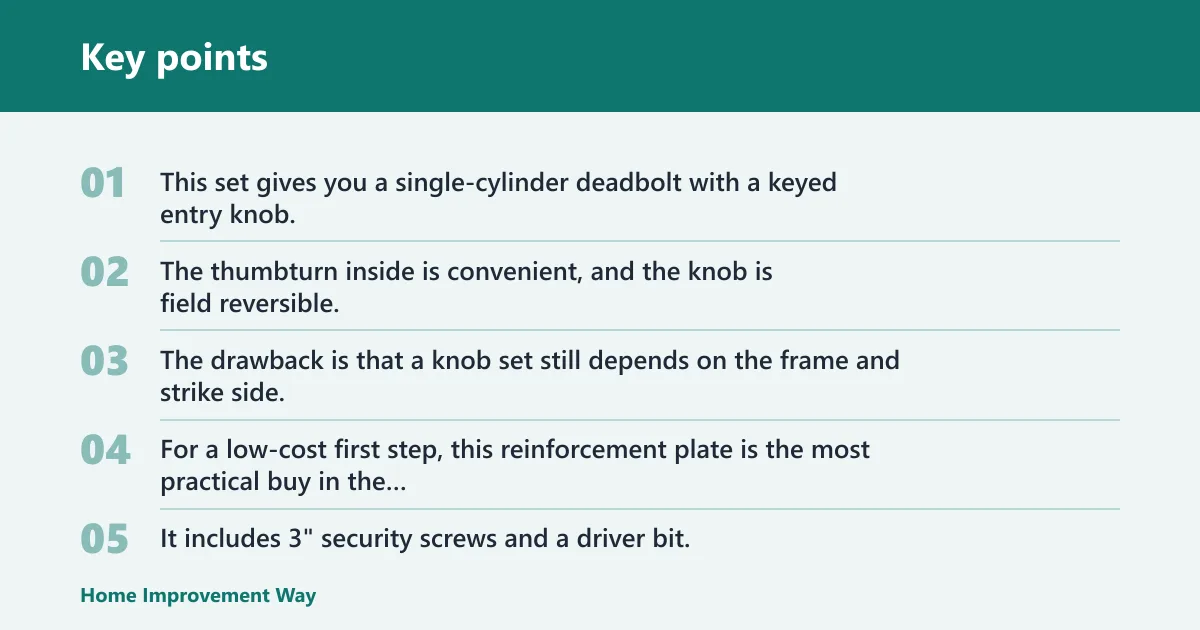
Standard front door: SCHLAGE Deadbolt & Door Knob Set

This set gives you a single-cylinder deadbolt with a keyed entry knob, which works well for a typical front door that needs a simple mechanical upgrade. The thumbturn inside is convenient, and the knob is field reversible. The drawback is that a knob set still depends on the frame and strike side, so it should not be treated as a complete security solution.
Tight budget: GOLD DEER security Door Strike plate reinforcement plate

For a low-cost first step, this reinforcement plate is the most practical buy in the group because it targets the weak point most often attacked. It includes 3" security screws and a driver bit, and the dual openings fit latch and deadbolt hardware. The tradeoff is that it is a repair-style upgrade, not a full lock replacement.
Higher-risk home: Tlence 2 pack door reinforcement plates

This 2-pack makes sense when you want to reinforce more than one exterior door or have multiple weak openings to address. Stainless steel construction and included fasteners make it a straightforward reinforcement choice. The drawback is that it still requires correct fit and installation, and it does not replace hinge or frame problems on its own.
Smart-access convenience: Rerishom 2 pack door security bar

This is the most portable option here and fits a renter, travel setup, or temporary added security plan. It needs no installation and can be moved from door to door. The drawback is obvious: it is not a permanent mechanical fix, and it is less relevant than frame or strike reinforcement for daily front-door security.
Checklist: inspect the door system in order
Use this flow before buying hardware. It starts at the failure point that usually causes the most trouble and moves outward only if the opening is already sound. The goal is not to buy the strongest-looking part; it is to stop the weakest part from failing first.
- Confirm the door closes, latches, and deadbolts without sticking.
- Inspect the strike plate for bending, looseness, or shallow screws.
- Check whether the screws reach framing, not just jamb trim.
- Look for jamb splits, soft wood, or frame movement around the strike.
- Check the hinge side for exposed barrels or removable pins.
- Check door construction for hollow-core, warped, or glass-heavy panels.
- Match lock type and grade to the door use case and egress needs.
- Add smart access only after the mechanical opening is solid.
Quick inspection notes by door type
Solid-core front doors usually benefit most from strike and hinge reinforcement first. Hollow-core side or garage man doors often need frame support before a premium lock makes any difference. Double-door entries need coordination at the inactive leaf, threshold, and astragal; otherwise the active lock leaf can still be bypassed.
Mistakes to avoid
Do not buy a stronger lock and leave the loose strike plate in place. Do not assume Grade 1 hardware can save a split jamb or short screws. Do not treat smart locks as automatically more secure than a well-fitted mechanical deadbolt. And do not ignore the hinge side on an exterior door.
A common first-timer mistake is replacing only the visible lockset on a rental side door and leaving builder-grade screws in a shallow jamb. The door still feels flimsy because the failure point never changed. Another is fitting a smart lock for convenience, then discovering the frame and latch alignment were weak from the start.
How do I choose door security hardware for my home?
Start with the weakest point you can actually improve: strike plate, screws, frame, hinges, then the lock body. Match the hardware to the door type and use case, then compare Grade 1 and Grade 2 as a buying filter. If the door is a primary exterior entry, prioritize forced-entry resistance over convenience features. For double-leaf entries, make sure the inactive leaf is secured before spending on a premium keypad or decorative lock trim.
What door hardware matters most for entry door security?
The full stack matters: lock body, strike plate, screws, frame, hinges, and door fit. The strike side is often the easiest failure point to strengthen, so it usually gives the best return first. A solid lock on a weak jamb can still fail quickly. If the entry also has glass near the lock, the risk profile changes, but the reinforcement order still starts at the frame.
Should I upgrade the lock, strike plate, hinges, or frame first?
Upgrade the strike plate and screws first, then address the frame if the jamb is weak or damaged. Add security hinges when the hinge side is exposed or lift-off is a concern. Replace the lock after the opening can support it, because the lock cannot compensate for poor anchoring. This order usually gives the highest security gain per dollar spent.
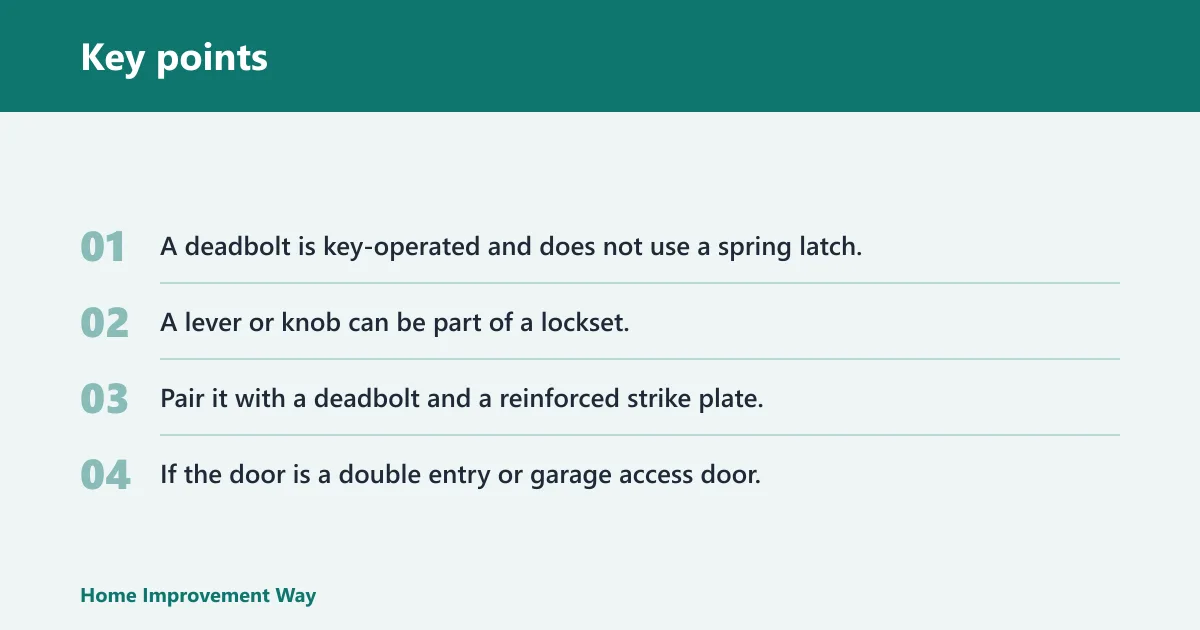
What is the difference between a deadbolt and a lever or knob for security?
A deadbolt is key-operated and does not use a spring latch, so it resists forced movement better than a typical latch-style lever or knob alone. A lever or knob can be part of a lockset, but it should not be your only security element on an exterior door. Pair it with a deadbolt and a reinforced strike plate. If the door is a double entry or garage access door, that pairing matters even more because the surrounding hardware is usually easier to exploit than the lock face.
Do I need Grade 1 hardware for my front door?
Not always, but it is the safer choice for a main exterior entry or a higher-risk home. Grade 1 is the stronger residential comparison point, while Grade 2 can work on lower-risk doors if the frame, strike, and hinges are good. The grade should support the door system, not substitute for it. On a simple rear entry or low-traffic side door, a better strike plate may deliver more real-world improvement than a premium grade label alone.
How long should strike plate screws be for better security?
Long enough to reach the stud behind the frame. That is the practical rule. Short screws that only bite the jamb or trim can still let the strike area split under load. A reinforced plate with long security screws usually matters more than the cosmetic look of the hardware. A common consumer-grade benchmark is 3-inch security screws, but the real standard is whether they anchor into framing wood rather than just finish material.
Are smart locks more secure than mechanical locks?
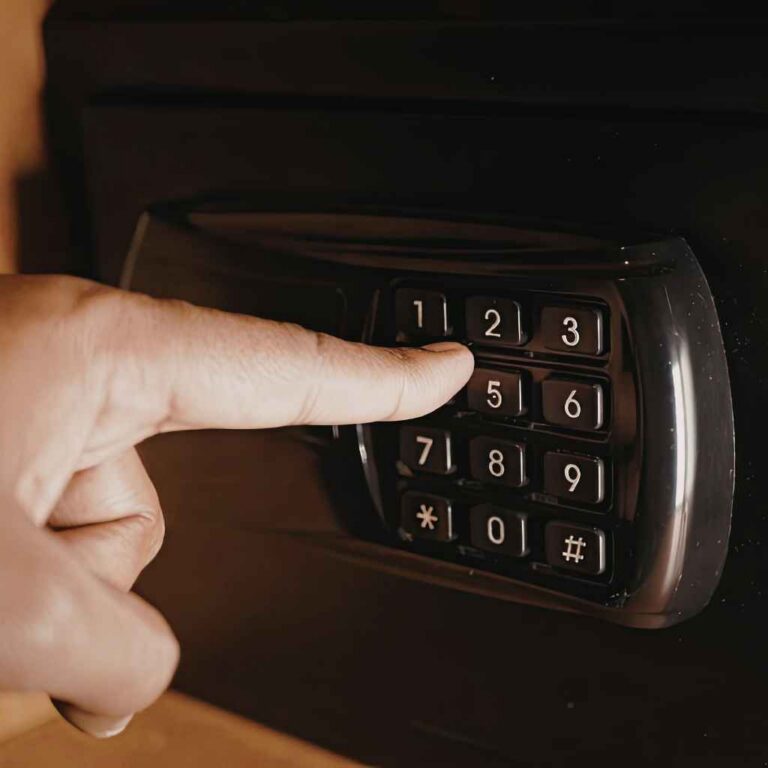
Not automatically. Smart locks add keypad, fingerprint, or app access, but they also depend on batteries and often on Wi-Fi or Bluetooth. They can improve convenience and access control, yet the physical strength of the door opening still matters more. Consumer Reports also groups retrofit smart locks as keeping the existing deadbolt exterior side and keys. In other words, the smart features change how you enter; they do not replace the need for a strong strike side and solid frame.
How do I tell if my door hardware is outdated for security?
Look for short screws, a loose latch fit, a thin or bent strike plate, visible frame damage, or builder-grade hardware that feels light and sloppy. If the door flexes, the latch rattles, or the hinge side looks easy to lift, the setup is outdated for security. The fix usually starts at the frame, not the lock face. On older doors, outdated also means poor fit with modern deadbolts, missing reinforcement, or a mismatch between the door use case and the lock type.
What does fail-safe and fail-secure mean in access control?
Fail-safe unlocks when power is lost, while fail-secure stays locked when power is lost. That distinction matters most on electrically controlled strikes and mag locks. Fail-safe is the safer choice for emergency escape paths and exit doors where people may need to leave during an outage. Fail-secure is better when the priority is keeping the door locked during a power failure and another safe exit is already available.
When is a double-cylinder deadbolt a bad idea?
A double-cylinder deadbolt can be a bad idea when it could delay emergency exit or confuse occupants during an urgent evacuation. Because it needs a key on both sides, it can slow egress if the key is unavailable or hard to reach. That makes it a poor fit for many occupied bedrooms, rental spaces, and primary exits. Use it only when the risk from nearby glass or reach-in attacks clearly outweighs the egress drawback and local code allows it.
Which upgrade is best for a double front door?
Start with the inactive leaf, astragal, and top and bottom bolts, because a double door is only as strong as its weakest leaf. Then reinforce the active leaf strike plate and jamb. A single great deadbolt on one leaf does little if the other leaf can be pried or forced open. In many cases, double doors benefit from frame reinforcement before they benefit from a better lock trim set.
What should I buy for a garage man door or utility entry?
Prioritize a reinforced strike plate, longer screws, and a lock that fits the existing bore and door thickness. Utility doors often have lighter construction and weaker frames, so the jamb is usually the first weak point. If the door leads from a garage or side passage, add hinge-side reinforcement if the hinges are exposed. For these openings, a simple mechanical reinforcement usually beats a more expensive but mismatched smart lock.
Sources
Consumer Reports door locks buying guide: consumerreports.org
Kisi on door security components, security hinges, electric strikes, fail safe/fail secure behavior, and mag locks: getkisi.com
ANSI/BHMA lock grades are the standard reference for Grade 1, Grade 2, and Grade 3 comparisons in residential hardware. NFPA 101 is the life-safety reference for egress considerations on exit doors. Manufacturer product pages can also confirm included screw length, lock center spacing, and door thickness fit before installation.
Sponsored / affiliate links. As an Amazon Associate I earn from qualifying purchases. I may earn additional commission from eligible campaigns.