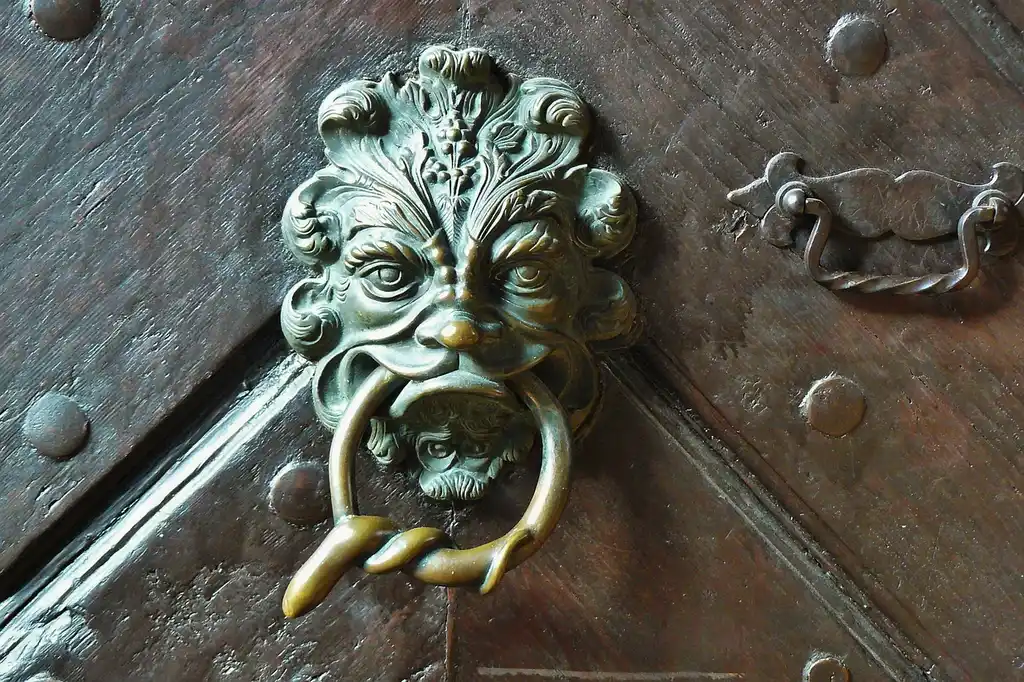
How to Clean Brass Door Hardware Without Tarnish
Clean brass door hardware with mild soap and water first. If it is lacquered, stop there. If it is unlacquered, use a gentle brass polish only after testing a hidden spot. Wrong cleaners can strip finish, pit brass, and leave the latch sticky. This guide shows how to identify the finish, clean the visible brass and the mechanism separately, and slow future tarnish.
What you’ll need

- Soft cloth or microfiber cloth
- Small bowl of warm water
- Mild dish soap
- Dry towel
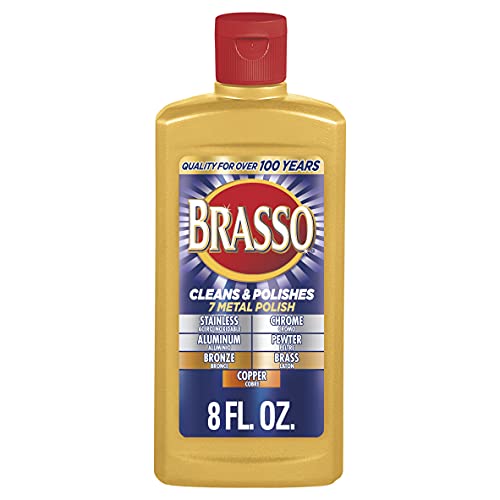
- Optional brass polish for bare brass only
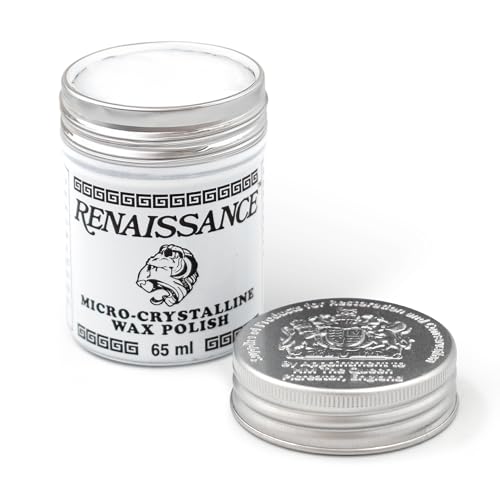
- Optional protective wax for finished brass
- Cotton swabs for edges and crevices
- Basic screwdriver for removing hardware, if needed
- Compatible lubricant for the latch and moving parts
How do you tell what finish you have?
Check the finish before you clean. Lacquered brass has a clear coating that slows tarnish, plated brass has only a thin brass layer over another core, and solid brass can tolerate more polishing than either one. Skip this check, and you can scratch through plating or wear down a coated surface.
Check for lacquer before you polish
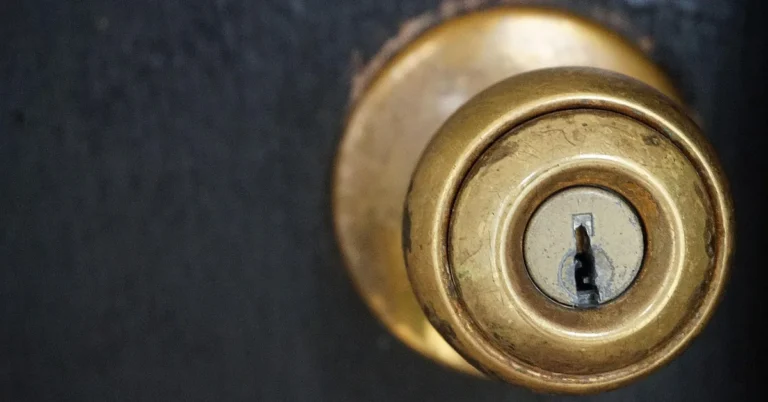
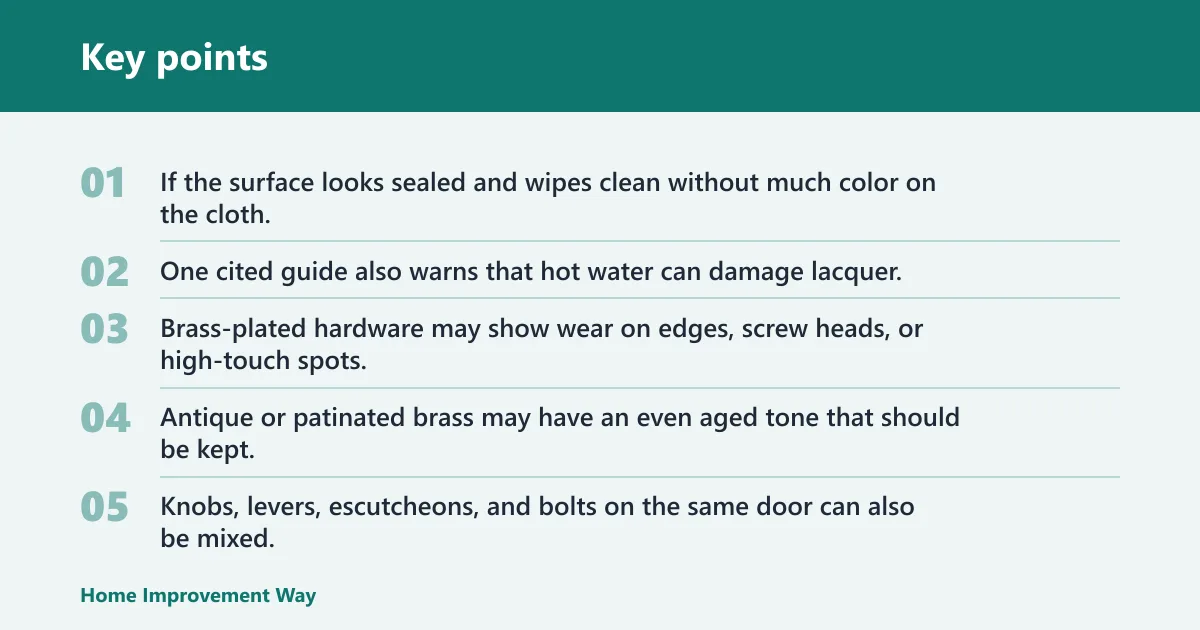
Look for a uniform, slightly sealed sheen. If the surface looks sealed and wipes clean without much color on the cloth, assume lacquer first. Hot water can damage lacquer, so stay with lukewarm water and a soft cloth.
Look for plating, patina, and mixed metals
Brass-plated hardware may show wear on edges, screw heads, or high-touch spots. Antique or patinated brass may have an even aged tone that should be kept, not scrubbed away. Knobs, levers, escutcheons, and bolts on the same door can also be mixed, so inspect each piece separately.
Use the magnet test carefully
A magnet can help check whether brass is plated. If a magnet does not stick, the item is brass, per the cited advice. If it does stick, a steel core is likely under the brass layer. Do not scrape or polish hard just to confirm it.
| Finish type | Safe cleaner | What not to use | Follow-up protection |
|---|---|---|---|
| Solid unlacquered brass | Mild soap and water, then brass polish only if tarnish remains | Abrasive pads, thick abrasives, vinegar, lemon juice | Protective wax after drying |
| Lacquered brass | Soft cloth with mild soap and water only | Abrasive polish, harsh scrubbing, hot water | Leave the coating intact; replace damaged lacquer if needed |
| Brass-plated hardware | Warm water and soap, then dry immediately | Polishing that can scratch through the brass layer | Light wax only if the finish is still intact |
| Antique or patinated brass | Soft cloth and mild soap, used lightly | Polish that removes patina or surface metal | Wax if the goal is to hold the aged look |
| Coastal-exterior brass | Frequent mild soap-and-water cleaning | Waiting too long between cleanings | Wax every few months, plus more frequent wipe-downs |
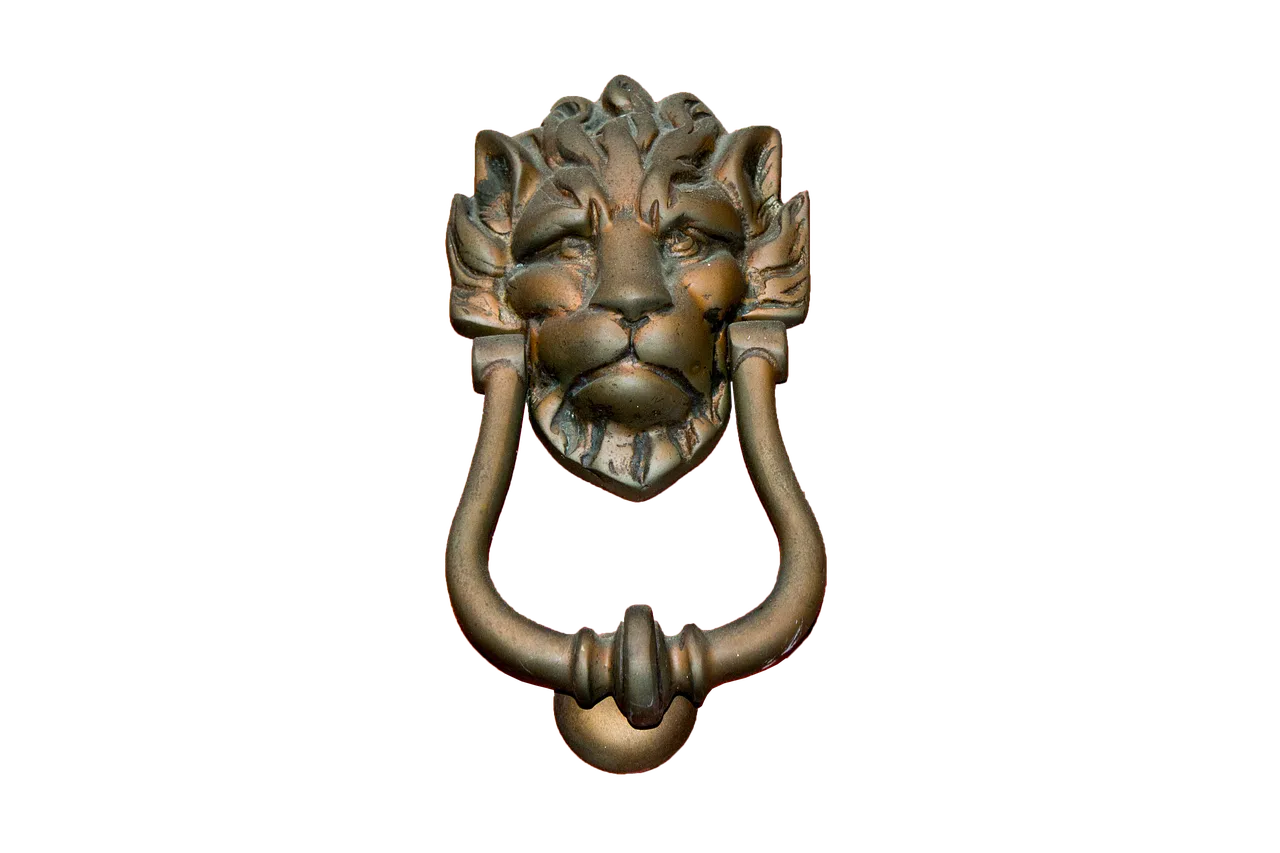
Start with the visible surface, then clean the moving parts separately. Solid brass is an alloy of copper and zinc, and it tarnishes from oxygen, moisture, pollutants, and fingerprints. The working mechanism can get stiff for a different reason: dust, dried lubricant, corrosion, or misalignment.
- Dust the surface, edges, screw heads, and trim with a dry microfiber cloth.
- Mix mild soap with warm water, then wipe the brass with a soft cloth.
- Dry immediately with a clean towel so residue does not stay on the metal.
- Inspect the finish under good light. If tarnish remains on bare brass, test brass polish on a hidden spot first.
- Use polish only on unlacquered brass, and buff with a soft cloth. Use a light touch, because polishing removes some surface metal.
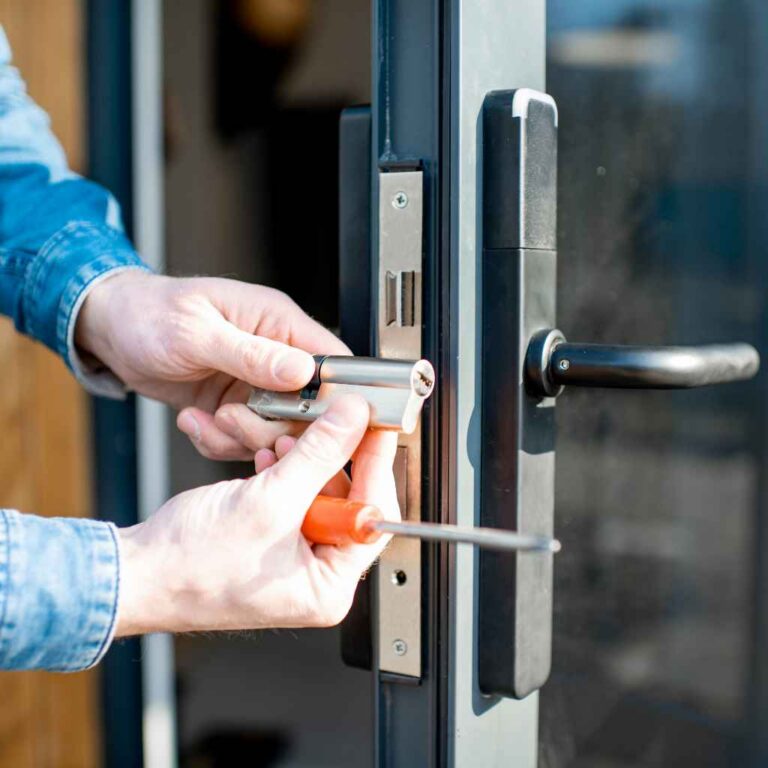
- Remove the knob or lever if needed, then clean the latch, spindle, and rose separately.
- Apply a compatible lubricant to moving parts only, not to the visible face, and reassemble.
Say your front-door lever looks dull on the outside, but the latch still snaps back slowly. Clean the handle finish first, then treat the latch housing and spindle separately. A surface shine will not fix a sticky spring, and a lubricant on the face will only collect dust.
Suppose a brass escutcheon on an interior door wipes clean, but the rose leaves a yellow film on the cloth. That usually points to ordinary tarnish on bare brass or residue on an old coating. Stop scrubbing, dry the part, and check whether lacquer is failing before you reach for polish.
Should you polish brass or just clean it?
Clean only if the brass is lightly soiled or coated. Polish only when tarnish remains on bare brass and you want a brighter finish. Brass polish is more abrasive than simple cleaning, so it can be a poor choice for antiques, lacquered pieces, or thin plated hardware.
Choose polish for stubborn tarnish only
If soap and water leave the brass dull but free of grime, a light polish can remove the remaining tarnish. Use the least aggressive product that works. For delicate metal work, one cited expert warns against thicker abrasives than 00 steel wool, which is a reminder to stay gentle.
Avoid polish on lacquered or plated finishes
Lacquered brass should never be polished abrasively. Brass-plated hardware can scratch or wear through with polishing, exposing the core underneath. If a magnet suggests a steel core, treat the piece as plated and keep to soap, water, and a soft cloth.
Keep patina when age or value matters
Antique or patinated brass may look best with its aged surface intact. A full polish can strip that look and thin the metal. If the goal is preservation, clean gently and stop before you remove the color that gives the hardware character.
How do you stop brass from tarnishing again?
Dry brass fully, wipe fingerprints off early, and add a protective wax after cleaning if the finish allows it. Wax slows future tarnish, but it is not permanent. Humidity and coastal exposure make brass tarnish faster, so cleaning frequency matters as much as the product you use.
Apply a protective wax after cleaning
A thin coat of protective wax can help slow air and moisture from reaching the surface. Reapplying it every few months. Car wax paste can protect a brass door knocker, and the same guide recommends spray-on lacquer after polishing that piece.
Match your cleaning schedule to humidity and coastal exposure
In humid or coastal areas, cleaning is often needed more frequently because moisture and airborne salts can speed tarnish. For exterior brass near the ocean, do not wait for a heavy brown film. Wipe and dry the surface regularly, then recheck the latch and trim for early buildup.
Wipe fingerprints and skin oils before they set
Skin oils can affect brass appearance, especially on door handles and levers that get touched all day. A quick wipe with a microfiber cloth removes the oils before they darken the finish. That small step helps both the look and the cleaning interval.
Common mistakes
Most brass damage comes from using the wrong cleaner on the wrong finish, then treating the mechanism as if it were the surface. Watch for these failures before you make them worse.
- Using abrasive pads or harsh acids: Vinegar and lemon juice are not routine cleaners for brass door hardware, and acid can attack the finish.
- Skipping the moving parts: A shiny knob with a stiff latch still needs a separate mechanism cleaning and the right lubricant.
- Polishing through lacquer or brass plating: If the finish is coated or thin, polish can cut through it fast.
- Ignoring pinking, green deposits, or cloudy residue: Those signs can point to finish failure, corrosion, or cleaner residue that needs a different next step.
| Failure sign | Likely cause | Next step |
|---|---|---|
| Pinking | Brass layer or surface coating may be wearing thin | Stop polishing, check for plating, and clean only with soap and water |
| Green deposits | Moisture, corrosion, or residue around seams and crevices | Clean gently, dry fully, and inspect for trapped moisture near the rose or latch |
| Sticky feel | Dried lubricant, dust, corrosion, or misalignment | Remove the hardware if needed, clean the moving parts, and use a compatible lubricant |
| Cloudy residue | Soap film, old wax, or leftover cleaner | Wipe again with clean water, dry at once, and buff with a microfiber cloth |
Frequently asked questions
How do I clean brass door hardware without scratching it?
Use a soft cloth or microfiber cloth, mild soap, and warm water. Wipe with light pressure, then dry immediately. Avoid scouring pads, powders, and rough paper towels. If tarnish remains on bare brass, try brass polish on a hidden spot first and buff lightly rather than scrubbing hard.
How can I tell if my brass door hardware is lacquered?
Lacquered brass usually has a clear coating that slows tarnish and changes the way the surface feels under a cloth. If the finish wipes clean without leaving much color and does not respond like bare brass, treat it as coated. Stay with soap and water only unless the coating is removed professionally.
Should I polish brass hardware or just clean it?
Just clean it if the hardware is lacquered, plated, antique, or only lightly dirty. Polish only bare brass that still looks tarnished after washing. If you want to keep an aged finish, skip polish and use wax instead. That choice preserves more of the existing surface.
What keeps brass door hardware from tarnishing again?
Dry it fully, wipe fingerprints off early, and add a protective wax after cleaning if the finish is suitable. Reapply every few months in higher-wear spots or harsher environments. Coastal air, humidity, and frequent touching all shorten the time between cleanings.
Can I use vinegar or lemon juice on brass door hardware?
Not as a routine cleaner. Acid can be too aggressive for lacquered brass, plated brass, and older finishes, and it can leave the surface uneven. Mild soap and water are the safer first step. If tarnish remains on bare brass, use a proper brass polish instead.
How often should brass door hardware be cleaned in humid or coastal areas?
Clean more often than in a dry interior room, because moisture and coastal exposure speed tarnish. For exterior hardware, frequent wipe-downs and drying are more useful than waiting for visible buildup. If the piece is touched many times a day, add a quick finger wipe to the schedule.
How do I clean brass hardware if it is plated, not solid brass?
Use warm water and soap, then dry it right away. Do not polish aggressively, because the brass layer is thin and can wear through. If a magnet sticks, treat the piece as having a steel core unless the design clearly says otherwise. Keep the cleaning gentle.
What should I do if brass hardware looks pink or patchy after cleaning?
Stop polishing at once and check for plating or lacquer failure. Pinking can mean the brass layer is thinning, while patchiness can point to uneven wear or stripped coating. Clean only with mild soap and water, dry fully, and decide whether the finish needs repair or replacement.
Sponsored / affiliate links. As an Amazon Associate I earn from qualifying purchases. I may earn additional commission from eligible campaigns.