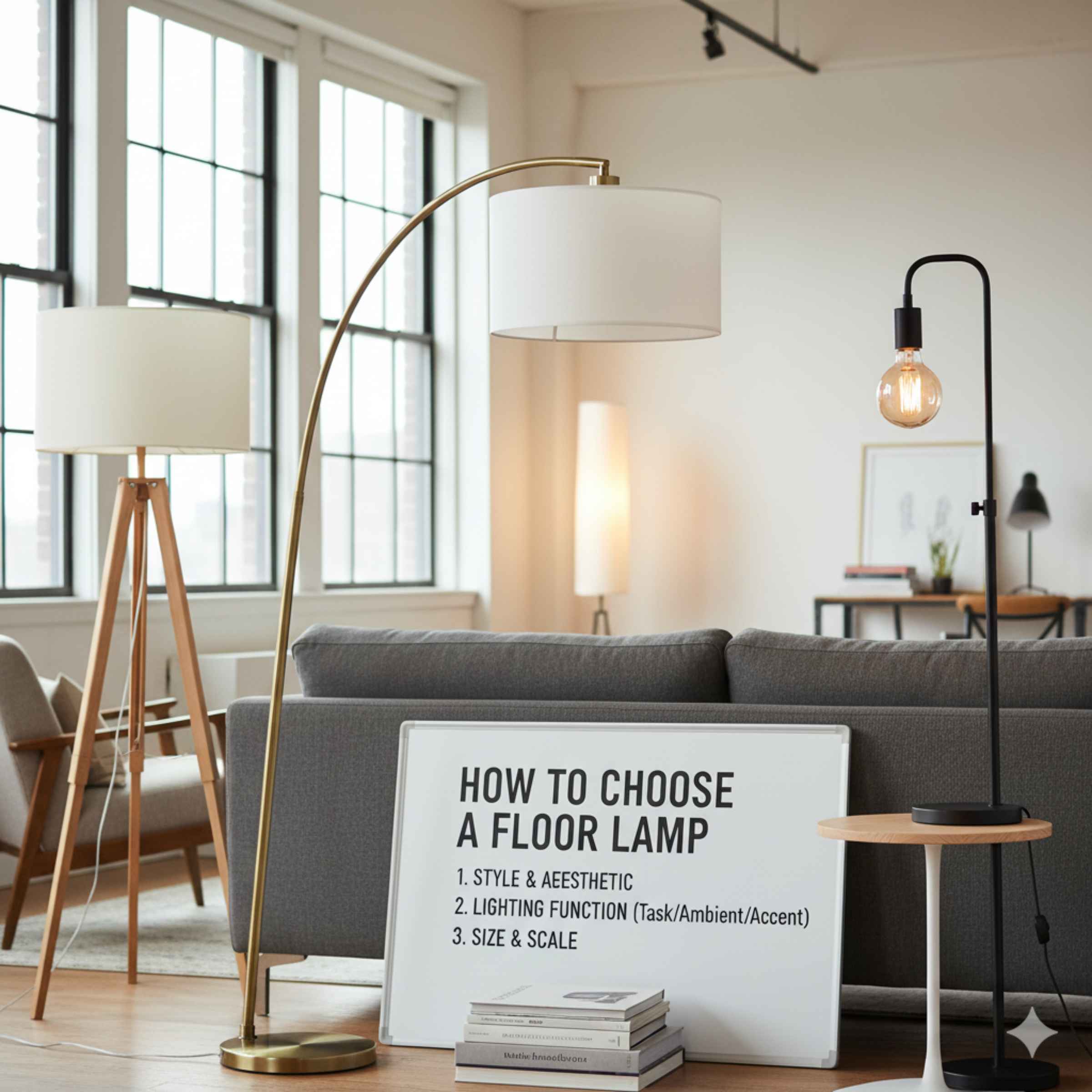
How To Choose A Floor Lamp: Essential Guide
To choose the perfect floor lamp, focus on three main areas: the lamp’s purpose (task, ambient, or accent lighting), its size and scale relative to your room, and the style that matches your existing decor. This guide breaks down these choices simply, ensuring you get the right light and look for your home project.
Hey there! I’m Md Meraj, and I know picking out a floor lamp can feel surprisingly tricky. You walk into a store, see dozens of towering metal sticks, and suddenly you forget why you even needed one! Lighting is crucial for making a room feel cozy and functional, but choosing the wrong one leaves you with shadows or a lamp that just doesn’t fit. Don’t worry; we’re going to walk through this step-by-step, just like we would when planning a weekend woodworking project. By the end of this guide, you’ll feel confident selecting the perfect floor lamp that lights your space just right.
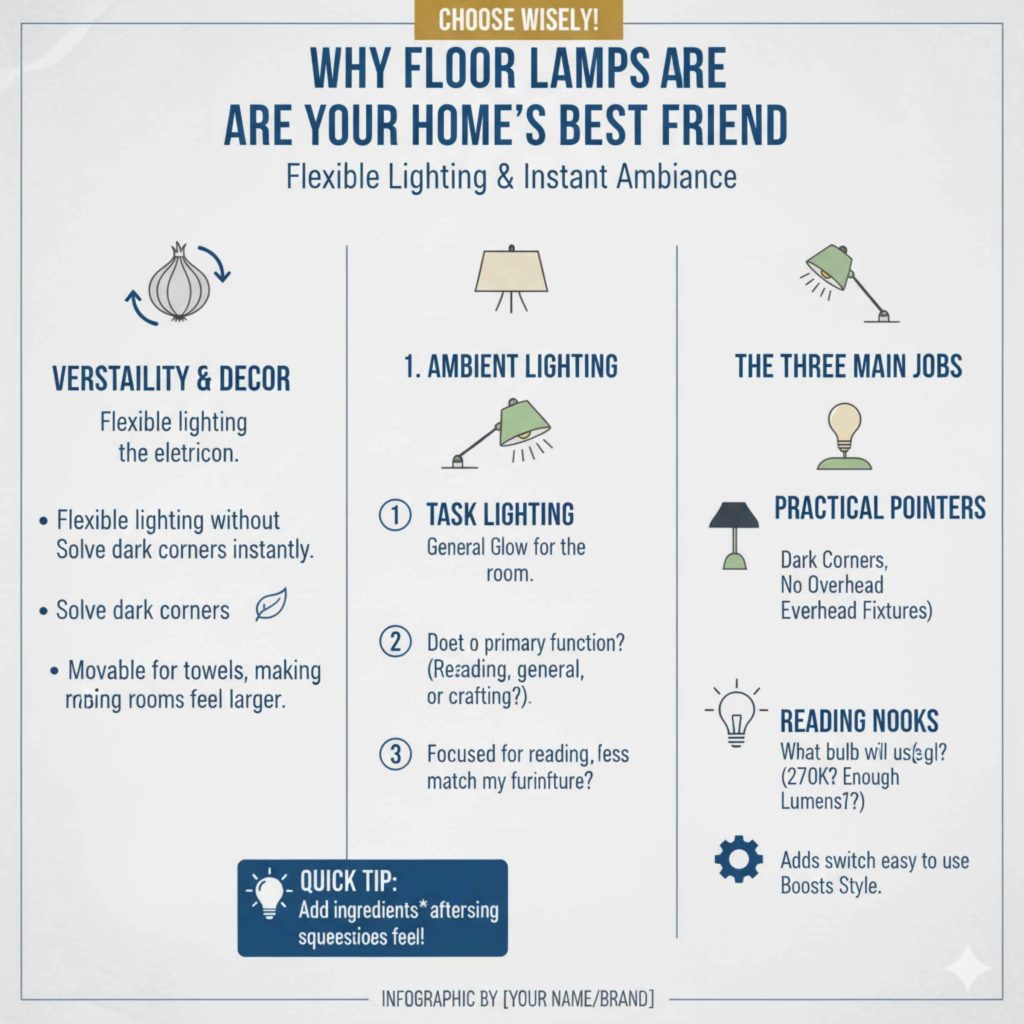
Why Floor Lamps Are Your Home’s Best Friend
Floor lamps are fantastic tools for homeowners because they offer flexible lighting without needing an electrician. They solve common lighting problems instantly. Think about those dark corners or that reading chair that never seems bright enough. A good floor lamp fixes that!
They are versatile pieces of home decor, too. Unlike built-in fixtures, you can move them whenever you rearrange your furniture or decide to change your style. They add height, which helps draw the eye upward and makes a room feel larger.
The Three Main Jobs of a Floor Lamp
Before you look at any specific model, you need to decide what job you need the lamp to do. Most floor lamps fall into one of three main categories, though some can do double duty.
- Ambient Lighting (General Glow): This is the overall light that fills the room. Think of it as the base layer of illumination. These lamps usually have shades that diffuse light broadly.
- Task Lighting (Focused Work): This light is concentrated on a specific area for activities like reading, crafting, or knitting. These often have adjustable arms or heads.
- Accent Lighting (Highlighting Decor): These lamps are used to draw attention to artwork, architectural features, or simply to add a warm glow to a specific spot. Uplights are a great example of accent lighting.
Step 1: Choosing the Right Type of Floor Lamp
Now that we know the job, let’s look at the common shapes and styles. Each shape is designed to handle a specific lighting task better than the others.
Arc Floor Lamps: The Reach Master
Arc lamps look like giant, graceful question marks. They are famous for their long, sweeping arms that allow the light source to hang over a seating area, like a sofa or dining table, without needing a ceiling fixture directly above it. They are excellent for ambient or soft task lighting over a large area.
- Best For: Living rooms where you need light centered over a coffee table or sectional.
- Pro Tip: Because they project light from above, ensure the base is heavy enough so it won’t tip over if someone bumps the shade.
Torchiere Lamps: The Uplight Specialist
Torchiere lamps direct light straight up toward the ceiling. The light then bounces off the ceiling and gently fills the room with soft, even, ambient light. They are superb for brightening up a room without creating harsh shadows.
- Best For: Creating general, soft background light in darker corners.
- Consideration: They don’t work well for focused reading unless they have a small, secondary reading light attached (often called a “dual-head” torchiere).
Reading Floor Lamps (or Task Lamps): The Focused Helper
These are usually slender, often featuring flexible necks or adjustable arms. They are the workhorses of lighting, designed specifically to put light exactly where you need it—right on your book or needlepoint.
- Best For: Home offices, bedside tables, or beside your favorite armchair.
- Key Feature: Look for swing arms or telescoping poles for maximum flexibility.
Tripod and Tree Lamps: The Decor Statement
Tripod lamps stand on three legs, giving them a sturdy, often mid-century modern or rustic feel. Tree lamps have a main pole with several arms branching out, often ending in multiple shades. These are great for filling vertical space and providing multi-directional light.
When choosing, remember that the style of the lamp base and shade heavily influences how much light gets diffused. A thick, opaque shade will block more light than a thin, white linen one.
Step 2: Sizing Up Your Space (Scale and Proportion)
This is where many folks go wrong. A lamp that looks perfect in the showroom might look tiny or overwhelming next to your sofa. Getting the scale right is essential for good home design.
Height Matters: Where Should the Light Hit?
The height of the lamp shade is important for comfort and function. You don’t want to stare directly into the bulb!
- For Reading Lamps: The bottom of the shade should ideally be level with or slightly above your shoulder when you are seated. This directs the light down onto your reading material without shining in your eyes.
- For Ambient Lamps (Torchiere/Arc): The highest point of the lamp should generally be about 6 to 7 feet tall if you have standard 8-foot ceilings. This allows the light to spread without feeling cramped.
Base and Footprint: The Landing Zone
Consider the space the base takes up on the floor. A large, heavy base provides stability, which is crucial for tall lamps, but it also takes up valuable floor space.
If you have a small apartment or tight corners, look for lamps with slim profiles or weighted bases that taper down. If you are placing a lamp next to a large sectional, a substantial, wide-based lamp will look balanced.
A Quick Look at Lamp Dimensions:
| Lamp Type | Typical Height Range | Best Used When… |
|---|---|---|
| Reading/Task Lamp | 48 – 65 inches | Seated near furniture |
| Torchiere Lamp | 65 – 72 inches | Filling a tall corner space |
| Arc Lamp | 70 – 85 inches (total span) | Reaching over a central furniture piece |
Step 3: Selecting the Right Style and Material
This is the fun part! The lamp should complement your existing furniture and overall home aesthetic. Think of the lamp as a piece of functional sculpture.
Matching Your Decor Vibe
It’s easy to get overwhelmed by trends, but stick to what feels right for your space. Here are some popular styles and what they pair well with:
- Modern/Minimalist: Look for clean lines, often featuring brushed nickel, matte black metal, or simple white/clear glass. The focus is on form over ornamentation.
- Farmhouse/Rustic: Oil-rubbed bronze, distressed wood finishes, or wrought iron bases work well. Shades are often burlap or heavy linen.
- Mid-Century Modern (MCM): Think tapered wooden legs (tripod style), brass accents, and simple, drum-shaped shades.
- Traditional: Detailed metalwork, carved wood columns, and classic fabric shades (like pleated silk or cream linen) fit this look perfectly.
The Importance of the Shade
The shade is arguably the most critical element for controlling light quality. Shades dictate color temperature and light spread.
When selecting a shade, consider:
- Opacity: A light, white or cream shade allows the most light through. A dark or heavily textured shade (like thick tweed) will create a cozier, dimmer mood by directing most light up and down.
- Shape: Drum shades offer even, diffused light. Bell or tapered shades often direct more light downward.
- Lining: Some high-quality shades have gold or silver linings inside. These linings reflect warmer light into the room, enhancing coziness.
Step 4: Understanding Wattage and Bulb Choices (The Power Check)
A beautiful lamp is useless if it’s too dim or too bright. This is all about the bulb—the heart of your lighting fixture. As homeowners doing DIY projects, understanding the electrical side simply ensures safety and satisfaction. Remember, always unplug the lamp before changing bulbs!
The Wattage Limit
Every lamp has a maximum wattage rating stamped near the socket (usually on a sticker or etched near the bulb base). Never exceed this limit. For example, if it says “Max 100W,” do not screw in a 150W bulb. Overloading the socket can cause overheating and is a fire hazard. You can learn more about basic home electrical safety from resources like the CDC’s home safety guidelines.
LEDs: The Modern Solution
Forget old incandescent bulbs. Today, you should almost always choose LED bulbs. They use far less energy and last for years. The key with LEDs is understanding Lumens and Color Temperature.
Lumens (Brightness)
Lumens measure the actual amount of visible light produced. Wattage measures energy use. You want to choose Lumens based on the lamp’s job:
- Ambient Light (General Room Fill): Aim for 800–1100 Lumens per lamp.
- Task Light (Reading): Aim for 1000–1600 Lumens focused on your workspace.
Color Temperature (The Mood Setter)
Color temperature is measured in Kelvins (K) and determines if the light looks warm (yellowish) or cool (bluish).
| Kelvin (K) Rating | Appearance | Best For |
|---|---|---|
| 2700K – 3000K | Warm White / Soft White | Living rooms, bedrooms (cozy, relaxing) |
| 3500K – 4100K | Neutral White / Cool White | Kitchens, offices, workshops (alertness) |
| 5000K+ | Daylight | Detailed tasks, garages (brightest clarity) |
For most living areas, a 2700K or 3000K bulb gives that inviting, warm glow we usually seek from a floor lamp.
Step 5: Considering Practical Features and Functionality
A lamp needs to work well with your lifestyle. Think about how often you’ll be turning it on and off, and what kind of outlets you have available.
Switch Type: Where is the Control?
The switch mechanism can make or break the usability of your lamp:
- Inline Switch (Cord Switch): A small switch located on the cord itself. Best for lamps where the switch needs to be reachable from the side or behind furniture.
- Rotary Switch (Knob on Socket): The classic twist knob right under the bulb. Great for traditional lamps, but can be awkward if the lamp is tucked away.
- Foot Switch (On the Cord Base): Ideal for task lamps or lamps placed near a comfy chair. You can turn it on and off easily without leaning over.
- Touch Switches: These lamps turn on/off or dim with just a tap on the base or stem. Very convenient, especially for older homeowners or those with mobility issues.
Dimmer Capability
If you choose a lamp that supports dimming (either built-in or by using a compatible dimmer switch/smart bulb), you gain incredible versatility. Dimming allows you to use the same lamp for bright reading light during the day and a soft, mood light in the evening.
Safety Note on Dimmers: If you add a dimmer switch to a standard lamp, ensure both the lamp socket and the bulb you use are rated as “dimmable.” Mixing non-dimmable components can cause buzzing or premature failure.
The Cord Management Challenge
We all deal with cords! Look at the cord length—is it long enough to reach an outlet without stretching awkwardly across the room? Also, check where the cord exits the base. Some modern designs hide the cord neatly down the leg, while others have it exit directly from the center, which might look messy if the cord is visible.
A Quick Troubleshooting Guide for Lamp Shopping
Sometimes, even with a plan, you run into a snag. Here are a few common beginner worries solved simply:
| The Problem | The Simple Fix |
|---|---|
| The lamp looks too small next to the sofa. | Look for a taller lamp (over 65 inches) or one with a wider, more substantial shade to balance the furniture scale. |
| The light is too harsh and glaring. | Change the bulb to a lower Lumen count (e.g., 800 Lumens) or switch to a shade made of thicker, more opaque material. |
| The base wobbles when I touch the switch. | The base is too light for its height. Return it, or try adding weight (like a bag of decorative stones) to the bottom if the base is hollow and accessible. |
| I can’t reach the switch easily. | Opt for a lamp with a foot switch or a touch-sensitive base. |
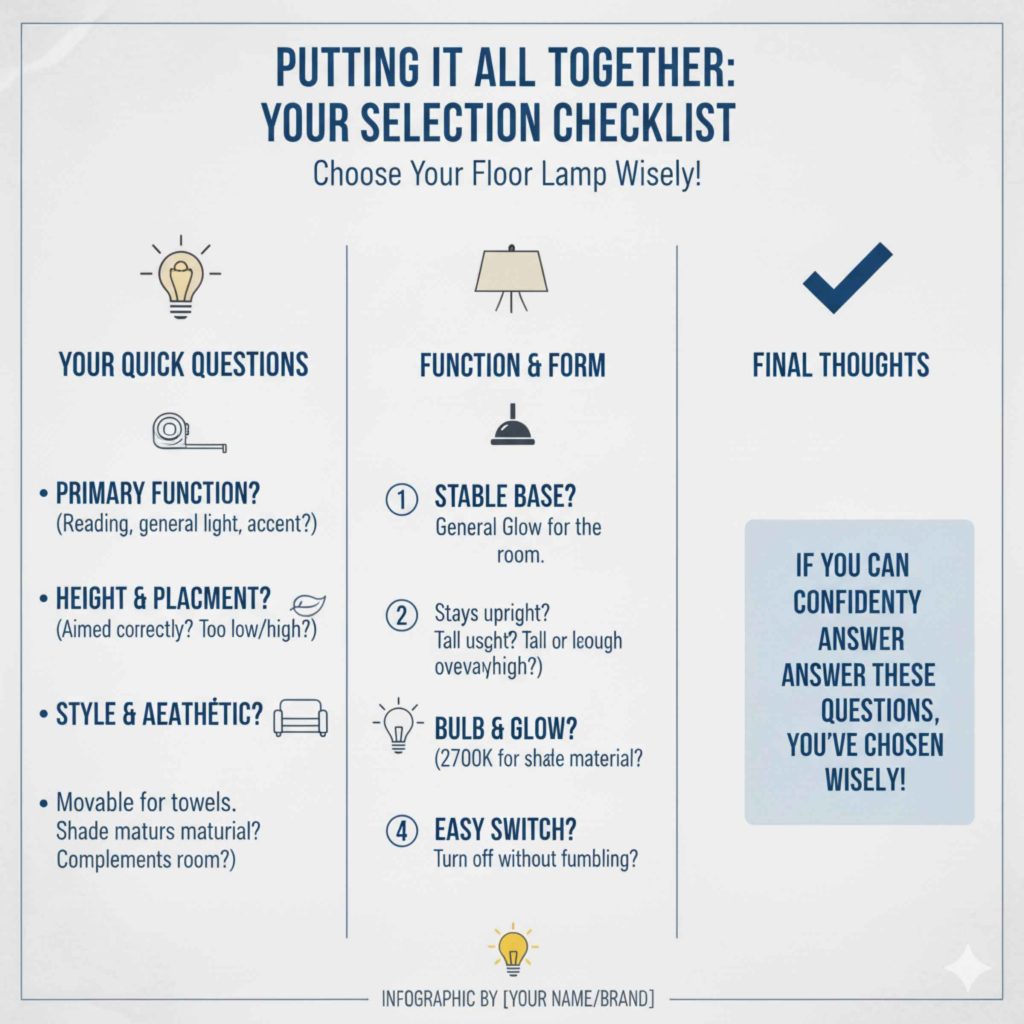
Putting It All Together: Your Selection Checklist
Before you load that lamp into your cart, run through this quick mental checklist. If you can confidently answer these questions, you’ve chosen wisely!
- What is the primary function? (Reading, general light, or accent?)
- Does the height feel right? (Is the light source aimed correctly for the task, or is it too low/high for the room?)
- Does the style match my furniture? (Does the metal finish and shade material complement the room?)
- Is the base stable? (Will it stay upright, especially if it’s tall or has an overhang?)
- What bulb will I use? (Do I need 2700K for coziness, and do I have enough Lumens?)
- Is the switch easy to use? (Can I turn it off without fumbling around?)
Frequently Asked Questions (FAQ) for Beginner Lamp Buyers
Q1: What is the standard height for a floor lamp in a living room?
A: For general ambient lighting, a standard floor lamp should be between 65 and 72 inches tall. This allows the light to spread evenly across the ceiling and room without the bulb being directly in your line of sight.
Q2: Should I match the metal finish of the lamp to my other furniture hardware?
A: While matching is safe, it’s not strictly required anymore! It’s better to choose finishes that coordinate or complement. For example, mixing brushed nickel (cool tone) with matte black (neutral) often looks more intentional and modern than trying to match every single piece.
Q3: How do I make my floor lamp brighter without changing the bulb?
A: If you can’t change the bulb wattage (due to the lamp’s limit), focus on the shade. Switch to a shade made of lighter, more translucent material (like white linen instead of dark burlap). Also, ensure the inside of the shade is white or light-colored to maximize reflection.
Q4: Are arc lamps safe to use around kids or pets?
A: Arc lamps can sometimes be tipping hazards if the base isn’t heavy enough or if they are positioned where people walk underneath them. Always ensure the base has significant weight, and consider anchoring the arm slightly if you have very active pets or small children running around.
Q5: What is the difference between a floor lamp and a torch lamp?
A: “Floor lamp” is the general term for any lamp standing on the floor. A “torch lamp” (or Torchiere) is a specific type of floor lamp characterized by a bowl-shaped head that directs light upward toward the ceiling for ambient lighting.
Q6: Can I use a smart bulb in any floor lamp?
A: Yes, most modern floor lamps can easily accept a smart bulb, provided the bulb physically fits into the socket opening and the lamp’s maximum wattage rating is not exceeded by the smart bulb’s equivalent wattage draw.
Conclusion: Lighting Your Home with Confidence
There you have it! Choosing the right floor lamp moves from being a confusing chore to a simple, rewarding design decision. Remember, lighting is all about function first, then form. Start by figuring out if you need a task light for focused work or an ambient light for a soft glow. Then, pay attention to the scale—make sure the lamp looks like it belongs next to your furniture, not like a forgotten afterthought.
By focusing on the type of light you need, the physical size, and the bulb you plan to use, you are setting yourself up for success. You don’t need to be an electrician or a professional designer; you just need a clear plan. Go ahead and pick out that perfect lamp. You’ve got this, and it’s going to make your space look and feel fantastic!