How To Coordinate Light Fixtures: Genius Design
Quick Summary:
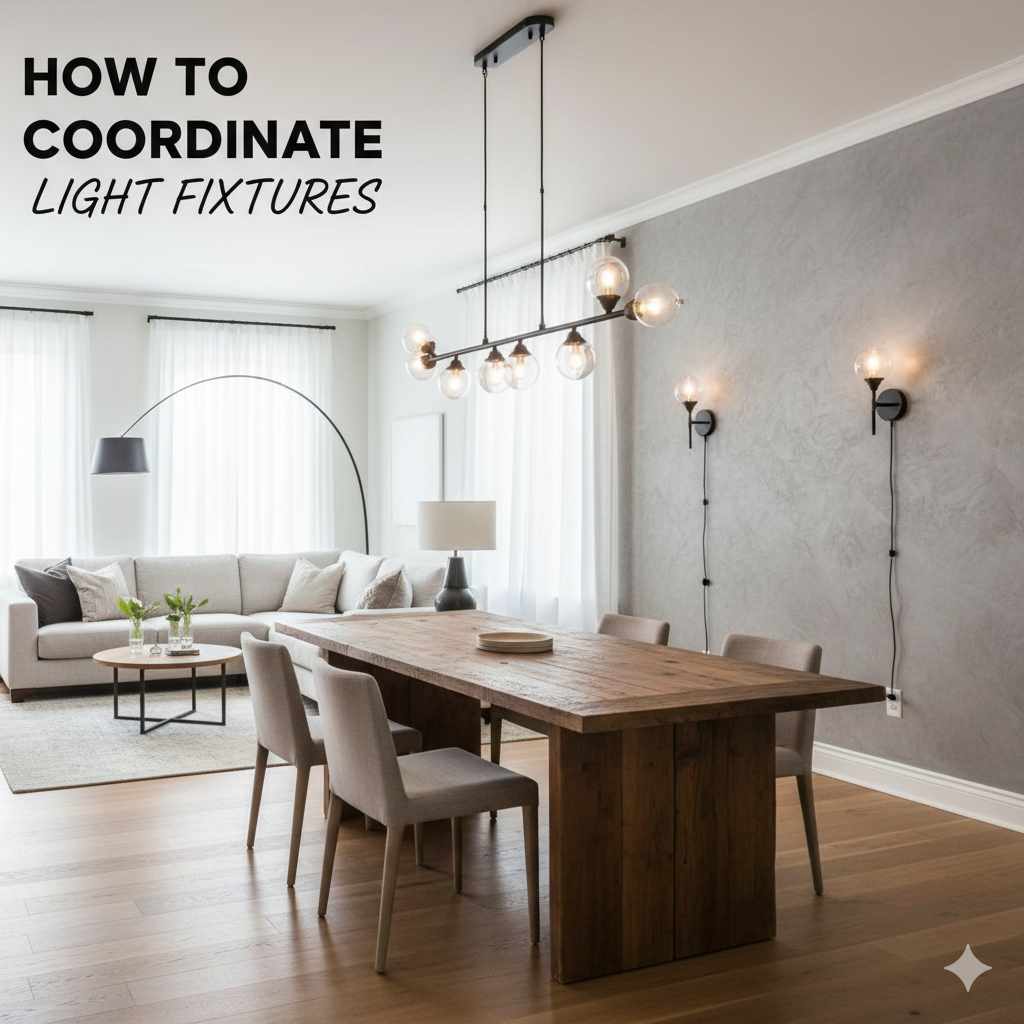
Coordinating light fixtures is about creating a cohesive look by matching style, finish, and scale. This guide breaks down how to select and place lights for a beautiful, functional home, making your space feel thoughtfully designed and welcoming.
Ever walked into a room and felt like something was just… off? Often, that feeling comes down to how the lights are working together. It’s not just about having enough light; it’s about how your fixtures complement each other and the overall style of your home. Getting this right can transform a space from ordinary to extraordinary. But where do you even start? It can feel overwhelming with so many choices! Don’t worry, this guide is here to help. We’ll walk through simple, smart ways to coordinate your light fixtures, making your home look professionally designed. You’ll learn the secrets to creating harmony and flow, room by room, so you can feel confident in your choices and love the way your home looks and feels.
The Art of Light Fixture Coordination: What It Means
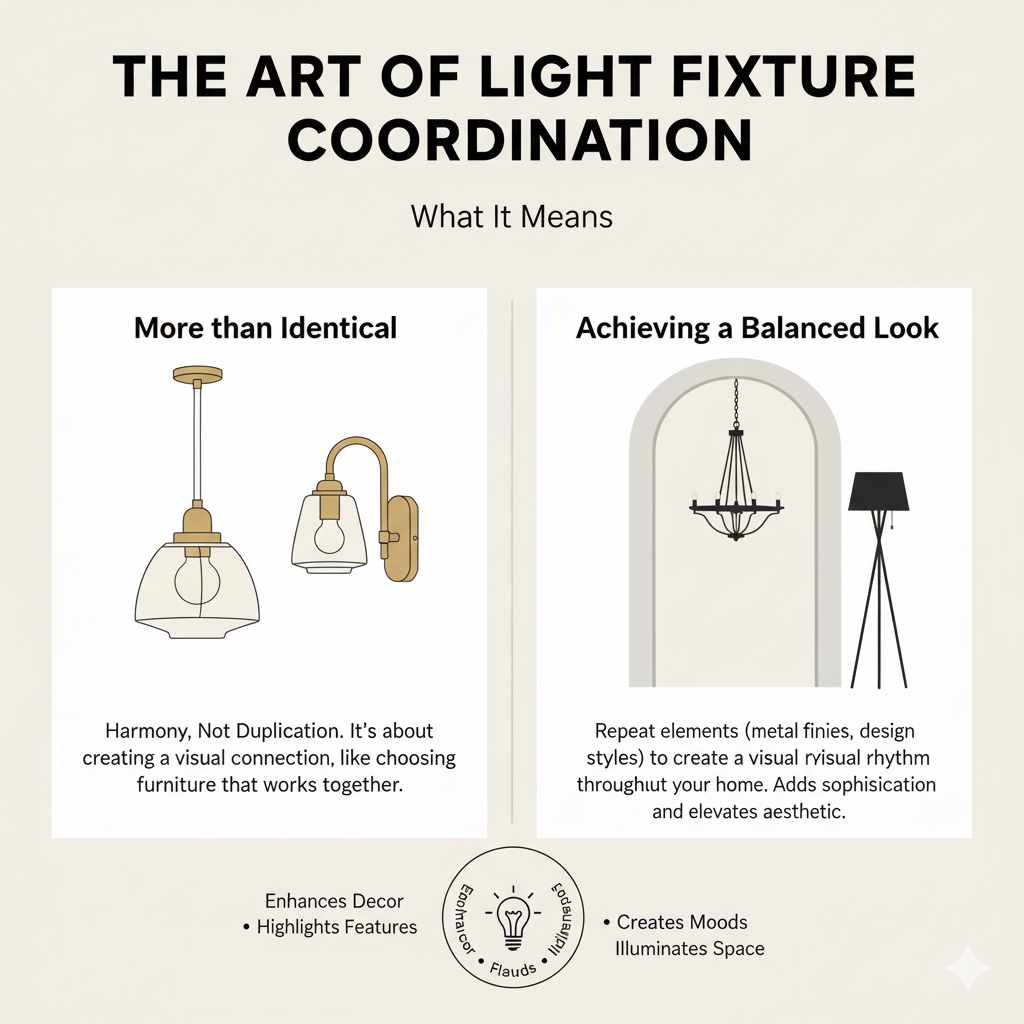
Coordinating light fixtures isn’t about making everything identical. Instead, it’s about creating a sense of harmony and visual connection throughout your home. Think of it like choosing furniture or paint colors – you want elements that work well together, even if they aren’t exactly the same. This thoughtful approach makes your home feel more intentional, stylish, and inviting. When your lights are coordinated, they enhance your decor, highlight architectural features, and create specific moods, all while serving their primary purpose: to illuminate your space.
The goal is to achieve a balanced look. This can involve repeating certain elements, like a specific metal finish or a particular design style, across different rooms or within the same large space. It’s about establishing a visual rhythm that guides the eye and makes the entire home feel cohesive. When done well, this coordination adds a layer of sophistication and polish that can significantly elevate your home’s aesthetic appeal.
Why Coordinating Your Lights Matters
When light fixtures are chosen without a plan, they can clash, creating a disjointed and unappealing atmosphere. Imagine a modern kitchen with a rustic chandelier in the dining area, and then a sleek, minimalist pendant over the island. While each piece might be beautiful on its own, together they can feel chaotic and disconnected. This lack of coordination can make a room feel unfinished or even cheapen the overall design.
On the other hand, coordinated lighting offers several benefits:
- Enhanced Aesthetics: Creates a visually pleasing and unified look throughout your home.
- Improved Flow: Helps guide the eye from one space to another, making transitions feel smooth.
- Defined Style: Reinforces your chosen interior design style, making your home feel more intentional.
- Increased Home Value: A well-designed lighting scheme can be a significant selling point.
- Functional Beauty: Ensures that both the form and function of your lighting contribute to the overall appeal.
Key Elements for Coordinating Light Fixtures
To successfully coordinate your light fixtures, you need to consider a few crucial design elements. Focusing on these will help you make informed choices that tie your lighting together beautifully.
1. Style Consistency
This is perhaps the most important factor. Your light fixtures should generally align with the overall interior design style of your home. Whether your home leans modern, traditional, farmhouse, industrial, or bohemian, choose fixtures that echo that aesthetic. This doesn’t mean every single fixture has to be identical, but they should belong to the same design family.
For example, if you have a modern home, you might opt for fixtures with clean lines, geometric shapes, and minimalist details. If your style is more traditional, you might look for fixtures with classic curves, ornate details, and perhaps a brushed brass or antique nickel finish. For a farmhouse vibe, think of barn-inspired shapes, distressed wood accents, and matte black finishes.
2. Finish Harmony
The finish of your light fixtures plays a big role in their coordination. While you don’t need every metal element in your home to be the exact same finish, it’s best to stick to a limited palette. Common finishes include:
- Brushed Nickel
- Polished Chrome
- Matte Black
- Oil-Rubbed Bronze
- Brushed Brass
- Antique Brass
- Wrought Iron
A good rule of thumb is to choose one or two primary finishes for your home and use them consistently. For instance, you might choose brushed nickel for most of your fixtures and use polished chrome as an accent. Or, you could go with matte black throughout and use a touch of warm brass in specific areas for contrast. Mixing too many finishes can make a space feel busy and uncoordinated.
Consider how finishes interact with other elements in the room, such as hardware on cabinets, faucets, and furniture legs. Aim for a complementary rather than competing relationship.
3. Scale and Proportion
The size of your light fixtures should be appropriate for the space they are in. A massive chandelier in a small entryway can overwhelm the space, while a tiny pendant in a large living room will look insignificant. Scale refers to the physical size of the fixture, while proportion relates to how that size fits within the dimensions of the room and the furniture it’s illuminating.
Here are some general guidelines:
- Entryways/Foyers: The width of a chandelier should typically be about one-third of the foyer’s width and length.
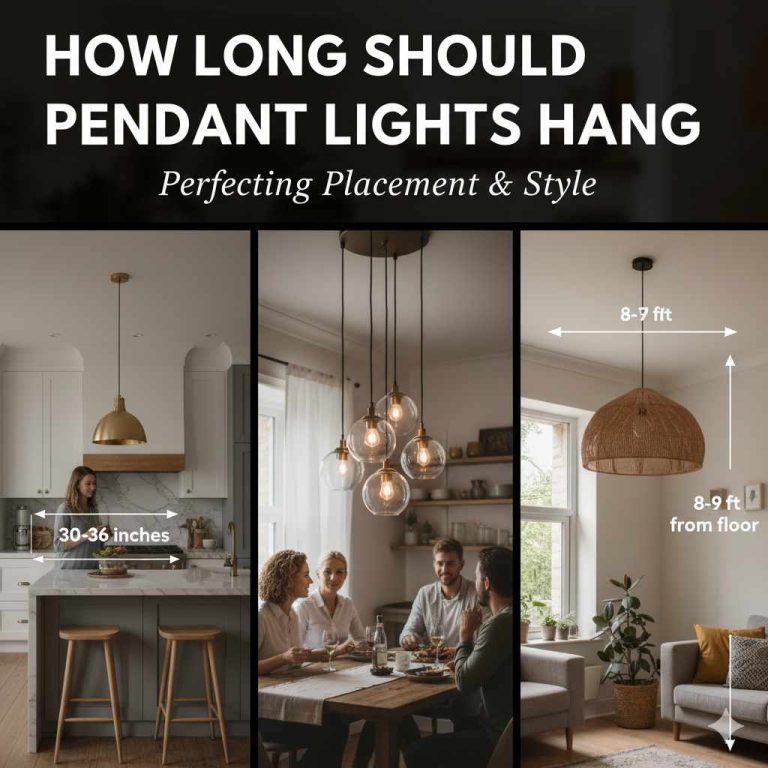
- Dining Rooms: A chandelier should be centered over the dining table and usually about half to two-thirds the width of the table. It should also hang high enough so that diners aren’t obstructed (typically 30-36 inches above the tabletop).
- Kitchen Islands: Pendants should be spaced evenly and hung at a height that doesn’t obstruct views but provides adequate task lighting (typically 30-36 inches above the counter).
- Living Rooms: Consider the ceiling height. Taller ceilings can accommodate larger or longer fixtures.
Proportion also means ensuring that fixtures within the same room or visible from one another are in a similar scale. For example, if you have a large ceiling fan in a great room, the other lighting in that room should be substantial enough not to be dwarfed by it.
4. Silhouette and Shape
While you don’t need every fixture to have the exact same shape, a recurring silhouette or design element can create a subtle sense of unity. This could be a preference for drum shades, geometric forms, or fixtures with exposed bulbs. For instance, if you have a series of drum pendants over your kitchen island, you might choose a drum-shaped flush mount light for the adjacent hallway.
Think about the overall form. Are you drawn to linear designs, spherical shapes, or more organic, sculptural forms? Repeating these general shapes in different fixtures can build a cohesive look without being matchy-matchy.
5. Light Quality and Color Temperature
Beyond the visual appearance, the type of light your fixtures emit also matters. Consider the color temperature, measured in Kelvin (K). Warmer light (around 2700K) is cozy and inviting, while cooler light (4000K+) is more crisp and energizing. For most homes, a consistent warm white (2700K-3000K) is preferred for a welcoming ambiance.
Using different color temperatures in close proximity can feel jarring. For example, having a fixture with warm light next to one with cool, blueish light can disrupt the room’s mood. While task lighting might sometimes benefit from a slightly cooler temperature, ensure it doesn’t create a stark contrast with ambient or accent lighting.
Practical Strategies for Coordinating Lights Room by Room
Let’s get practical. How do you apply these principles to different areas of your home? Here’s a room-by-room approach.
Entryway and Hallways
These are the first impressions of your home. They set the tone for the rest of the interior. A consistent style and finish here are crucial.
- Entryway: A statement pendant or chandelier is common. Ensure its style and finish complement your main living areas.
- Hallways: Use flush mounts, semi-flush mounts, or track lighting that echoes the style and finish of your entryway fixture. If the hallway is long, consider repeating a smaller fixture at intervals.
Example: If your entryway has a brushed brass pendant with a modern silhouette, consider brushed brass flush mounts in the adjacent hallway with a similar clean-lined design.
Living Room and Family Room
These are spaces where comfort and ambiance are key. Layering light is important here, combining overhead, task, and accent lighting.
- Overhead: A central ceiling fixture (like a chandelier, pendant, or flush mount) should set the primary style for the room.
- Task Lighting: Floor lamps and table lamps should complement the overhead fixture in style and finish.
- Accent Lighting: Wall sconces or picture lights can add depth and highlight art, again, matching the overall aesthetic and finish.
Tip: Use dimmers on most fixtures in these rooms to control the mood. This allows you to adjust the light level without changing the fixture itself.
Kitchen
The kitchen requires functional lighting for tasks like cooking and prepping, but it also contributes to the overall homey feel.
- Overhead: Recessed lighting is popular for general illumination.
- Task Lighting: Pendants over an island or peninsula are common. These should match the kitchen’s overall style and often coordinate with hardware finishes.
- Under-Cabinet Lighting: Essential for task illumination, this is usually a functional, hidden light source.
- Dining Nook: If you have a small dining area within or adjacent to the kitchen, the fixture here should bridge the gap between kitchen and dining room styles.
Coordination Idea: If your cabinet hardware is matte black, consider matte black pendants over the island and matte black accents on a chandelier in an adjacent dining area. For a more subtle approach, if your faucet is brushed nickel, use brushed nickel fixtures throughout.
Dining Room
This space is often centered around a dining table, making the overhead fixture the star.
- Chandelier/Pendant: This is typically the main light source. Its style and finish should complement the kitchen and living areas.
- Buffet Lamps: If you have a buffet or sideboard, lamps on top can add ambient light and decorative flair, echoing the main fixture’s style or finish.
Table Size Matters: Ensure the fixture’s scale is appropriate for the dining table below it. A good resource for fixture sizing can be found on lighting retailer websites, which often provide guides.
Bedrooms
Bedrooms are sanctuaries, so lighting should be relaxing and functional.
- Overhead: A central fixture (flush mount, semi-flush, or a decorative pendant) provides general light.
- Bedside Lighting: Wall sconces or table lamps offer task lighting for reading. These should coordinate with the overhead fixture.
- Vanity/Dressing Area: If applicable, ensure lighting here matches the room’s overall style.
Tip: Opt for warmer light temperatures (2700K) in bedrooms for a cozier feel. Dimmers are also highly recommended.
Bathrooms
Bathrooms need good lighting for grooming and can also be a place to add a touch of style.
- Vanity Lighting: Sconces on either side of the mirror or a bar fixture above the mirror are common. These should provide ample, shadow-free light.
- Overhead: A moisture-rated flush mount or recessed lighting can provide general illumination.
Coordination: The finish of your vanity lighting should ideally match your faucet and shower fixtures. For example, if your faucet is polished chrome, use polished chrome sconces. The style of these fixtures can be more specific to the bathroom’s theme.
Creating a Unified Look with a Lighting Plan
Before you start buying fixtures, it’s incredibly helpful to create a simple lighting plan. This doesn’t have to be complicated, but it will save you time and money in the long run.
Step 1: Define Your Home’s Style
What is the overall aesthetic you’re going for? Modern, traditional, eclectic? Look at your furniture, paint colors, and decor. This will be your guiding principle.
Step 2: Choose Your Primary Finish
Select one or two metal finishes that you love and that work with your style. For example, you might decide on brushed nickel and matte black as your main finishes.
Step 3: Map Out Fixture Needs
Walk through your home and list the types of fixtures needed in each room (e.g., foyer chandelier, kitchen pendants, living room floor lamp, bathroom vanity lights).
Step 4: Select Fixtures
As you browse for fixtures, keep your style and primary finish in mind. Look for fixtures within your chosen style that come in your preferred finishes. Don’t be afraid to mix and match, as long as the elements work together.
Example Lighting Plan Snippet:
| Room | Fixture Type | Style | Primary Finish | Notes |
|---|---|---|---|---|
| Entryway | Chandelier | Modern Geometric | Brushed Brass | Approx. 24″ diameter |
| Living Room | Ceiling Fan | Transitional | Matte Black | With integrated light kit |
| Living Room | Floor Lamp | Modern Minimalist | Brushed Brass | Next to sofa |
| Kitchen | Pendants (x3) | Industrial | Matte Black | Over island, 10″ diameter each |
| Kitchen | Flush Mount | Modern | Brushed Brass | Pantry/Breakfast nook |
| Dining Room | Pendant | Modern Geometric | Brushed Brass | Over table, complements entryway |
| Master Bedroom | Semi-Flush Mount | Transitional | Brushed Nickel | Central fixture |
| Master Bathroom | Vanity Sconces (x2) | Modern | Brushed Nickel | Match faucet finish |
Step 5: Consider the “Rule of Three”
This design principle suggests that grouping items in threes can be visually appealing. You can apply this to lighting by using three similar pendants over a long island, or by having a primary overhead fixture, a floor lamp, and a table lamp in a living area.
When to Break the Rules (And How to Do It Smartly)
While consistency is key, rigid adherence isn’t always necessary. Sometimes, a deliberate contrast can add personality and interest. The trick is to make these exceptions intentional.
- Accent Finishes: You might use a primary finish like brushed nickel throughout most of your home, but introduce a different finish (like matte black or warm brass) in a specific room that has a distinct color palette or design theme. For example, a bold black chandelier in a dining room that’s otherwise filled with lighter tones can be a striking focal point.
- Functional Exceptions: In areas like a workshop or garage, where utility is paramount, the fixtures might be purely functional and not match the style of the rest of the house. This is acceptable as these spaces are often separate or have a different purpose.
- Transitional Spaces: If you have a distinct transition between two very different design styles (e.g., moving from a modern kitchen to a rustic living room), you might use a fixture in the connecting hallway that bridges both styles or uses a neutral finish like oil-rubbed bronze or matte black that can complement both.
The key is that any deviation from the norm should feel deliberate and well-thought-out, rather than accidental. It should add to the design, not detract from it.
Common Mistakes to Avoid
Even with the best intentions, some common pitfalls can derail your lighting coordination efforts.
- Too Many Finishes: Mixing more than two or three metal finishes in a single visible area can look cluttered.
- Ignoring Scale: Using fixtures that are too large or too small for the space. Always check dimensions.
- Clashing Styles: Putting highly ornate fixtures in a minimalist space or vice versa.
- Inconsistent Color Temperature: Mixing warm and cool bulbs in the same fixture or in close proximity.
- Forgetting Function: Choosing a beautiful fixture that doesn’t provide adequate light for the room’s purpose.
- Matchy-Matchy Overload: Buying an entire “collection” where every single piece is identical. This can look dated and uninspired. Variety within a consistent theme is better.
Where to Find Inspiration and Quality Fixtures
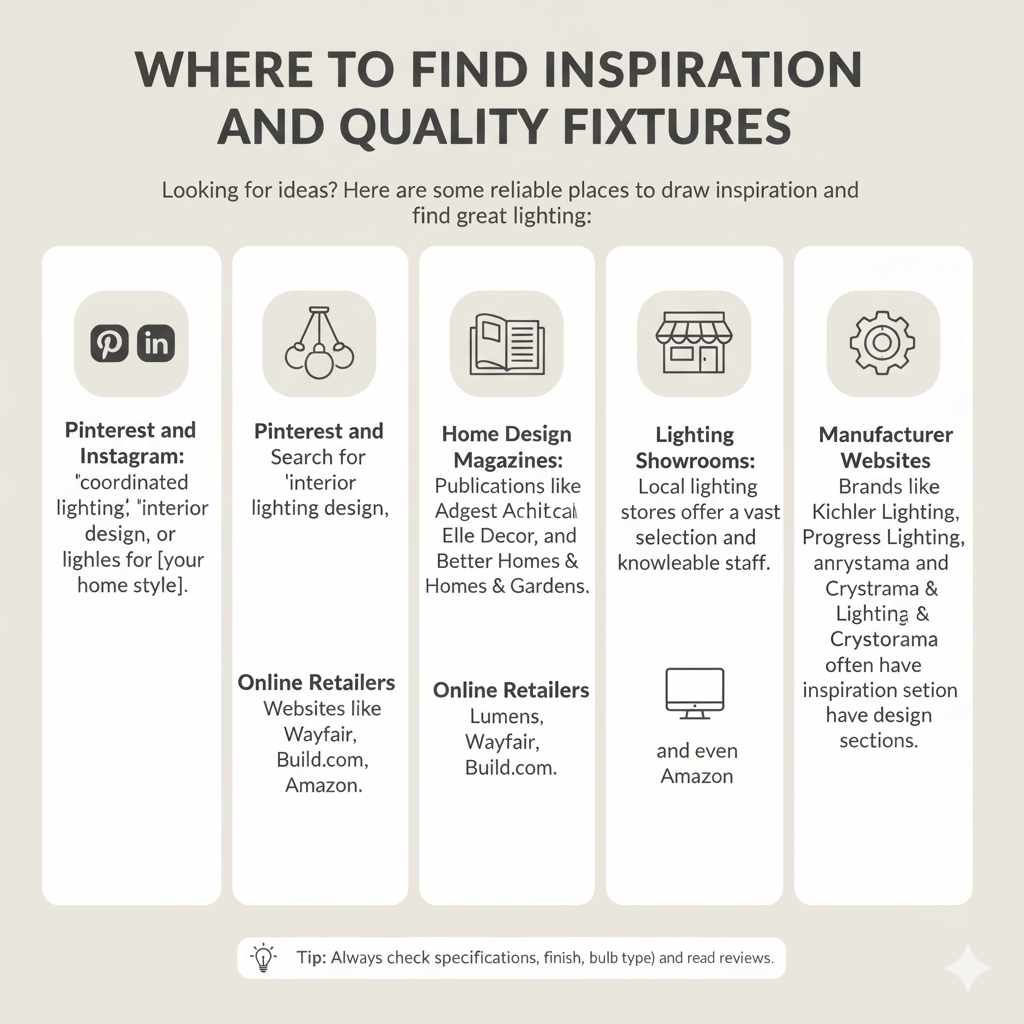
Looking for ideas? Here are some reliable places to draw inspiration and find great lighting:
- Pinterest and Instagram: Search for terms like “coordinated lighting,” “interior lighting design,” or “lighting styles for [your home style].”
- Home Design Magazines: Publications like Architectural Digest, Elle Decor, and Better Homes & Gardens often showcase beautifully lit homes.
- Lighting Showrooms: Local lighting stores offer a vast selection and knowledgeable staff who can offer advice.
- Online Retailers: Websites like Lumens, Wayfair, Build.com, and even Amazon offer a wide range of options and customer reviews.
- Manufacturer Websites: Brands like�� Kichler Lighting, Progress Lighting, and Crystorama often have design inspiration sections.
When shopping, always check the specifications carefully – dimensions, finish details, and bulb type. Reading reviews can also provide insights into quality and ease of installation.
Frequently Asked Questions (FAQ)
Q1: Do all my light fixtures have to be the same finish?
No, not necessarily. It’s best to stick to one or two primary finishes throughout your home for a cohesive look. You can use an accent finish in certain areas for contrast, but avoid mixing too many different metals in the same visual space.
Q2: How do I coordinate lights between rooms?
Choose a consistent style and finish that carries through the main living areas. For example, if your foyer has a brushed nickel chandelier, use brushed nickel fixtures in the adjacent living room and hallways. The style can vary slightly, but the finish and overall aesthetic should feel connected.
Q3: What if I have an open-concept home? How do I coordinate lighting?
In open-concept spaces, consistency is even more critical. Use the same primary finish throughout. You can vary fixture styles slightly to define different zones (e.g., pendants over an island, a chandelier over a dining table), but they should all share the same stylistic language and finish.
Q4: Should I match my light fixture finish to my hardware?
It’s a great way to tie things together! Matching your light fixture finish to cabinet hardware, door knobs, or plumbing fixtures in the same room or area creates a polished, intentional look. For example, matte black pendants over an island with matte black cabinet pulls is a popular and effective choice.
Q5: What’s the difference between a pendant and a chandelier?
A pendant light hangs from a single cord or chain, often featuring a more modern or minimalist design. A chandelier is typically a more elaborate, multi-armed fixture designed to make a statement, often with multiple bulbs. Both can be used to coordinate lighting, depending on your style and the space.
Q6: Can I mix metals in the same room?
Yes, you can, but do it thoughtfully. A common approach is to have one dominant metal finish and use a second metal as an accent. For instance, a room with mostly brushed nickel fixtures could incorporate a table lamp with brass accents. Avoid having too many competing metals that make the space feel busy.
Conclusion
Coordinating light fixtures is a powerful yet accessible design technique that can dramatically enhance the beauty and functionality of your home. By focusing on style, finish, and scale, and by creating a simple lighting plan, you can ensure your lights work in harmony, creating a cohesive and inviting atmosphere throughout your entire living space. Remember, it’s not about making everything identical, but about creating a visual rhythm and flow that feels intentional and elegant. Don’t be afraid to experiment a little, but always keep your overall design goals in mind. With these principles, you’re well on your way to a beautifully lit home that you’ll love for years to come.