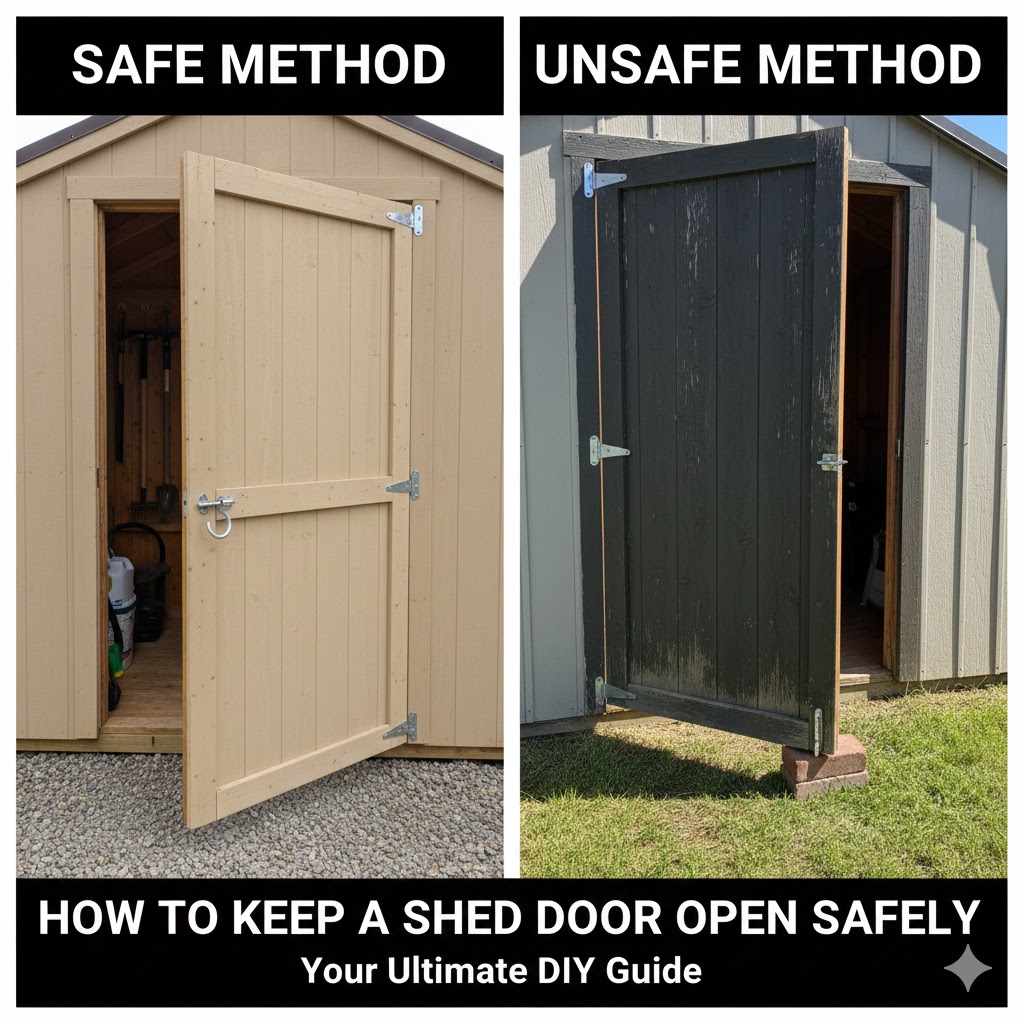
How to Keep a Shed Door Open Safely
Keeping your shed door open can be a common challenge, especially when you’re working inside and need both hands free. Beginners often struggle with finding simple, reliable ways to secure it. The wind can be tricky, and a slamming door can be dangerous.
This guide will show you easy, step-by-step methods to keep your shed door open safely and securely. You’ll learn about tools and tricks that make this task simple for anyone.
Keeping Your Shed Door Open Safely
Properly securing a shed door when it’s open is a simple but important task. It helps prevent accidents, keeps tools from being disturbed, and makes your work much easier. This section covers why it’s useful and the basic things you need to consider.
Good planning here makes a big difference in safety and convenience when you’re using your shed.
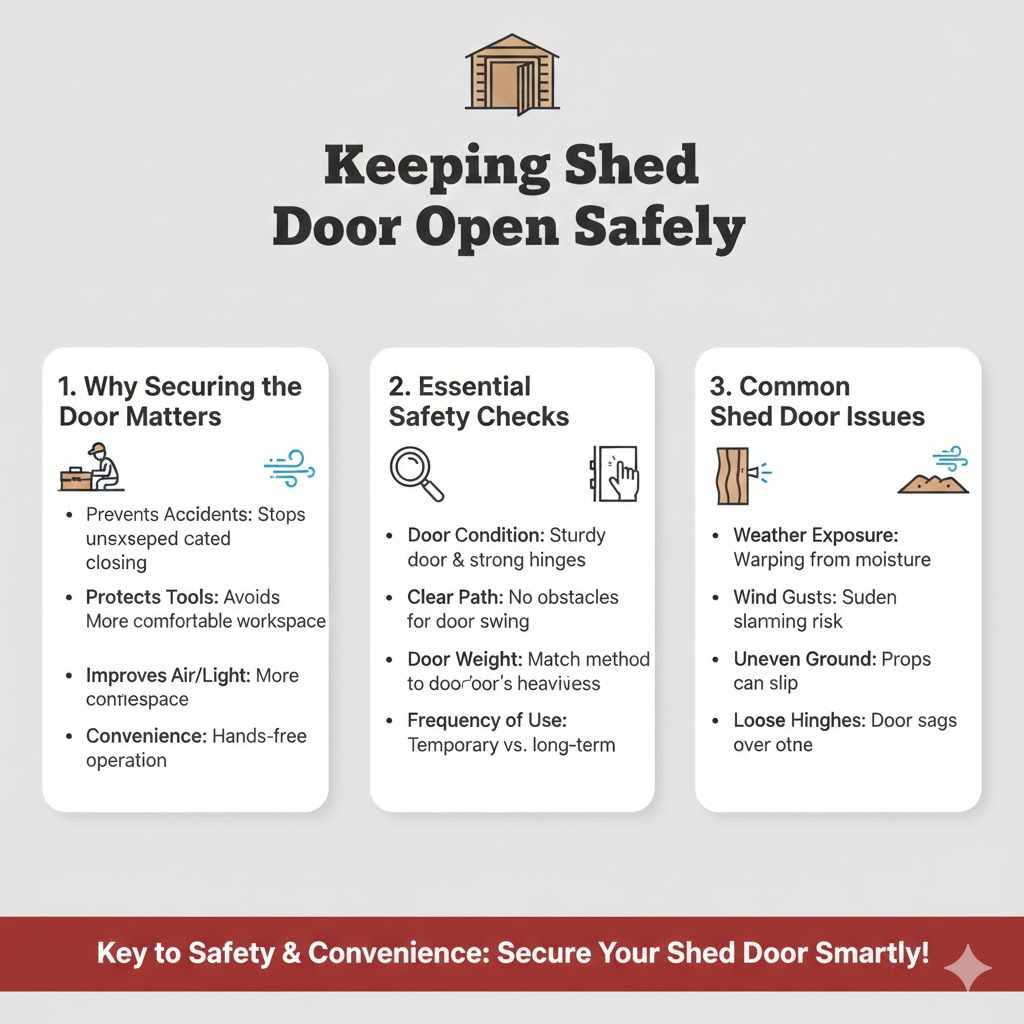
Why Securing the Door Matters
A shed door that swings shut unexpectedly can cause injuries. Someone working inside might get hit, or tools and materials could fall. This is especially true in windy weather.
Keeping the door open also lets in fresh air and light, making your shed a more pleasant place to work. It means you don’t have to hold the door with your body or a temporary prop that might fall.
For people new to DIY or shed use, figuring out the best way to keep a door open might seem like a small detail. However, it’s one of those things that can cause frustration or even a minor accident if not handled correctly. Simple solutions are often the best and most overlooked.
Essential Safety Checks
Before you even think about holding a door open, check its condition. Is the door itself sturdy? Are the hinges working well?
A damaged door or weak hinges can make any solution less safe. Make sure there’s nothing blocking the door’s path that could cause it to catch or fall. This quick check ensures your chosen method will work as expected.
Consider the weight of the door. A heavy wooden door needs a stronger method than a light metal one. Also, think about how often you need to keep it open.
If it’s for a quick task, a simple wedge might do. If you’re spending hours inside, you’ll need a more stable solution.
Common Shed Door Issues
Shed doors often face different problems than house doors. They might be exposed to more weather. They can get warped from moisture.
Sometimes, they don’t close perfectly straight. These issues can make them harder to keep open or closed. Understanding these potential problems helps you pick the right fix.
Wind is a major factor. A sudden gust can slam a door shut. This can be startling and dangerous.
Also, the ground around a shed might be uneven, making props slip. Over time, hinges can loosen, causing the door to sag. These are all things to keep in mind as you look for solutions.
Simple Methods for How to Keep a Shed Door Open Safely
There are many ways to keep a shed door open. Some are very simple, using items you might already have. Others involve a bit more effort but offer stronger security.
The goal is always to prevent the door from closing unexpectedly. We will explore easy-to-use options that work for most sheds.
Using Door Stops and Wedges
Door stops and wedges are perhaps the easiest solutions. A door wedge is a triangular piece of material that you slide under the bottom of the door. When the door is pushed open to the desired position, you push the wedge firmly into the gap between the door and the floor.
This creates friction that stops the door from moving.
You can buy rubber, plastic, or wooden wedges. Rubber ones offer good grip. Wooden ones can be strong for heavier doors.
Some wedges are shaped to fit snugly. Others are simpler triangles. For maximum effectiveness, ensure the wedge is firmly lodged and the floor surface is clean.
- Rubber Door Wedges
- Rubber wedges are very popular because rubber has great friction properties. They grip well on most surfaces, including concrete, wood, and tile, preventing the door from sliding. They are also flexible and can conform to slight unevenness in the floor.
- You can find them in various sizes, so you can choose one that fits the gap under your shed door. They are lightweight and easy to store.
- Wooden Door Stops
- Wooden door stops are sturdy and can handle heavier doors. They are often shaped like a simple triangle or have a more ergonomic design for easier placement and removal. Wood is durable, but it might not offer as much grip as rubber on very smooth surfaces.
- You can even make your own wooden wedge with some basic tools.
- Adjustable Door Stops
- Some door stops are adjustable, meaning you can change their height. This is useful if your shed door has a significant gap underneath or if the floor isn’t perfectly level. They often have a screw mechanism to tighten them in place.
This type provides a very secure hold.
DIY Solutions with Common Items
You don’t always need special tools. Many household items can be used to prop open a shed door. These are great for temporary fixes or when you need a quick solution.
- Using a Brick or Heavy Object
- A simple brick, a heavy stone, or even a bag of sand can serve as a makeshift doorstop. Place the object firmly against the bottom edge of the door to prevent it from swinging shut. Make sure the object is stable and won’t roll away.
- This is a very basic but often effective method for keeping a door open on a calm day.
- A Sturdy Stick or Pole
- If you have a strong stick or a piece of lumber, you can use it to prop the door open. Place one end of the stick on the ground in front of the door and lean the other end against the bottom edge of the door. Ensure the stick is angled correctly so it won’t slip.
- This method works best if the ground is firm and level.
- Rope and a Hook
- You can tie a strong rope to the door handle or a sturdy point on the door. Then, tie the other end of the rope to a secure anchor point outside the shed, like a sturdy hook screwed into the shed wall or a strong fence post. Adjust the rope’s length to keep the door open at your desired angle.
This is a very secure method, especially if the anchor point is well-placed.
Door Holders and Magnetic Catches
For a more permanent and convenient solution, consider specialized door holders. These are designed to keep doors open reliably and can be installed on many types of doors, including shed doors.
- Simple Door Holders
- These can be anything from a hook on the wall to a retractable arm that attaches to the door and the wall. Some are spring-loaded. When you open the door, you extend the holder and secure it.
- When you want to close the door, you release the holder. They are designed for ease of use and a secure hold.
- Magnetic Catches
- Magnetic catches use magnets to hold the door open. One part of the magnet attaches to the door, and the other to the wall or floor. When the door is open to a certain point, the magnets snap together, holding it firmly.
These are often used on cabinets but can work for shed doors too. They are very neat and don’t get in the way.
Install a Shed Door Holder Arm
A dedicated door holder arm is one of the most effective and user-friendly ways to keep a shed door open. These are typically made of metal and have a movable arm. One end attaches to the door frame, and the other to the door itself.
When you open the door, the arm extends and locks, holding the door in place.
Installation is usually straightforward. You’ll need a screwdriver and perhaps a drill. Most kits come with screws and instructions.
The key is to mount the parts at the correct height and angle so the arm can extend and retract smoothly. These arms are great for windy areas because they provide a strong hold.
Installation Steps for a Door Holder Arm
- Locate Mounting Points
- Open the shed door to the desired position. Hold the door holder arm against the door and the wall or frame. Mark where the arm will attach to both the door and the frame.
- Ensure there’s enough space for the arm to move freely without binding.
- Attach the Arm to the Door
- Using screws, attach the end of the holder arm to the marked spot on the shed door. Make sure it’s secure.
- Attach the Arm to the Frame
- Now, attach the other end of the holder arm to the marked spot on the door frame or wall. Again, ensure it’s firmly screwed in. Test the arm by opening and closing the door.
It should extend smoothly and hold the door open. When you want to close the door, you typically push the arm inwards to release it.
This method is excellent for consistent results. It is much safer than relying on a prop that could slip.
Using Gas Struts for Shed Doors
Gas struts, also known as gas springs, are a more advanced but very effective solution. They are commonly used on car boots or lift-up lids. For shed doors, they can be mounted to hold the door open, often lifting it upwards or outwards.
This is ideal for sheds with upward-opening doors or hatches.
Gas struts are pressurized cylinders that allow for smooth opening and controlled closing. They can support the weight of the door, making it easy to open and holding it securely. Installation requires careful measurement to ensure the strut extends to the correct angle and provides enough support.
How Gas Struts Work
A gas strut contains pressurized gas (usually nitrogen) and a small amount of oil. When the strut is compressed, the gas is forced through the oil, creating a damping effect. When the strut is extended, the gas pressure pushes the rod out, providing lifting force.
For a shed door, one end of the strut attaches to the door frame or side of the shed, and the other end attaches to the shed door. As you open the door, the strut extends, lifting and holding the door open. The force of the strut is chosen based on the weight and size of the shed door.
| Feature | Door Wedge | Door Holder Arm | Gas Strut |
|---|---|---|---|
| Ease of Use | Very Easy | Easy | Moderate |
| Security Level | Low to Moderate | High | Very High |
| Cost | Low | Moderate | Moderate to High |
| Installation | None | Simple | Requires Care |
| Wind Resistance | Poor | Good | Excellent |
This table shows how different methods compare. For frequent use and security, especially in windy conditions, a door holder arm or gas strut is often best.
Choosing the Right Method for Your Shed
The best method for how to keep a shed door open safely depends on several factors. Consider the size and weight of your door. Think about how windy it typically gets where you live.
Also, consider how often you need to keep the door open and for how long.
- Door Weight and Size
- Heavy doors need stronger solutions. A simple wedge might not be enough for a large, solid wood door. A door holder arm or gas strut will provide more reliable support.
- For lighter doors, simpler methods are often sufficient.
- Wind Conditions
- If your shed is in an exposed area prone to strong winds, you need a secure method. A door wedge can be blown away, and a simple prop can fall over. In these cases, a strong door holder arm or gas strut is recommended.
- Magnetic catches can also be strong if they are high-quality.
- Frequency of Use
- For daily use, a convenient system like a door holder arm or magnetic catch is best. If you only need to keep the door open occasionally, a temporary solution like a wedge or brick might be fine. Consider how easy it is to deploy and retract the chosen method.
- Budget and DIY Skills
- Some methods, like wedges and bricks, are very cheap or free. Door holder arms and gas struts cost more but offer better performance. If you enjoy DIY projects, you might be able to build a custom solution.
A great example of using a simple method is when you’re bringing in large items. You need the door held wide open. A sturdy prop like a thick piece of wood angled correctly can work.
However, if a sudden gust of wind blows, that prop could dislodge. This is why investing in a dedicated holder is often wise for peace of mind.
Maintaining Your Shed Door Security Solutions
Once you have a system in place for how to keep your shed door open safely, it’s important to maintain it. Like any tool or fixture, these solutions need care to work best.
- Regular Inspections
- Periodically check any installed hardware, like door holder arms or gas struts. Ensure screws are tight and there’s no rust or damage. For wedges, check them for wear and tear.
- A worn wedge might not provide enough grip.
- Cleaning Surfaces
- If you use wedges or props, make sure the floor and the bottom of the door are clean and dry. Dirt or debris can reduce friction and cause a wedge to slip. Regularly sweep around your shed.
- Lubrication (if applicable)
- Some more complex door holding mechanisms might benefit from occasional lubrication. Check the manufacturer’s instructions. This can help them move smoothly and last longer.
A practical scenario: Imagine you’re gardening and need to bring tools out of the shed. You open the door and prop it with a brick. The wind picks up, and the brick shifts slightly, allowing the door to creep shut.
This could snag your tools or even injure your hand. If you had used a strong door holder arm, this wouldn’t happen, keeping your gardening session safe and smooth.
Advanced Techniques and Considerations
While simple methods work, sometimes more advanced approaches are needed. These can offer greater security and convenience, especially for specific shed designs or challenging conditions.
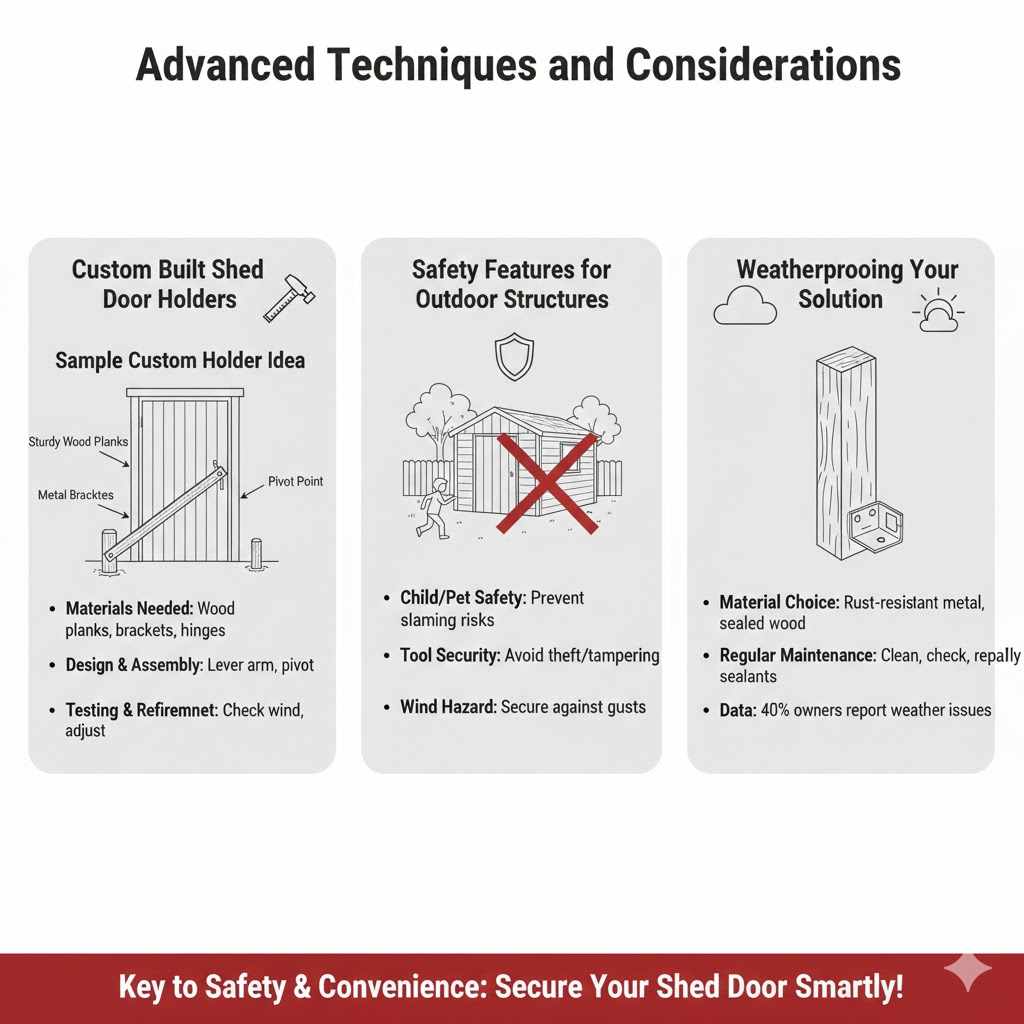
Custom Built Shed Door Holders
For those with specific needs or a love for DIY, building a custom shed door holder can be a rewarding project. This allows you to tailor the solution precisely to your shed and how you use it.
Sample Custom Holder Idea
- Materials Needed
- You might need sturdy wood planks, metal brackets, hinges, and screws. Consider a simple lever arm design. One part of the lever mounts to the door, and the other to the ground or a small post.
- Design and Assembly
- The idea is to create a pivot point. When the door opens, the lever arm extends and props the door. When you want to close it, you lift the lever arm, and it folds neatly out of the way.
- This requires some basic carpentry skills.
- Testing and Refinement
- After building, test it thoroughly. Ensure it holds the door securely in various wind conditions. Adjust the length or mounting points as needed.
- A well-made custom holder can be very effective and blend nicely with your shed’s aesthetic.
Safety Features for Outdoor Structures
When dealing with any outdoor structure like a shed, safety should always be the top priority. This includes how you manage access. Thinking about how you keep the door open is part of this broader safety consideration.
For instance, if children or pets frequent the area around your shed, a door that slams shut can be a hazard. Ensuring it stays open securely prevents accidental injuries. Also, if you store valuable tools or equipment, a door that’s not properly secured might be easier for unauthorized people to tamper with or blow open, potentially exposing your belongings.
Weatherproofing Your Solution
Any method you choose to keep your shed door open will be exposed to the elements. Rain, sun, and snow can affect how well your solution works and how long it lasts.
- Material Choice
- Opt for materials that can withstand outdoor conditions. Metal parts should be rust-resistant, like galvanized steel or aluminum. Wood should be treated or sealed to prevent rot and warping.
- Rubber components should be UV-resistant to avoid cracking.
- Regular Maintenance
- Even weather-resistant materials need some care. Clean off dirt and debris. Check for rust or damage.
- Reapply sealants or paints as needed. For gas struts, ensure the seals are intact to maintain pressure.
Data from a survey on backyard structures indicates that about 40% of shed owners report minor issues with door security or functionality over a five-year period, often related to weather exposure. Choosing robust materials and performing regular checks can significantly reduce these problems.
Frequently Asked Questions
Question: What is the easiest way to keep a shed door open?
Answer: The easiest way is often using a simple door wedge. You just slide it under the door when it’s open to the position you want.
Question: Can I use a brick to keep my shed door open?
Answer: Yes, a heavy brick or similar object can work as a temporary prop, but be sure it’s stable and won’t roll away.
Question: How do I stop my shed door from slamming shut in the wind?
Answer: For windy conditions, a sturdy door holder arm or gas strut is recommended. These provide a much more secure hold than simple props.
Question: Do I need special tools to install a shed door holder?
Answer: Most standard door holder arms require only basic tools like a screwdriver. Some might need a drill, but installation is generally simple.
Question: How often should I check my shed door security solution?
Answer: It’s a good idea to check your solution regularly, perhaps every few months or after strong winds, to ensure it’s still working safely and securely.
Summary
Keeping your shed door open safely is achievable with simple methods like wedges or more robust solutions like door holder arms. Prioritize sturdy materials and regular checks. This ensures your shed remains accessible and secure, making your outdoor projects easier and safer for everyone involved.