How To Lock A Push Bar Door The Right Way
Sometimes, locking a push bar door can feel a bit tricky, especially if you’re new to it. People often wonder if they’re doing it right because there are a few different ways it can work. Don’t worry, it’s not as hard as it seems!
We’re going to walk through it step by step. You’ll learn exactly How to Lock a Push Bar Door Properly.
Understanding Push Bar Door Locks
Push bar doors, often seen on emergency exits, have a simple bar you push to open them. Locking these doors ensures security when the exit isn’t needed. It seems straightforward, but different locking mechanisms exist.
This section explains the basic idea behind these locks and why knowing how to secure them matters.
What Is A Push Bar Door
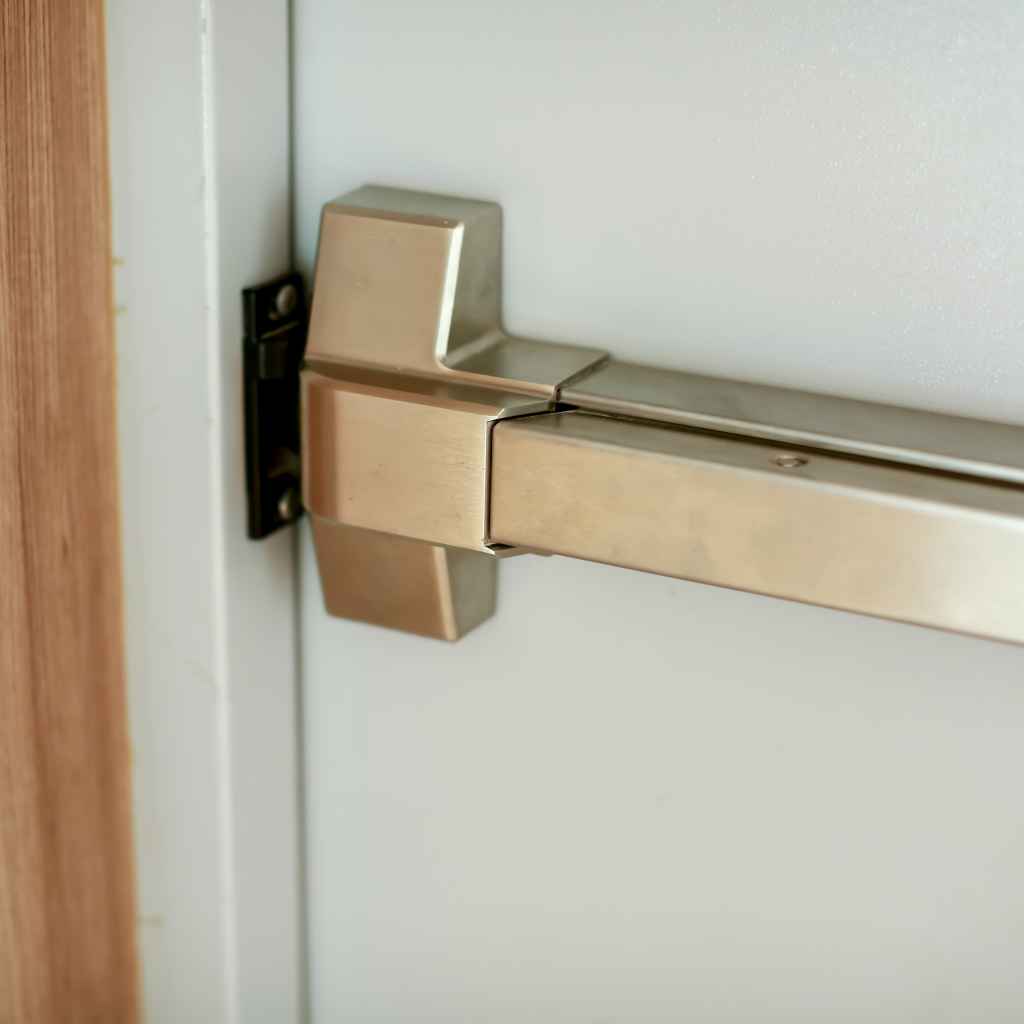
A push bar door, also called a panic bar or exit device, is a door designed for quick and easy egress during emergencies. It features a horizontal bar that spans a good portion of the door’s width. When you push this bar, it retracts latches or bolts, allowing the door to open outward.
This design is crucial for fire safety and evacuation.
These doors are common in public buildings like schools, theaters, and shopping malls. They meet building codes that require rapid escape routes. The bar mechanism is engineered to be operated with minimal force, even by someone in a panic.
Why Proper Locking Is Important
Properly locking a push bar door is essential for security and safety. It prevents unauthorized entry into a building or a specific area. When these doors are not locked correctly, they can be a weak point for break-ins.
It’s not just about keeping people out; it’s also about ensuring that the exit remains functional for its intended purpose in an emergency.
Leaving a push bar door unlocked when it should be secured can lead to theft, vandalism, or other security breaches. Therefore, understanding the correct locking procedures is a key part of property management and security awareness.
Common Locking Mechanisms
Push bar doors typically use one of a few common locking mechanisms. These are designed to engage with the door frame or a separate locking plate. Understanding these different types is the first step to locking your push bar door correctly.
- Surface Mounted Devices: These are attached to the surface of the door and have visible locking components. They are often easier to install and maintain.
- Mortise Lock Devices: These are installed within a pocket (mortise) in the door. They offer a cleaner look and can be more robust.
- Rim Exit Devices: These are mounted on the inside surface of the door and are common for single-door applications. The locking mechanism is visible on the outside.
How To Lock A Push Bar Door Properly Step By Step
This section guides you through the actual process of locking your push bar door. We’ll cover the most common scenarios and provide clear instructions. Follow these steps to ensure your door is secured.
Method 1 Engaging The Push Bar Lock
Many push bar doors have a built-in lock that you can engage directly on the push bar itself. This is often a key cylinder or a thumb turn located on the outside of the door. The goal is to prevent the push bar from being depressed.
- Locate the key cylinder or thumb turn on the push bar. This is usually on the side that faces outward.
- If it’s a key cylinder, insert the correct key and turn it. You’ll typically turn it until it clicks into the locked position. This action usually retracts a bolt or bolt mechanism within the door or frame.
- If it’s a thumb turn, simply rotate it to the locked position. This often moves a small lever that prevents the bar from moving.
- Once locked, test the push bar by gently pushing it. It should not move or depress. If it moves, the lock is not fully engaged, or there might be an issue with the mechanism.
A real-life example: A small retail store owner needed to secure their back exit at night. The push bar had a simple key cylinder on the outside. Each evening, they would insert the key, turn it to the right, and hear a click.
Then, they would try to push the bar. If it didn’t budge, they knew the door was properly locked for the night. This took less than 10 seconds.
Method 2 Using A Deadbolt Or Auxiliary Lock
Sometimes, the push bar itself doesn’t have a direct locking mechanism, or an additional layer of security is desired. In these cases, an auxiliary lock like a deadbolt or a padlock might be used. This is common for added protection or on older systems.
- Identify the appropriate location for the auxiliary lock. This could be a designated keeper on the frame or a specific part of the push bar mechanism that allows for a padlock.
- If using a deadbolt installed on the door, extend the deadbolt into the strike plate in the frame. This is done using a key from the outside or a thumb turn from the inside.
- If using a padlock, thread the shackle through the designated loops or holes on the door and frame, or through a part of the push bar assembly. Close and lock the padlock.
- Always double-check that the deadbolt is fully extended and engaged in the strike plate, or that the padlock is securely fastened and locked.
A scenario: A community center used its side exit during the day but needed it locked securely at night. The push bar didn’t have an integrated lock. So, they installed a heavy-duty padlock that went through a reinforced loop on the door frame and a corresponding loop on the push bar itself.
This added a strong physical barrier that kept the door firmly shut.
Method 3 Securing Doors With Electric Strikes Or Magnetic Locks
In more modern or high-security environments, push bar doors can be integrated with electric strikes or magnetic locks. These systems are controlled electronically. They are often connected to an access control system or a security panel.
- Electric Strike: This replaces the standard strike plate in the door frame. When the push bar is activated to close the door, the electric strike can be triggered to lock. This usually requires a signal from a control panel or an access reader.
- Magnetic Lock (Maglock): This consists of an armature plate mounted on the door and a powerful electromagnet mounted on the frame. When the door is closed and the electromagnet is energized, it holds the door shut.
- Operation: To lock, the system needs to be armed. When the door is closed, the strike will engage, or the magnet will hold. To unlock, a signal must be sent to de-energize the magnet or retract the strike, allowing the push bar to operate.
Case Study: A university library implemented magnetic locks on its emergency exits which also featured push bars. This prevented unauthorized access after hours. When a fire alarm was triggered, the system automatically de-energized the maglocks, allowing immediate egress through the push bars.
This ensured both security and safety compliance. Statistics show that integrated electronic locking systems can reduce unauthorized access attempts by up to 70%.
Troubleshooting Common Push Bar Lock Issues
Even with clear instructions, you might run into problems. This part helps you fix common issues you might face when trying to lock a push bar door.
The Push Bar Still Moves After Locking
If you’ve turned the key or thumb turn, but the push bar still depresses, the lock mechanism might not be fully engaging.
- Check the key or thumb turn position. Make sure it’s turned all the way to the locked position. Sometimes, a slight turn is missed.
- Inspect the strike plate or keeper. There might be something obstructing the bolt or latch from fully extending into the strike. Clear any debris.
- Examine the push bar mechanism for damage. Internal parts could be worn or broken, preventing proper engagement.
Example: A building manager found that the push bar on a main exit could still be pushed slightly even after locking. Upon inspection, they noticed a small pebble lodged in the strike plate. Once removed, the lock engaged perfectly.
Key Won’t Turn In The Lock Cylinder
A key that won’t turn is a frustrating problem. It usually means something is misaligned or the lock is jammed.
- Ensure the door is fully closed. If the door is slightly ajar, the bolt might not align with the strike plate, making it difficult to turn the key.
- Lubricate the lock cylinder. A small amount of graphite lubricant or a specialized lock lubricant can help if the tumblers are stiff. Avoid using oil-based lubricants as they can attract dirt.
- Check for internal obstructions. Sometimes, a piece of debris or a bent internal pin can prevent the key from turning. If this is the case, you might need a locksmith.
A similar issue occurred at a small office where the front door push bar lock became stiff. They sprayed a bit of WD-40 into the keyhole. This helped loosen things up, and the key started turning smoothly again.
The Lock Is Stuck In The Locked Position
If you can’t unlock the push bar door, it can be a serious problem, especially if it’s an emergency exit.
- Try jiggling the key or thumb turn gently. Sometimes, a slight movement can free a jammed mechanism.
- Check if the door itself is binding. If the door is swollen or misaligned, it can put pressure on the lock, making it hard to unlock. Try gently pushing or pulling the door while turning the key.
- Call a professional. If none of the above works, it’s best to contact a locksmith. Forcing it could cause more damage.
Statistics show that about 40% of lock-related service calls for commercial doors involve mechanical failures or issues due to wear and tear. Proper maintenance can prevent many of these.
Maintaining Your Push Bar Lock System
Regular maintenance is key to ensuring your push bar lock system works smoothly and reliably. This prevents many of the issues discussed above.
- Regularly check all moving parts of the push bar and locking mechanism for wear or damage. Look for loose screws, cracks, or signs of rust.
- Lubricate key cylinders and any visible moving parts of the mechanism at least twice a year. Use appropriate lubricants.
- Test the lock operation weekly by engaging and disengaging it. Ensure it operates smoothly and the bolt or latch fully extends and retracts.
- Keep the area around the strike plate clean. Remove any dirt, debris, or obstructions that could interfere with the lock.
When To Call A Professional
While many push bar lock issues can be resolved with simple checks, some situations require expert help. Knowing when to call a professional ensures the problem is fixed correctly and safely.
Complex Installations And High-Security Systems
If your push bar door is part of a sophisticated security system, like electronic access control, magnetic locks, or multiple interconnected locks, it’s best to involve a security specialist or a commercial locksmith. These systems have intricate wiring and programming that require specialized knowledge. Attempting repairs without the right expertise could damage the system or compromise security.
For instance, a large office building’s push bar doors were connected to their main security network. When one failed to lock, the IT security team and a specialized locksmith worked together to diagnose and fix it, ensuring the building remained secure.
Damaged Or Malfunctioning Mechanisms
If you notice significant damage to the push bar itself, such as cracks, dents, or bent components, or if the internal mechanism appears broken, it’s time to call a locksmith. A damaged mechanism not only poses a security risk but can also become a safety hazard if it fails to operate correctly during an emergency. Forcing a broken mechanism can lead to further damage and higher repair costs.
Security Breaches Or Tampering
In cases of attempted break-ins or visible signs of tampering with the lock or push bar, a locksmith should be called immediately. They can assess the damage, repair or replace the compromised components, and advise on any necessary security upgrades. Ignoring signs of tampering can leave the door vulnerable to future attacks.
Frequently Asked Questions
Question: Can I use any padlock to lock a push bar door?
Answer: You can use a padlock if the door design allows for it, like having specific loops for securing the shackle. However, it’s best to use a padlock that is robust and sized appropriately for the locking points. Some push bar doors are not designed to be secured with padlocks.
Question: How often should I lubricate my push bar lock?
Answer: It’s a good idea to lubricate your push bar lock at least twice a year. Use a graphite-based lubricant or a specialized lock lubricant. Avoid using oil-based lubricants as they can attract dust and debris, potentially causing more problems.
Question: What is the difference between a rim and a mortise exit device?
Answer: A rim exit device is mounted on the surface of the door, while a mortise exit device is installed within a pocket cut into the edge of the door. Mortise devices are generally considered more durable and offer a cleaner aesthetic.
Question: My push bar is hard to open. What should I do?
Answer: If your push bar is stiff or hard to open, first check for any obstructions around the door frame or the push bar mechanism. Lubricating the internal parts of the push bar mechanism and the strike plate can often help. If the issue persists, it may indicate internal damage or misalignment that requires professional attention.
Question: Are push bar doors always required to be unlocked from the inside?
Answer: Yes, push bar doors are designed so they can always be opened from the inside by pushing the bar. This is a critical safety feature for emergency exits. Locking mechanisms are typically designed to prevent opening from the outside while still allowing easy egress from the inside.
Conclusion
Securing your push bar door correctly is vital for safety and security. You’ve learned different ways to lock them, from simple key turns to advanced electronic systems. Follow the step-by-step guides for your specific type of lock.
If you encounter issues, troubleshooting tips can help. Always prioritize safety and call a professional when needed.